
PARSONS SCHOOL OF DESIGN
Core 1
Throughout fall 2025 semester, students explored key shifts shaping contemporary fashion marketing, from evolving menswear and creative agency models to sports as cultural currency, celebrity alignment, nostalgia, and food as storytelling tools. Led by Melquan Ganzy, they were challenged to move beyond theory and apply research directly to their fashion practices.
As part of their Core 1: Fashion Marketing & Communication capstone, students developed integrated brand campaigns grounded in primary and secondary research. Each project identified a cultural opportunity, applied strategic frameworks, and proposed a new initiative, product, or experience, balancing brand heritage with innovation and relevance for Gen Z and Millennial audiences.
LES EXECUTIVES
by Celia Ballesteros Renales | Saint Laurent


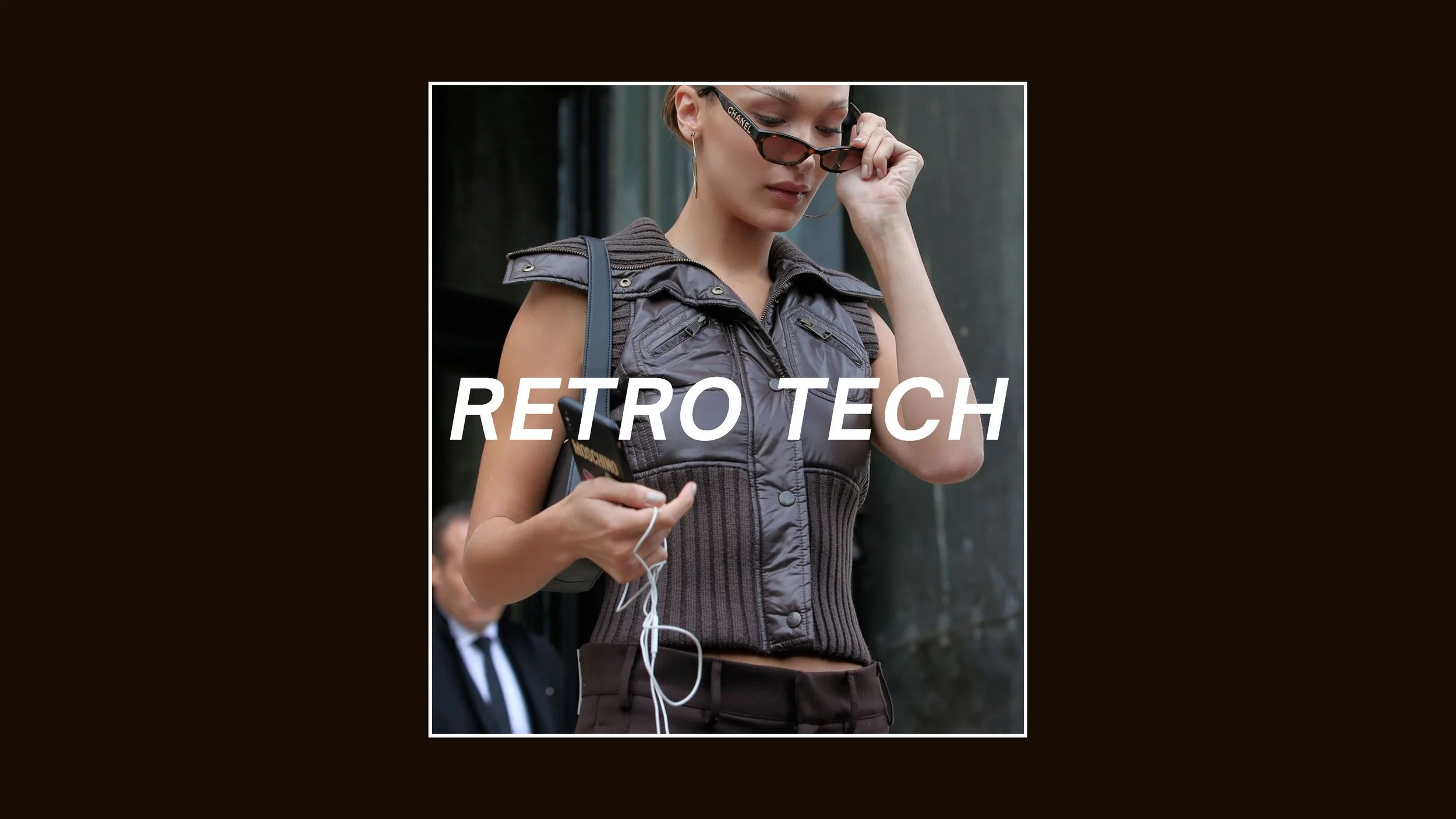


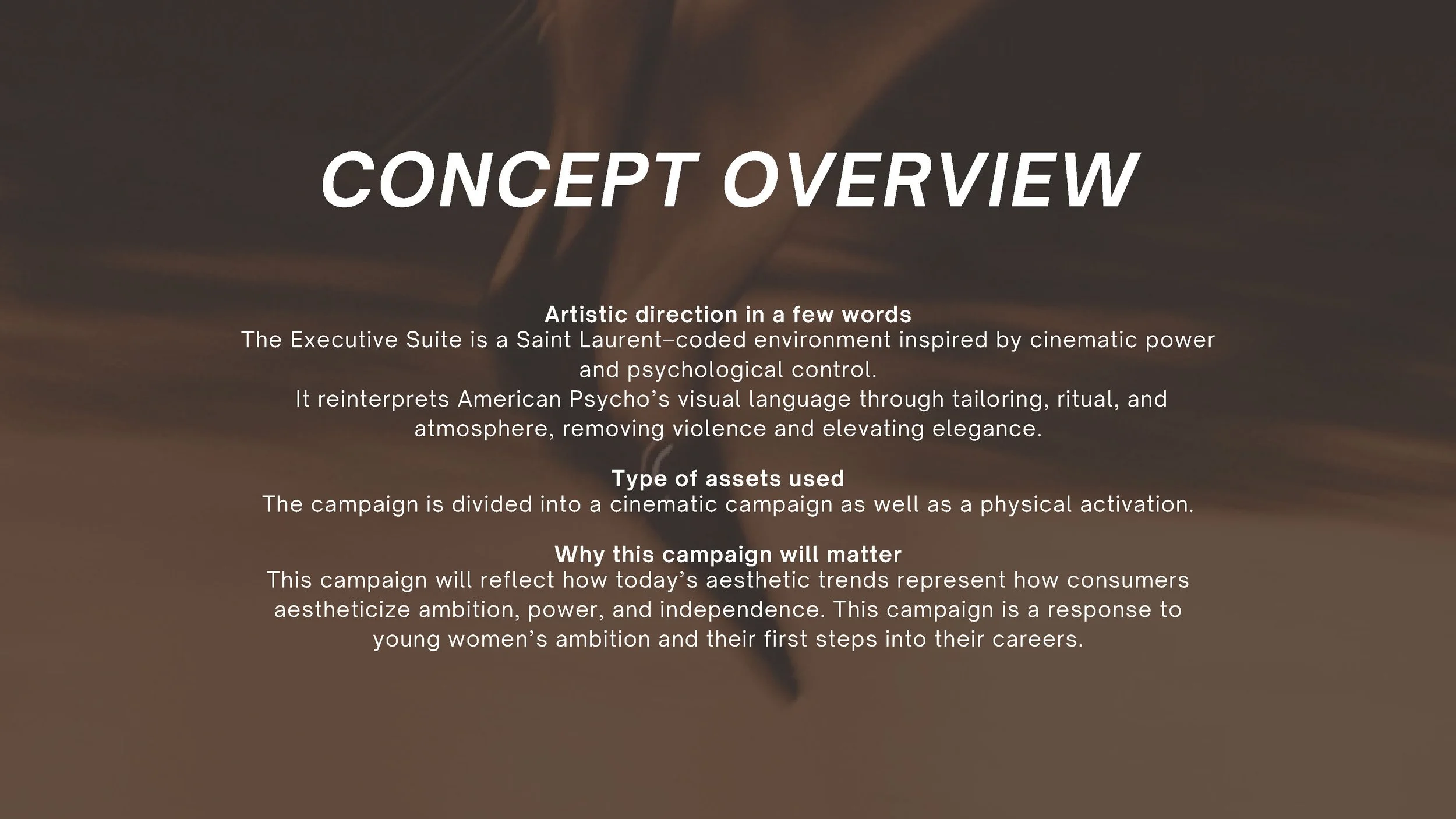


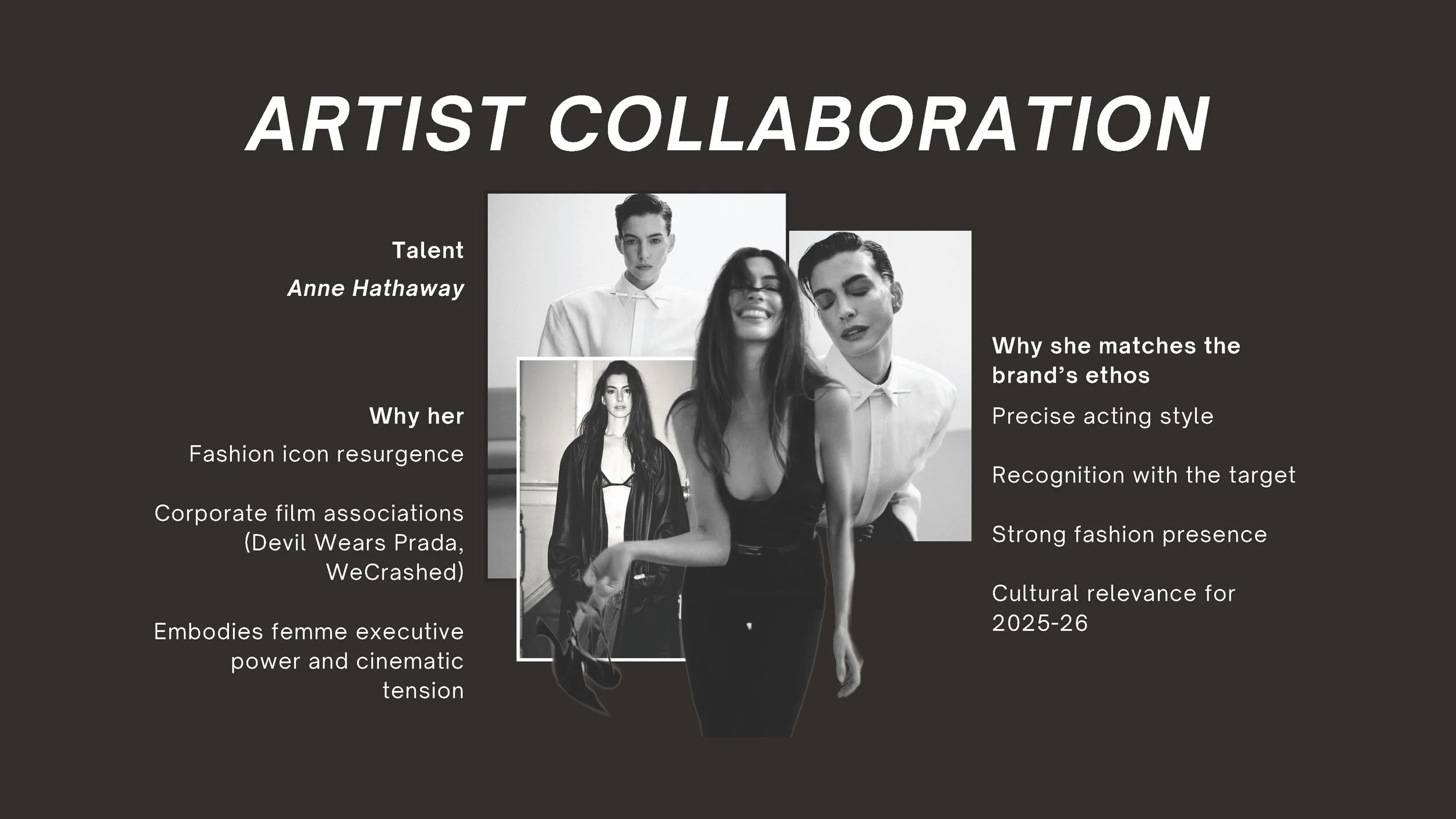

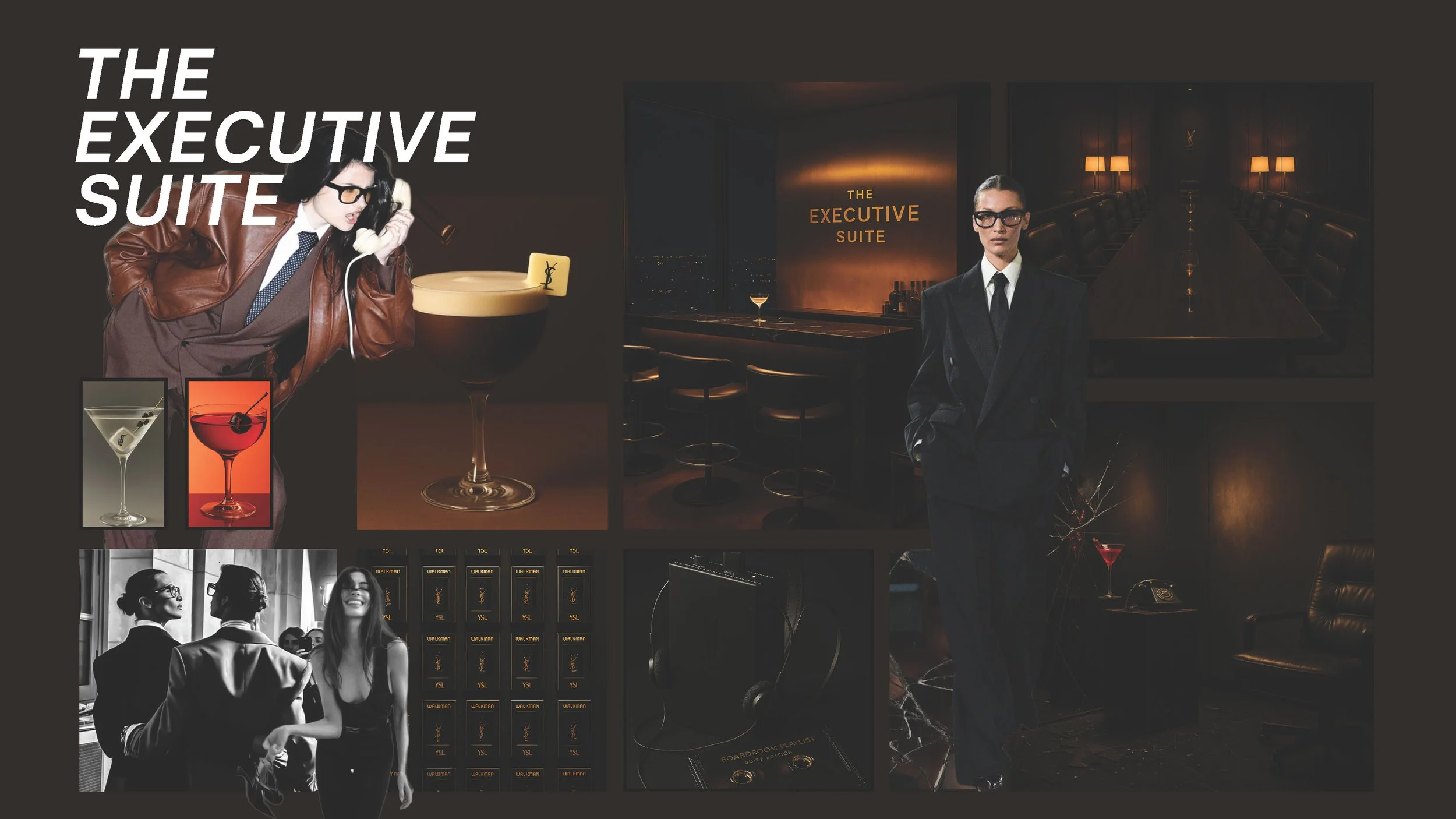




LES EXECUTIVES reimagines power dressing through precision, restraint, and psychological control. Drawing from cinematic references rather than overt spectacle, the campaign reframes tailoring as armor for a new generation entering positions of authority, where ambition, discipline, and self-definition are expressed through silhouette, ritual, and presence. Inspired by American Psycho’s visual language, the concept removes violence and excess, positioning ambition as discipline and restraint within a cinematic Saint Laurent campaign.
LA NOTTE ANALOGICA: The Night You Can’t Retake
BY Fiona Bonomi | Dolce & GabbanA
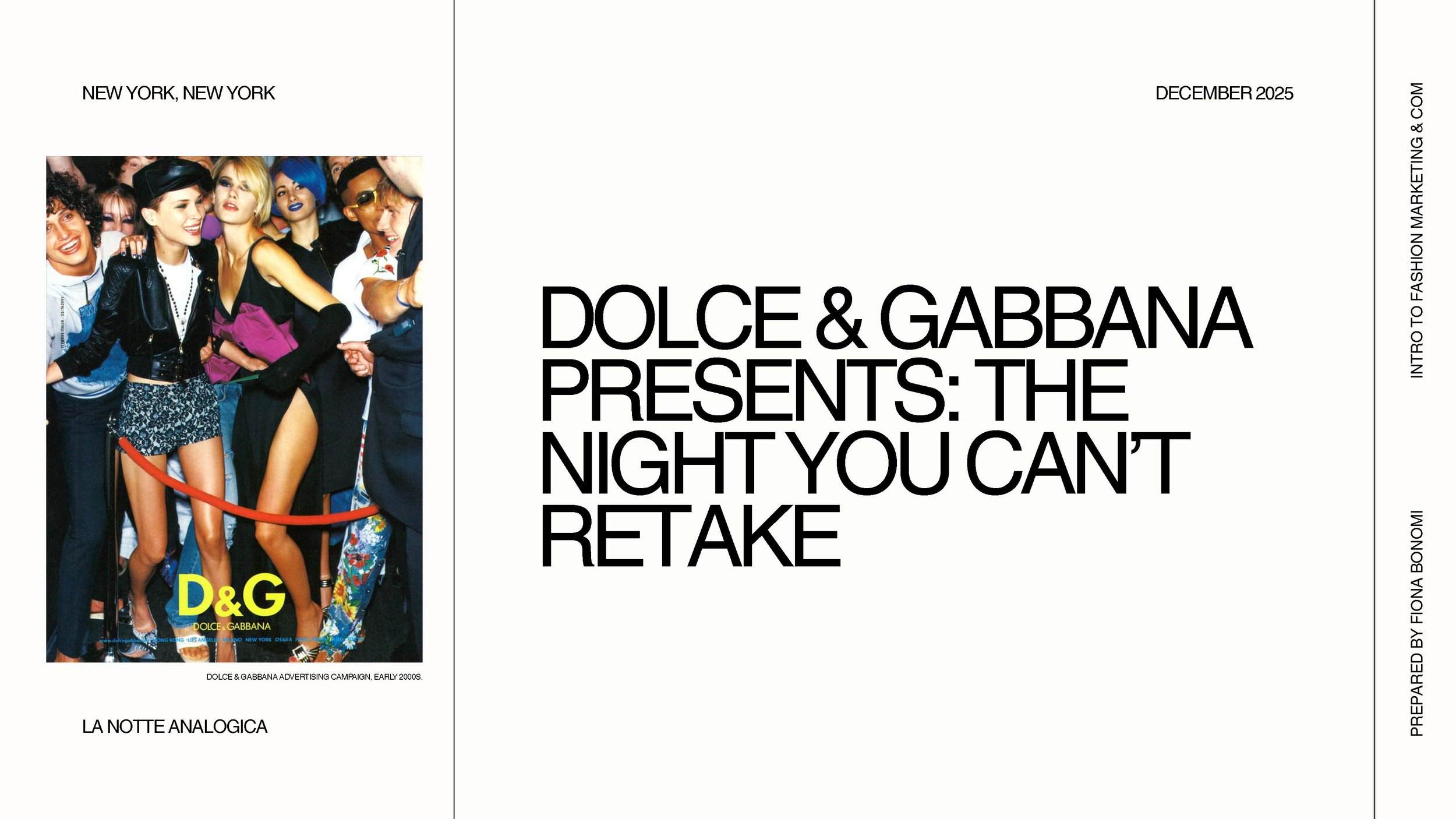
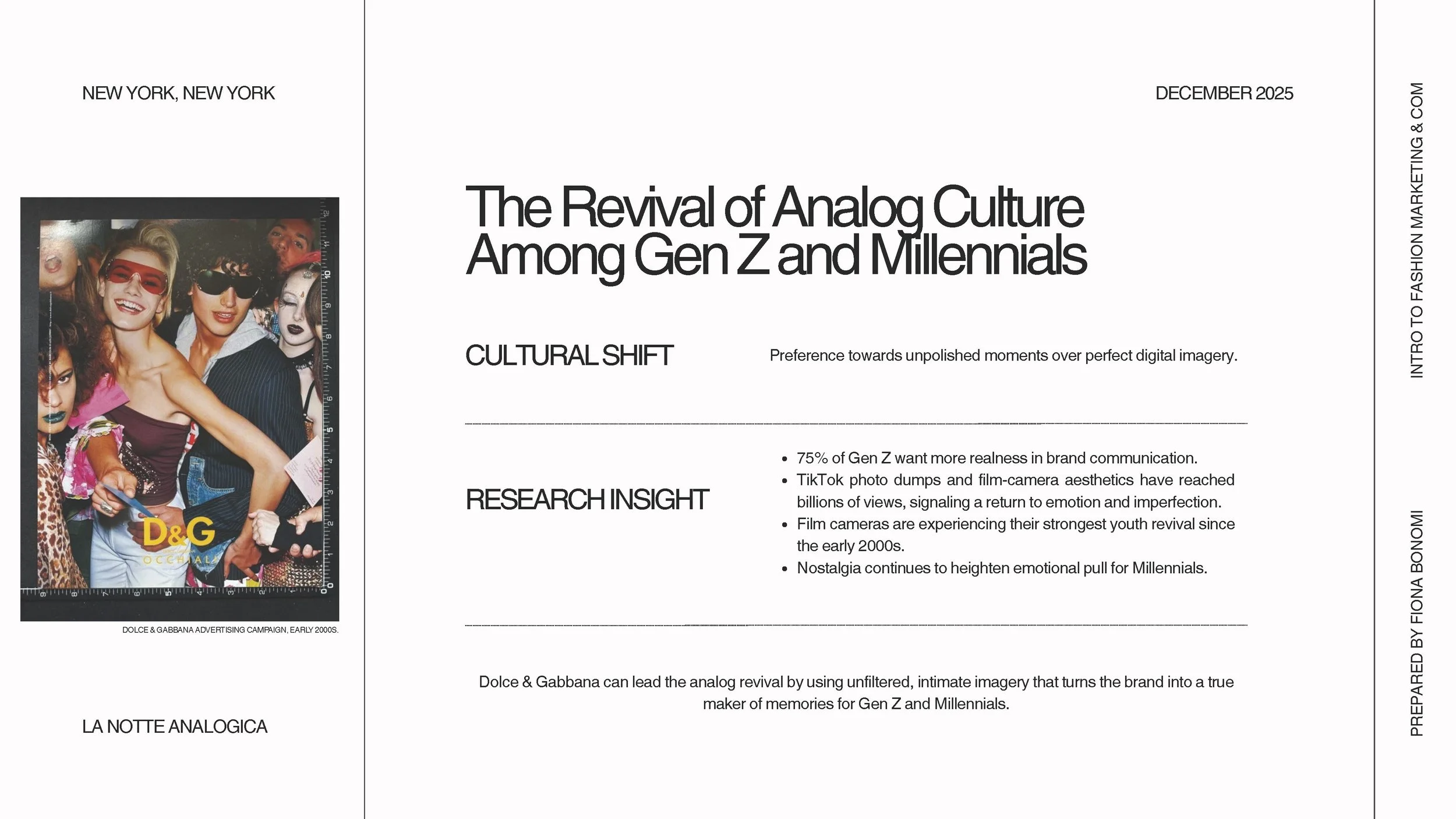
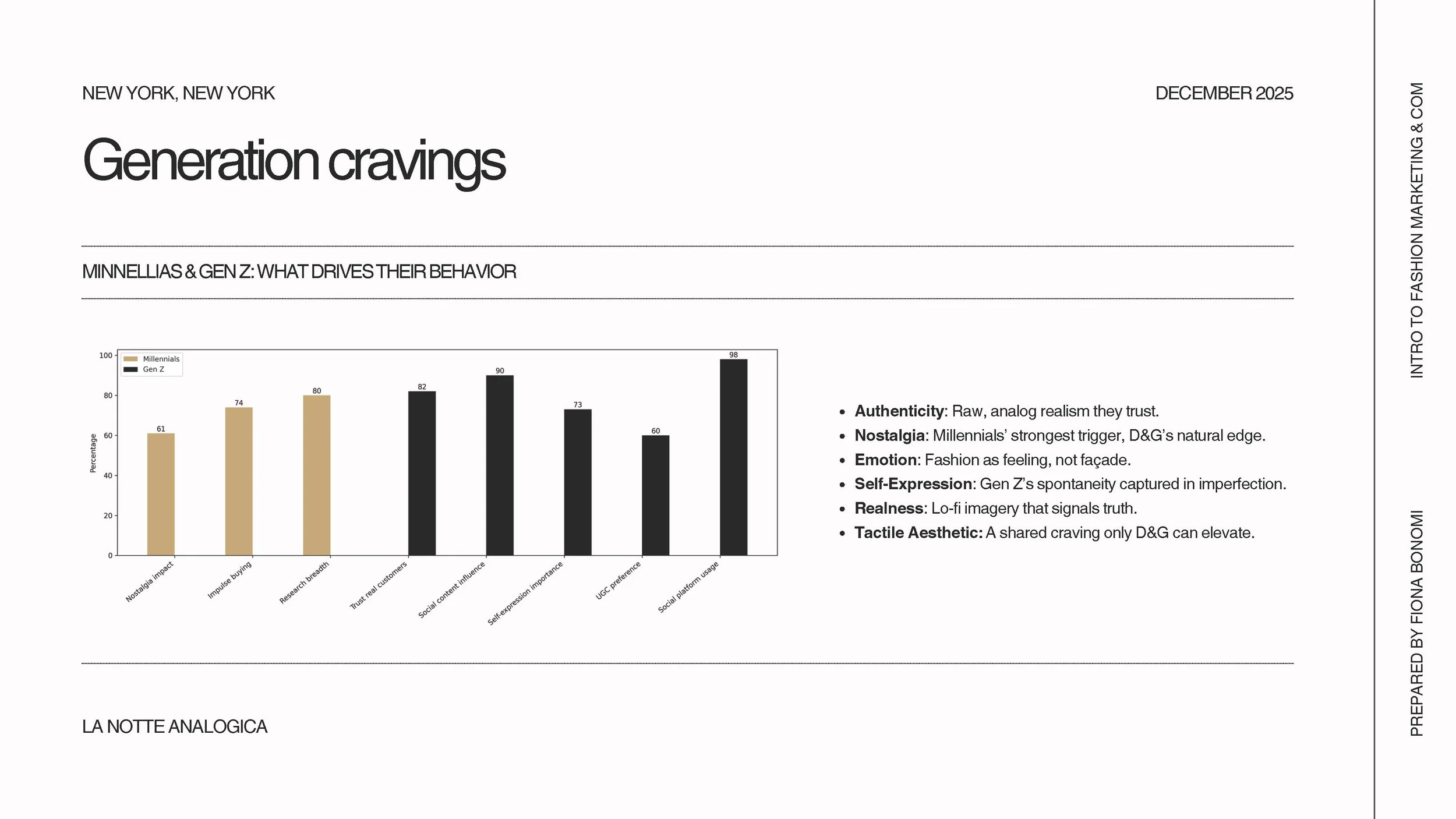
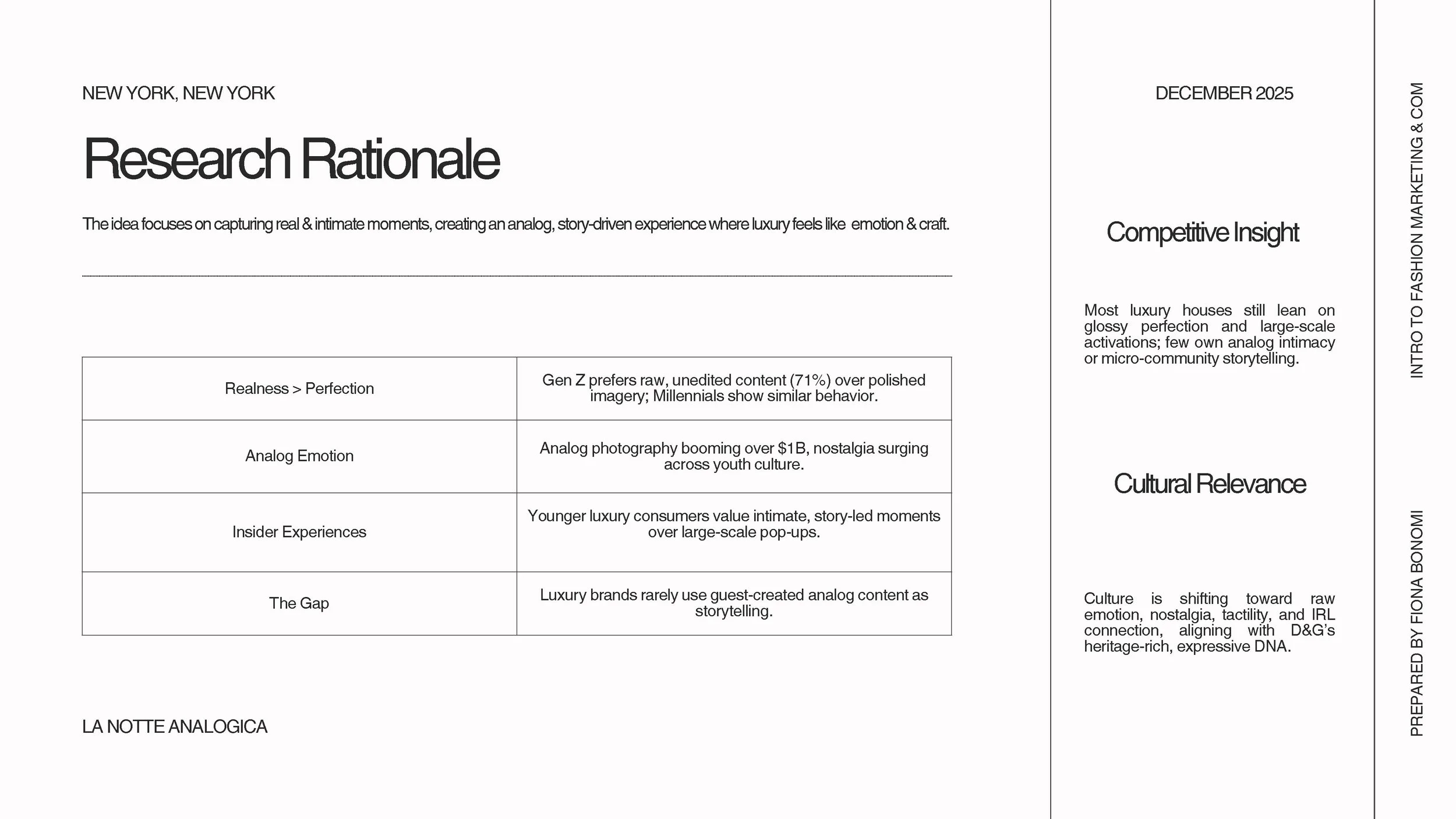
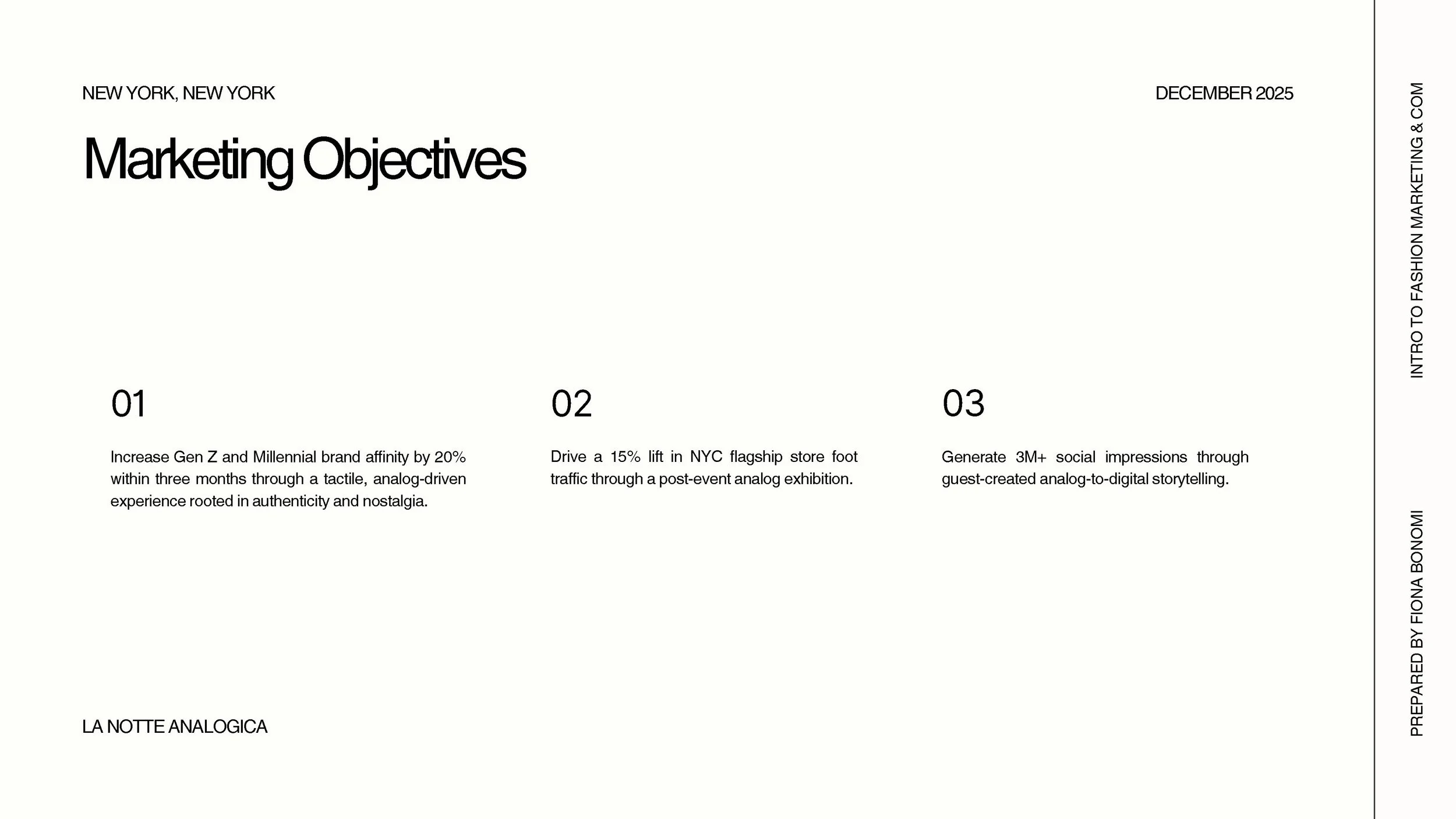
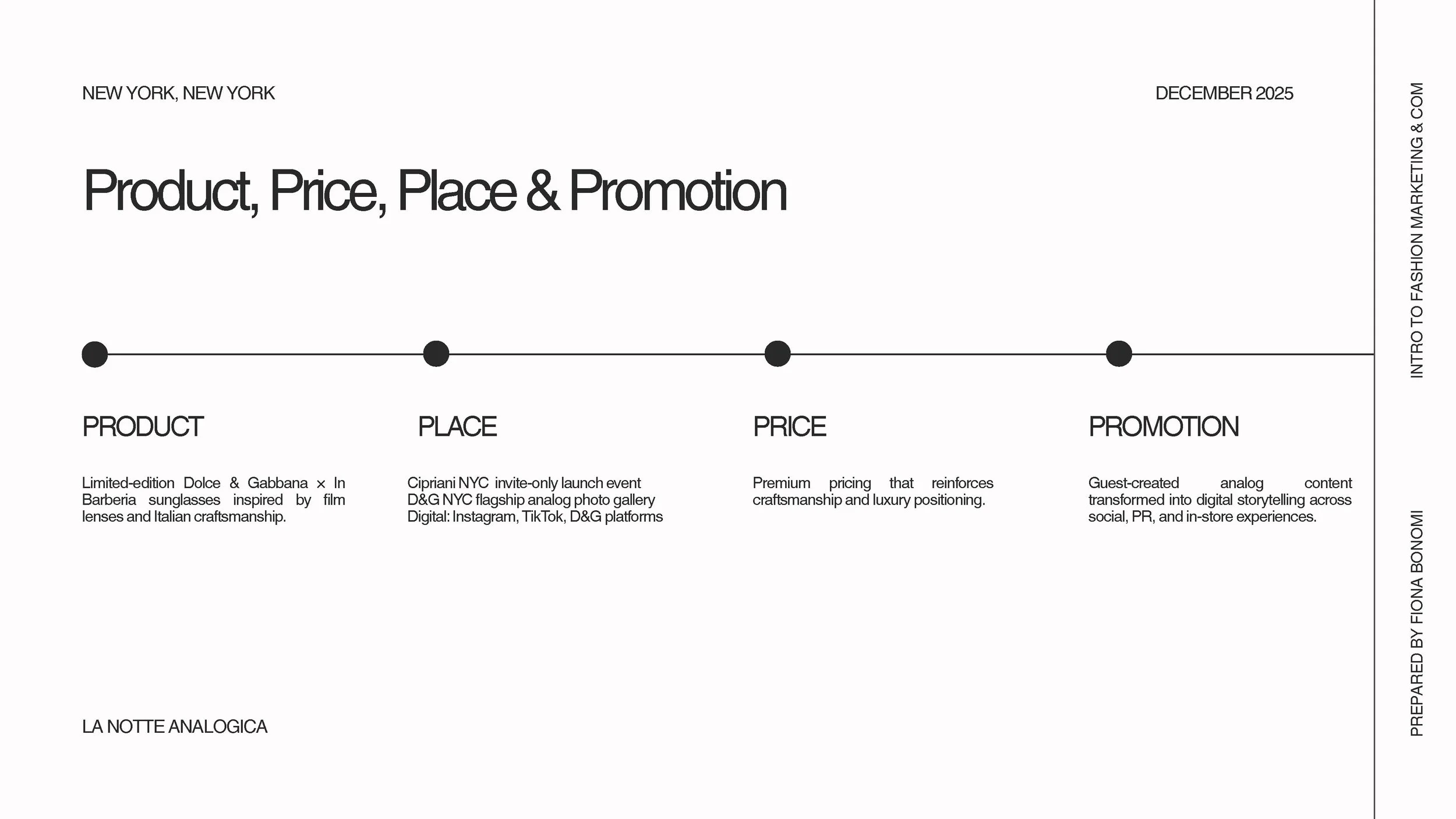
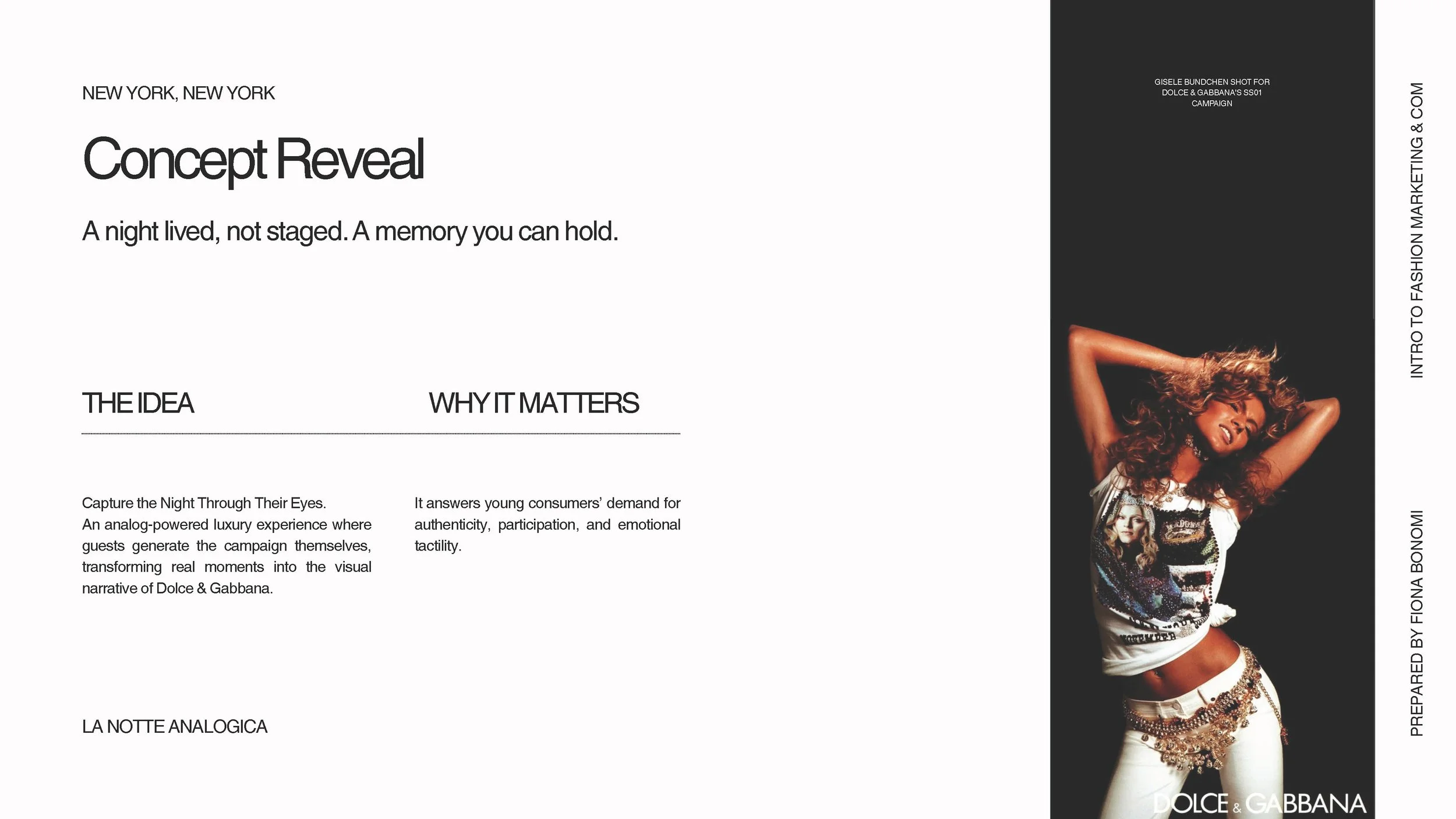
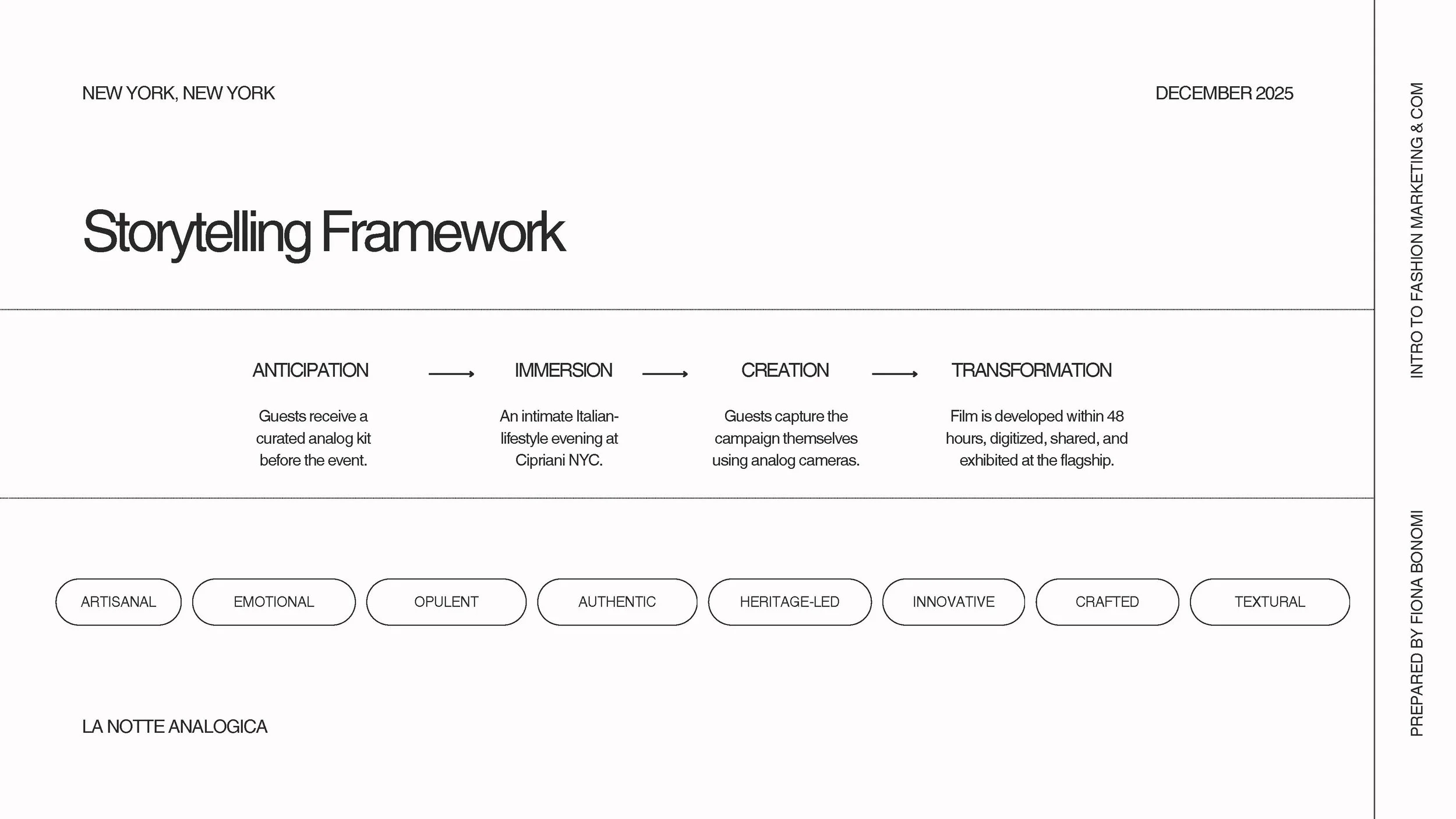
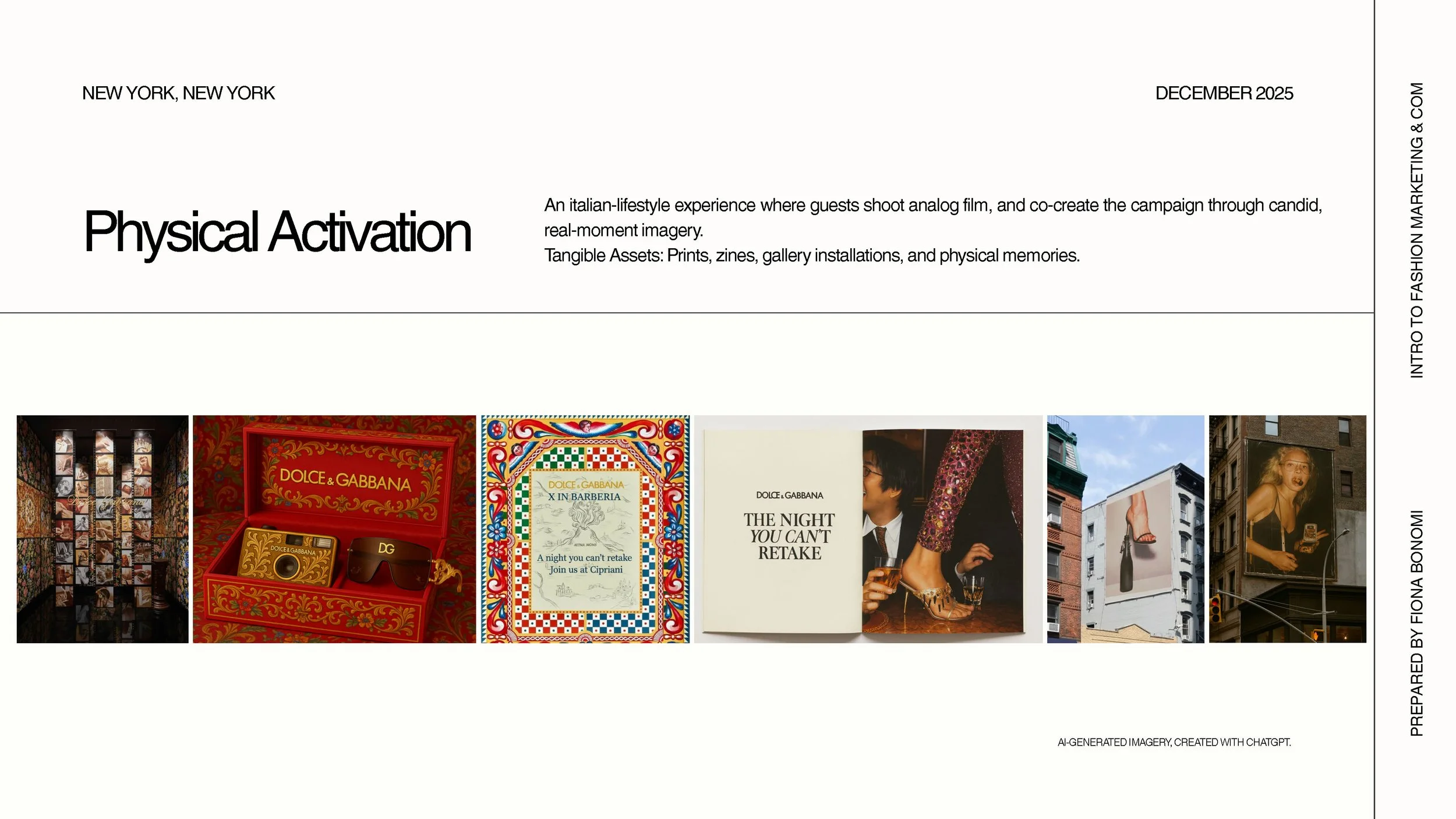
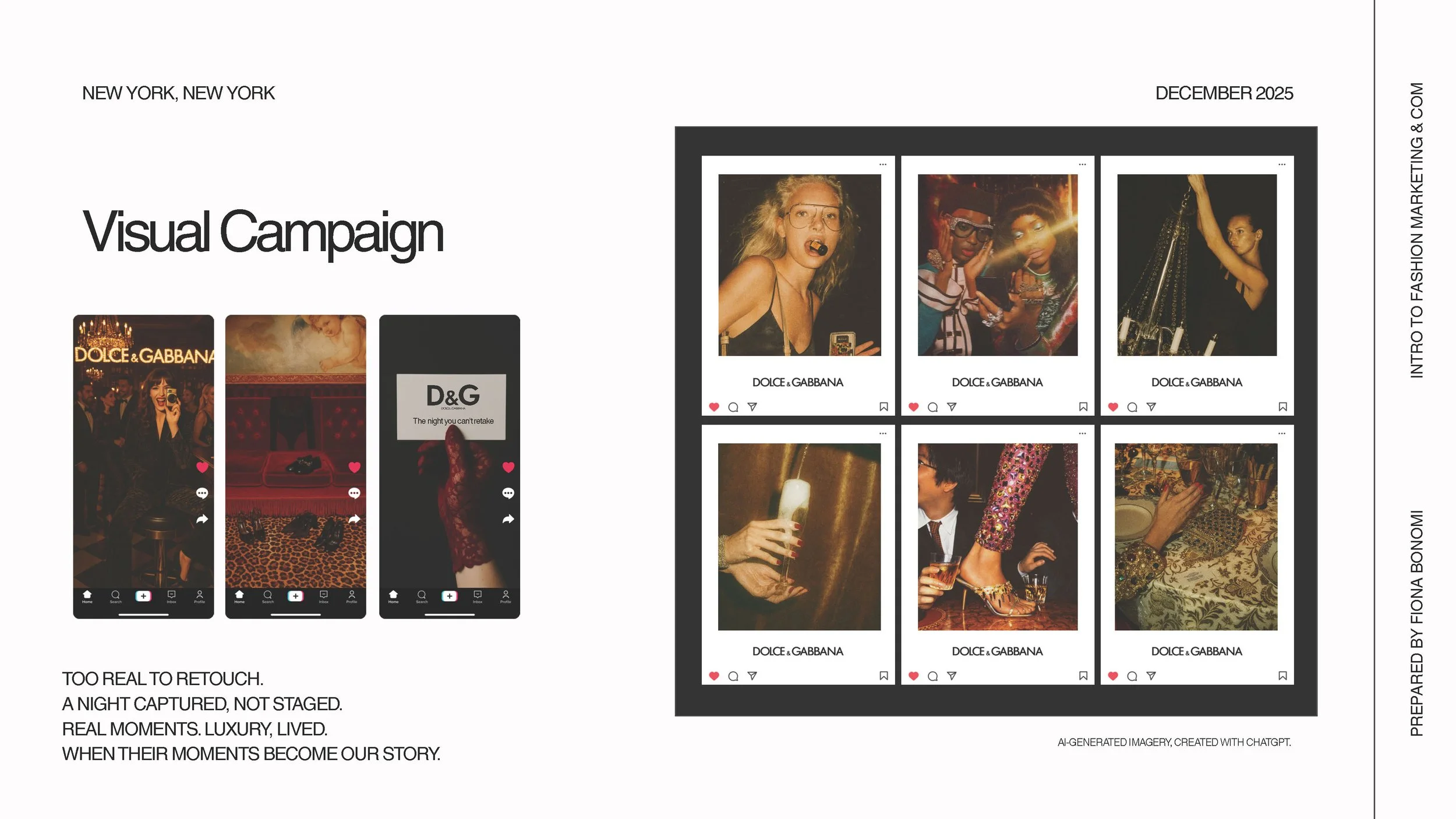
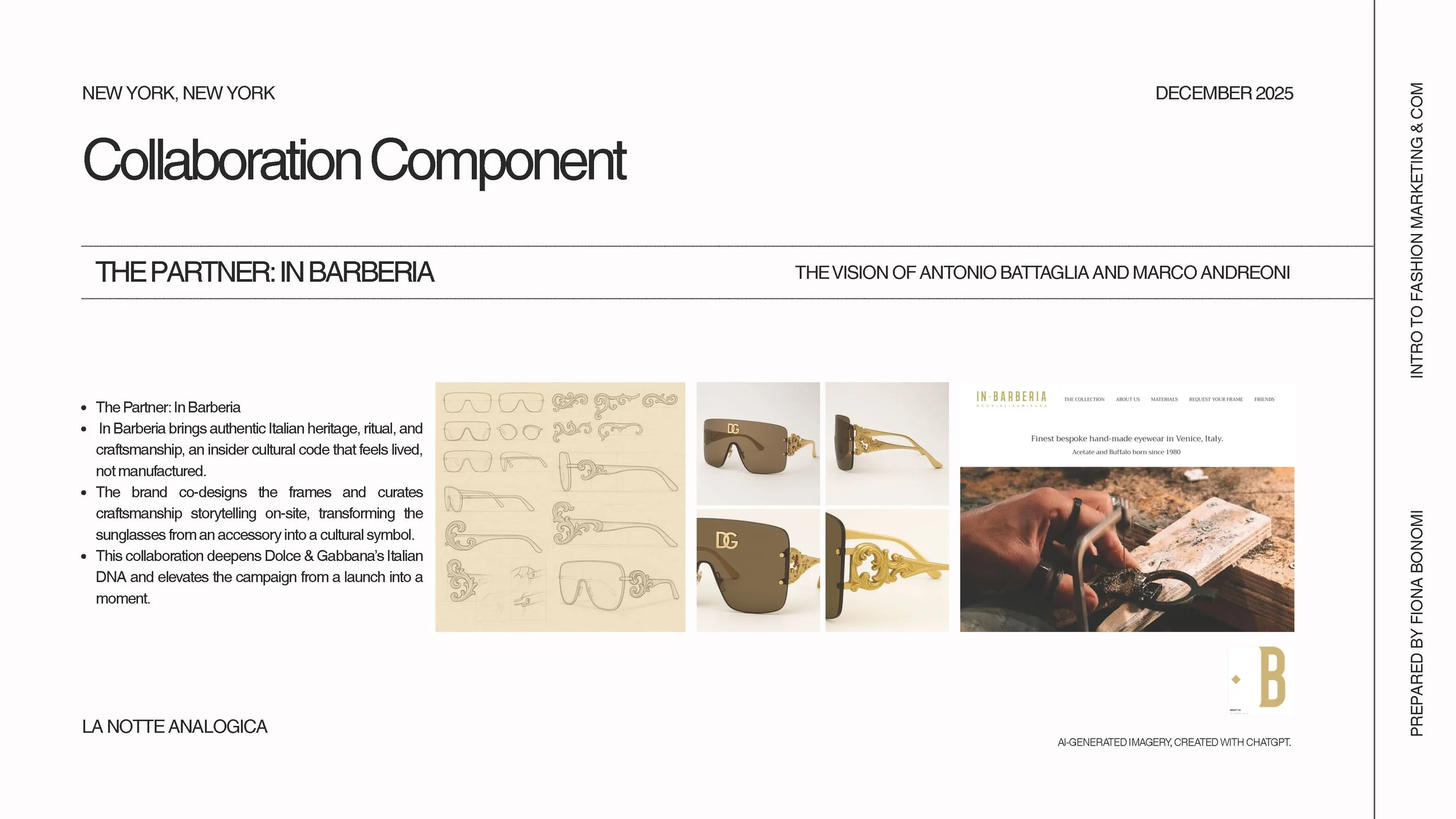
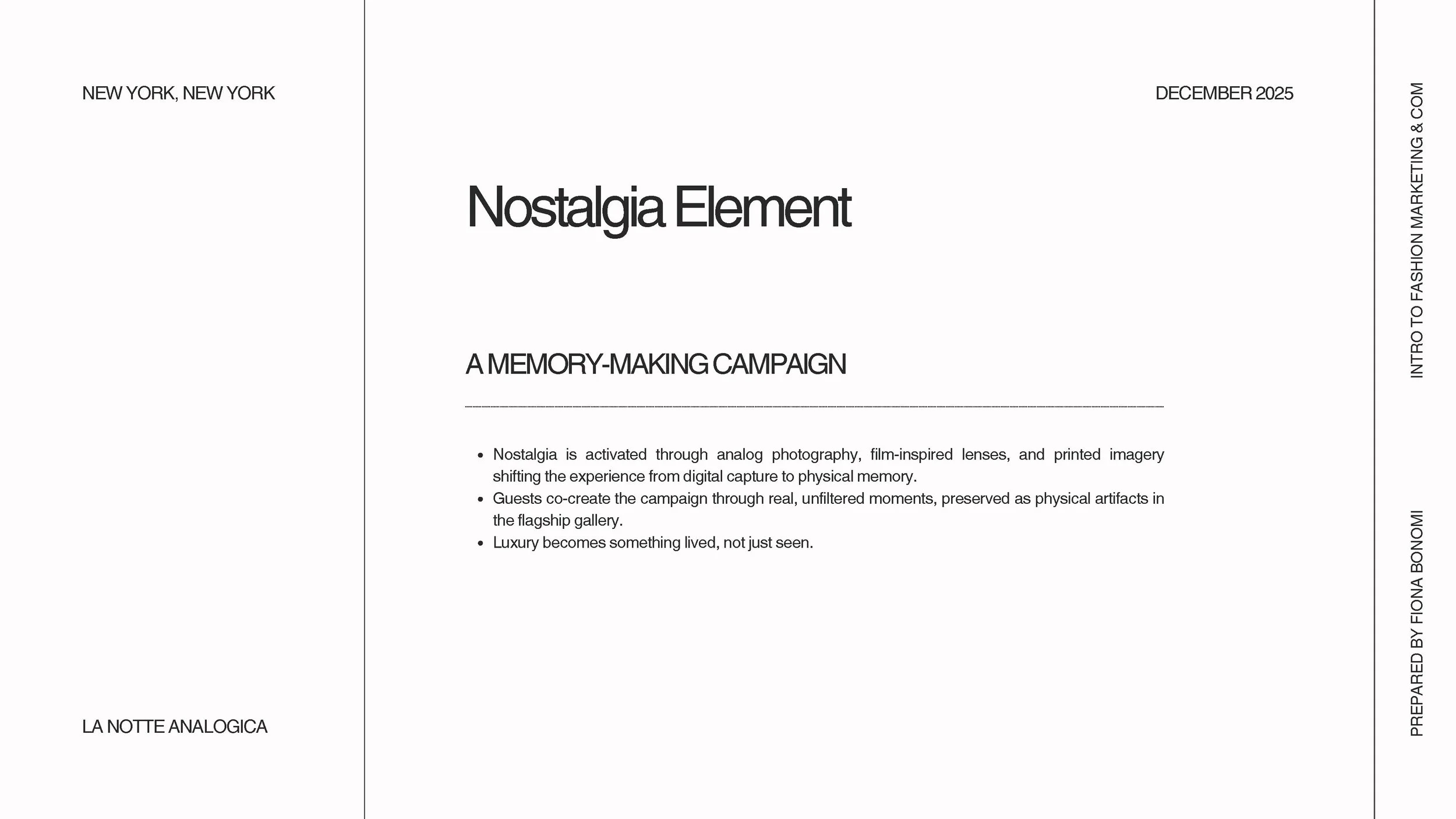
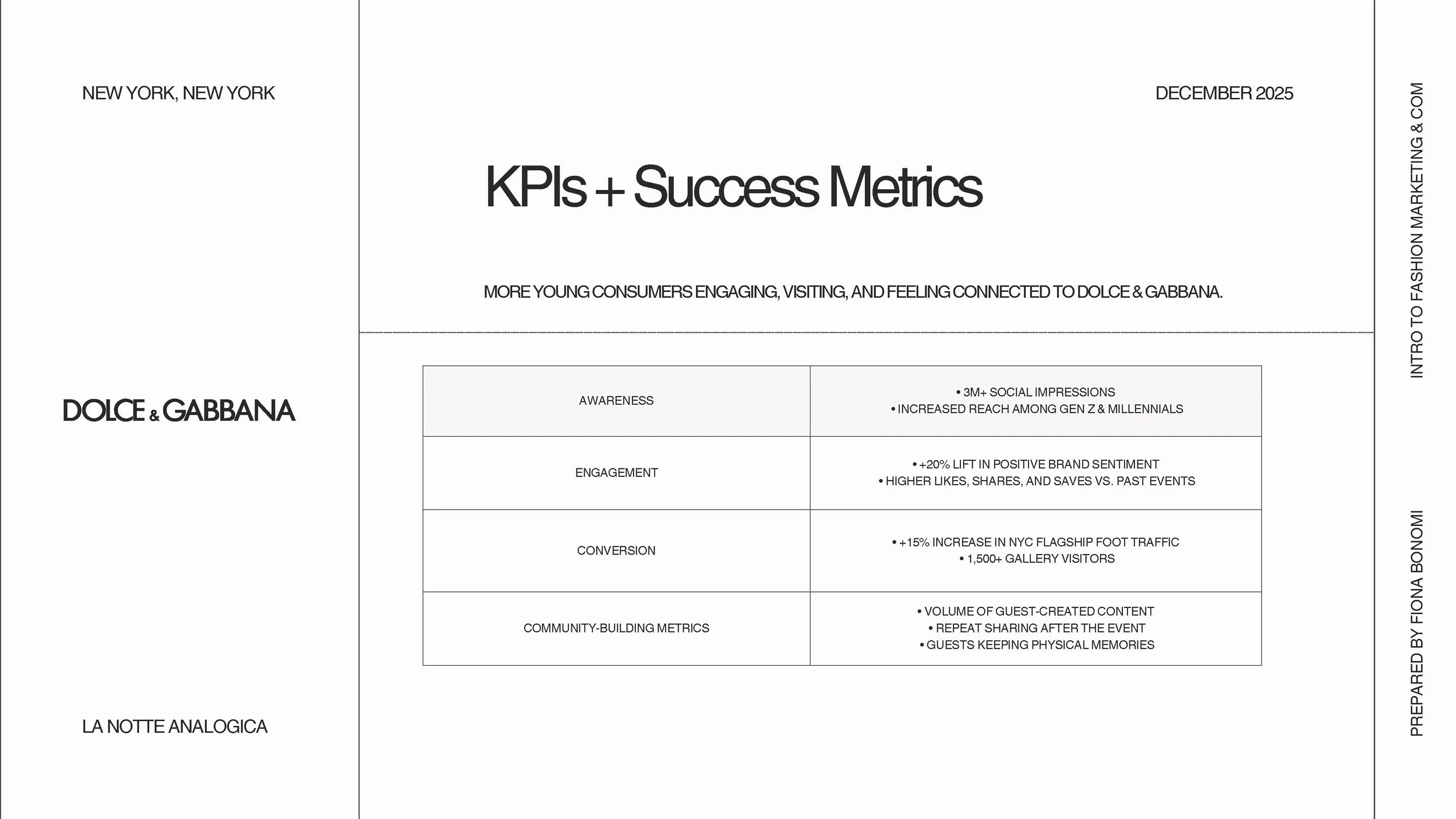
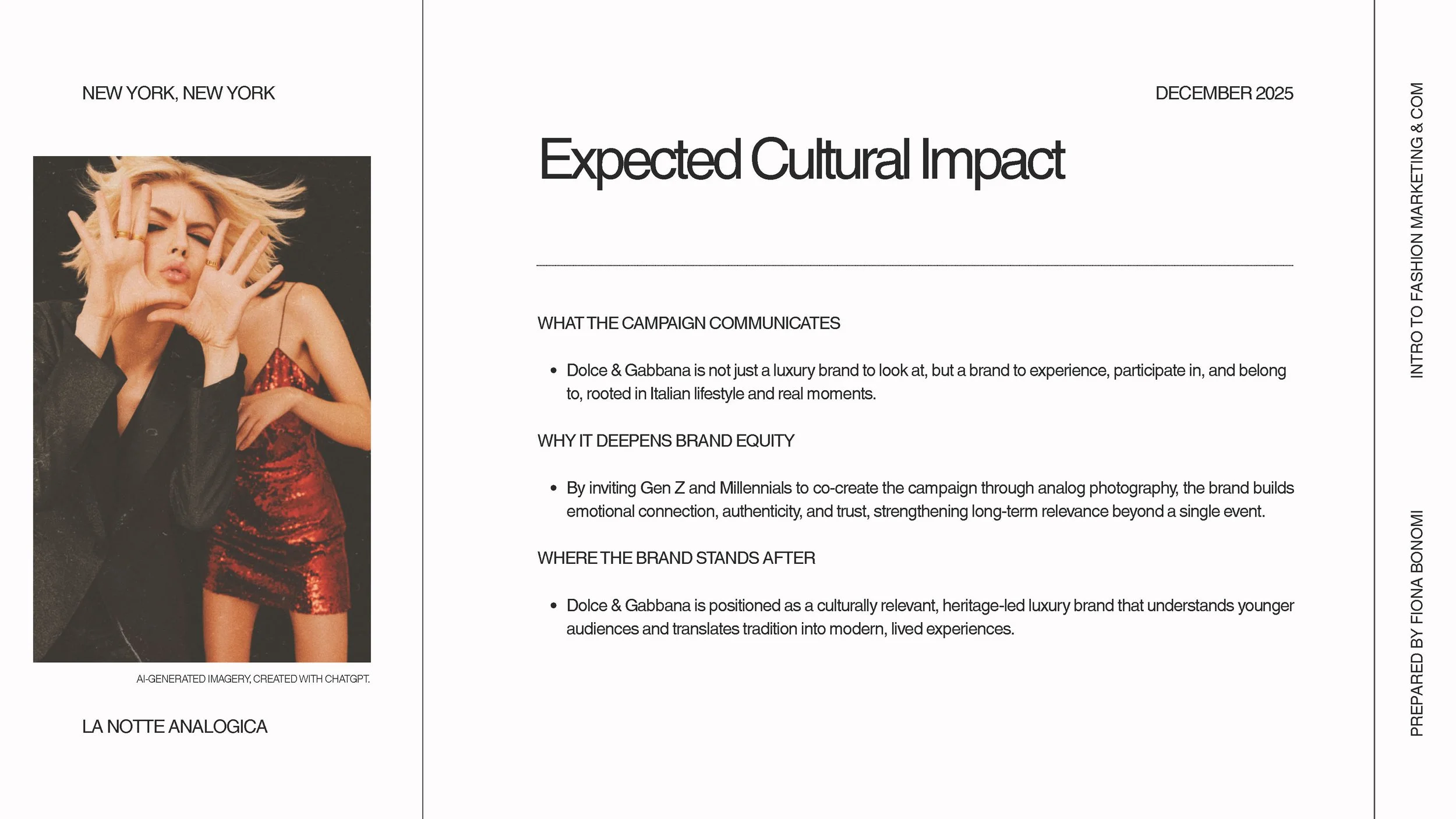
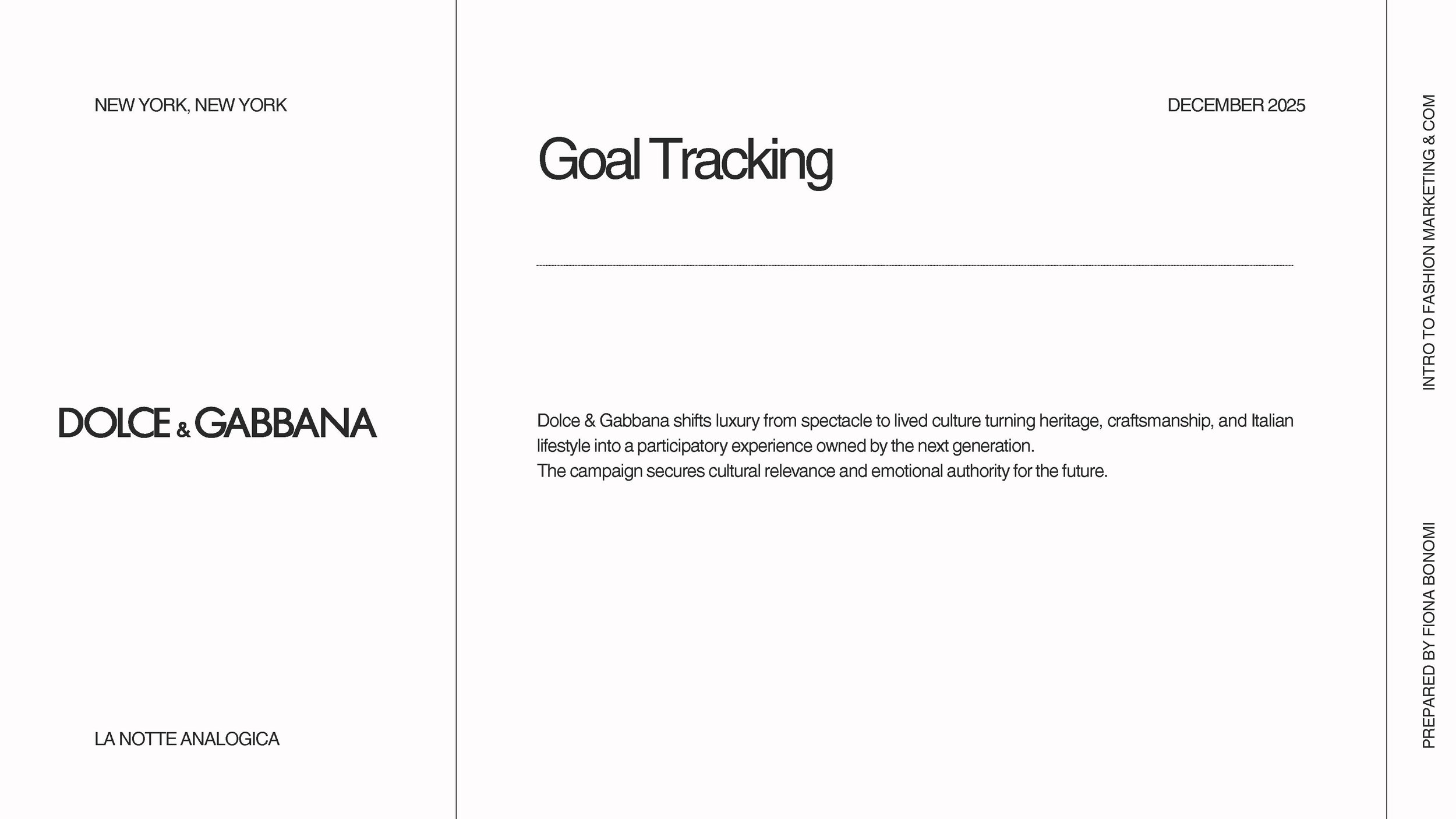
Intertwining analog intimacy, nostalgia, and lived emotion, this campaign responds to Gen Z and Millennial fatigue with polished digital imagery by centering raw, guest-created film photography. Embracing imperfection and presence, the concept transforms luxury into memory and participation, shifting the brand from spectacle to experience.
FROZEN CHILDHOOD by Angela Ren | LOEWE
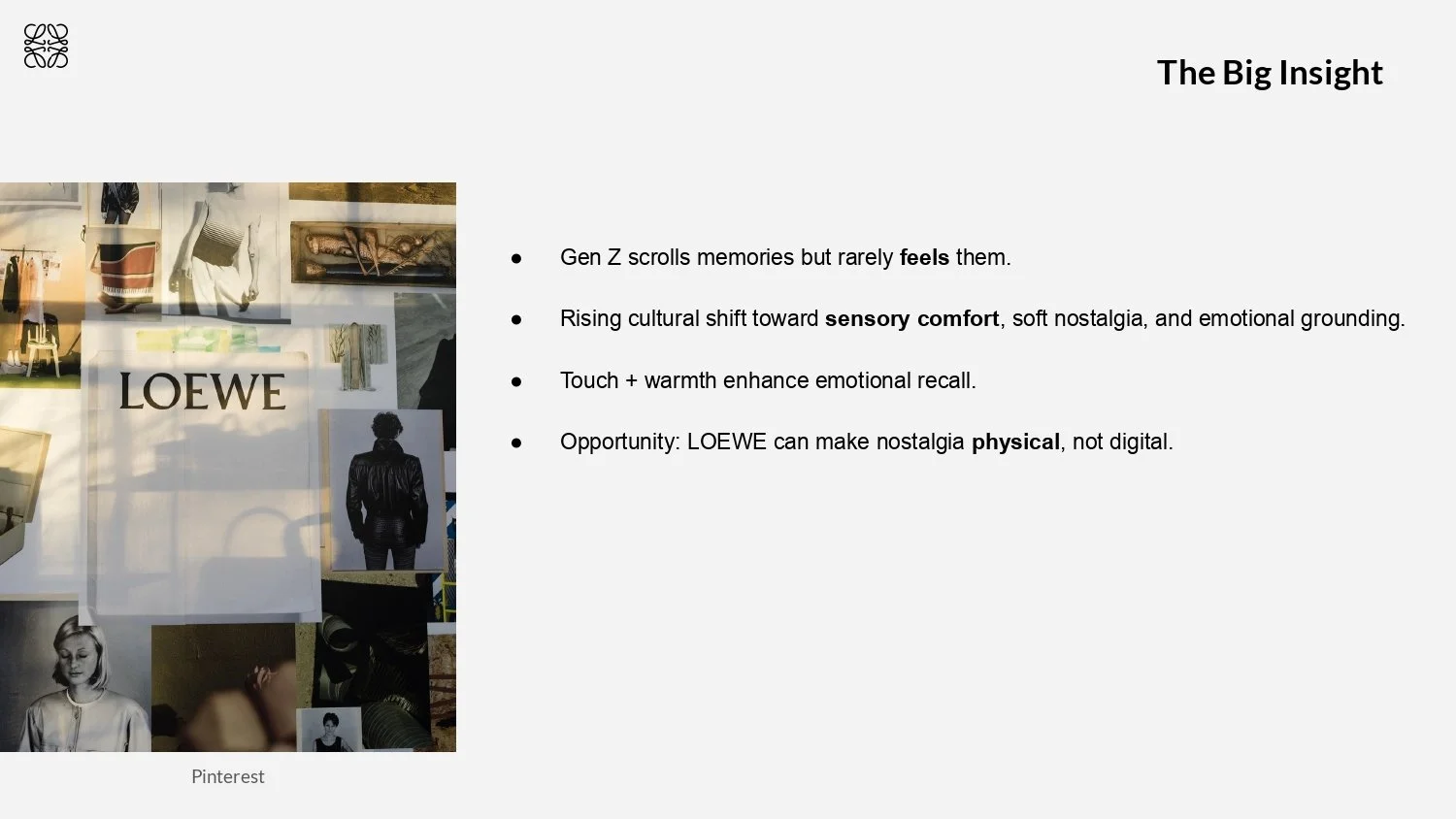
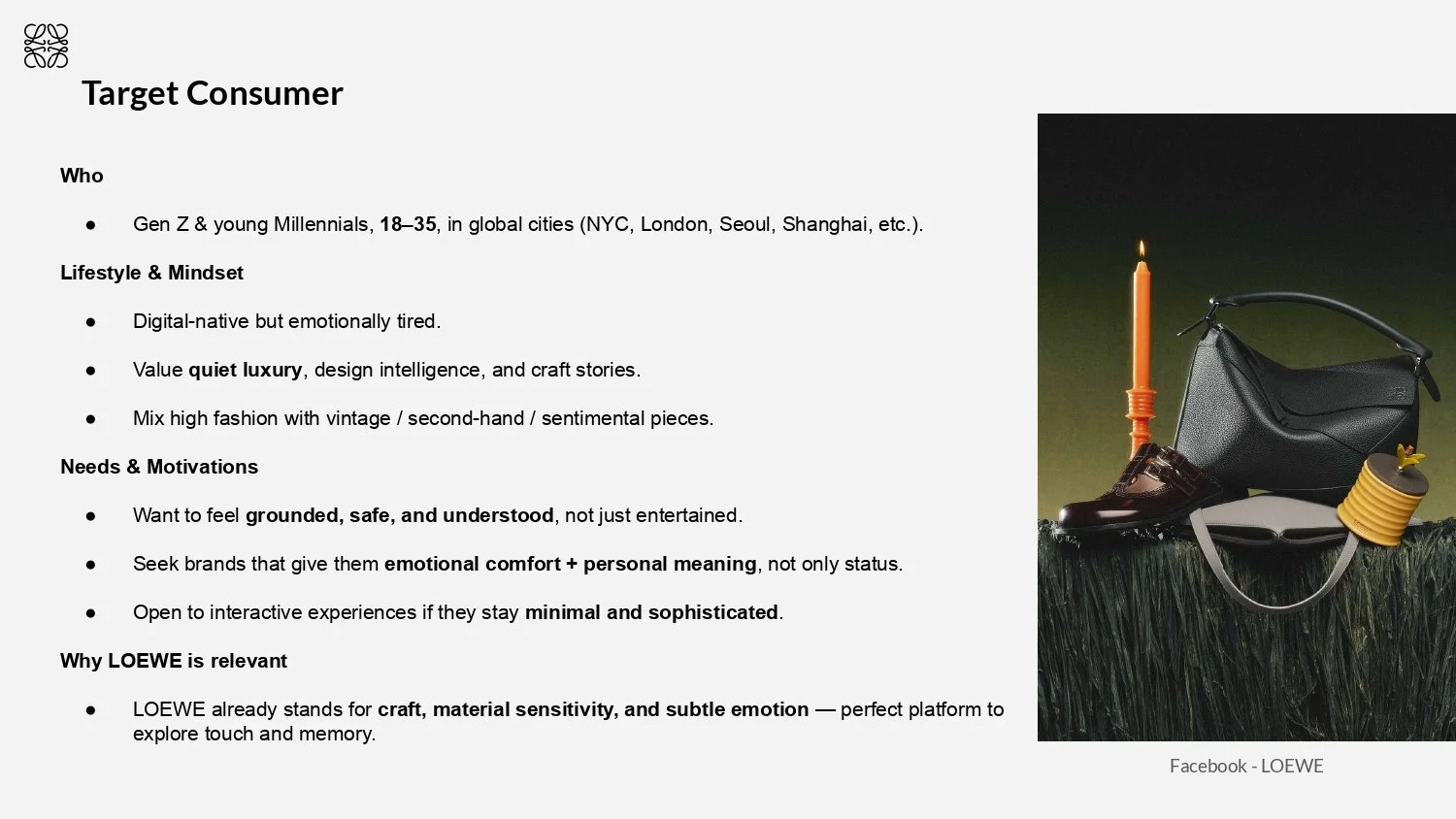
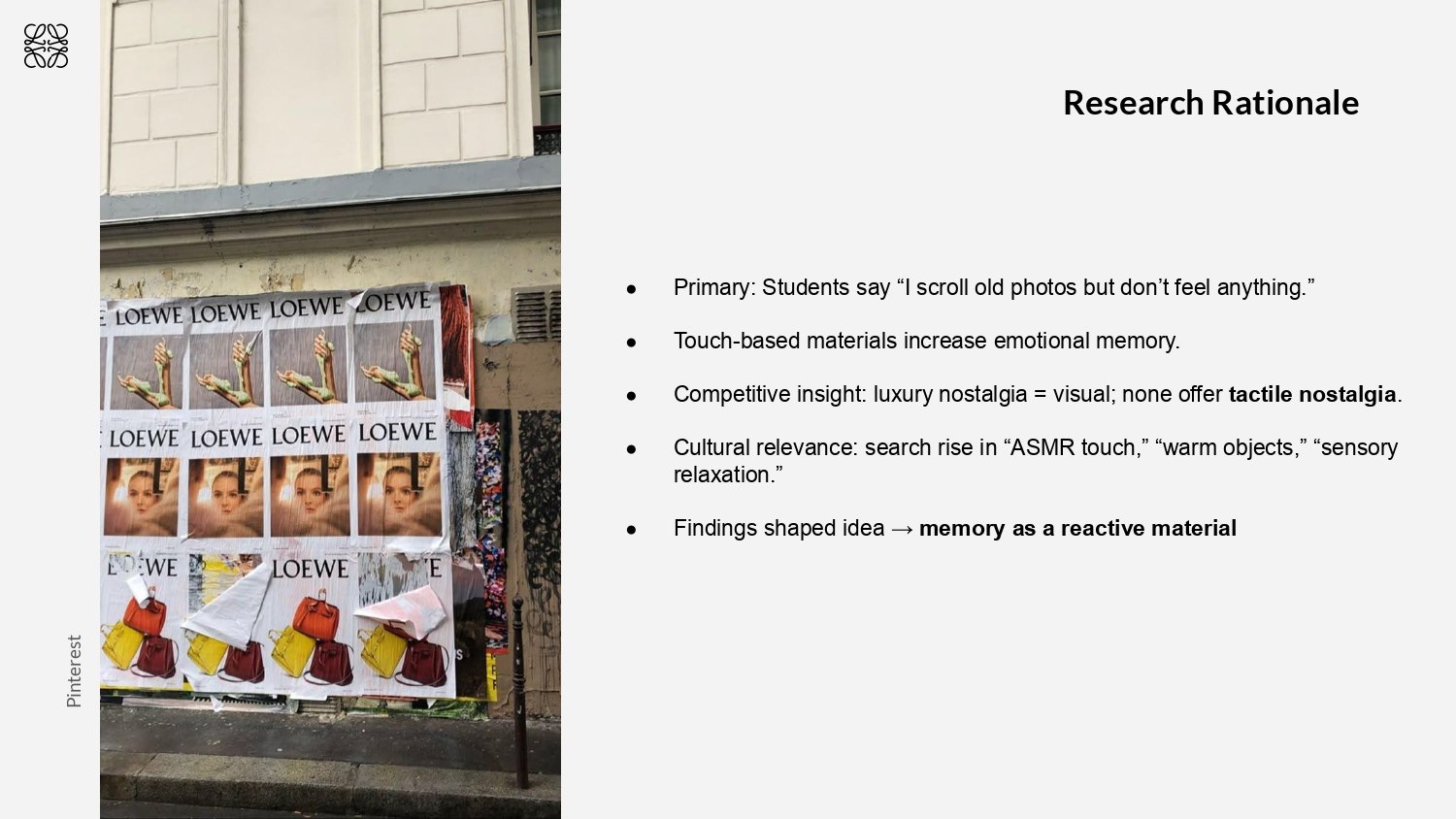
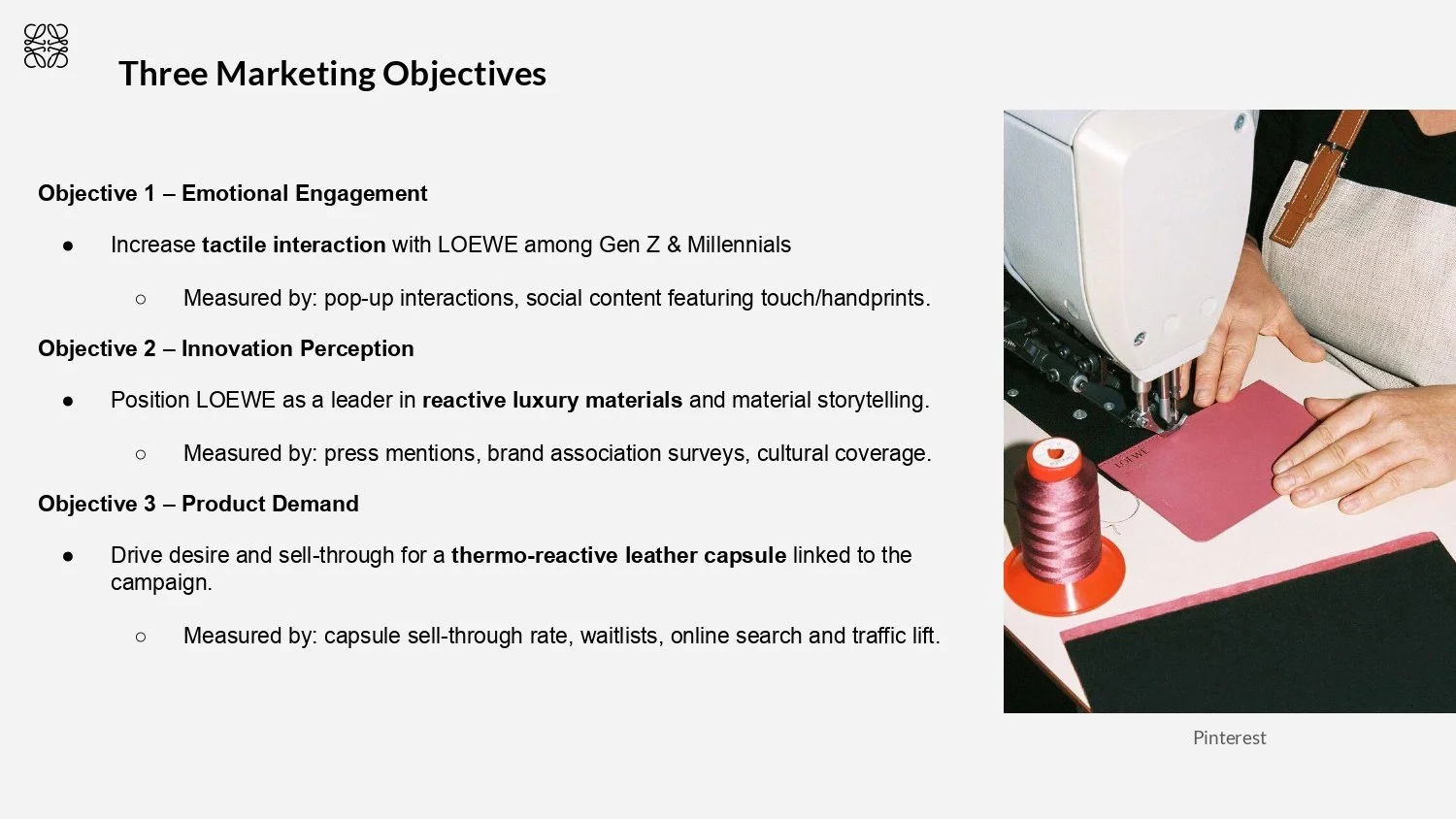
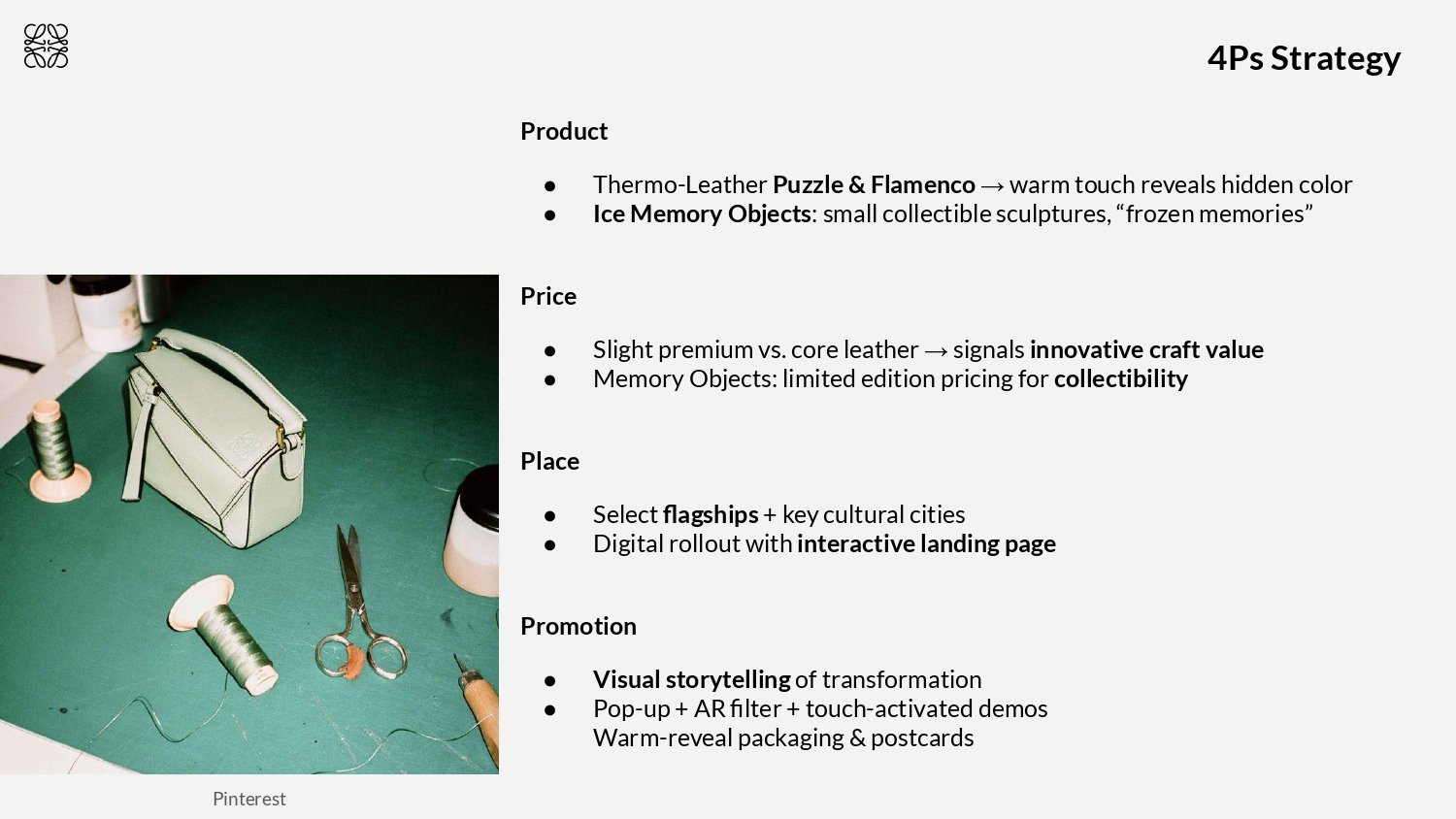
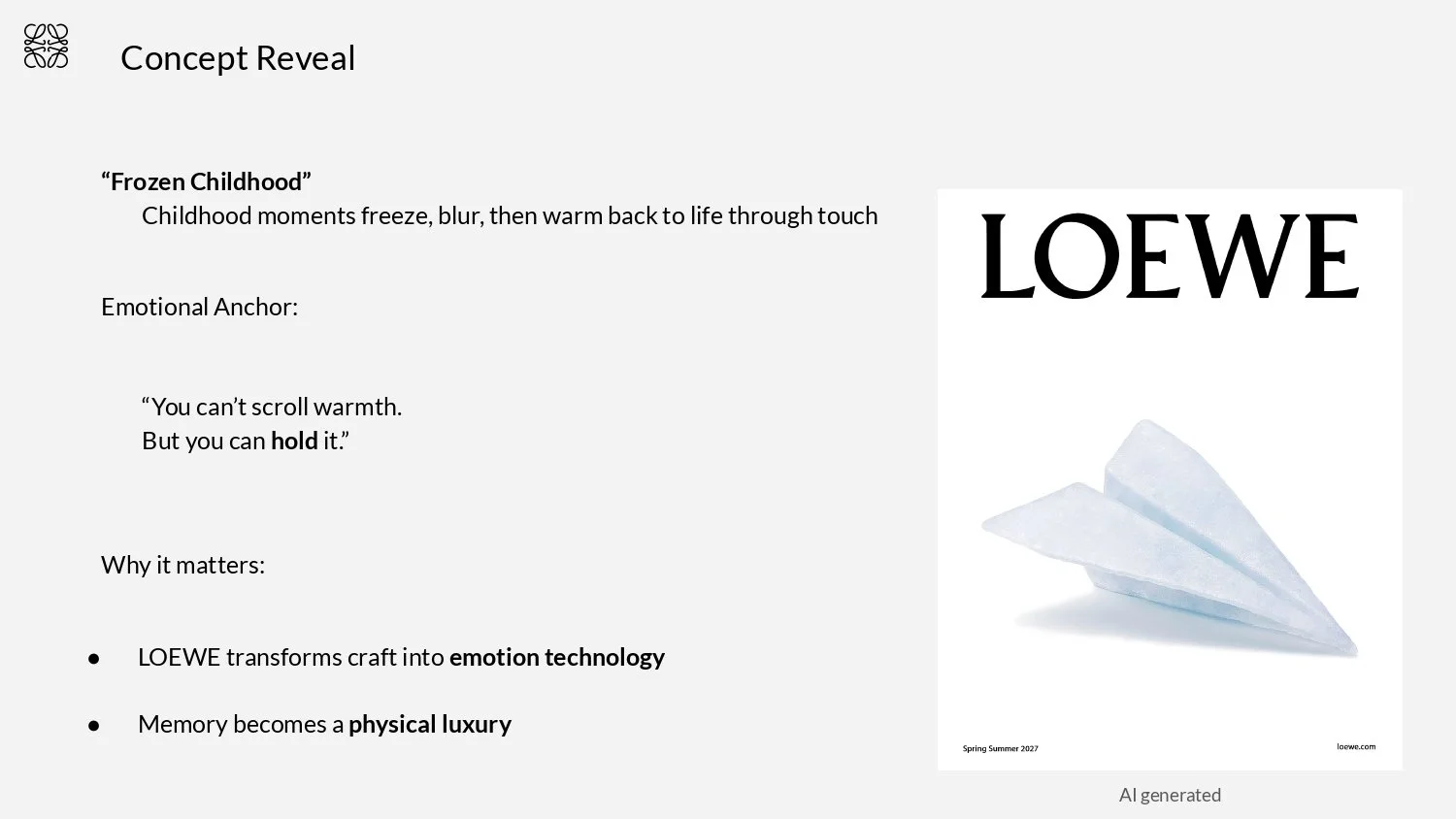
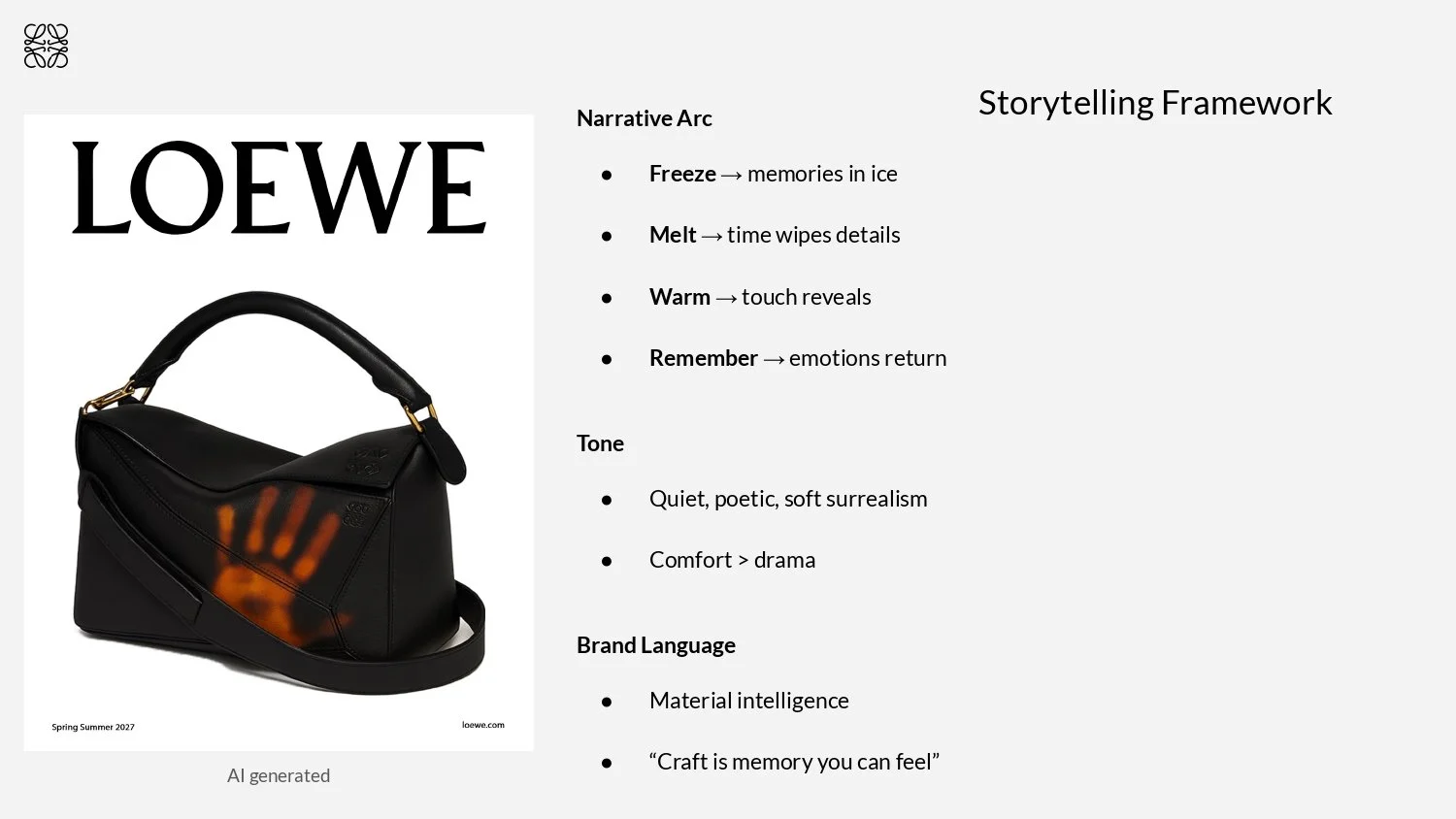
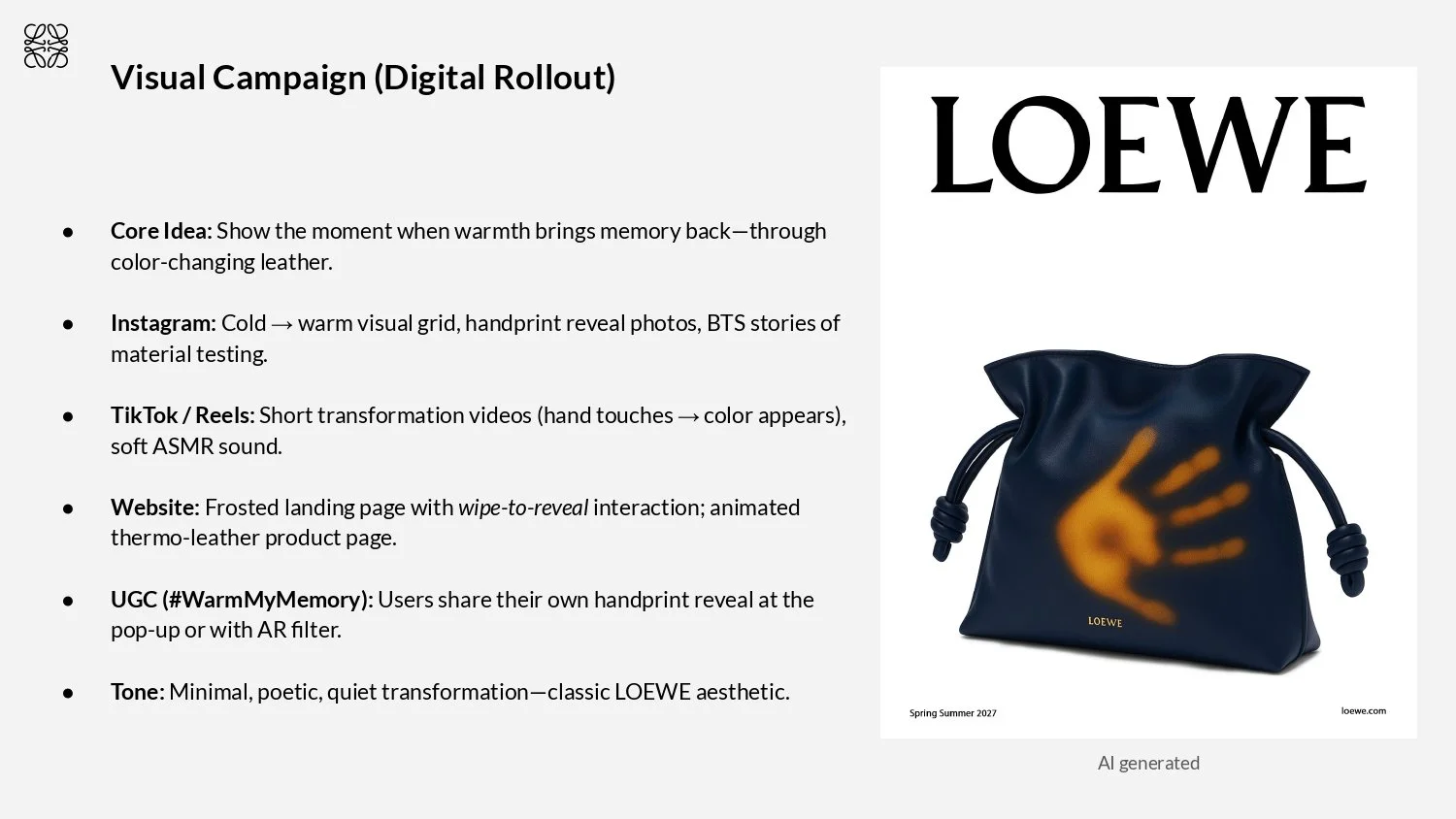
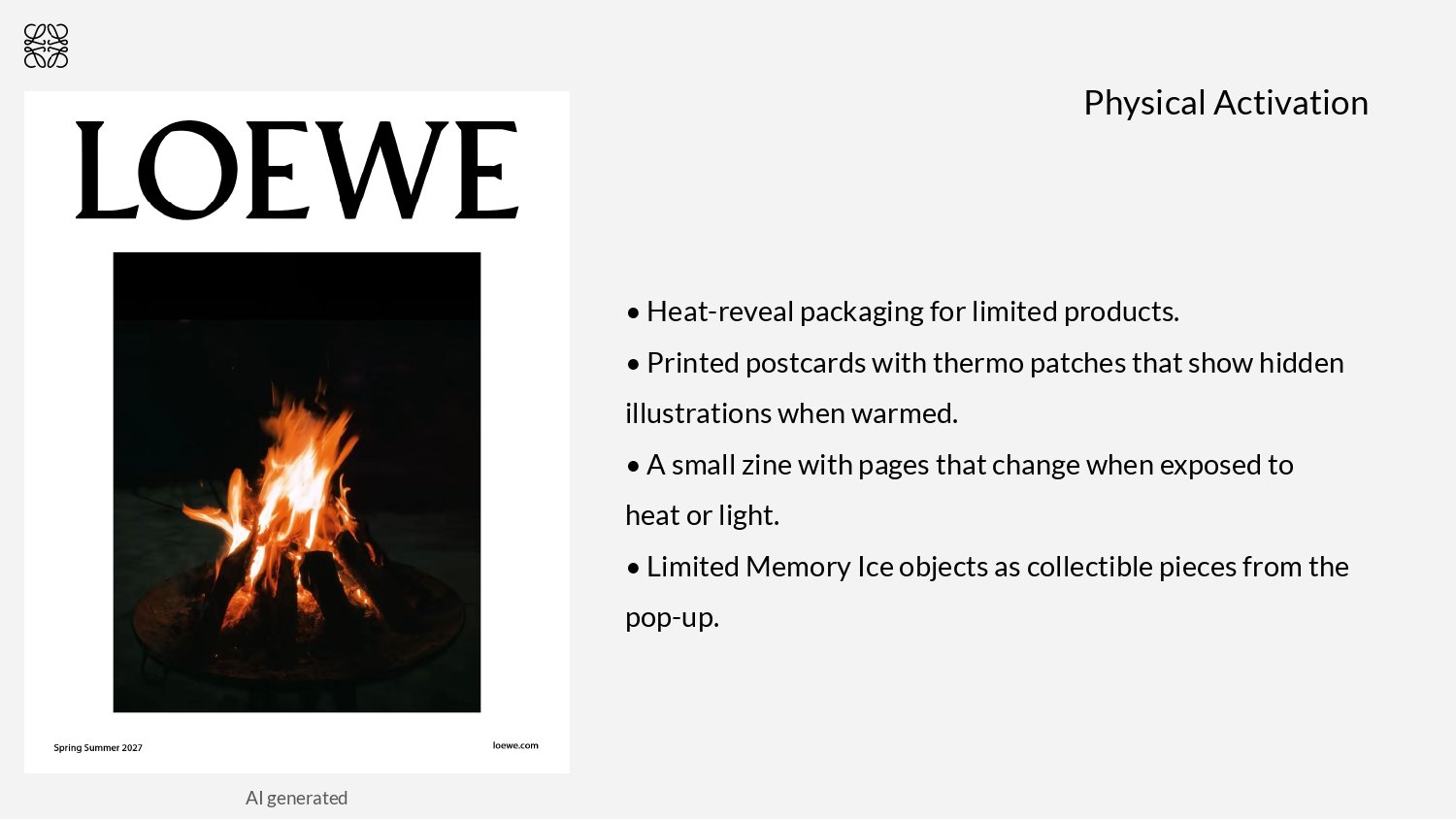
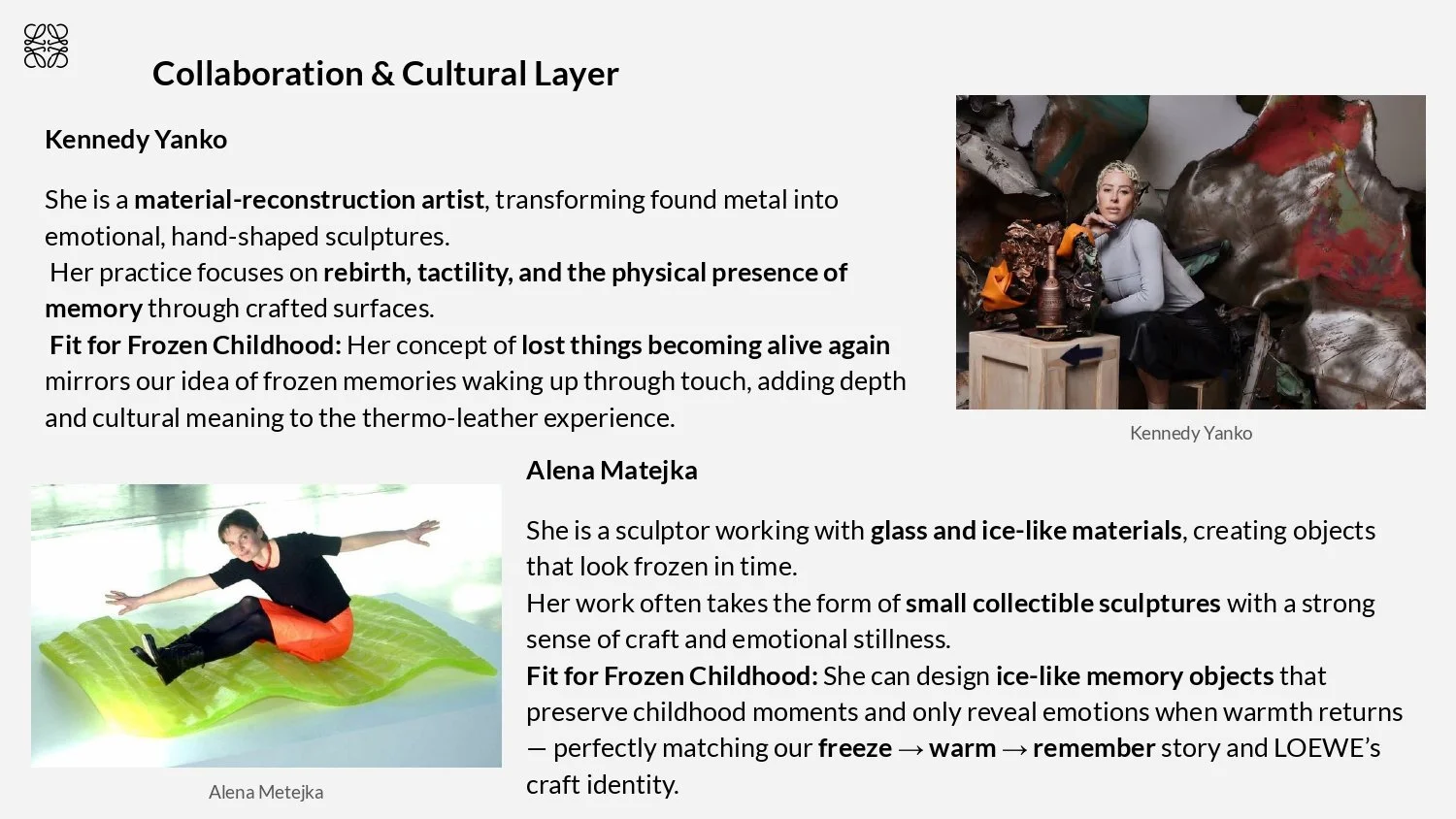
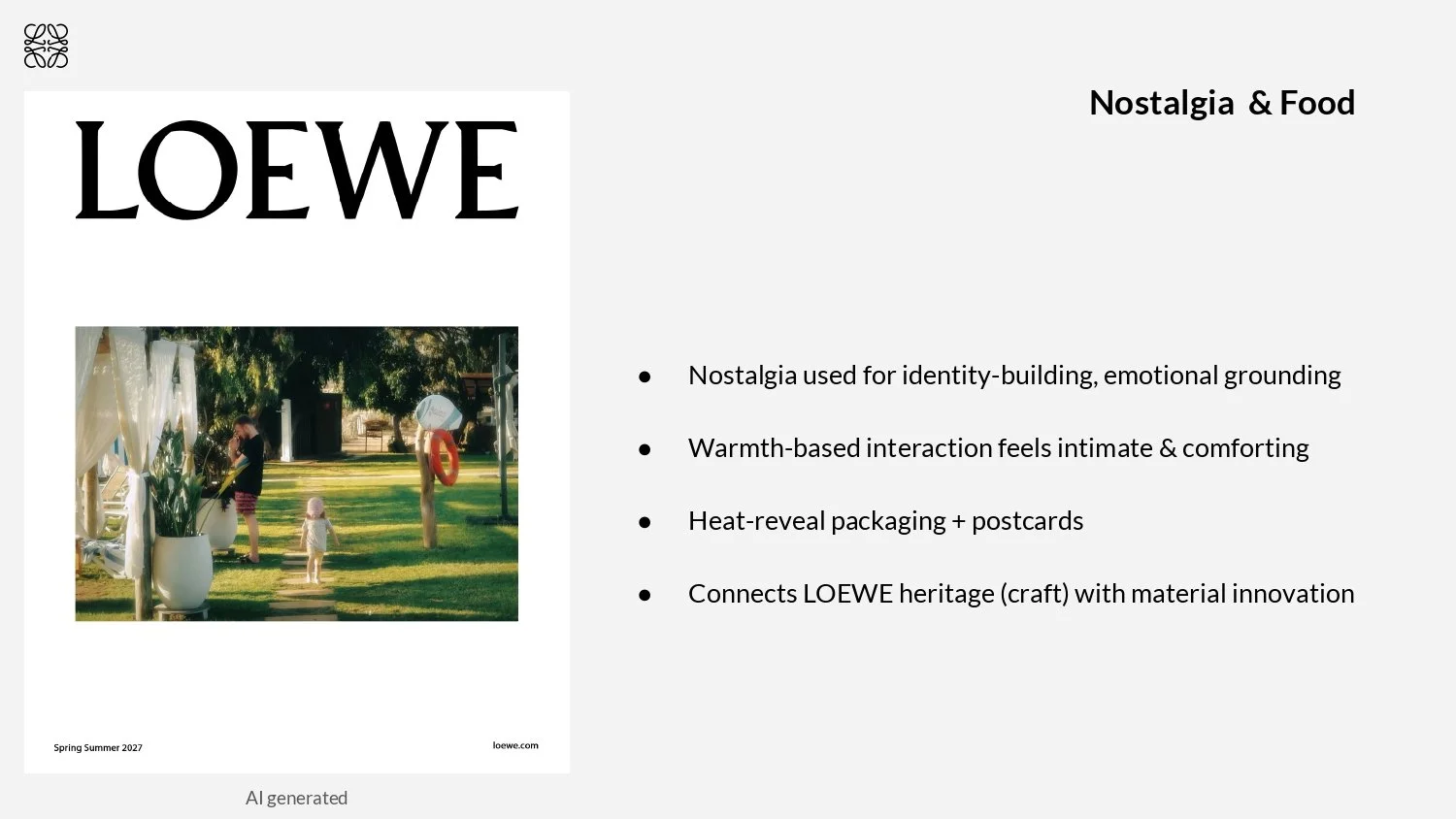
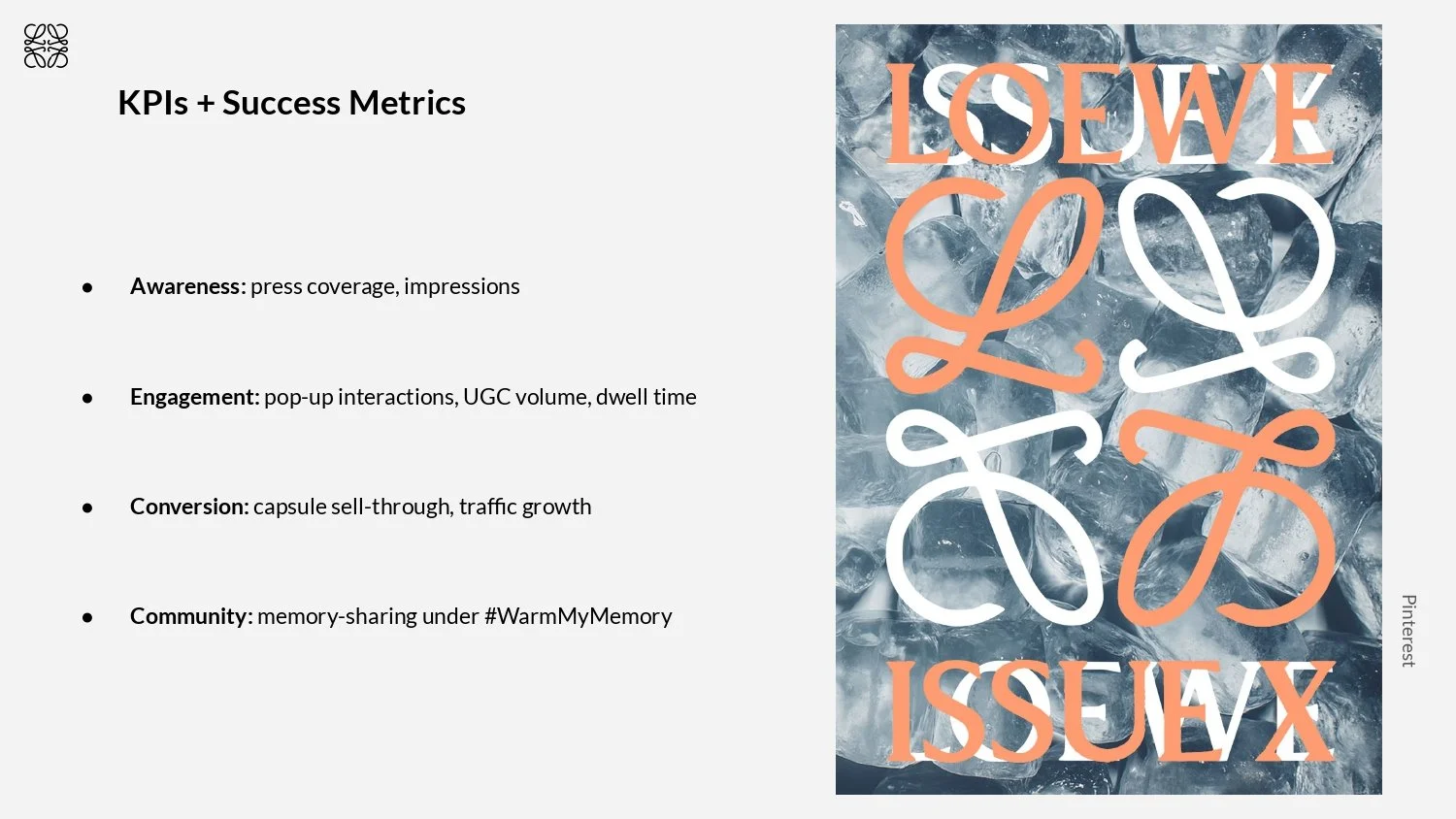
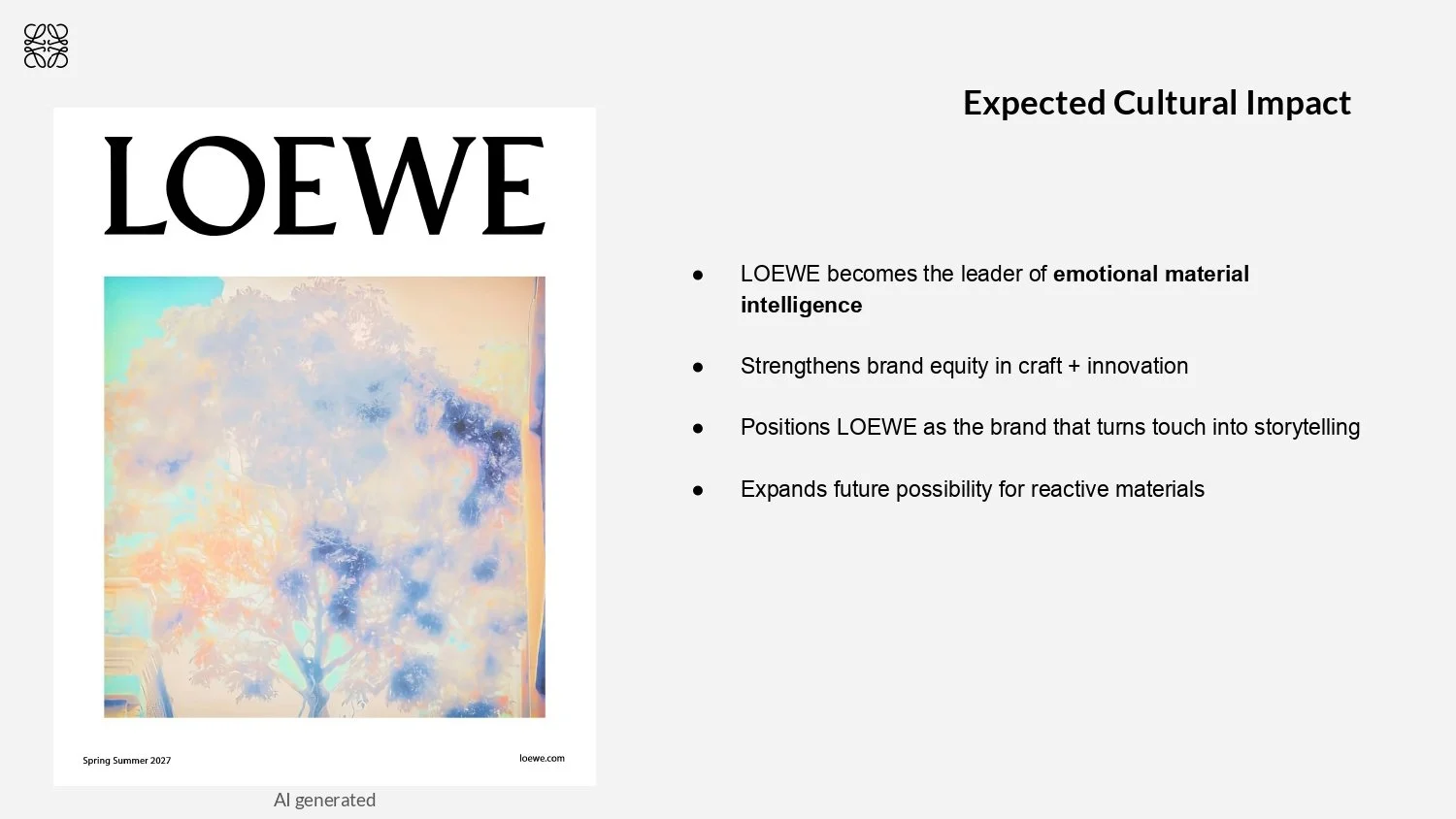
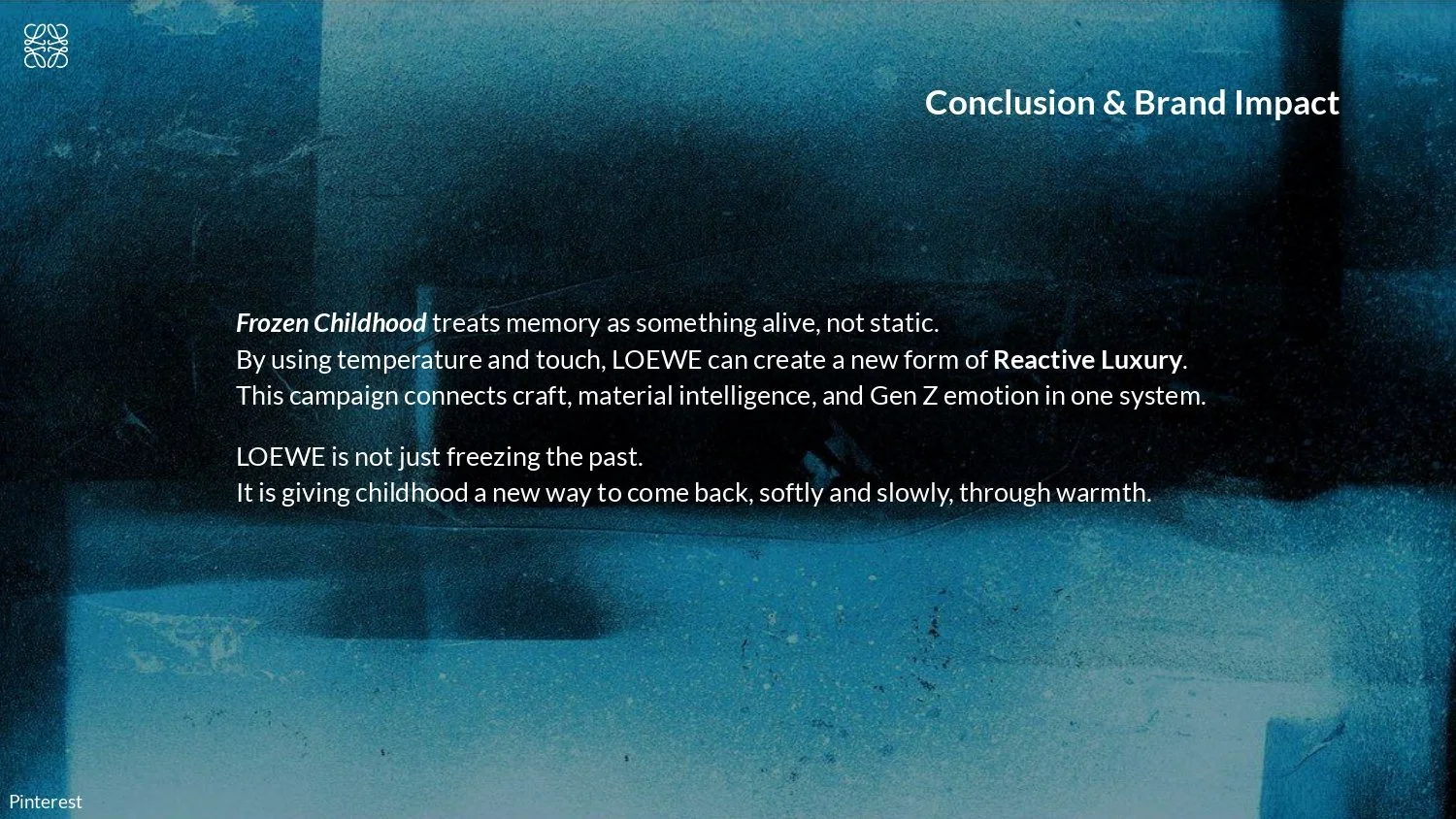
This campaign positions Loewe at the intersection of craft, play, and artistic experimentation. Drawing from the brand’s surrealist heritage, the concept engages Gen Z through tactile storytelling and visual exploration, preserving Loewe’s intellectual rigor while embracing curiosity, softness, and creative discovery.
Couture is A Body, Not A Gender
by Novy Oberon | SCHIAPARELLI


This campaign reinterprets Schiaparelli’s surrealist legacy through bold symbolism and sculptural storytelling, inviting men into creative expression rooted in armor and the corset’s origins in menswear. Grounded in the creator’s cultural identity, the corset becomes a symbol of protection and self-definition, reframing gender as fluid and expressive.
THE POETRY OF MAKING: PADDINGTON ATELIER
by Gabriela Alarcon | Chloé
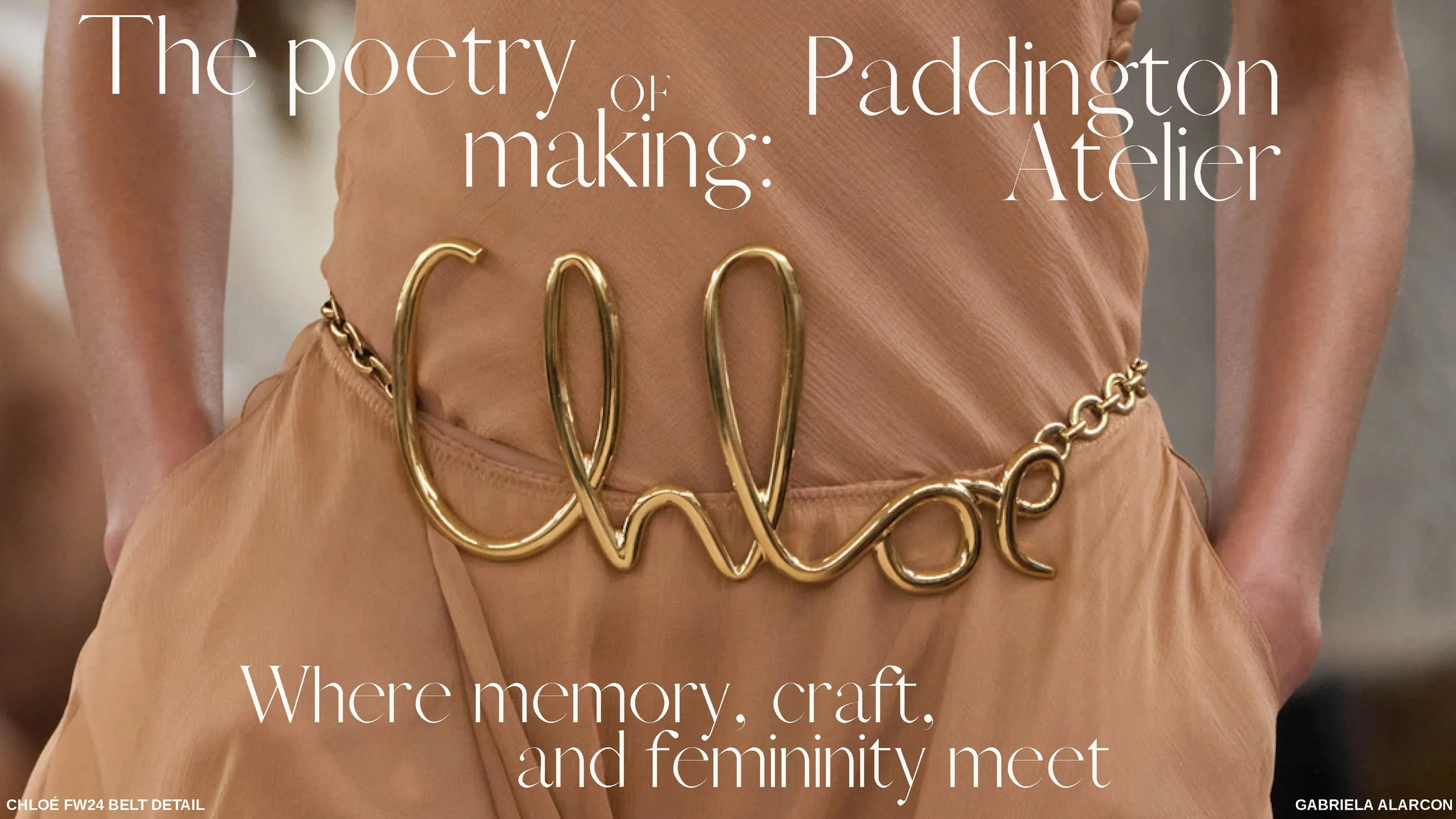
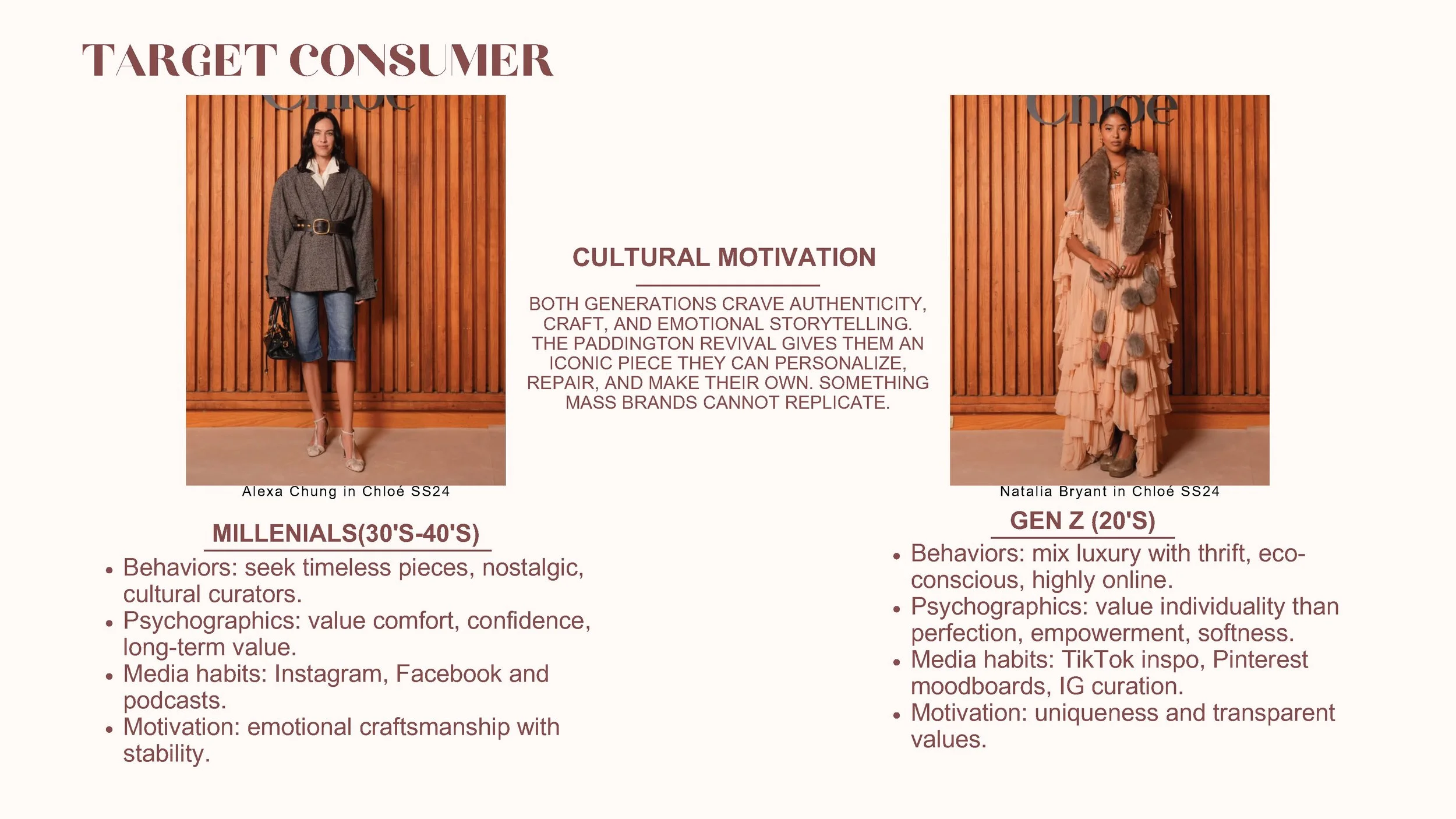
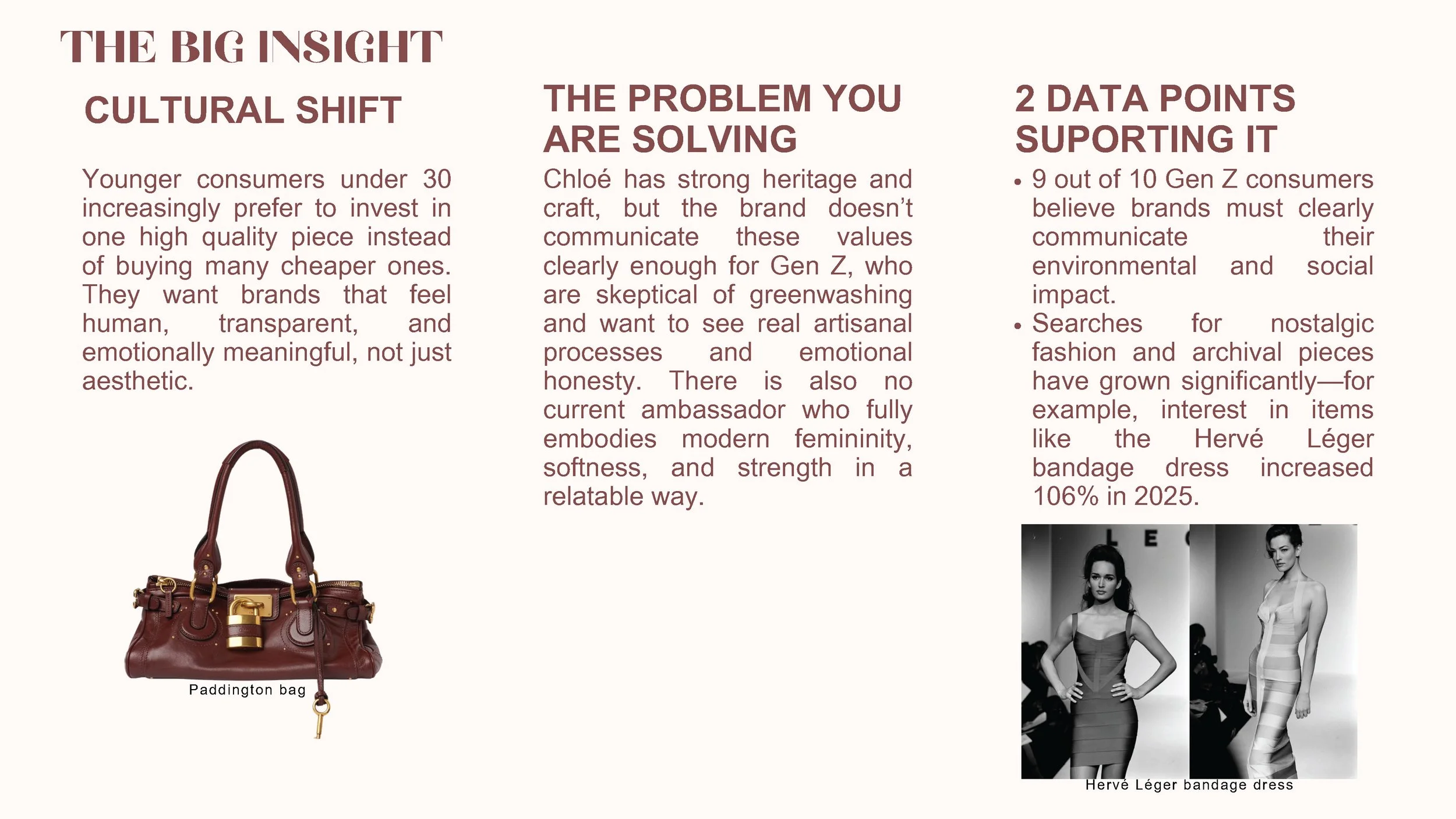
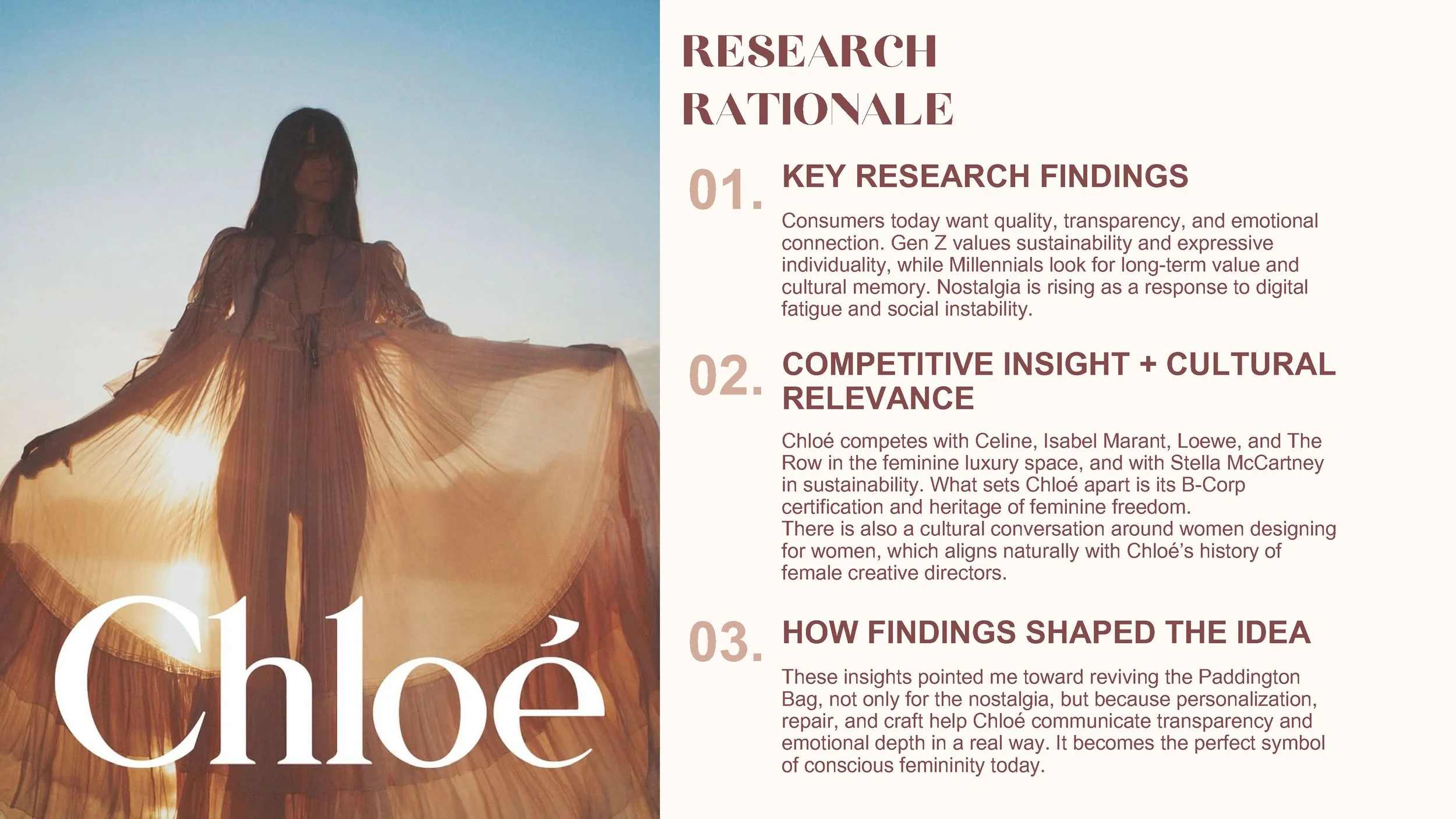
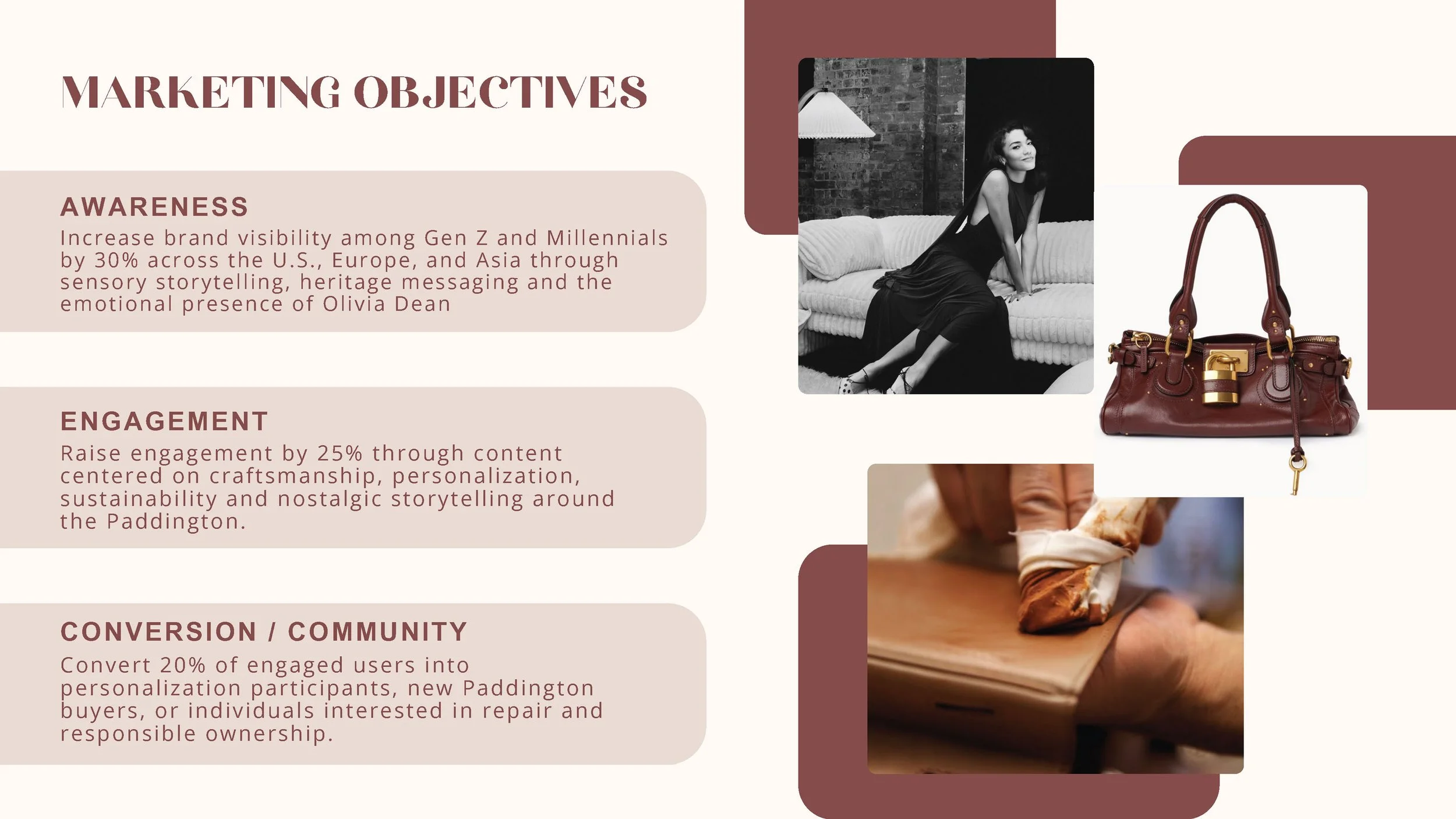
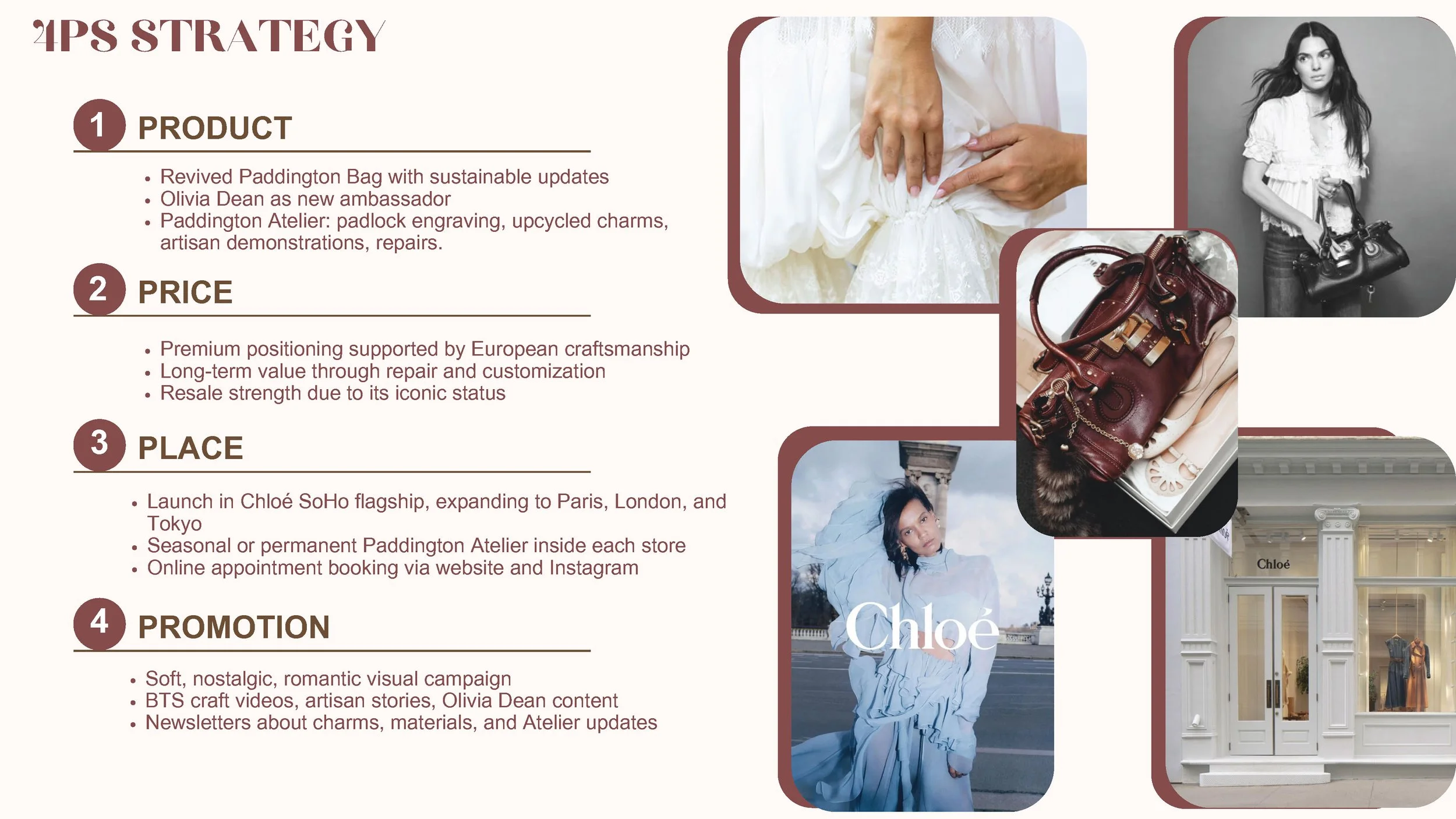
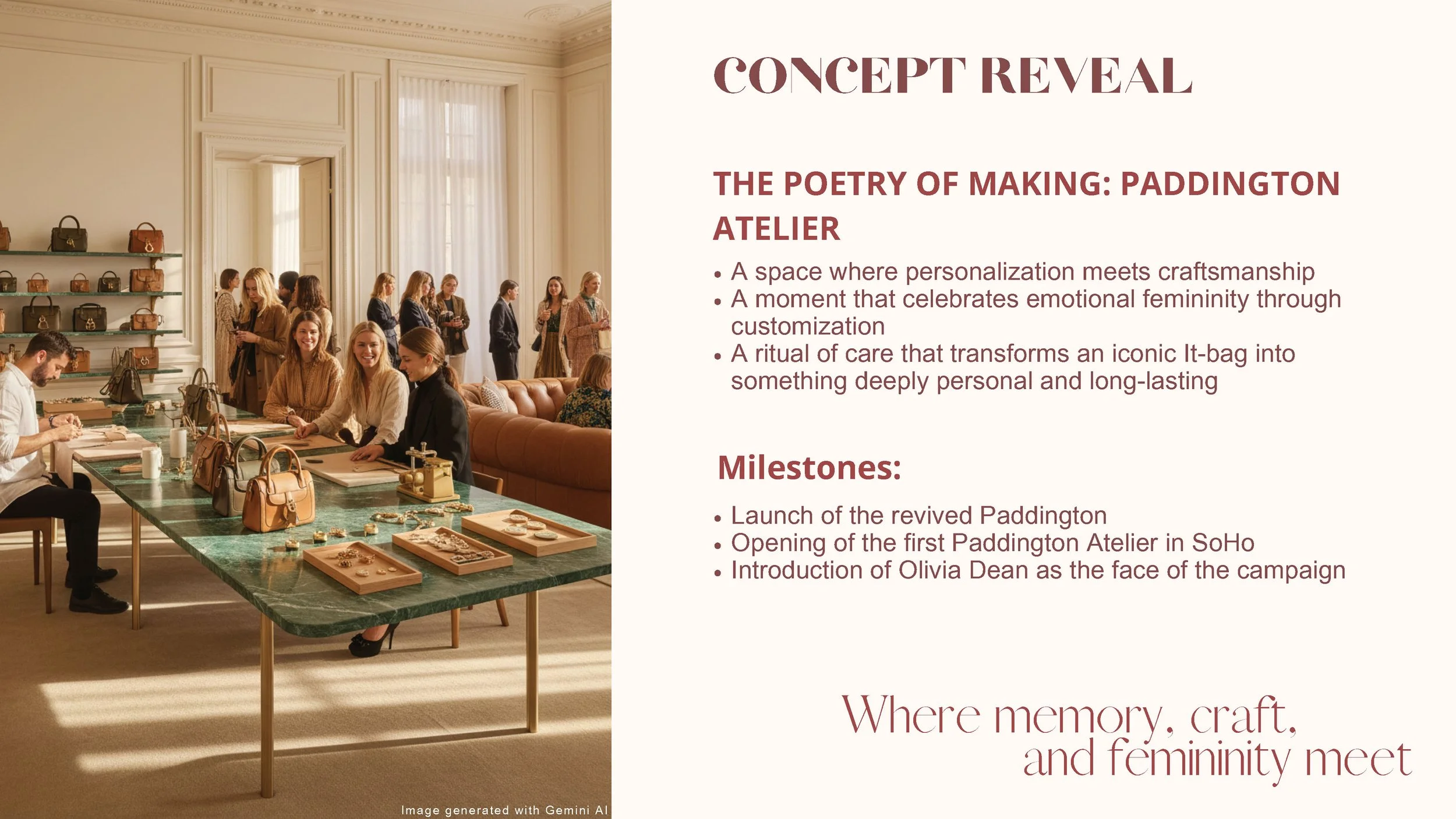
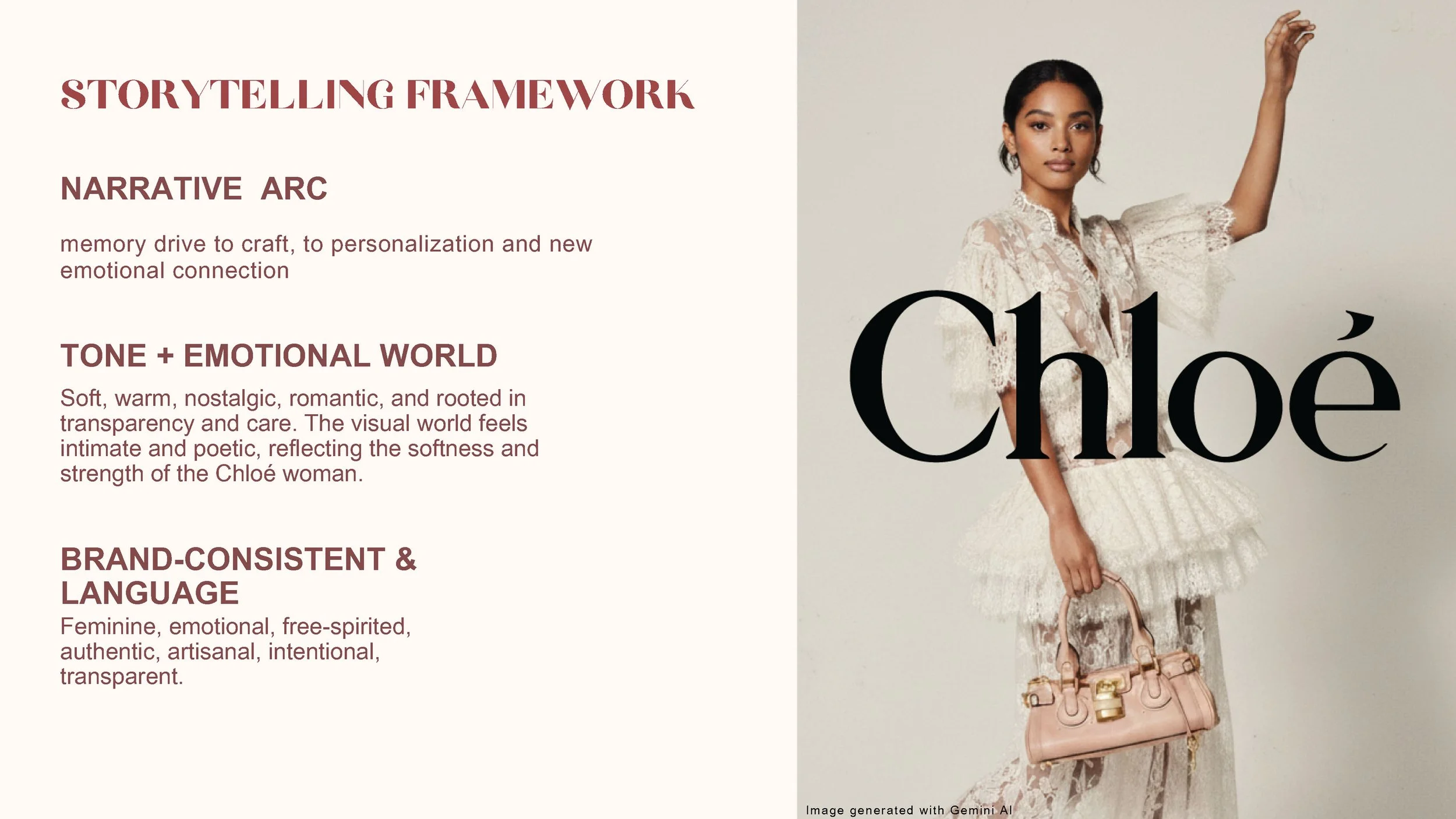
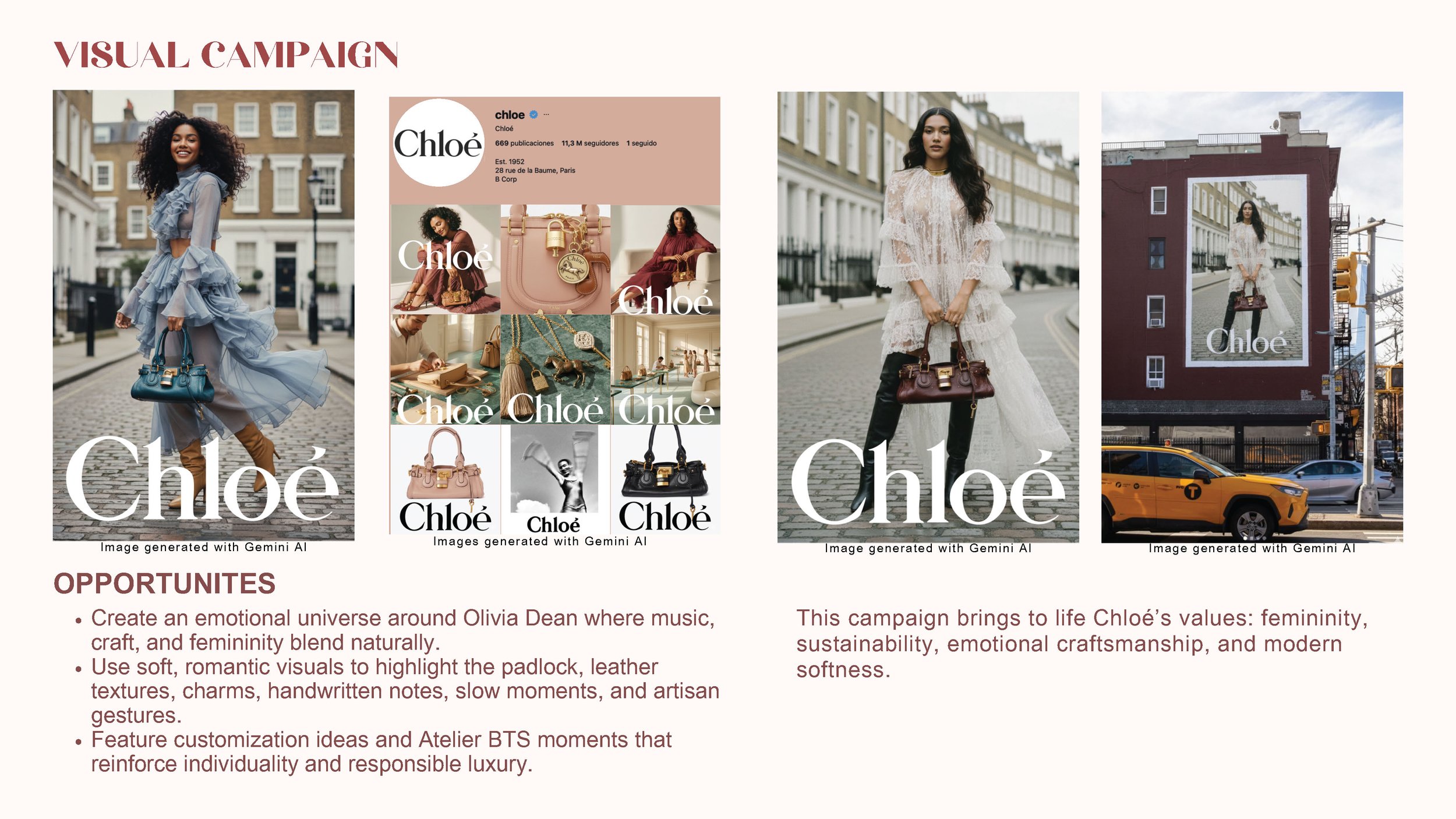
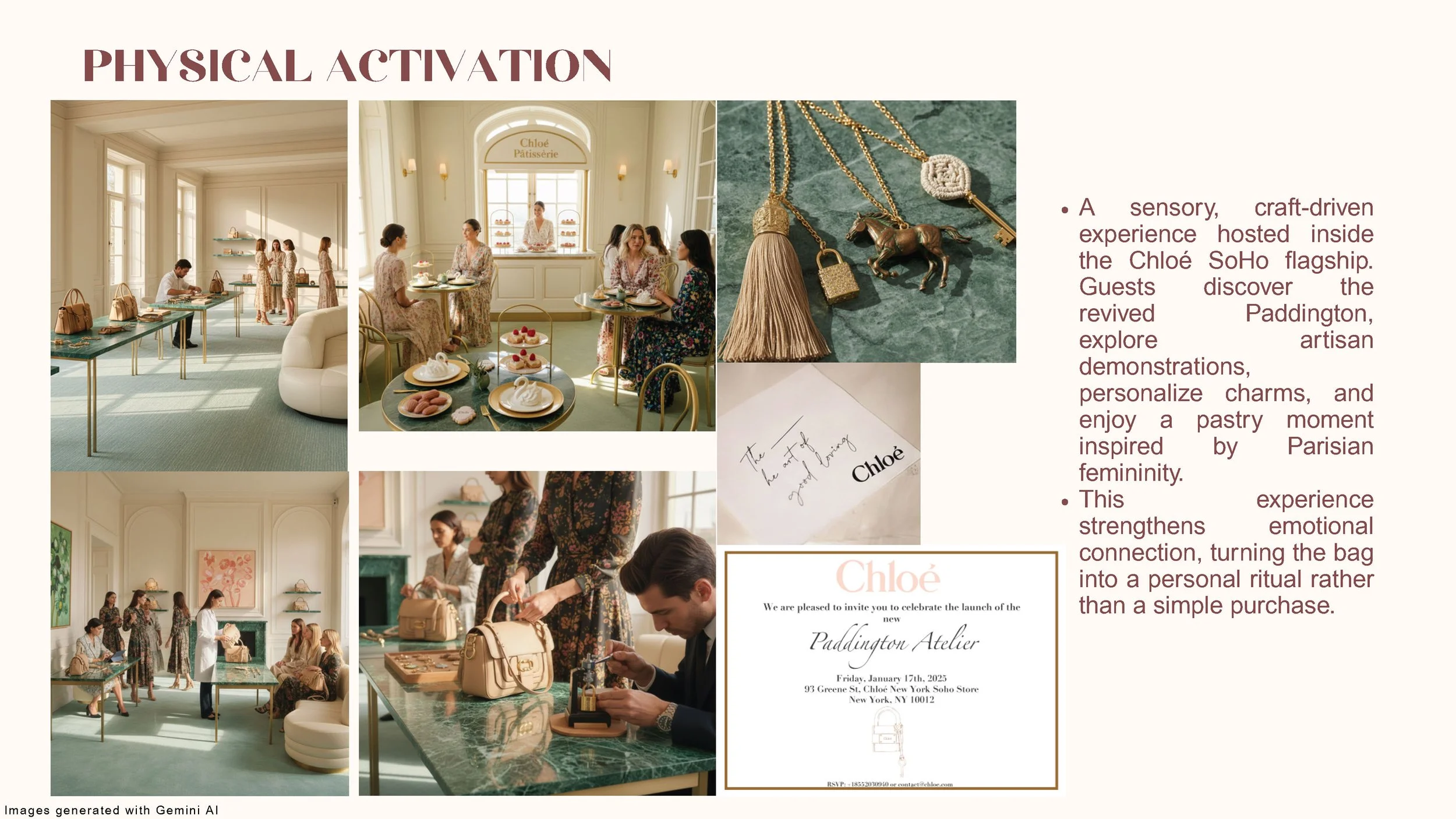
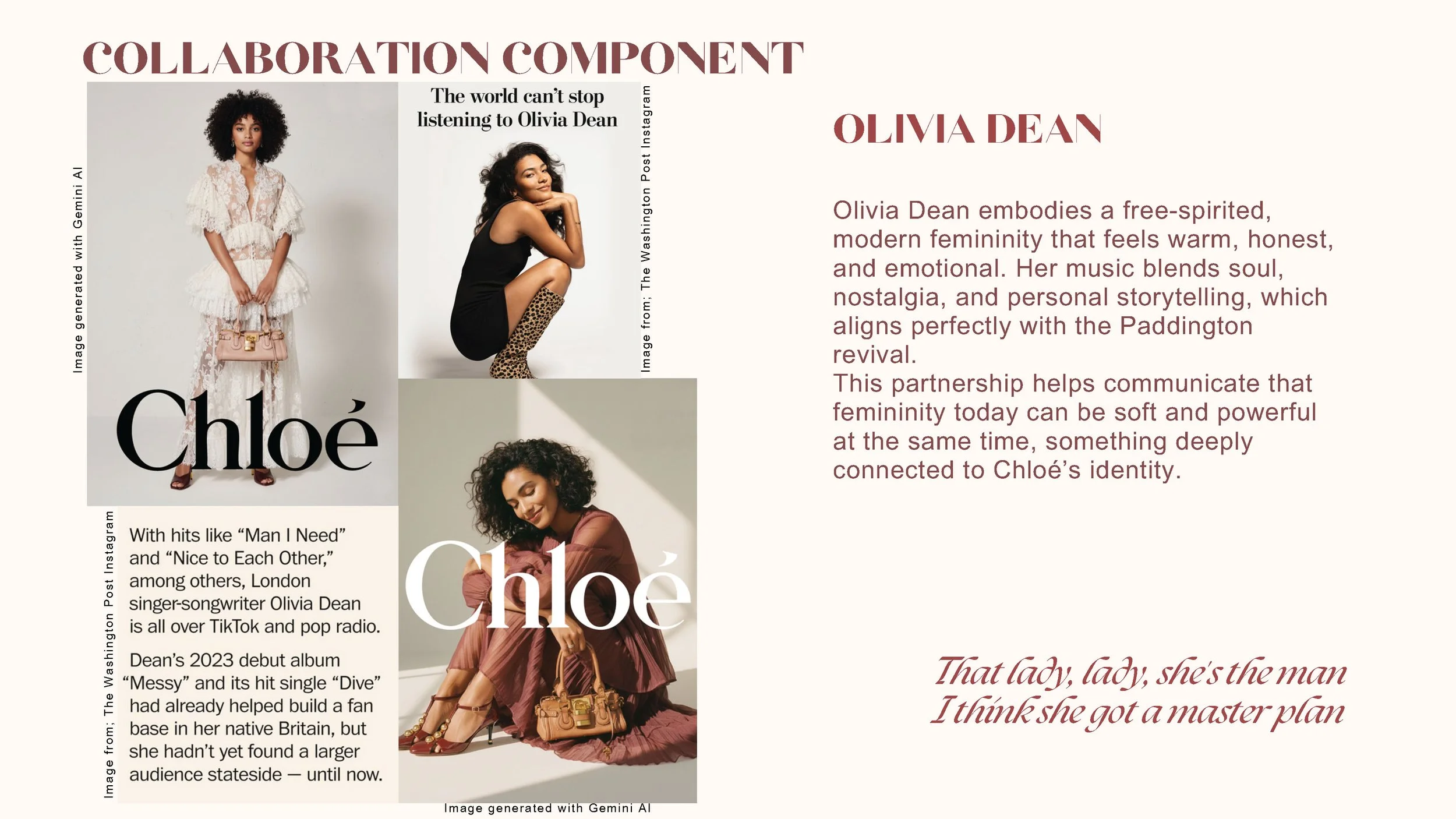
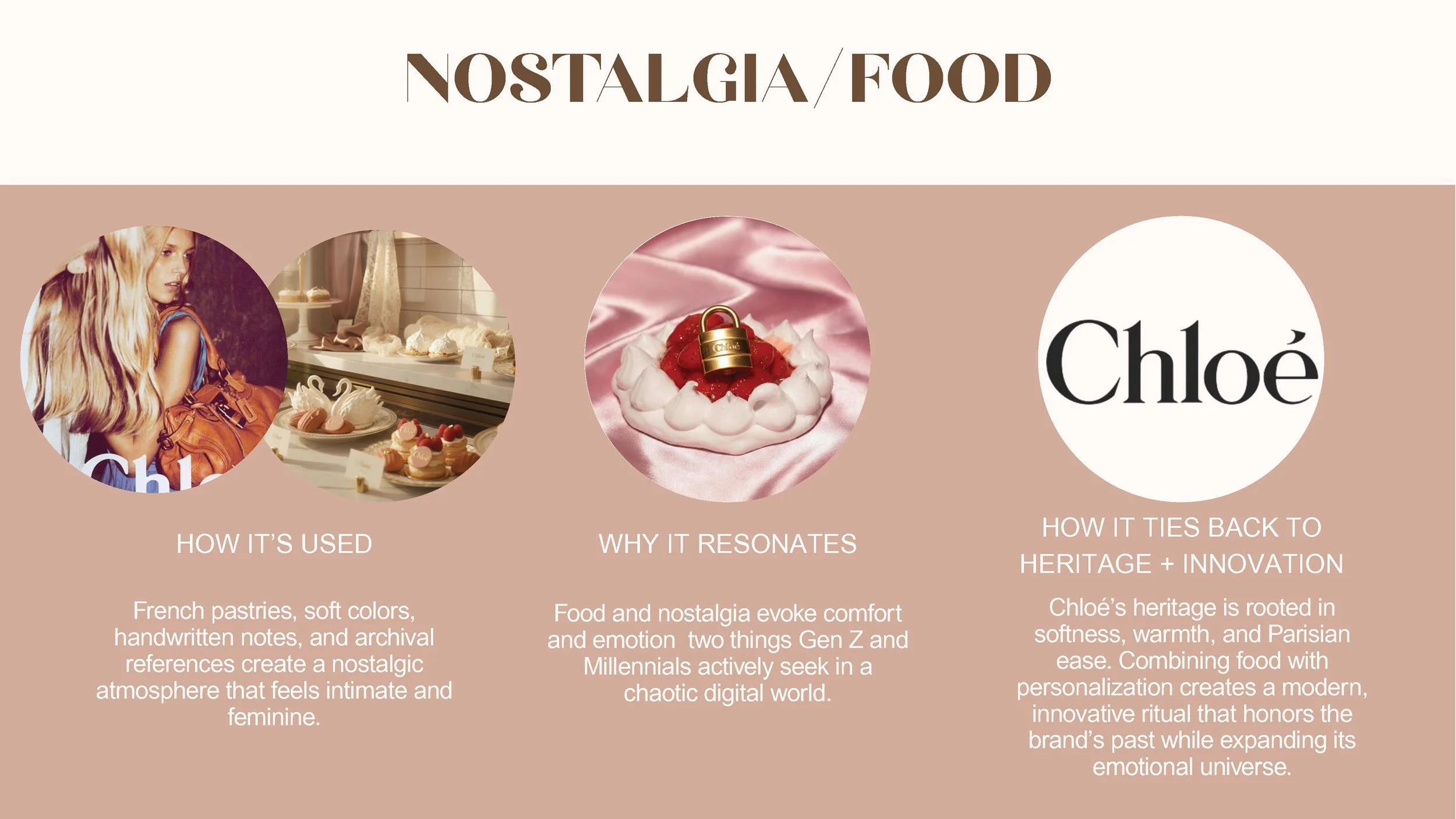
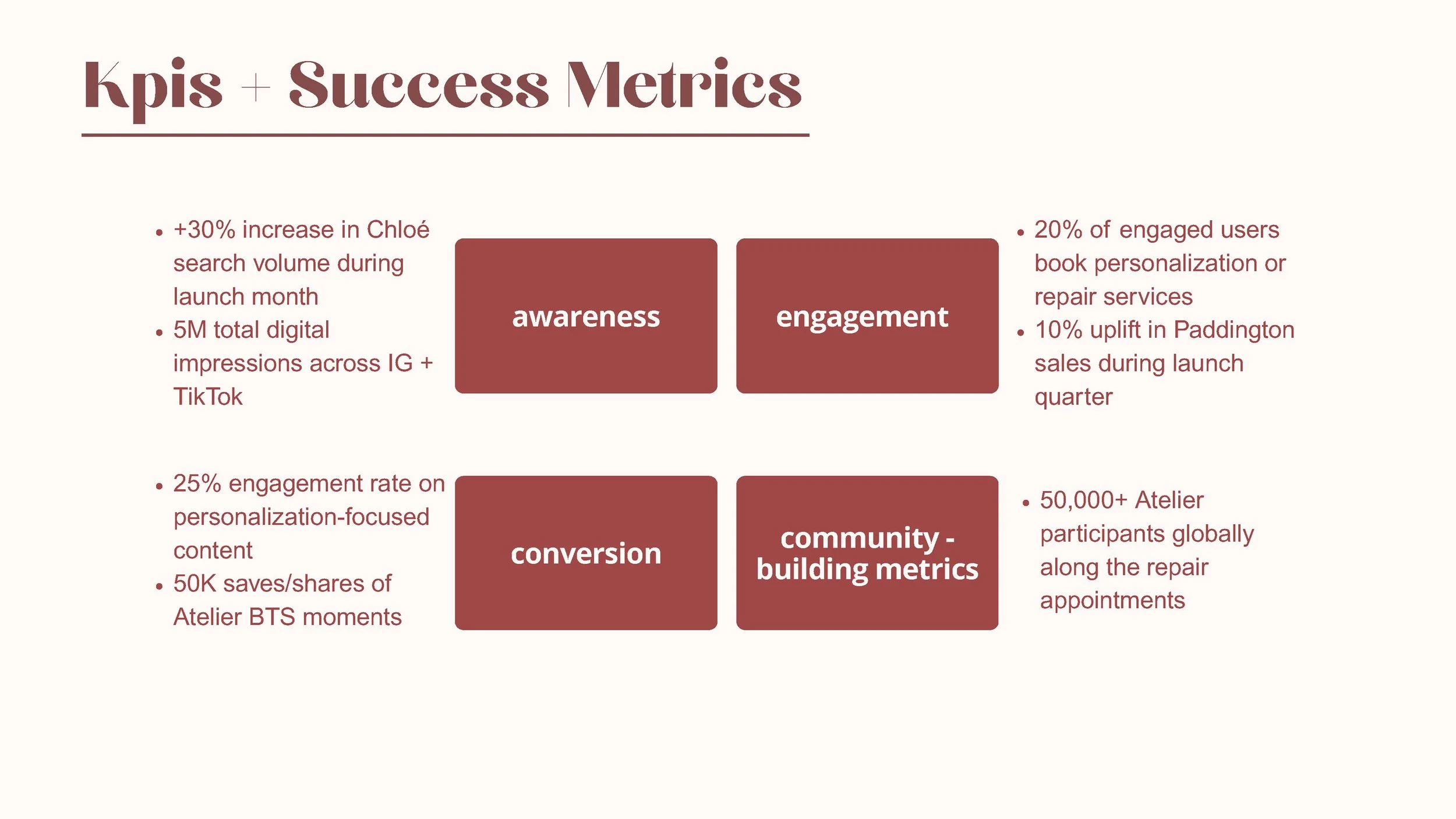
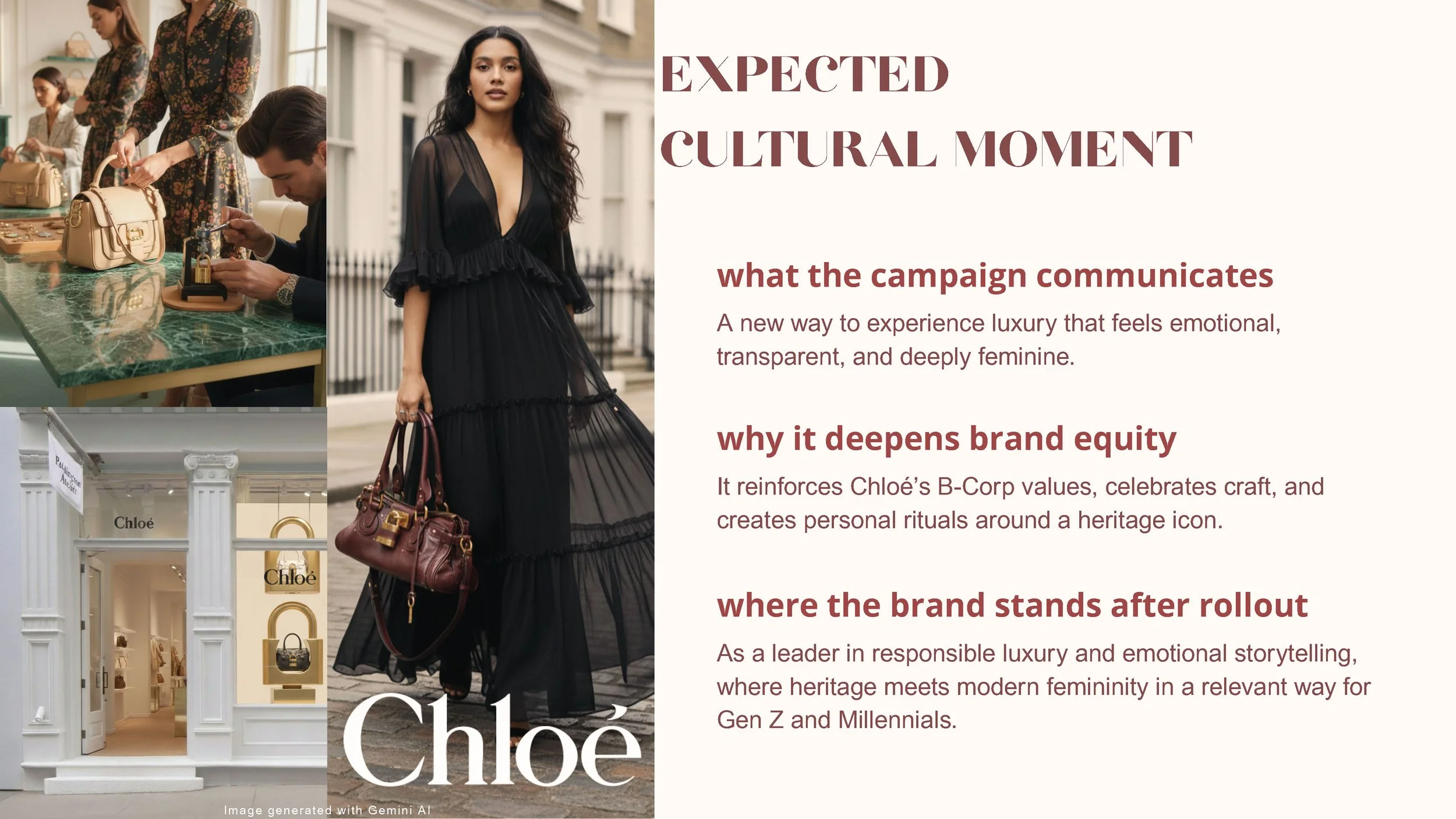
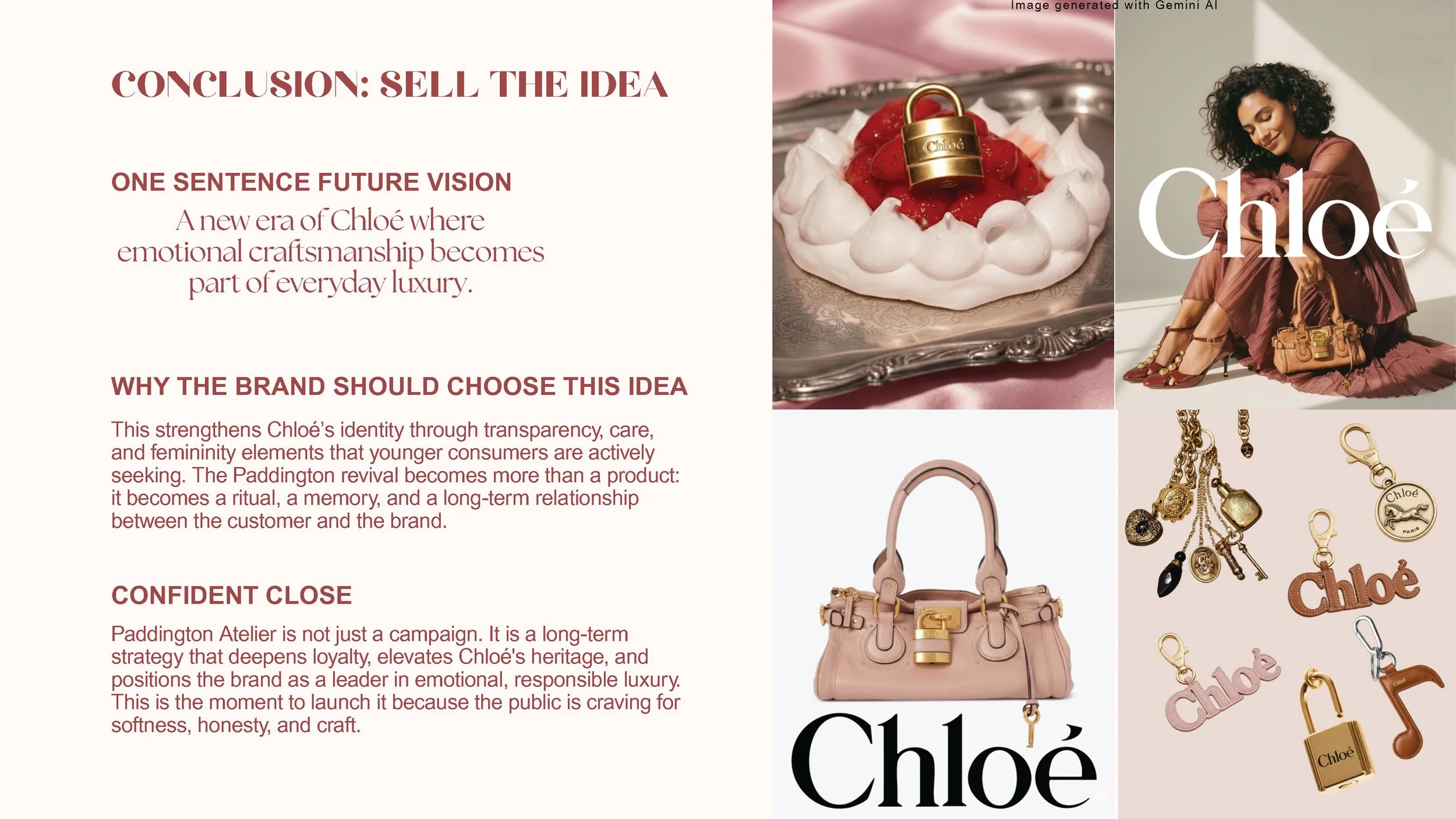
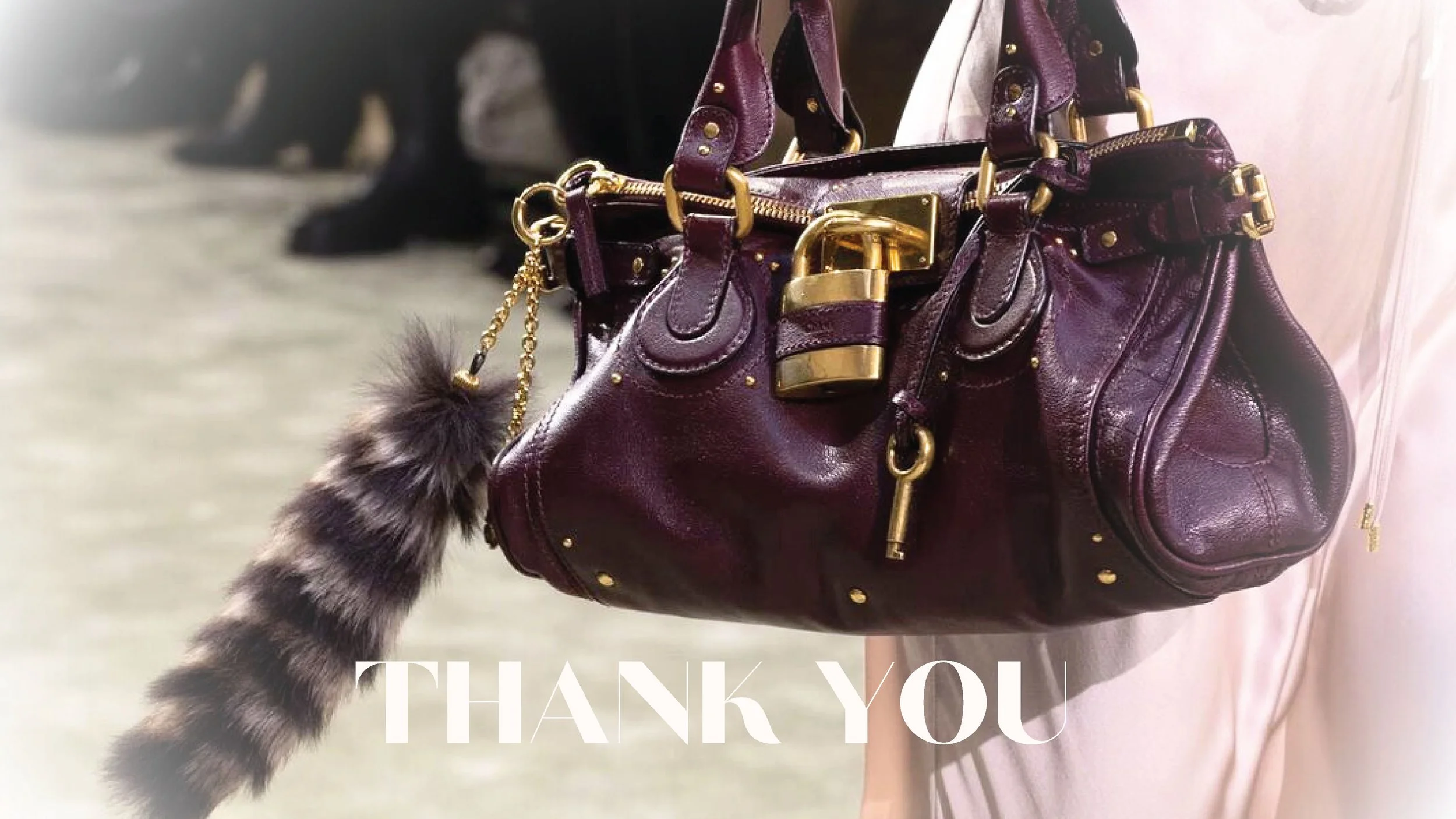
This campaign reimagines Chloé’s iconic Paddington bag through craft, personalization, and emotional storytelling. Centered on femininity, transparency, and sustainability, the concept transforms luxury from product to ritual, inviting consumers into an intimate experience of memory, care, and conscious ownership.
BURN BOOK
by Juju Rosell Pineda | GENTLE MONSTER
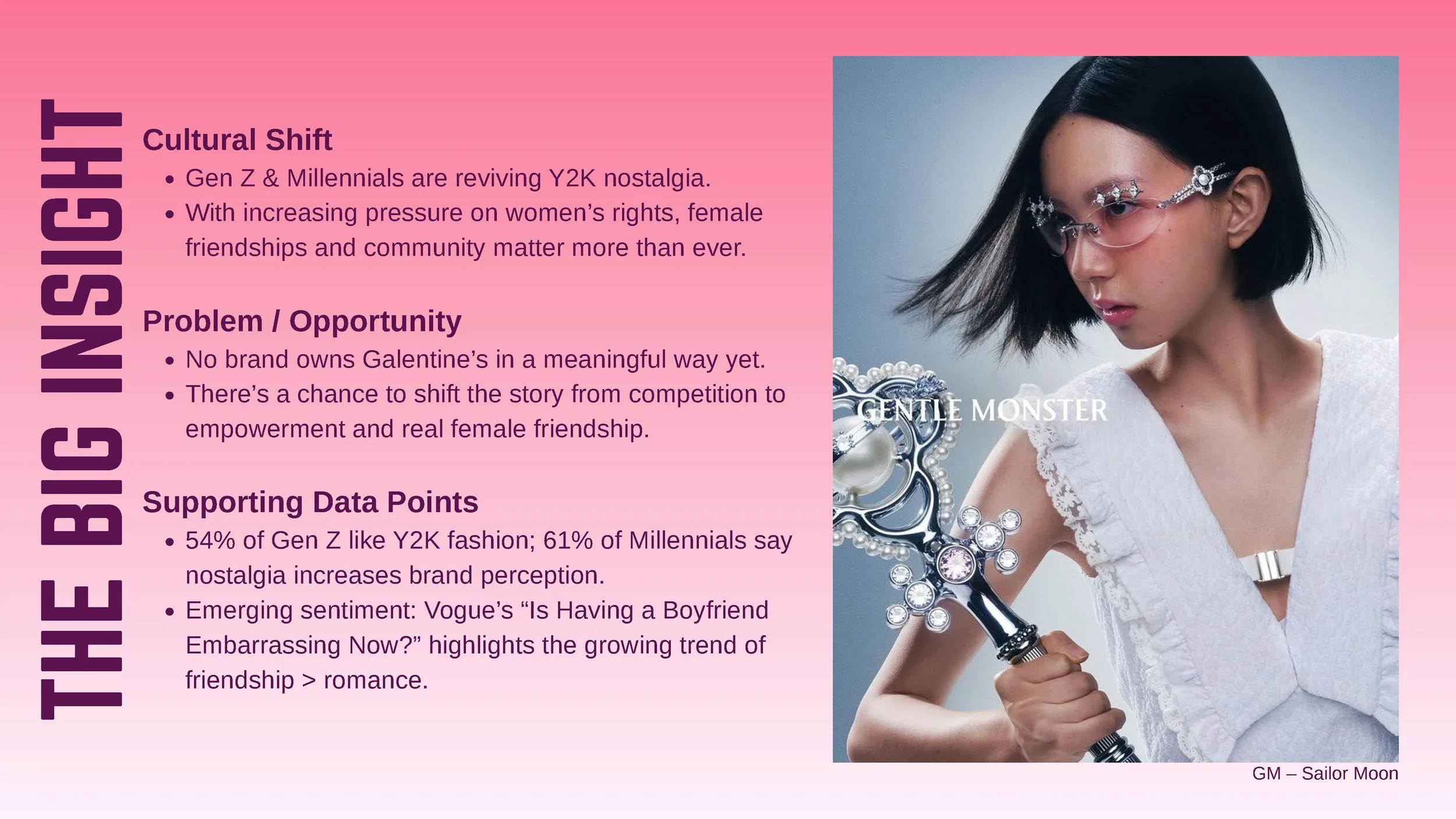
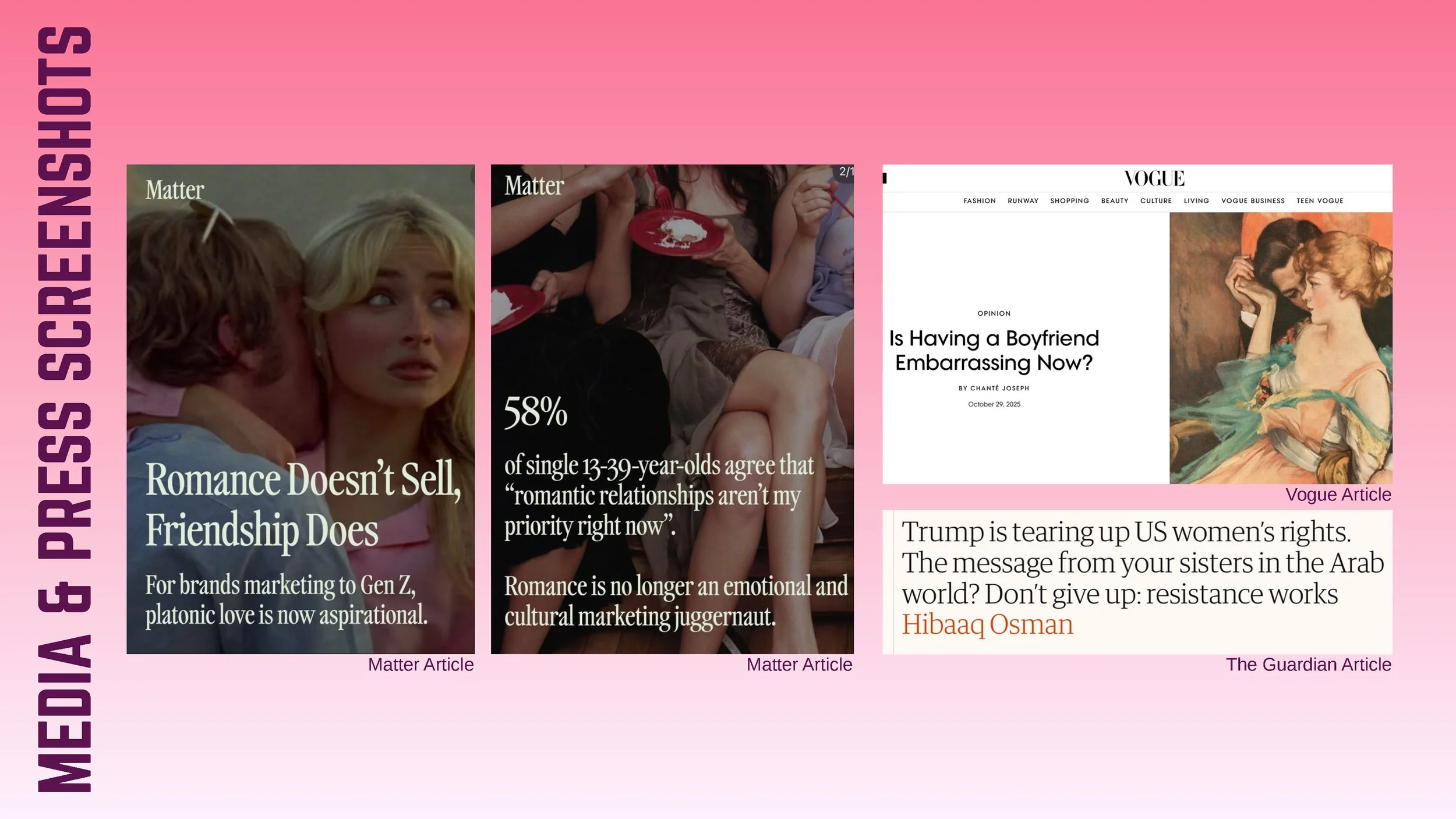
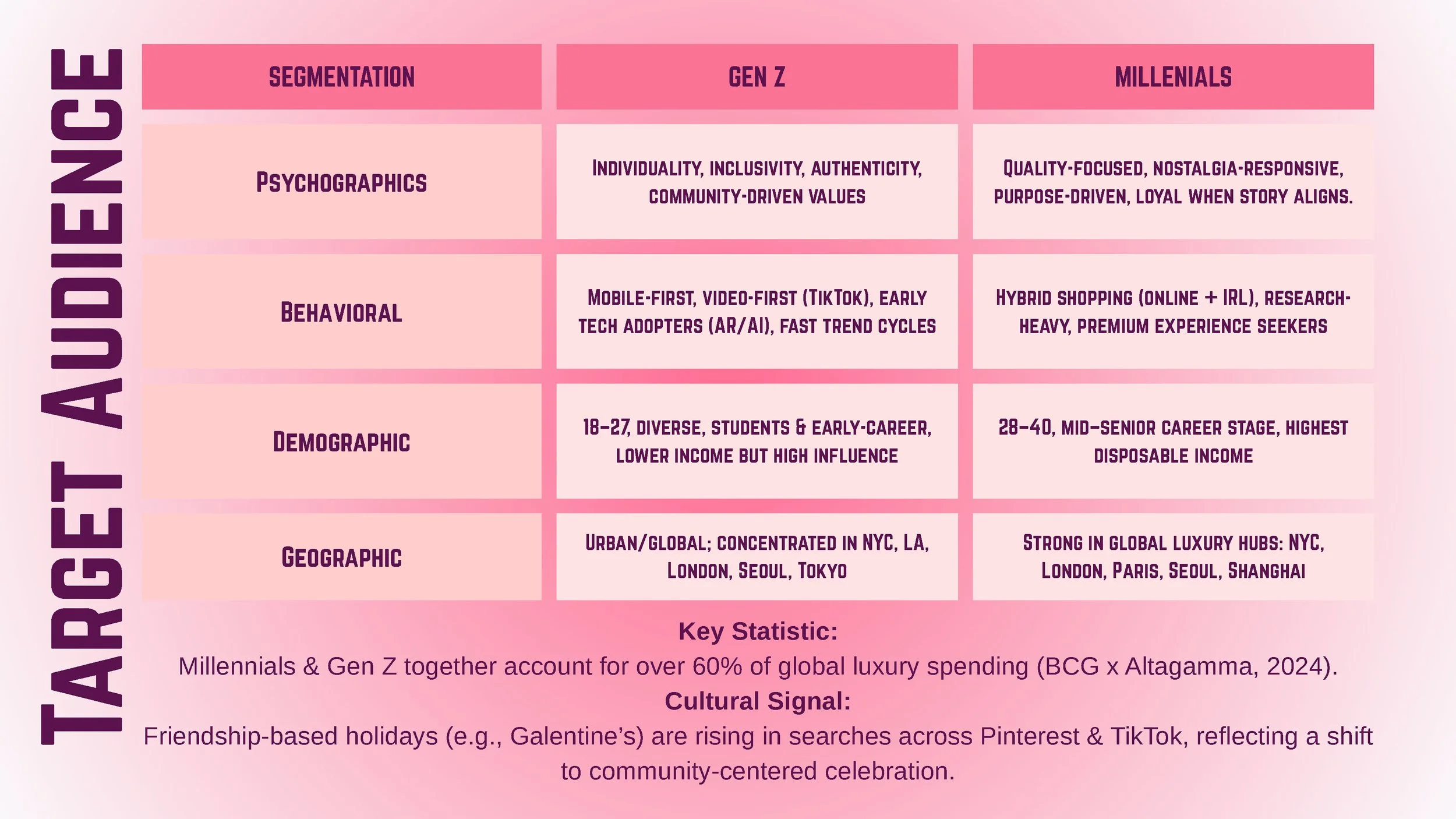
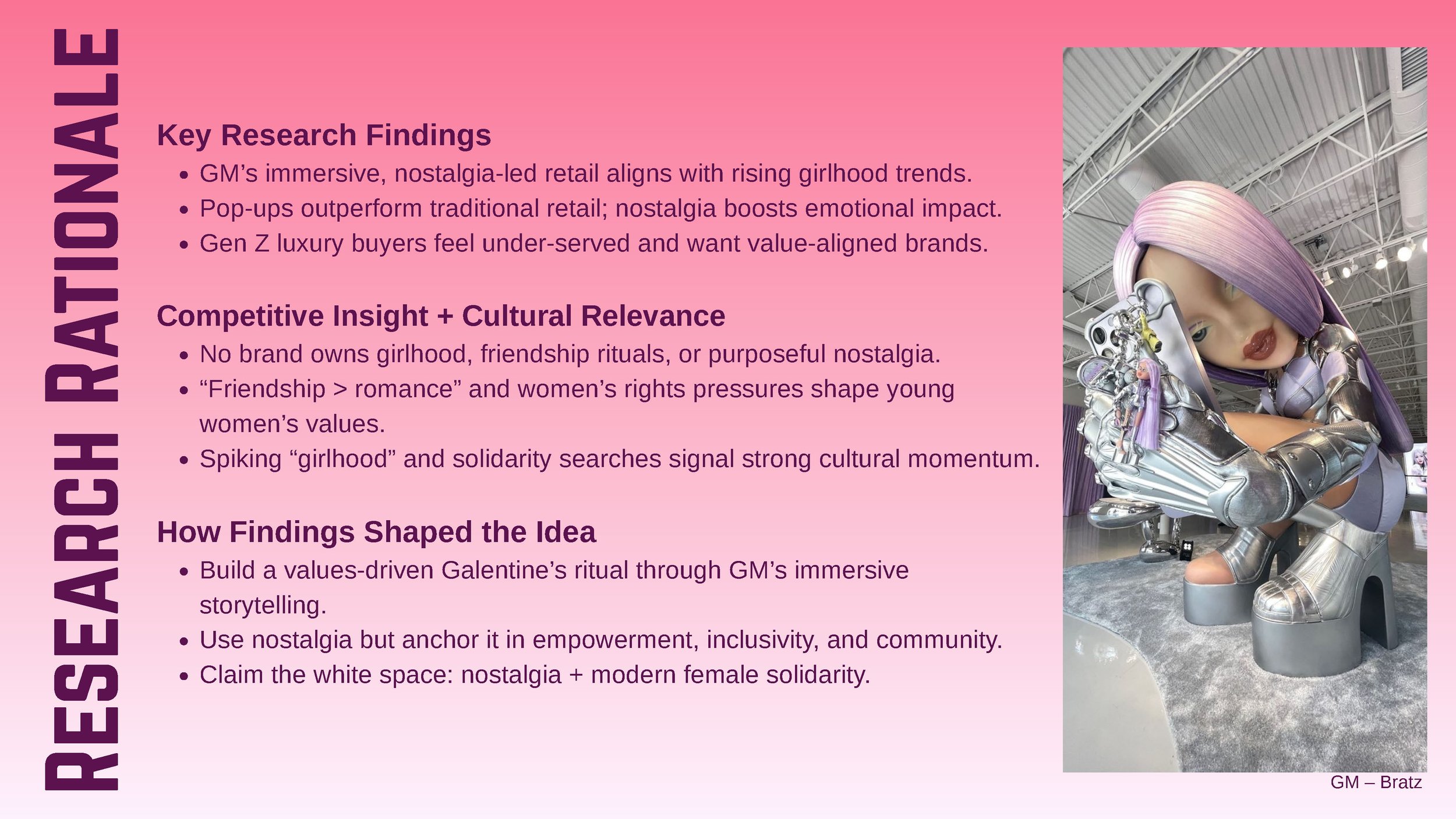
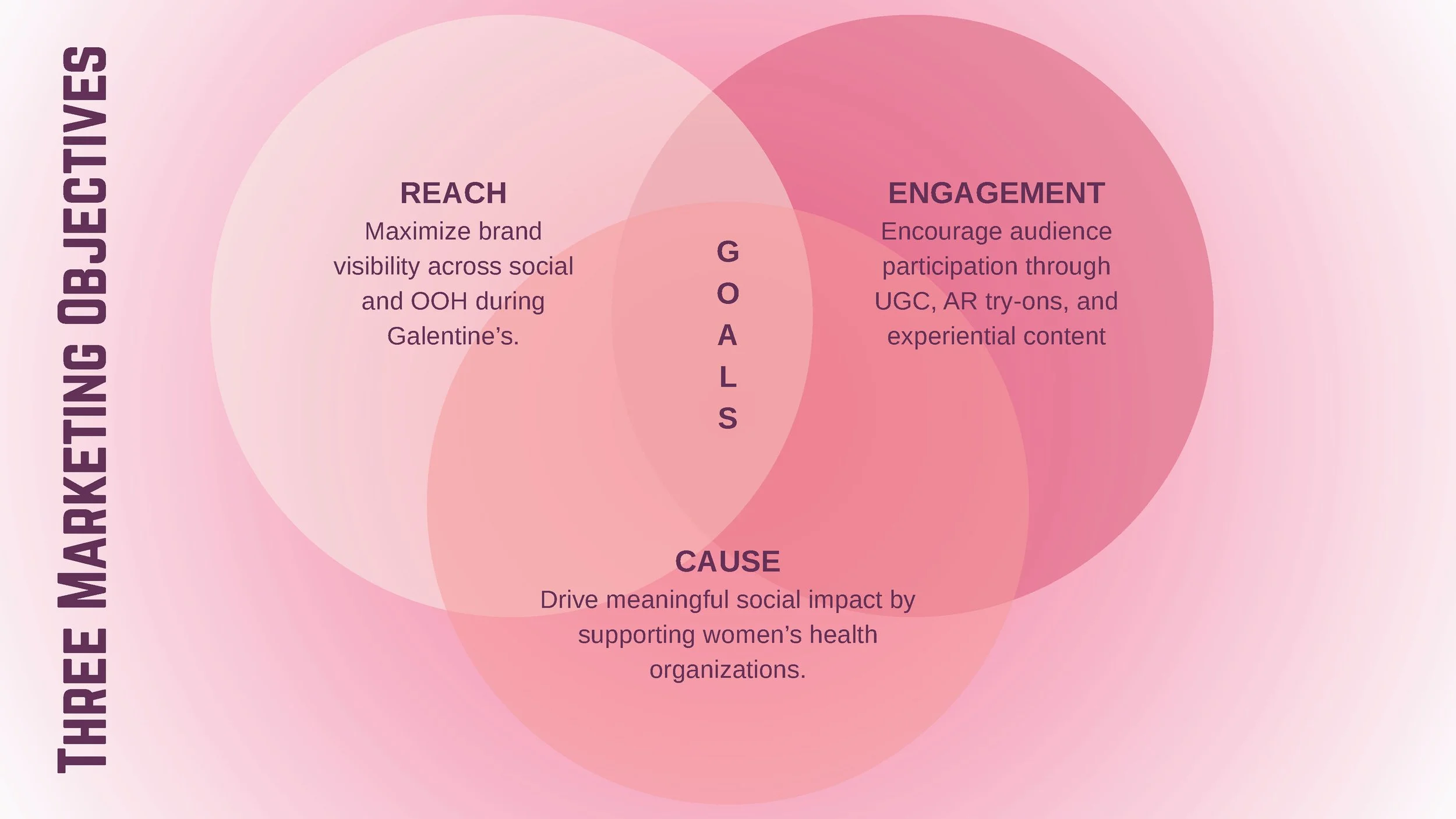

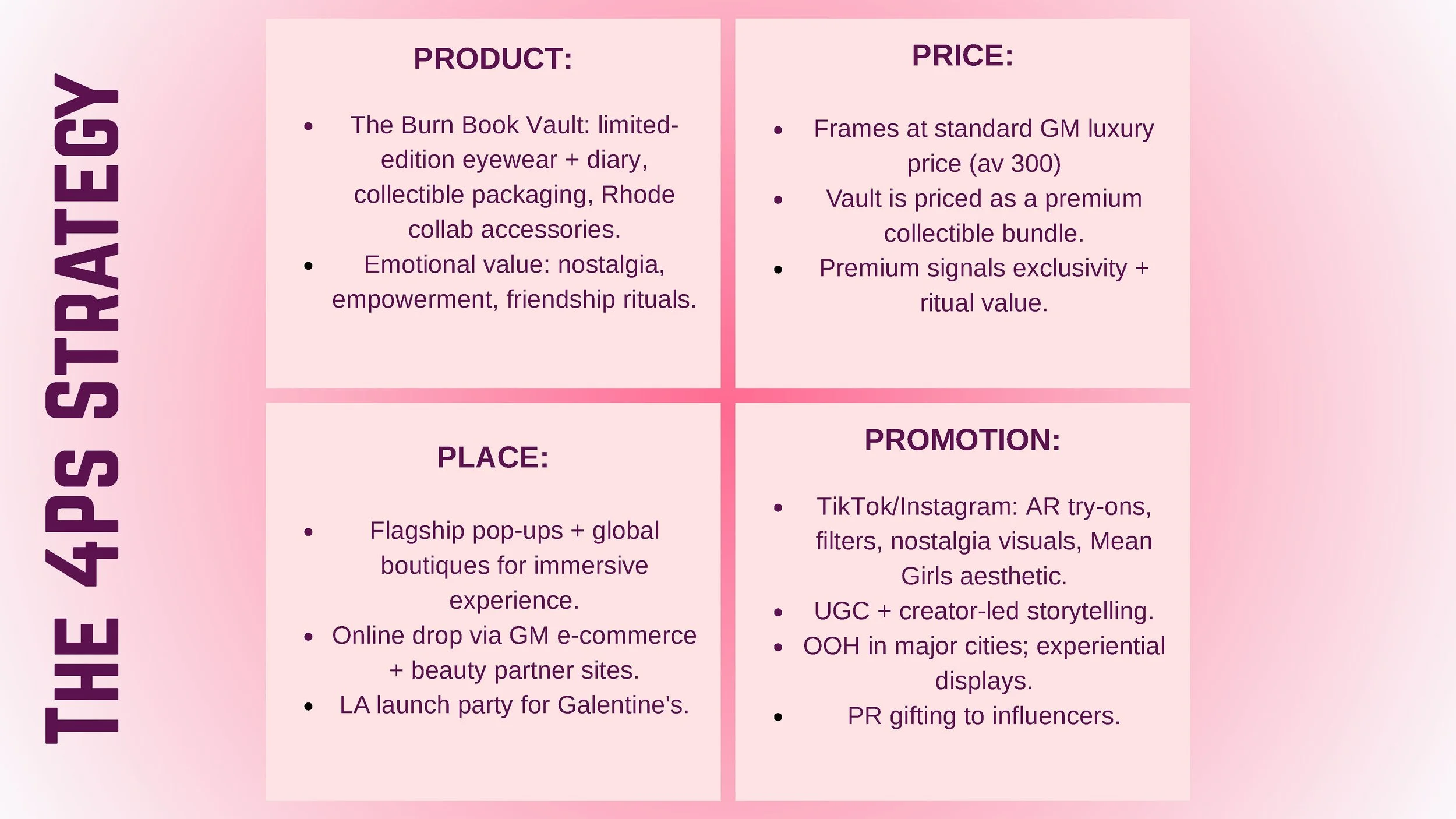
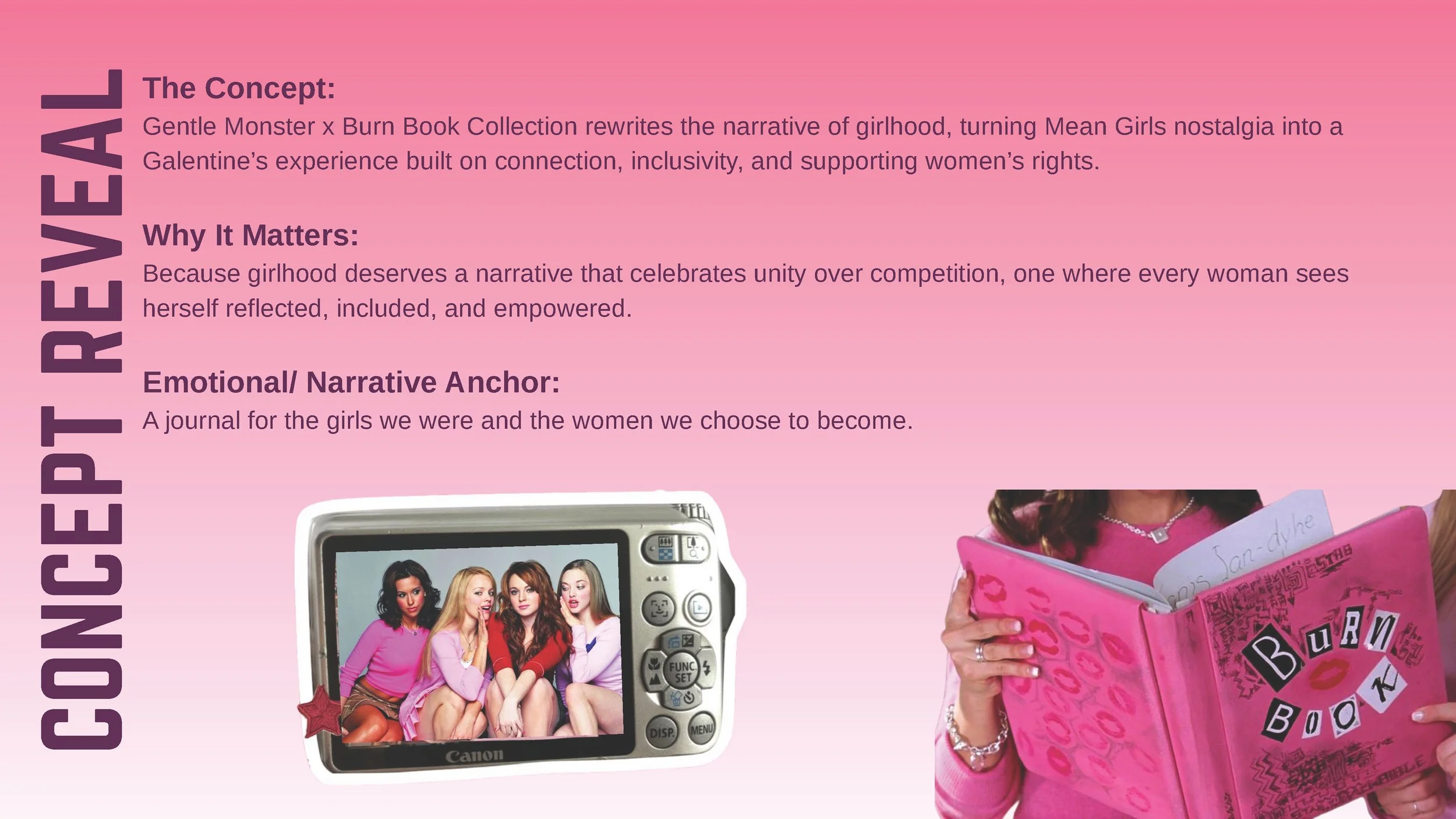
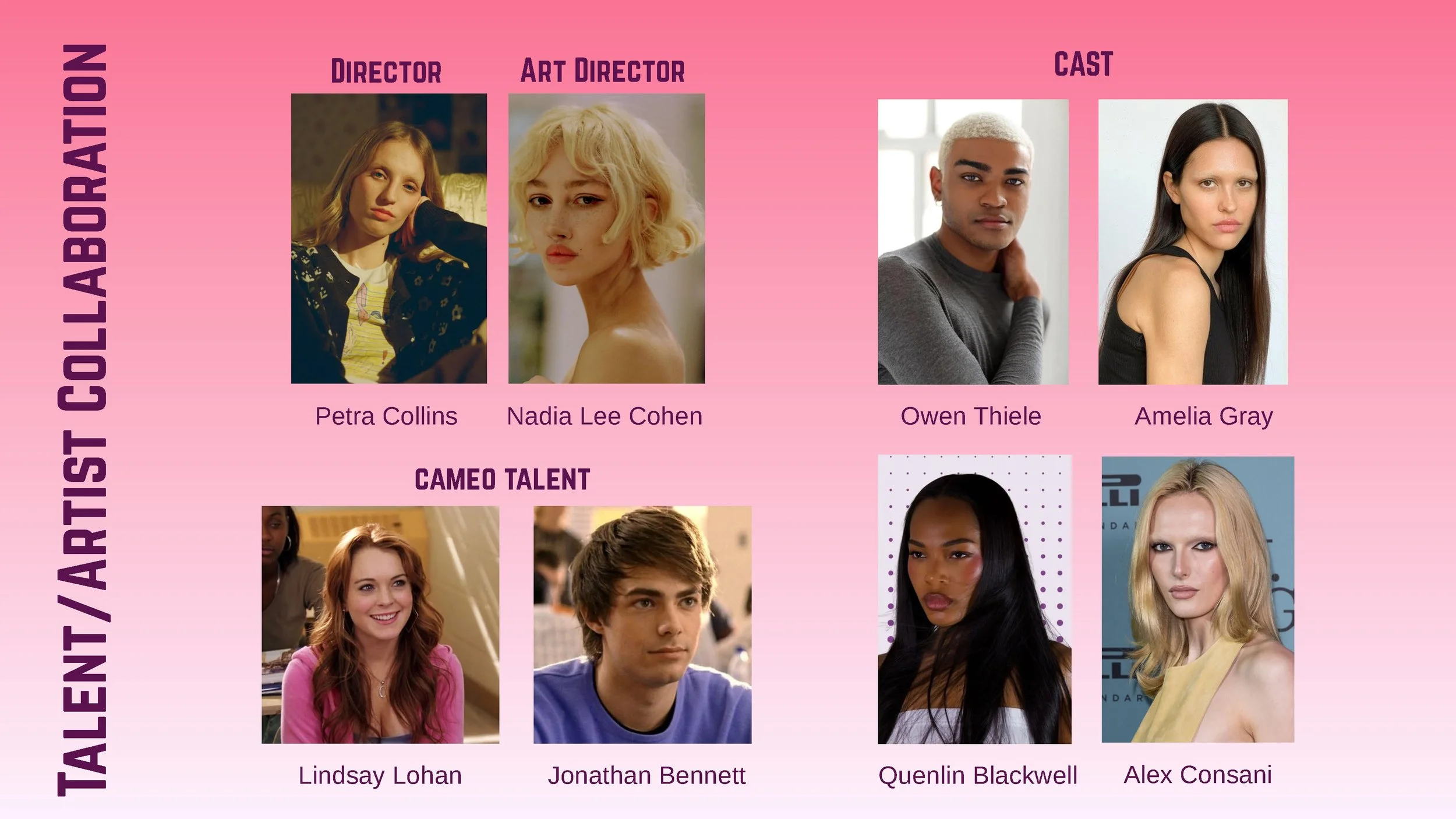
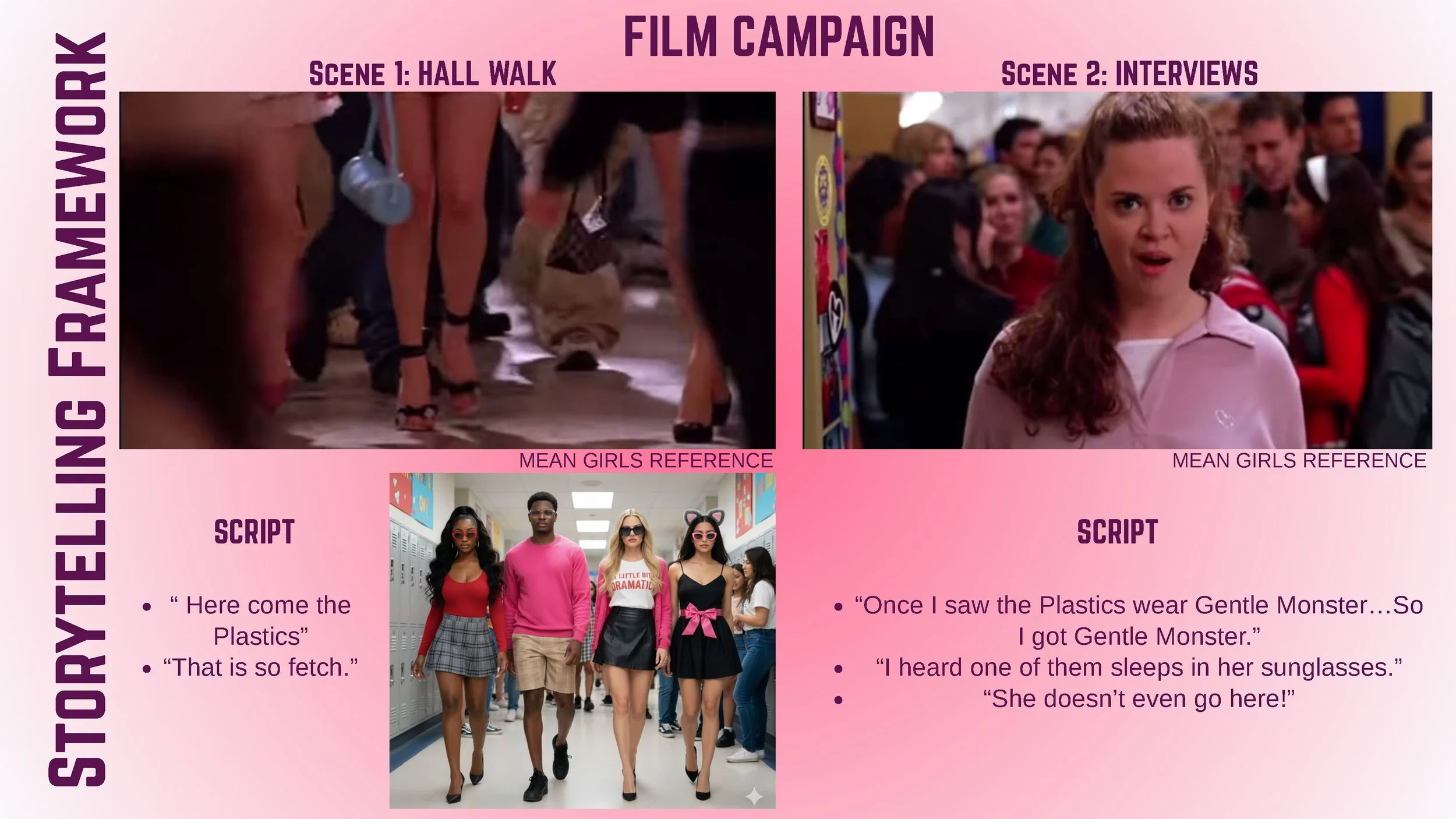
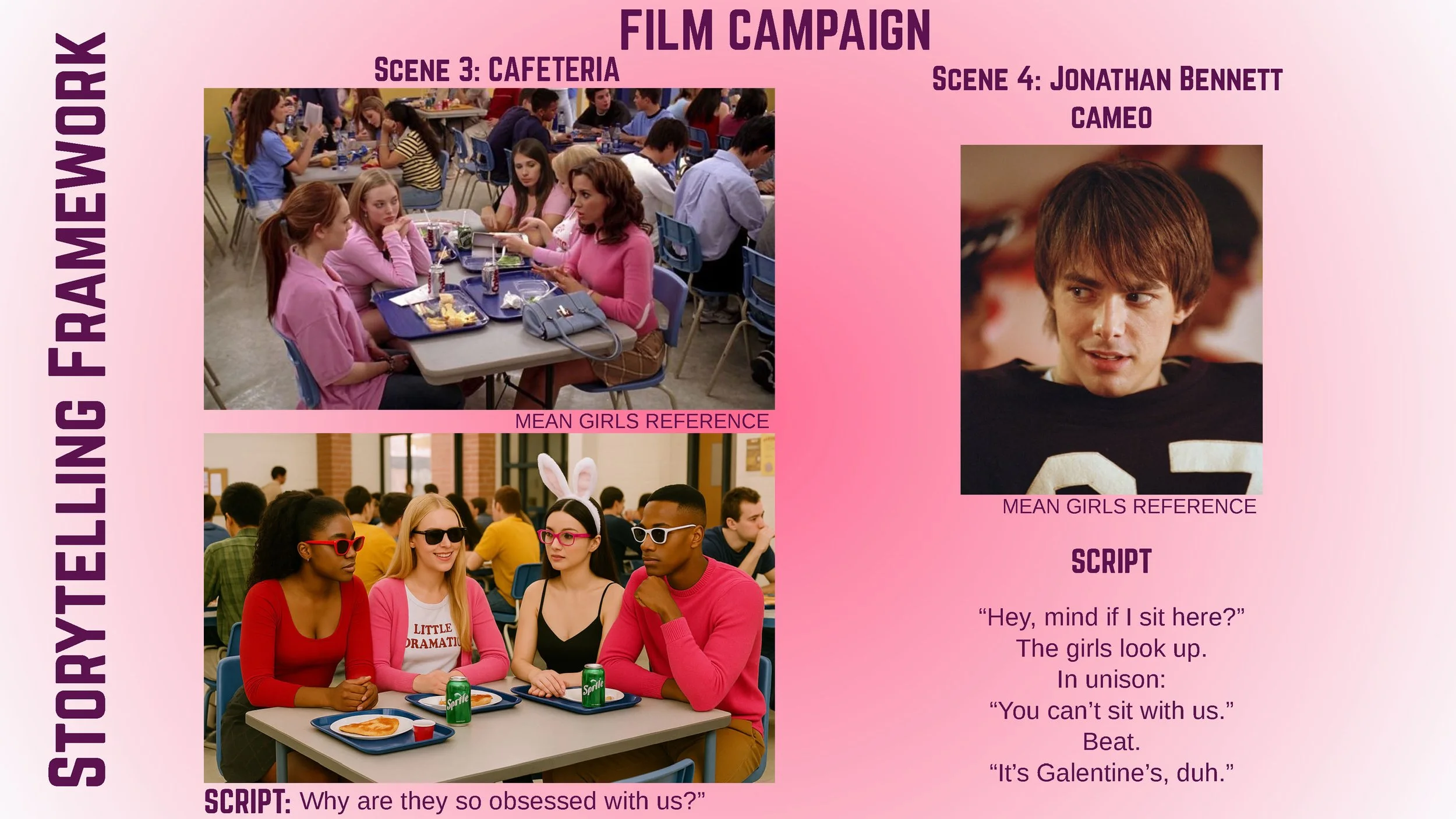
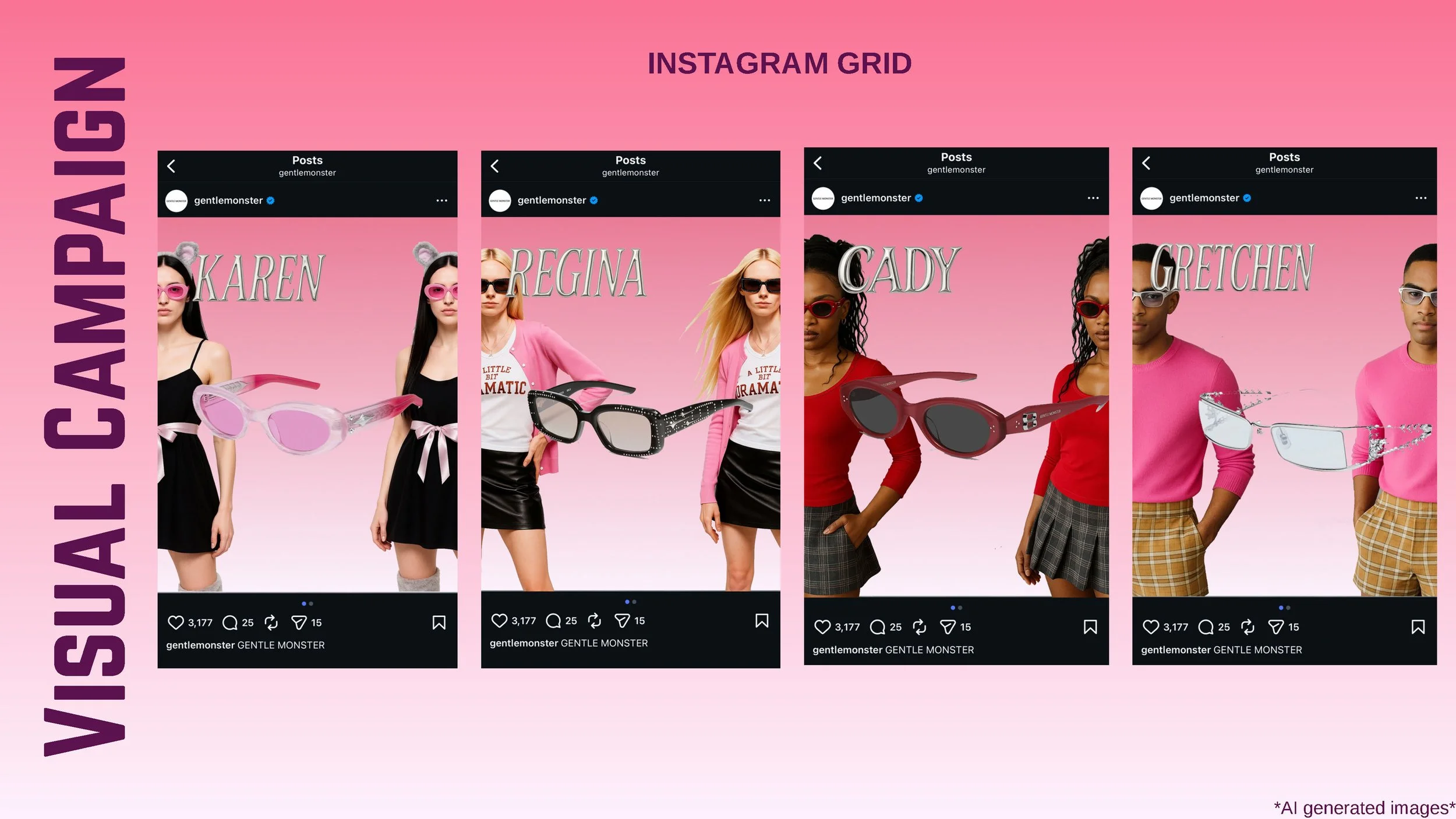
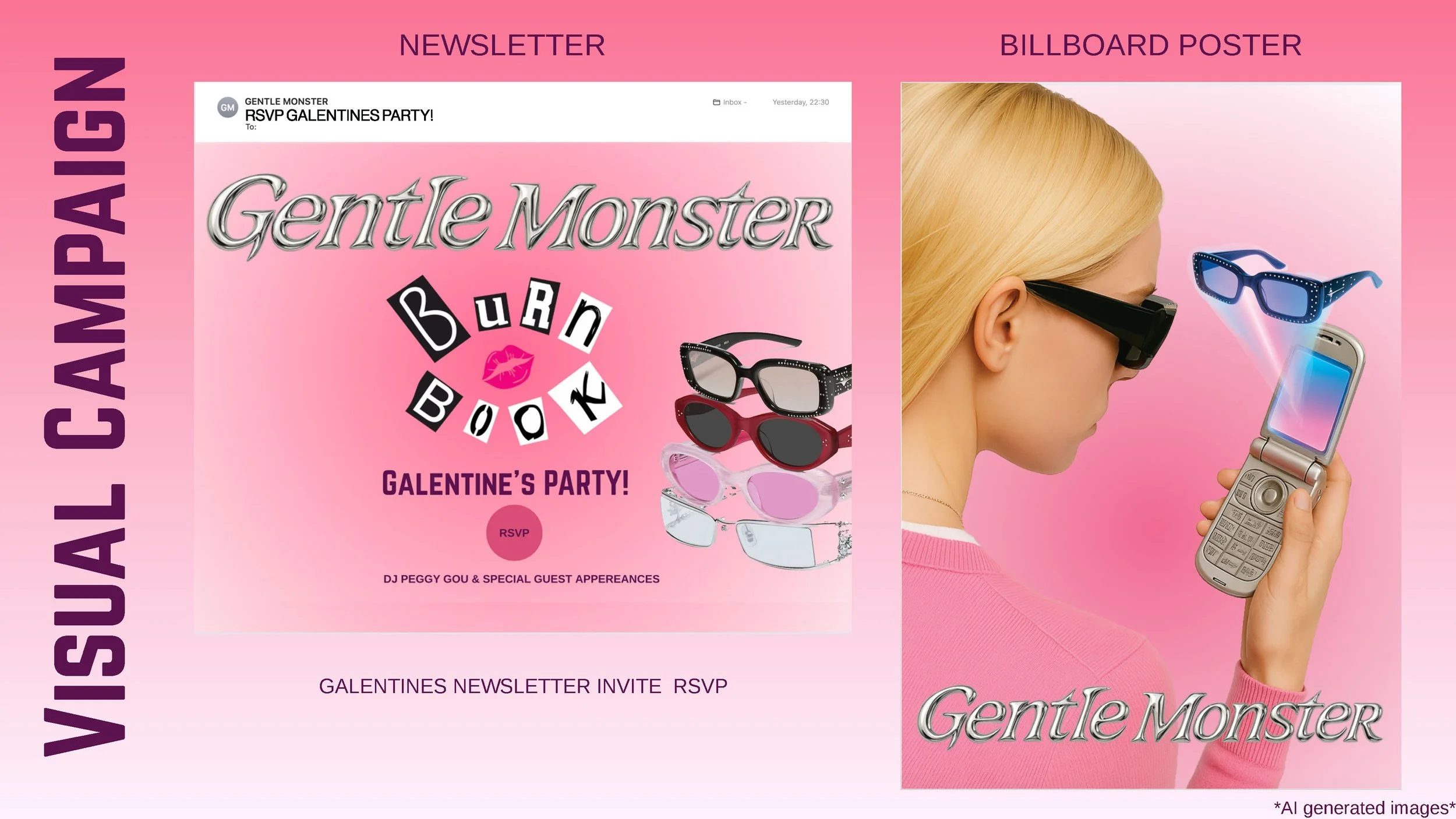
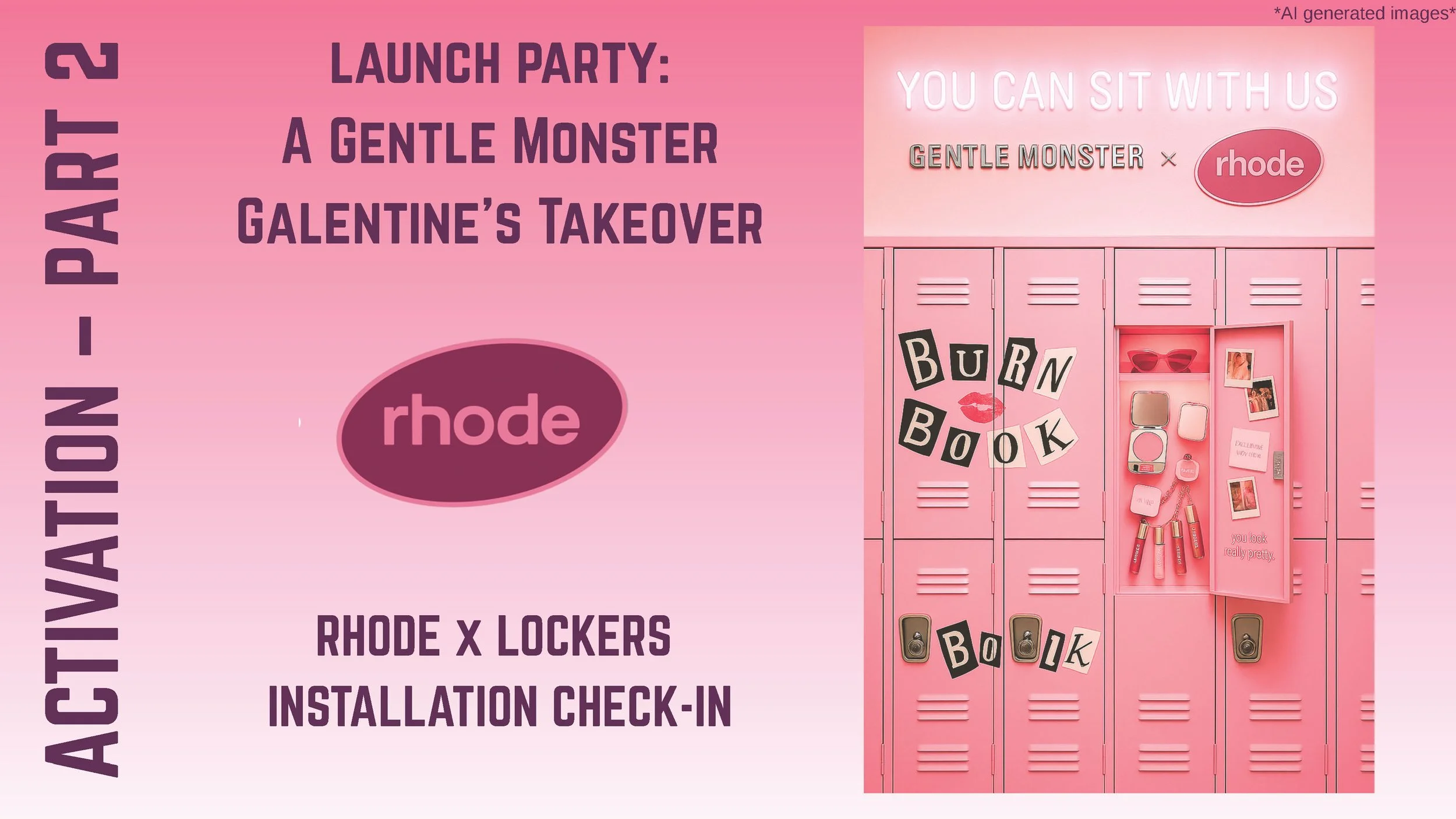

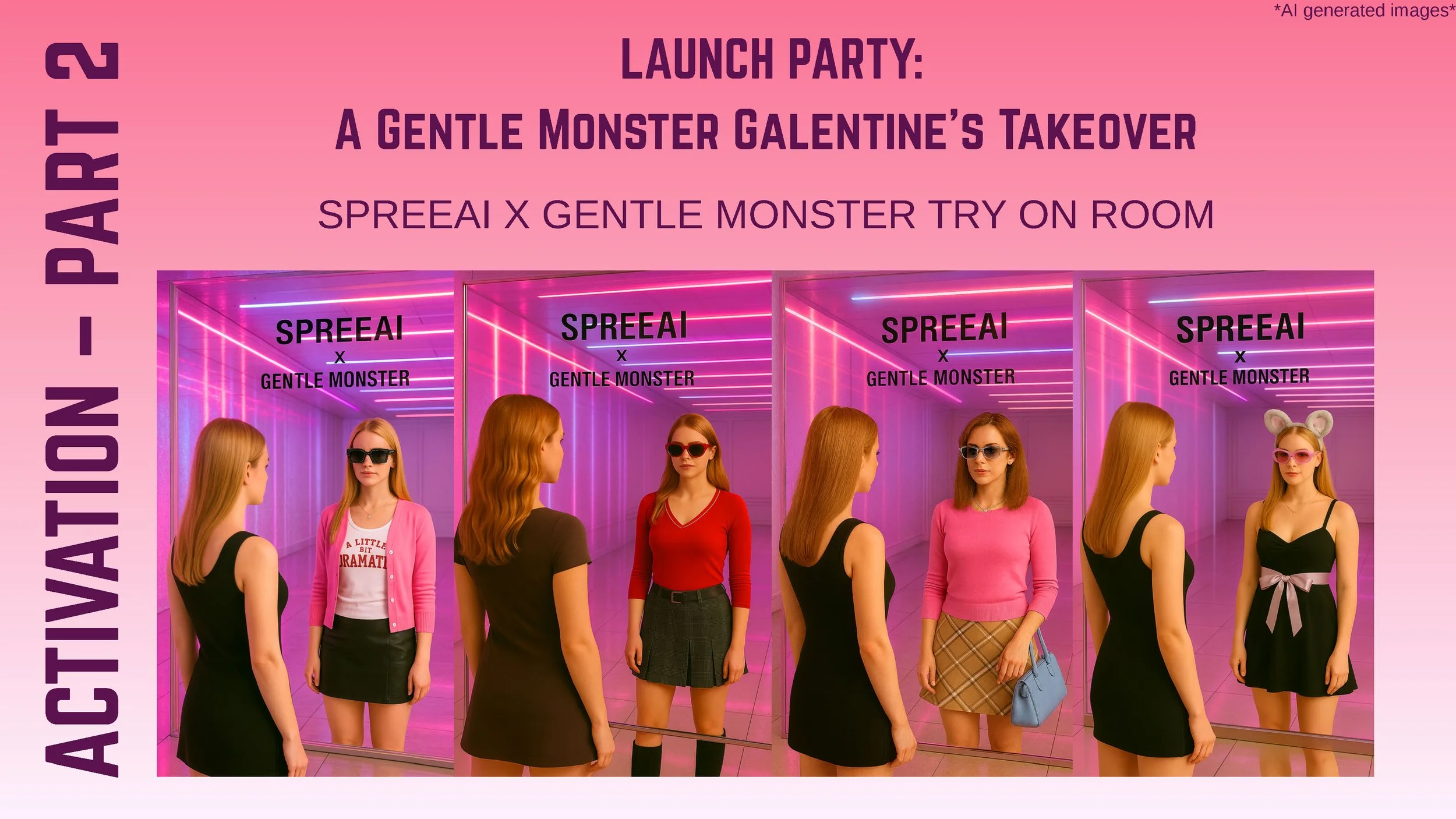
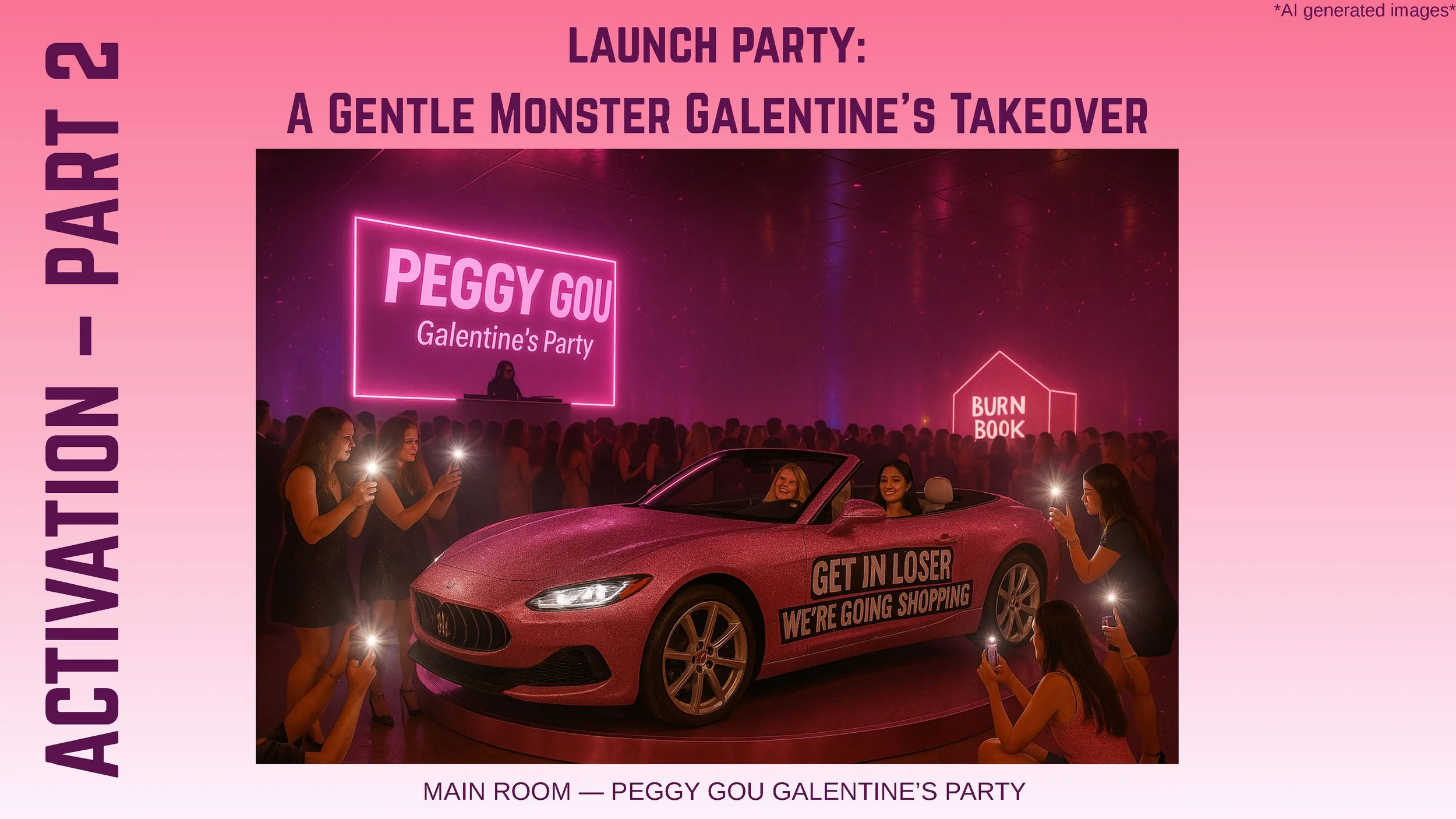
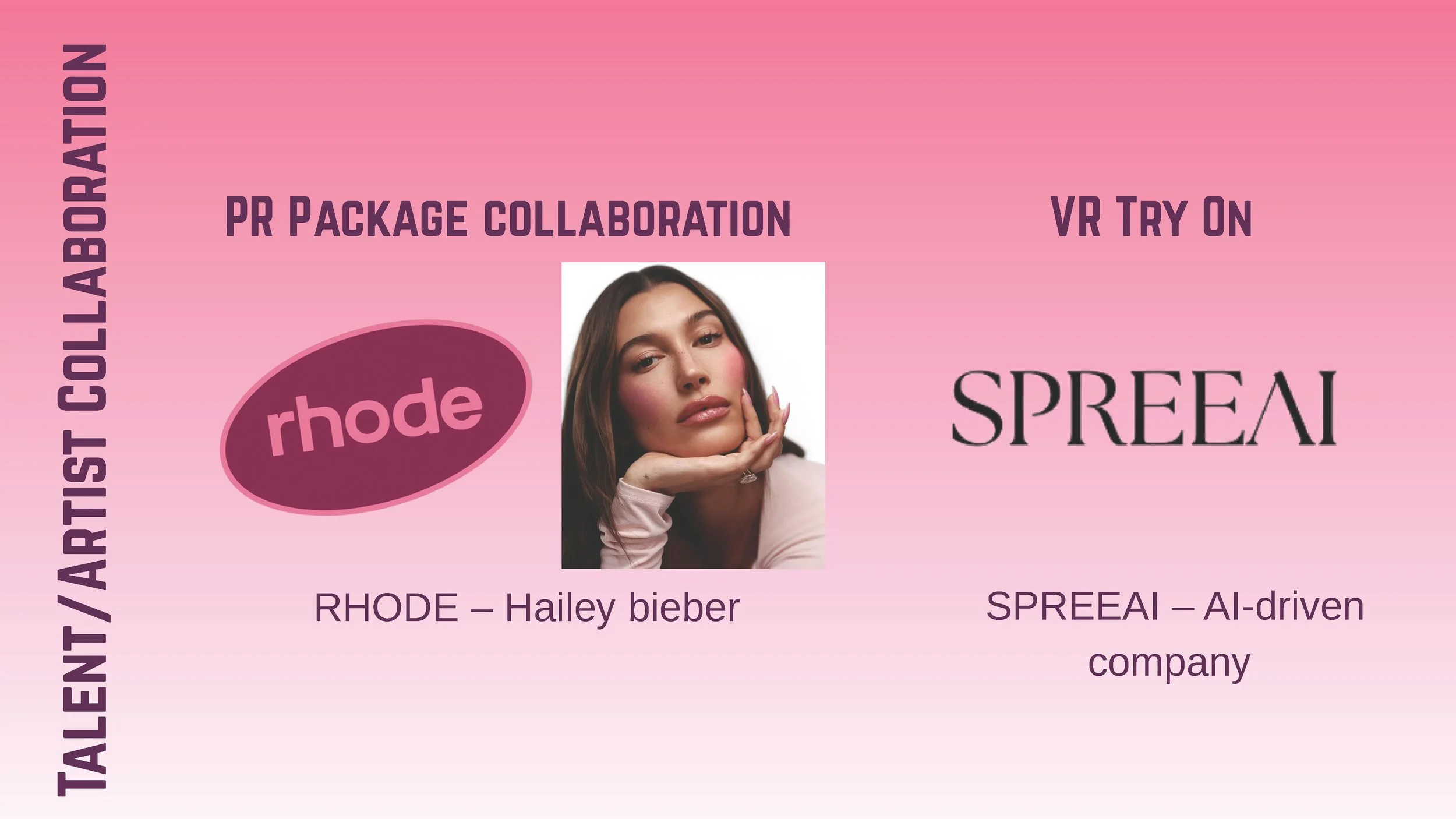
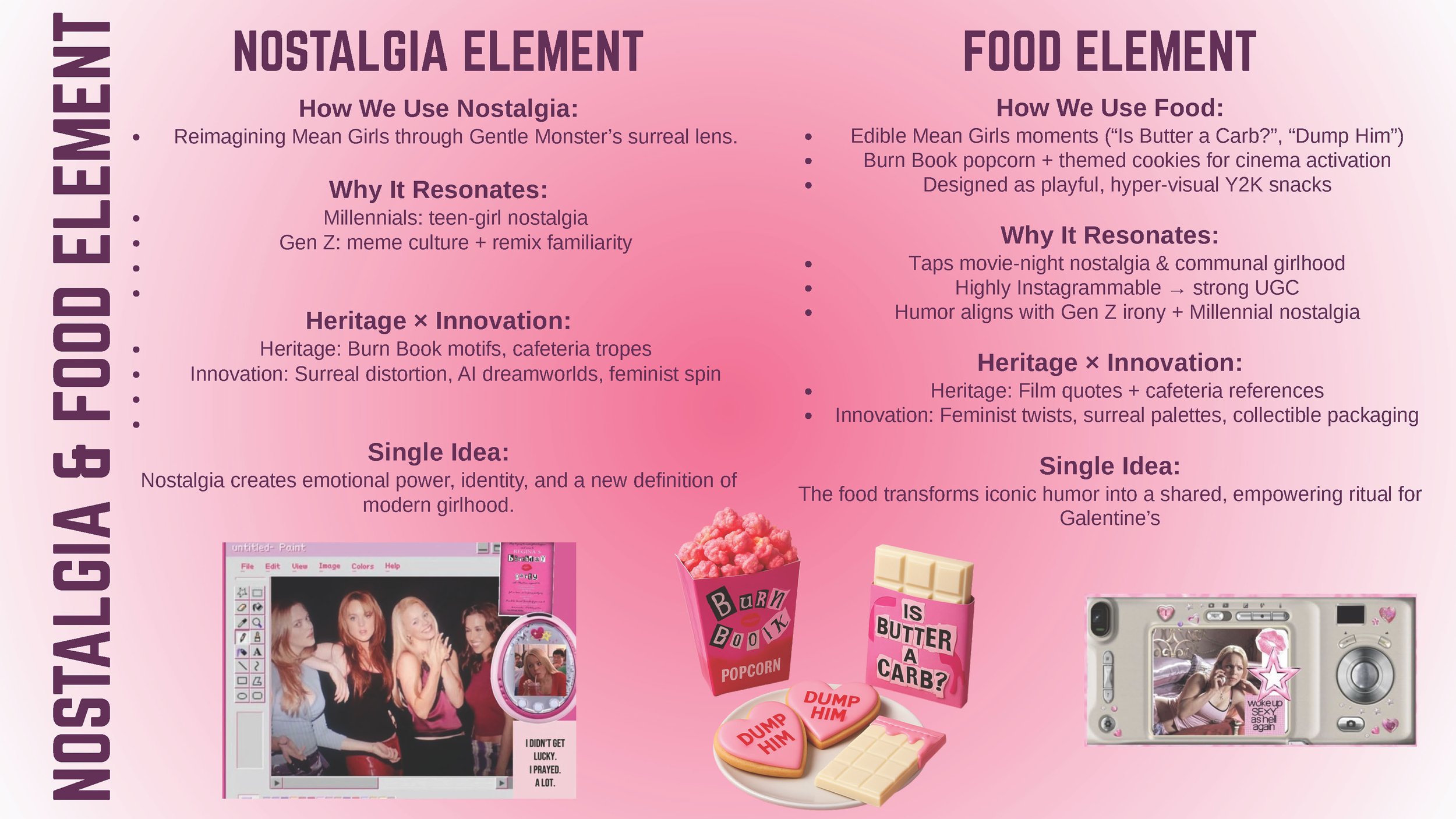
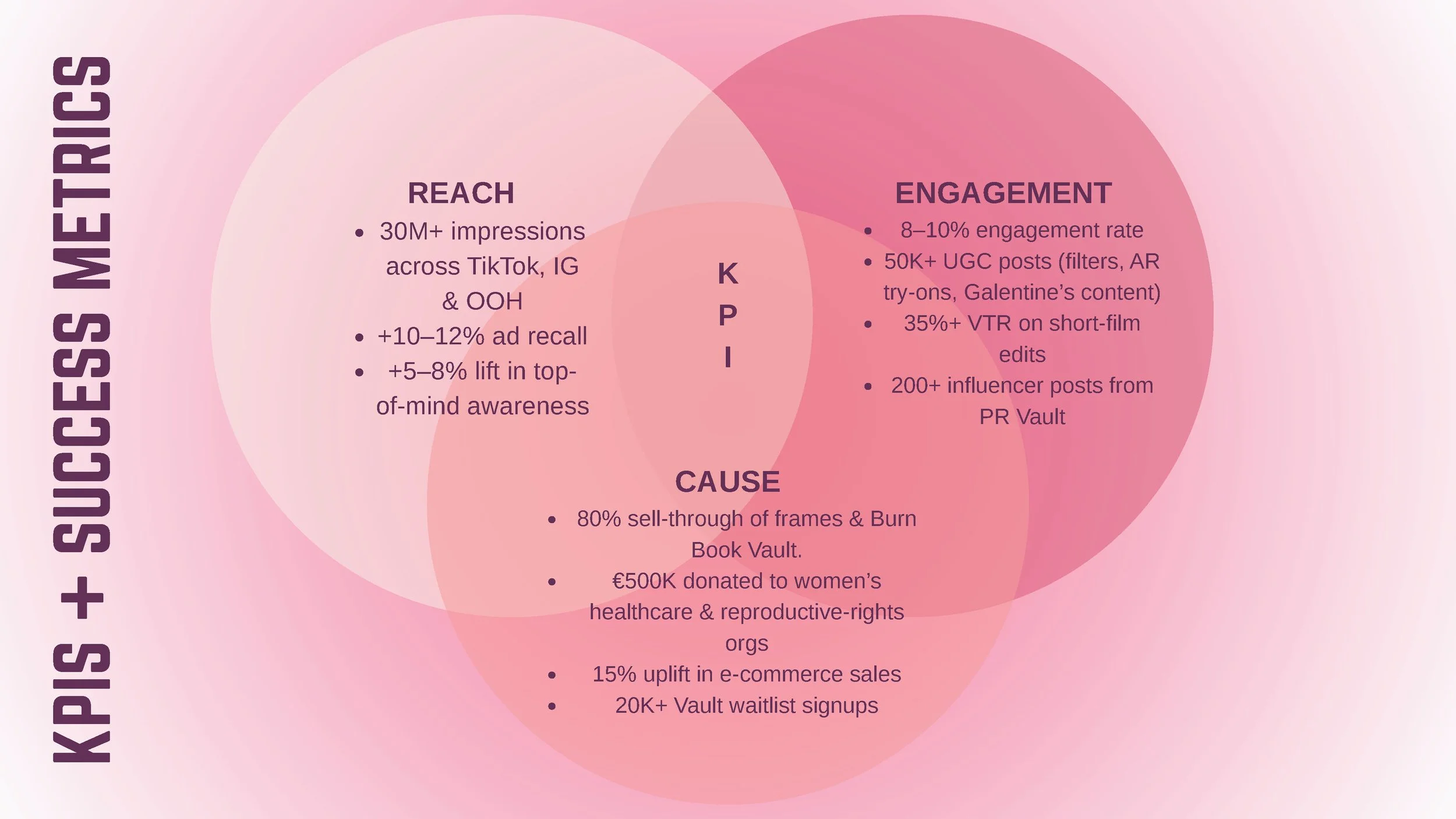
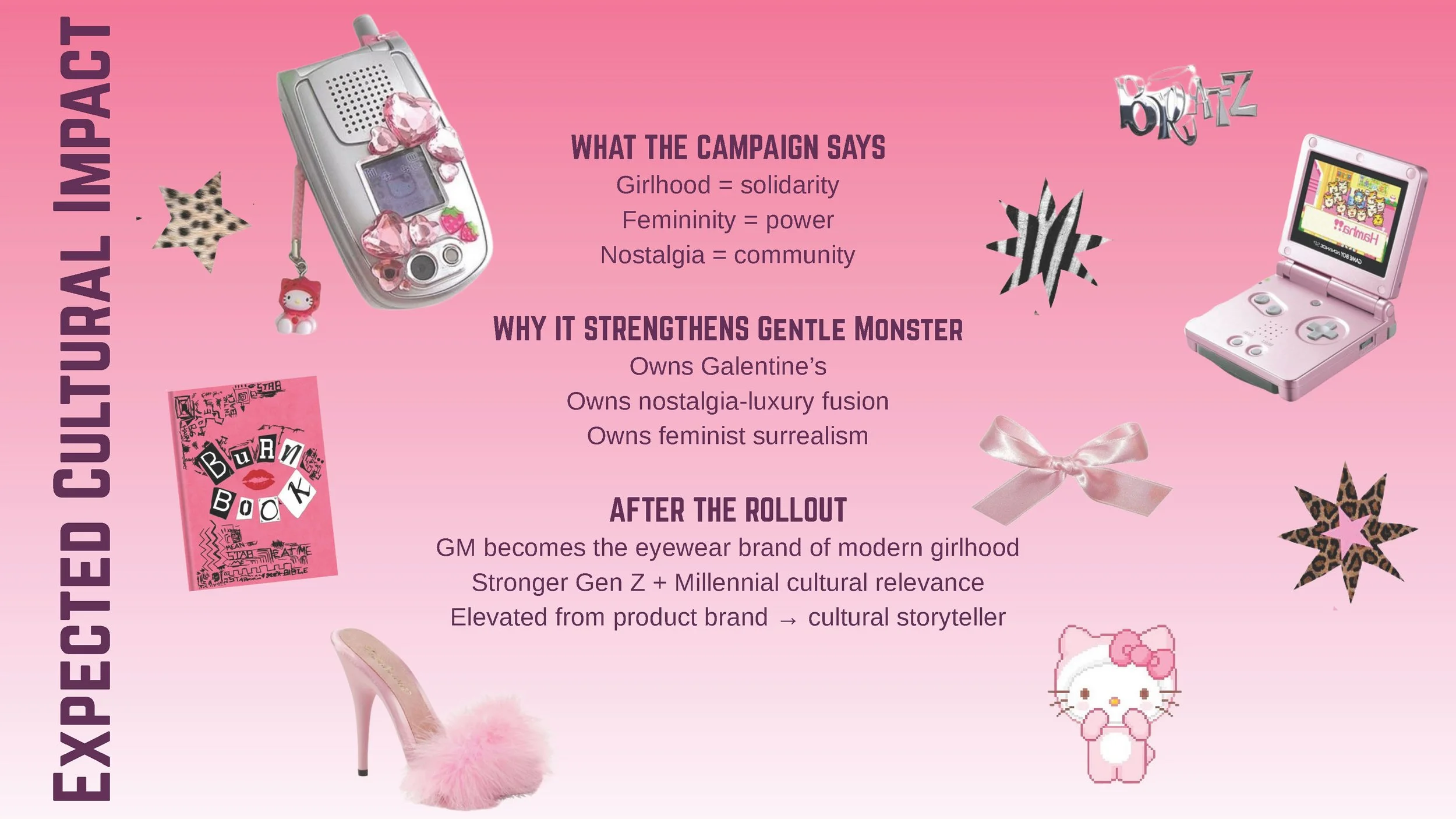
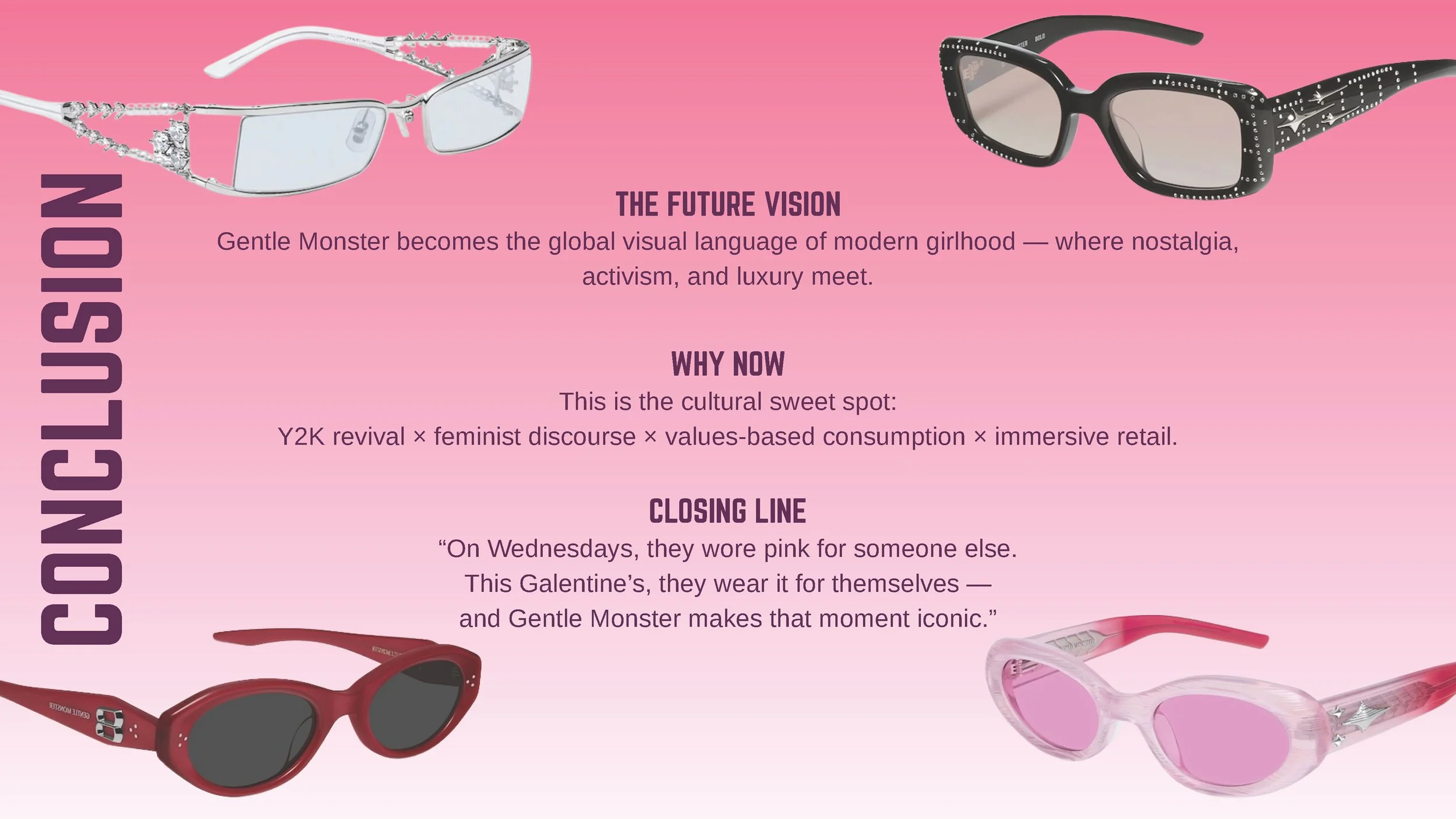

This campaign positions Gentle Monster as an immersive cultural force, reframing eyewear through sisterhood, collective care, and Galentine’s celebration. Blending technology, spectacle, and subversive storytelling, the concept transforms eyewear into an experiential symbol of friendship, identity, and shared joy.
THE LAST DAYS OF DISCO: THE ARCHIVE REAWAKENS
by Sarah Eisel | Tom Ford
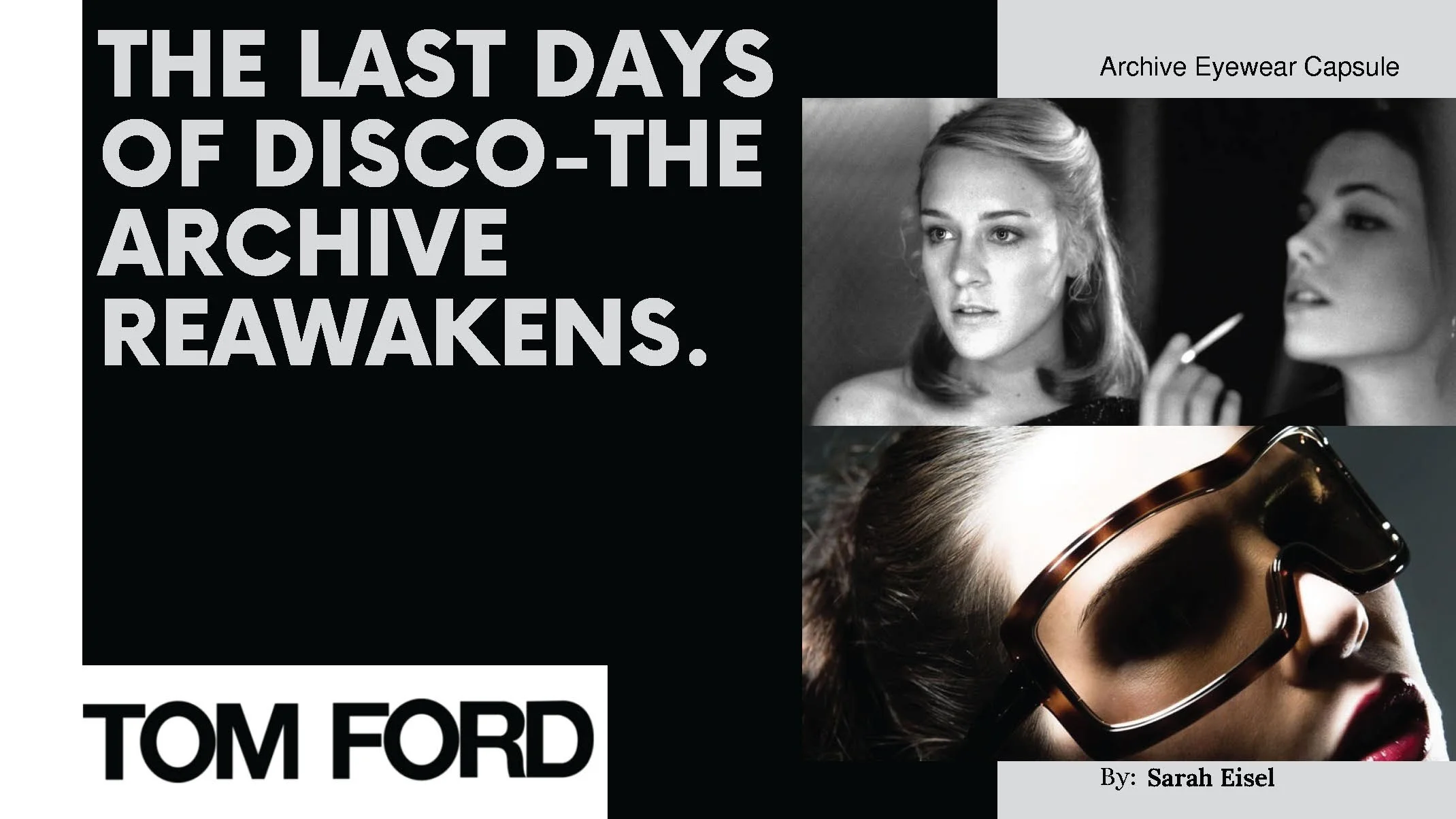
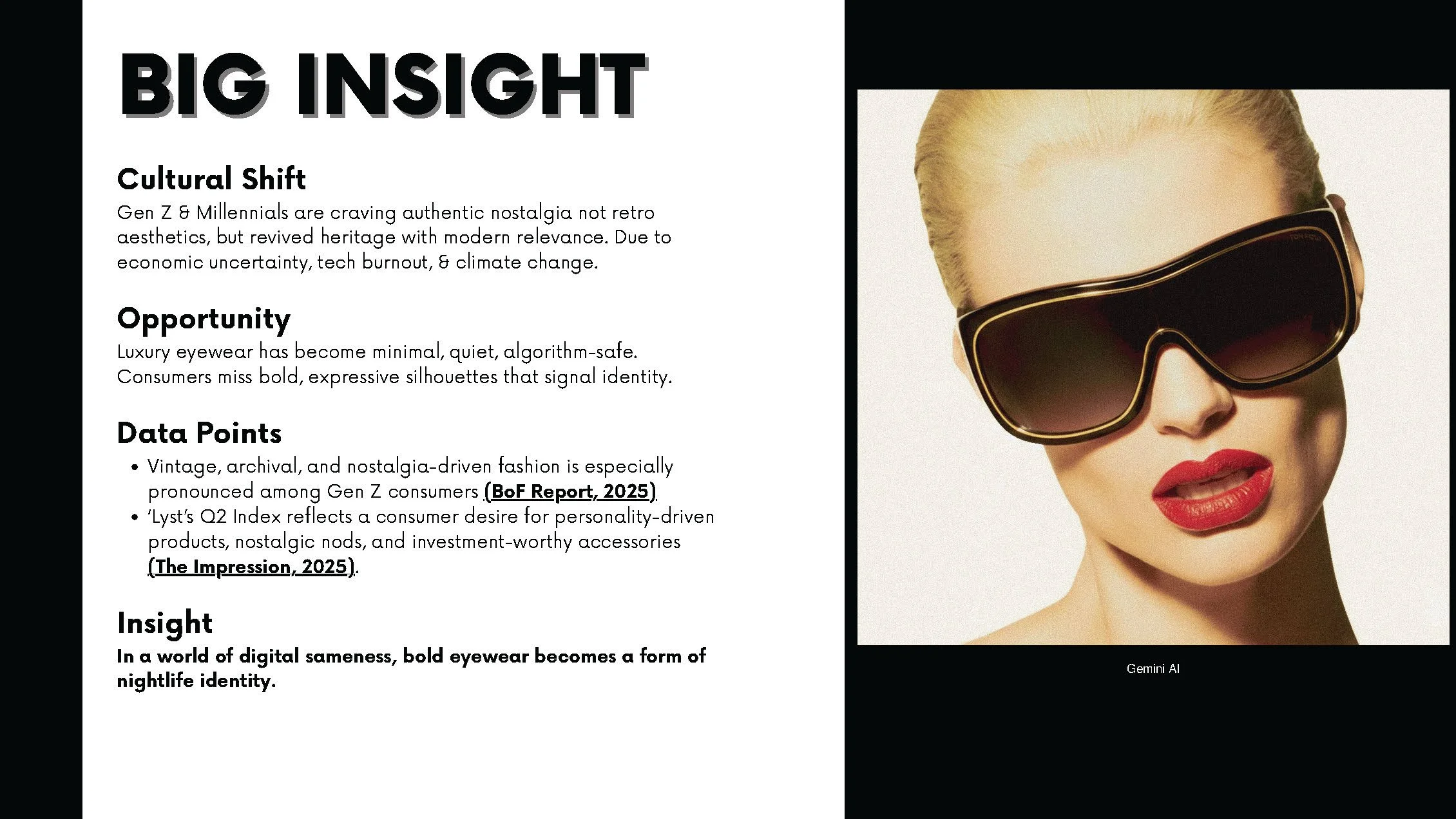


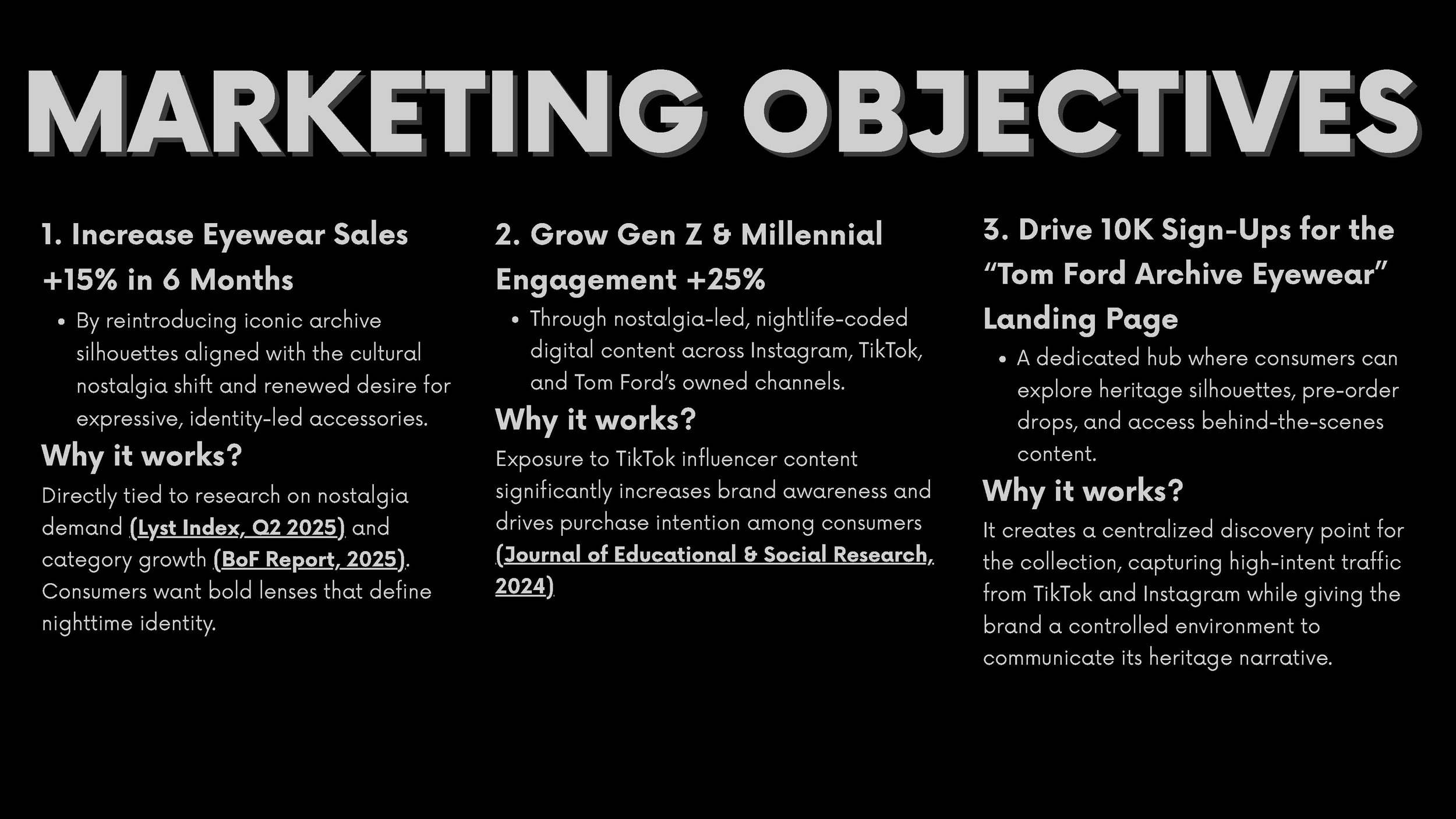


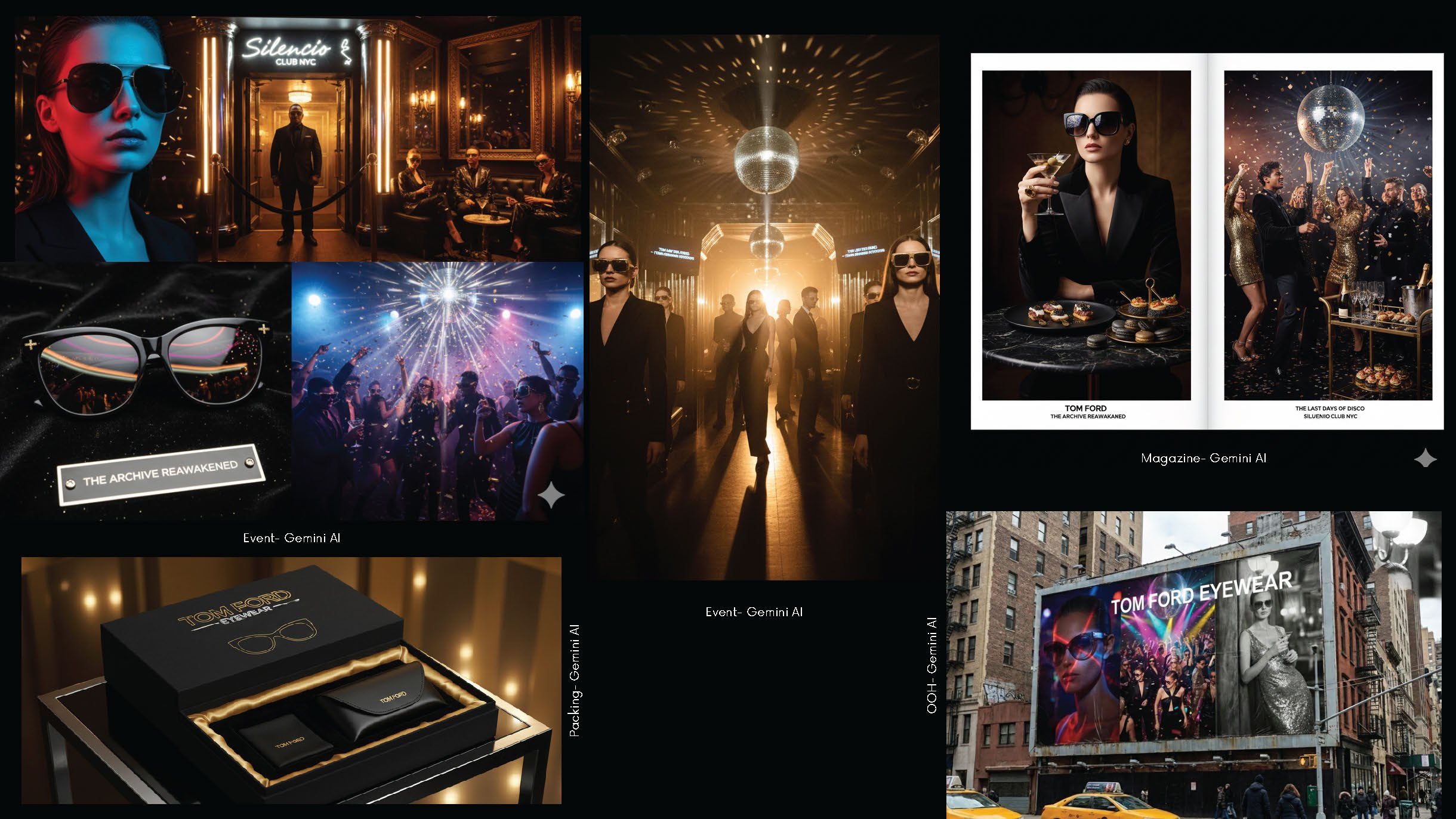


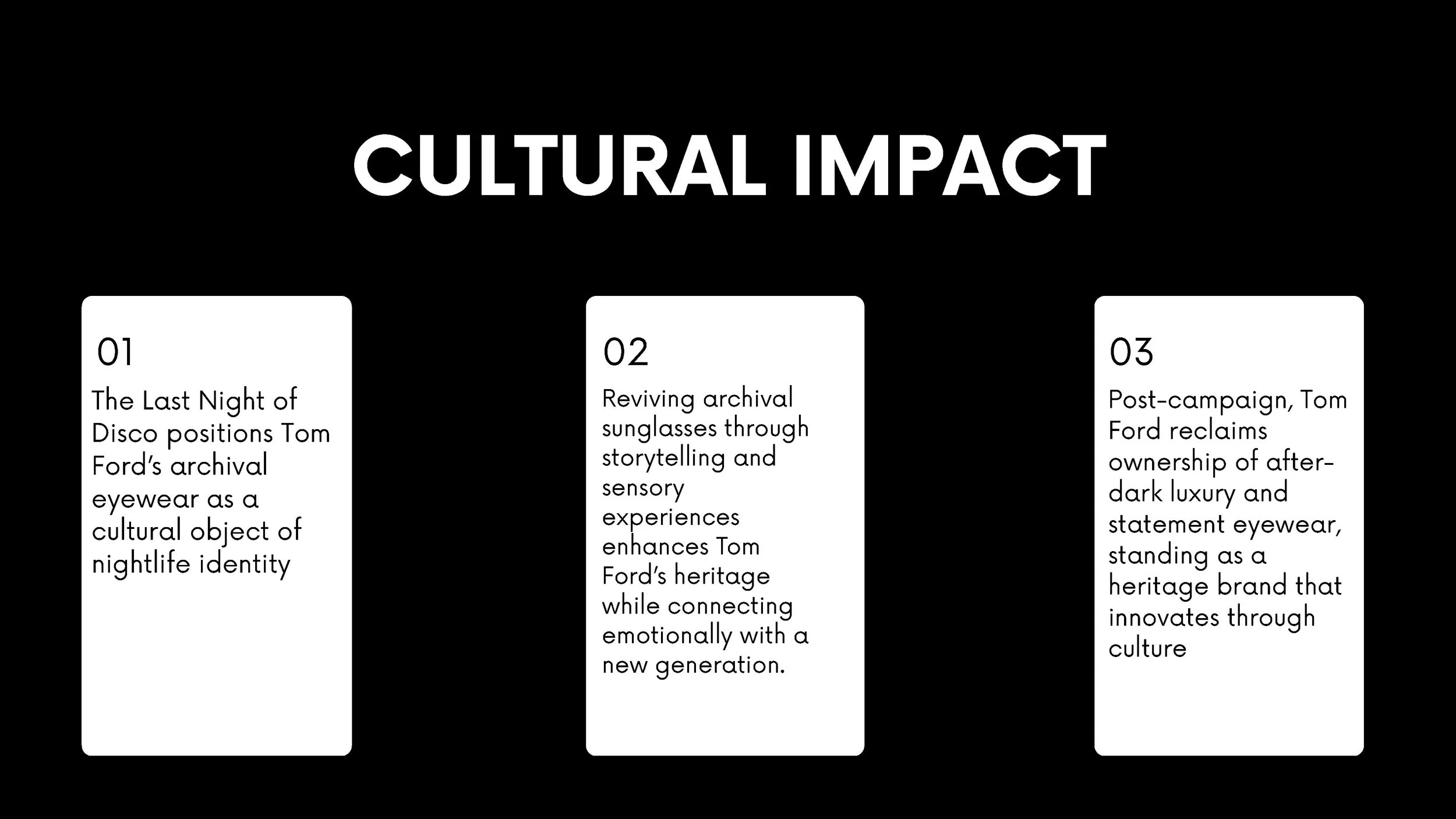


This campaign revives Tom Ford eyewear through nightlife nostalgia, archival glamour, and cinematic storytelling. Positioning bold eyewear as identity armor, the concept reclaims the brand’s legacy of sensual mystery while responding to contemporary demand for expressive, after-dark accessories rooted in heritage.
Futures: Fashion Communication
In Spring 2025 semester, students investigated how identity, storytelling, and emerging technologies shape the future of fashion. Led by Melquan Ganzy, the course examined tools such as AI, AR/VR, blockchain, and immersive platforms, centering how brands can create meaningful digital experiences rooted in culture, creativity, and social impact.
For their final projects, students expanded upon midterm research to design immersive brand strategies with virtual fashion, imagining how brands might exist and thrive in the metaverse. Each project proposed a virtual fashion experience aligned with brand values, integrated digital and physical touchpoints, and explored how identity, technology, and storytelling converge for global audiences.
Projects addressed marketing strategy, digital product prototyping, media outreach, and experiential design, bridging virtual worlds with physical production through speculative yet strategic futures thinking.
Thom Browne Immersive Strategy
by Students Chanho Kim, Grace Hatesohl,
Ju Hee Lee, AND Vier Bindra
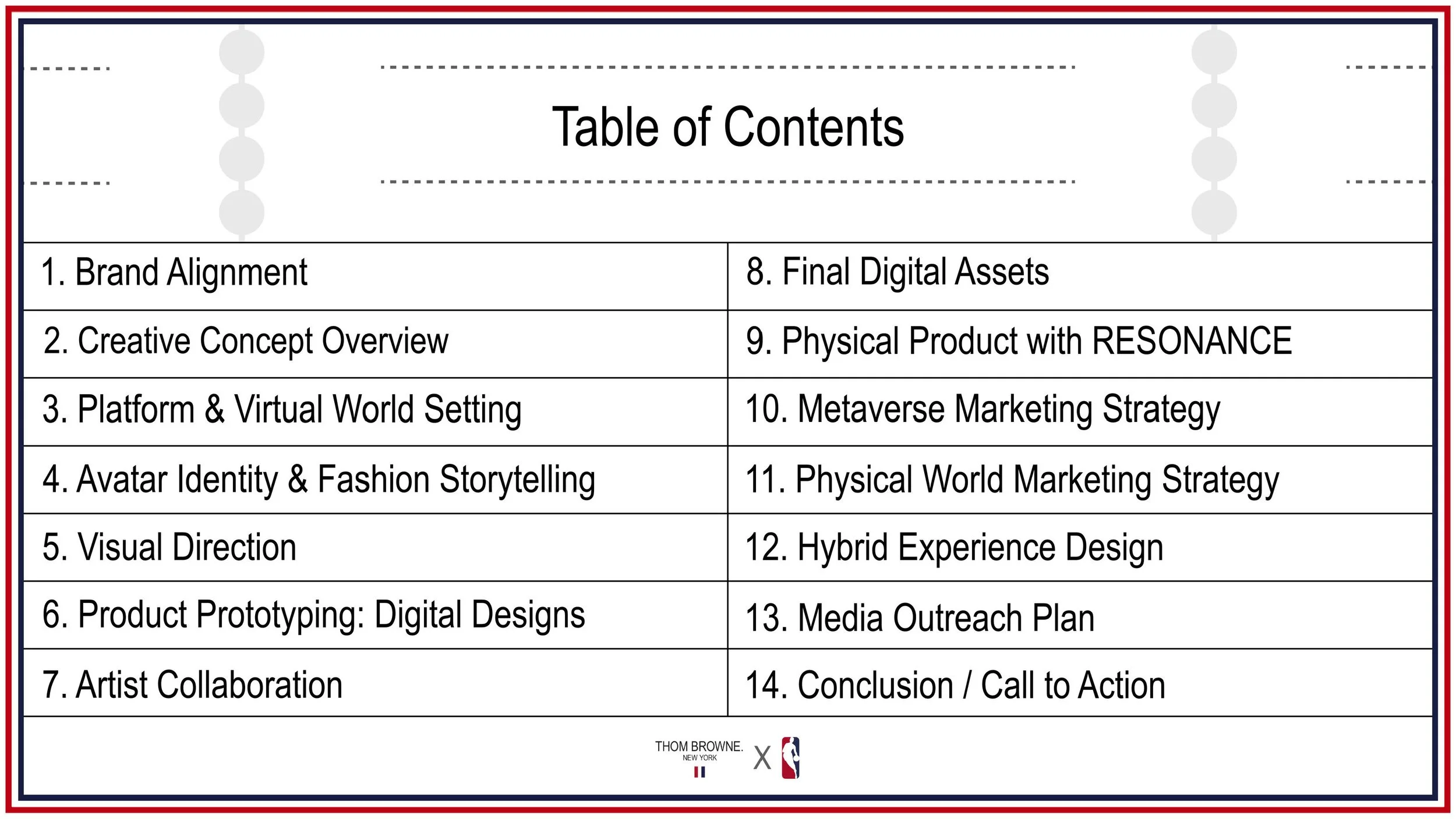
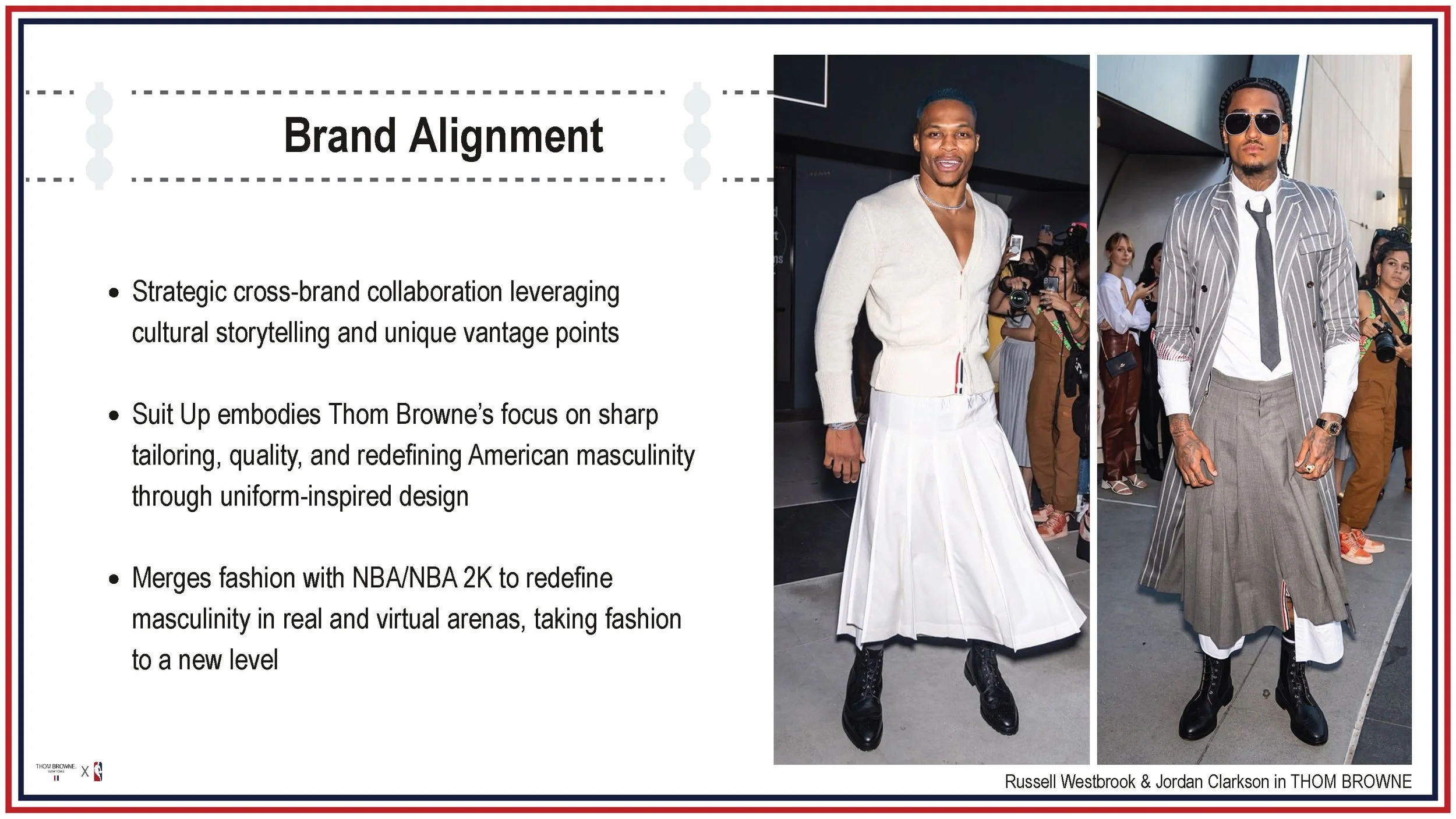
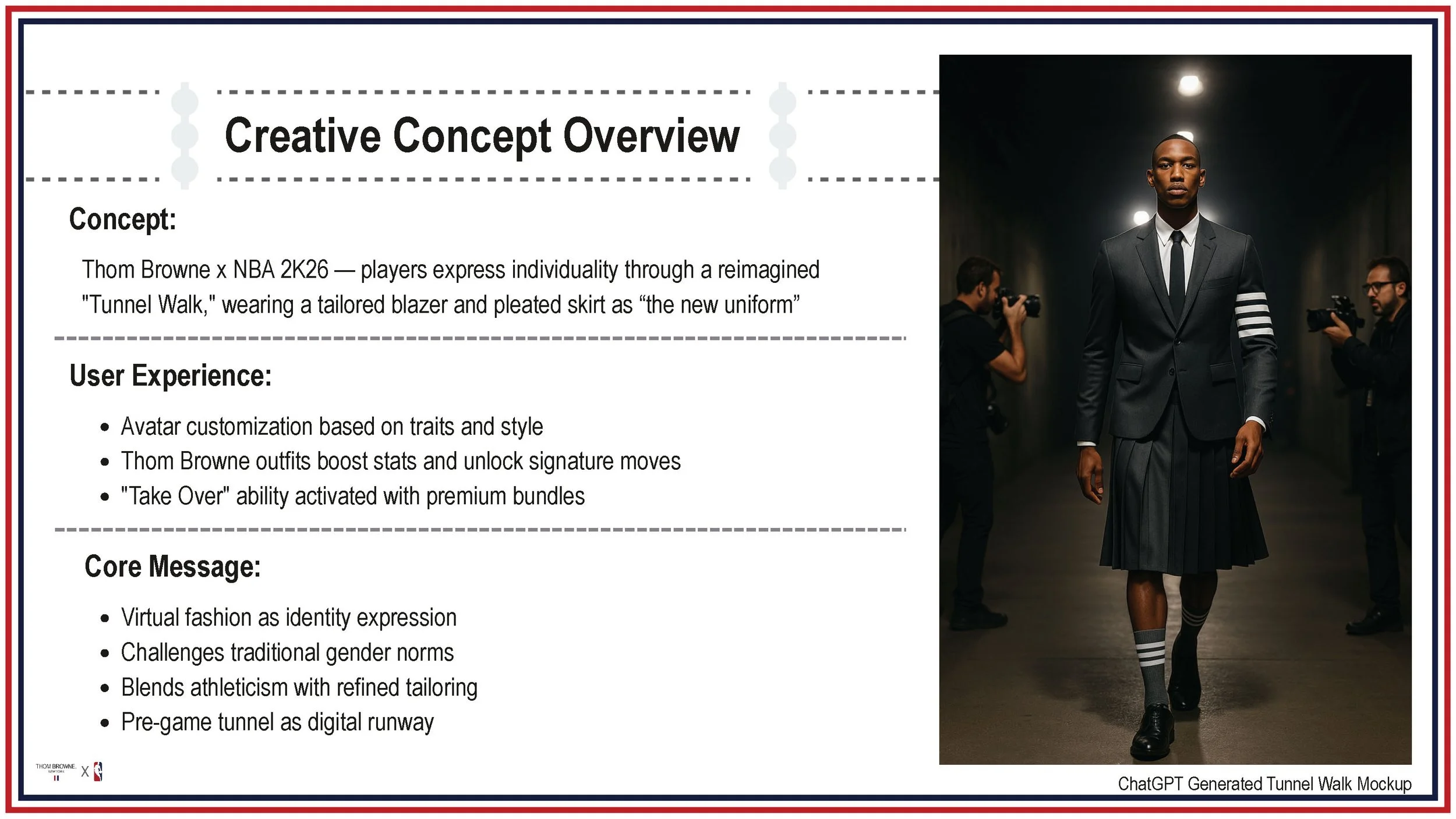
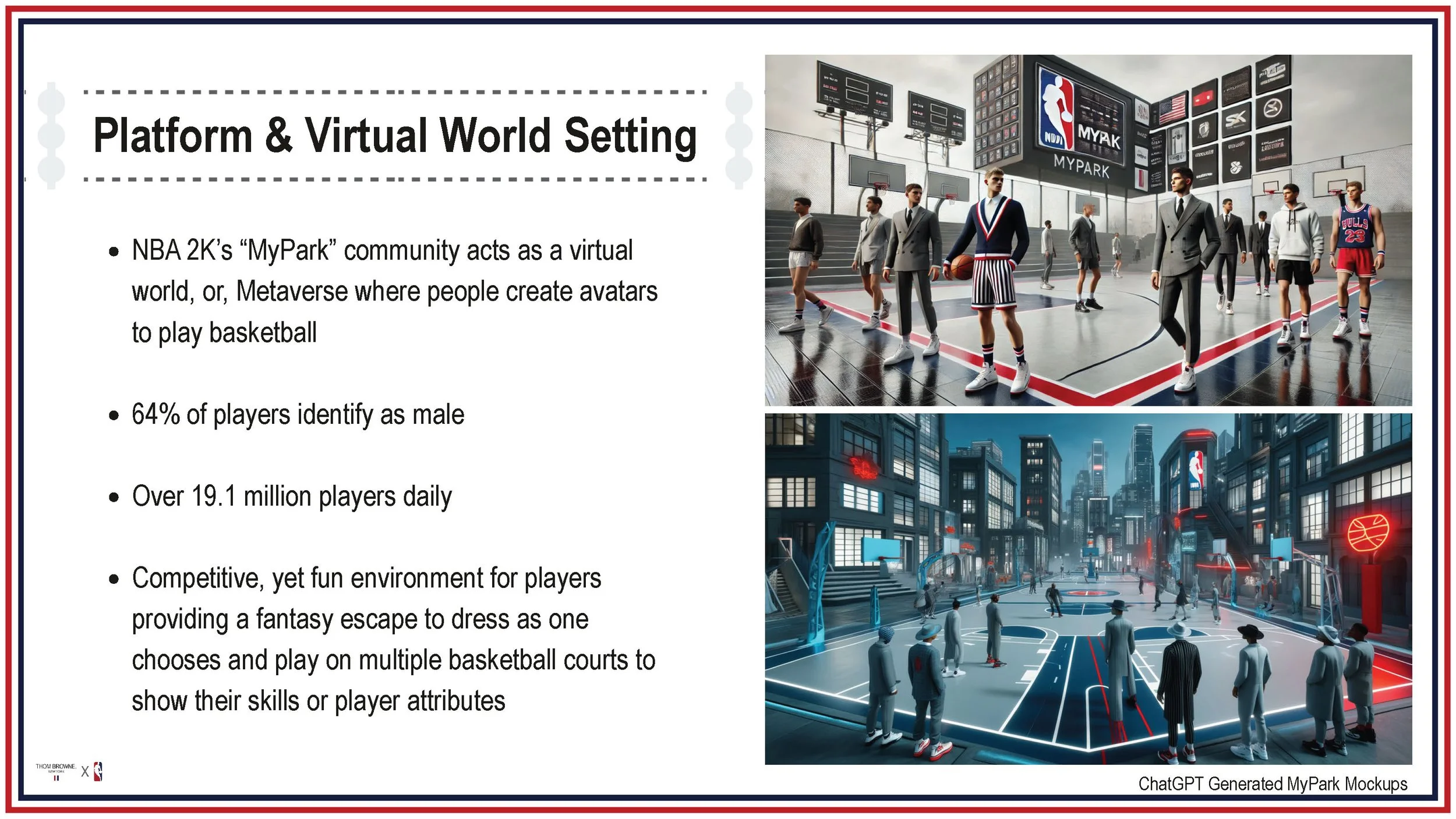
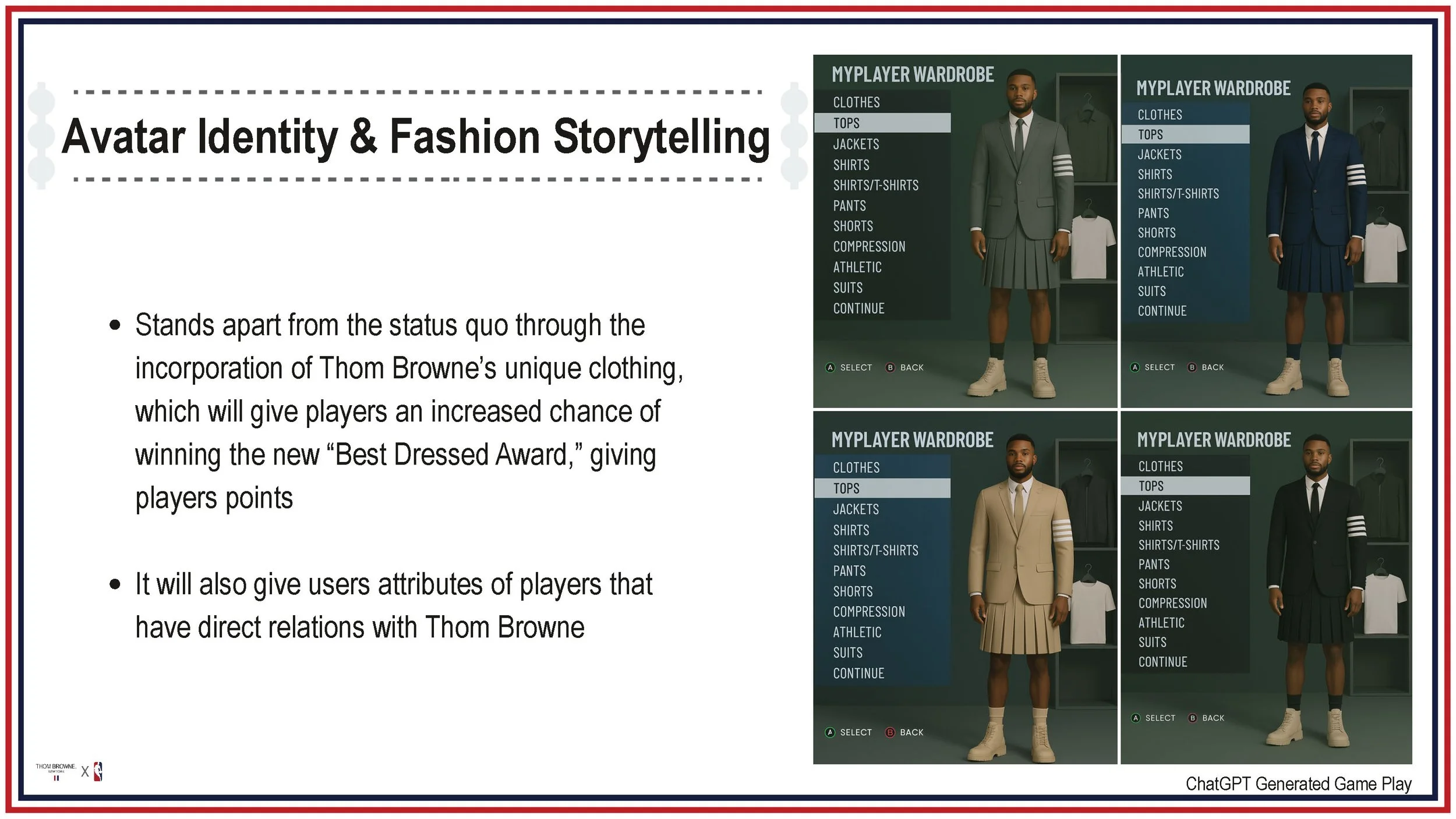
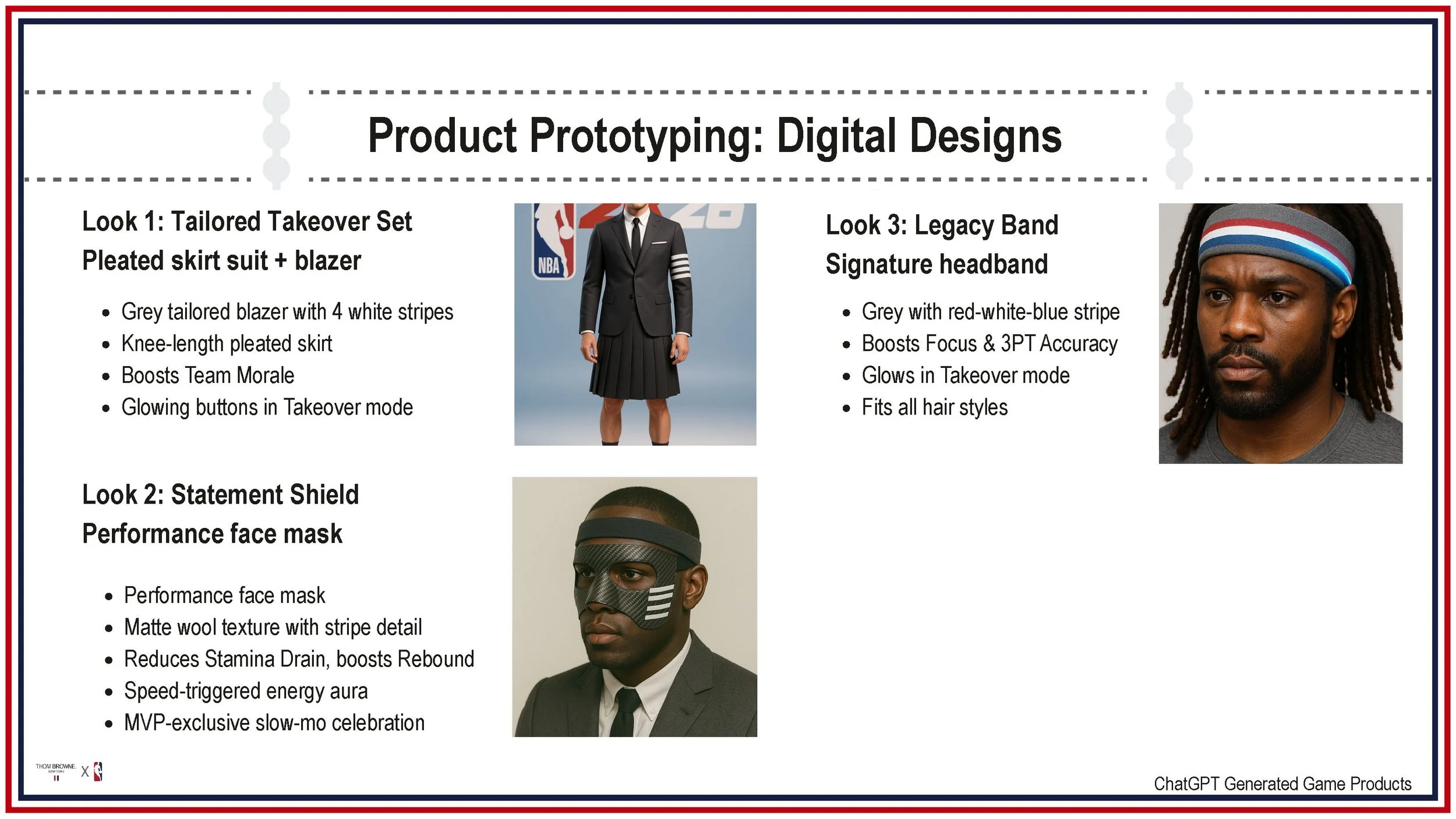
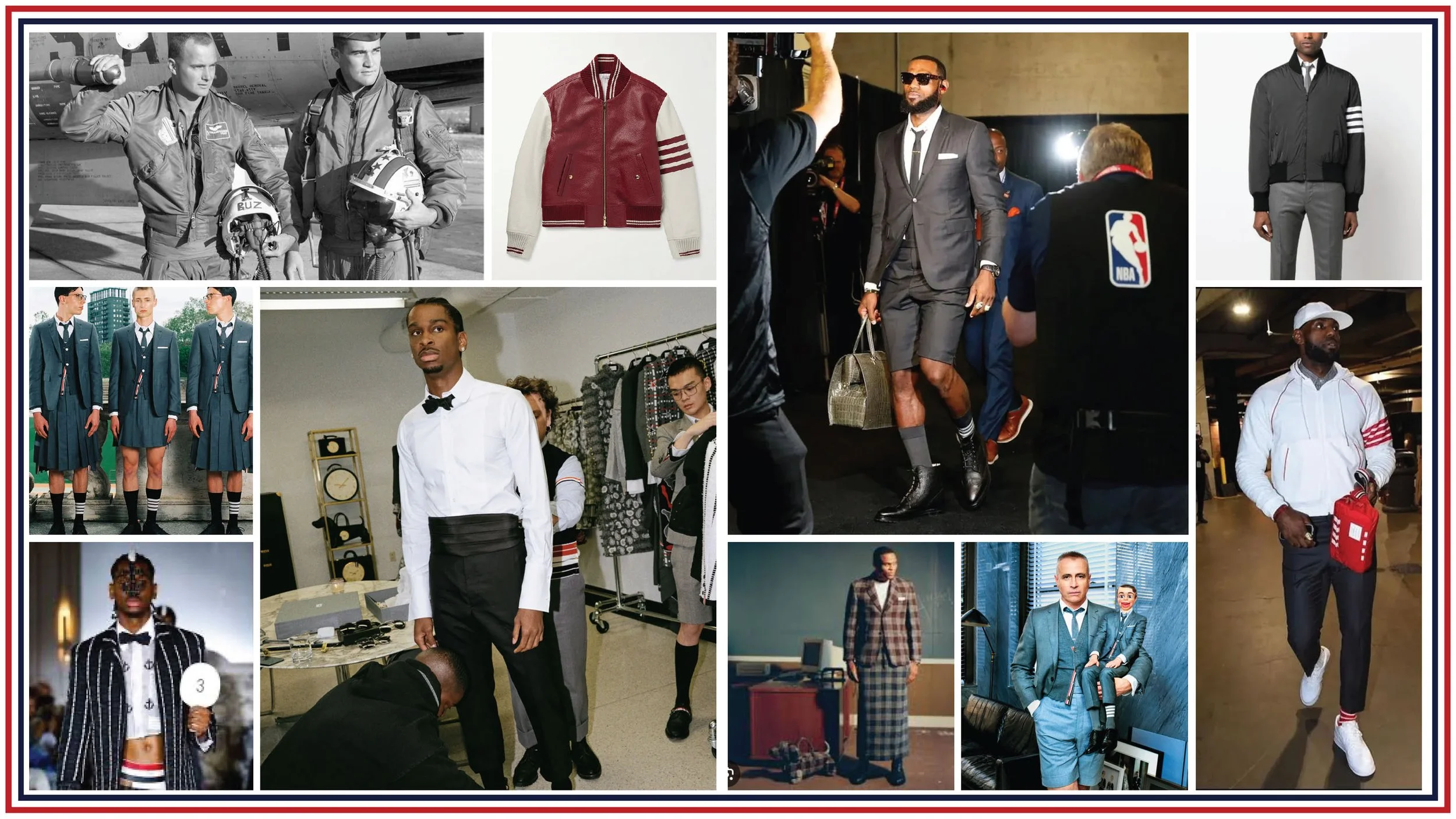
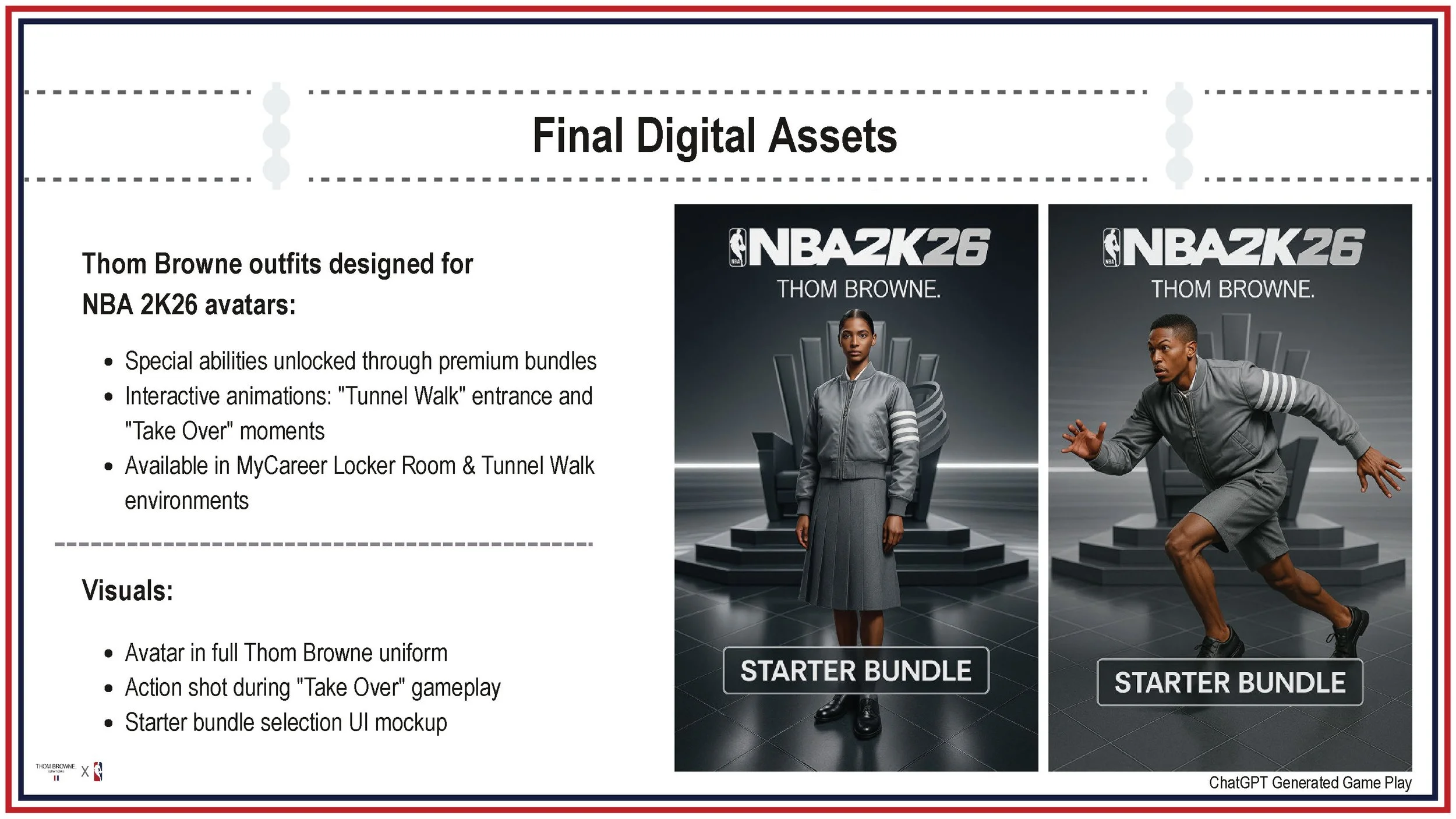
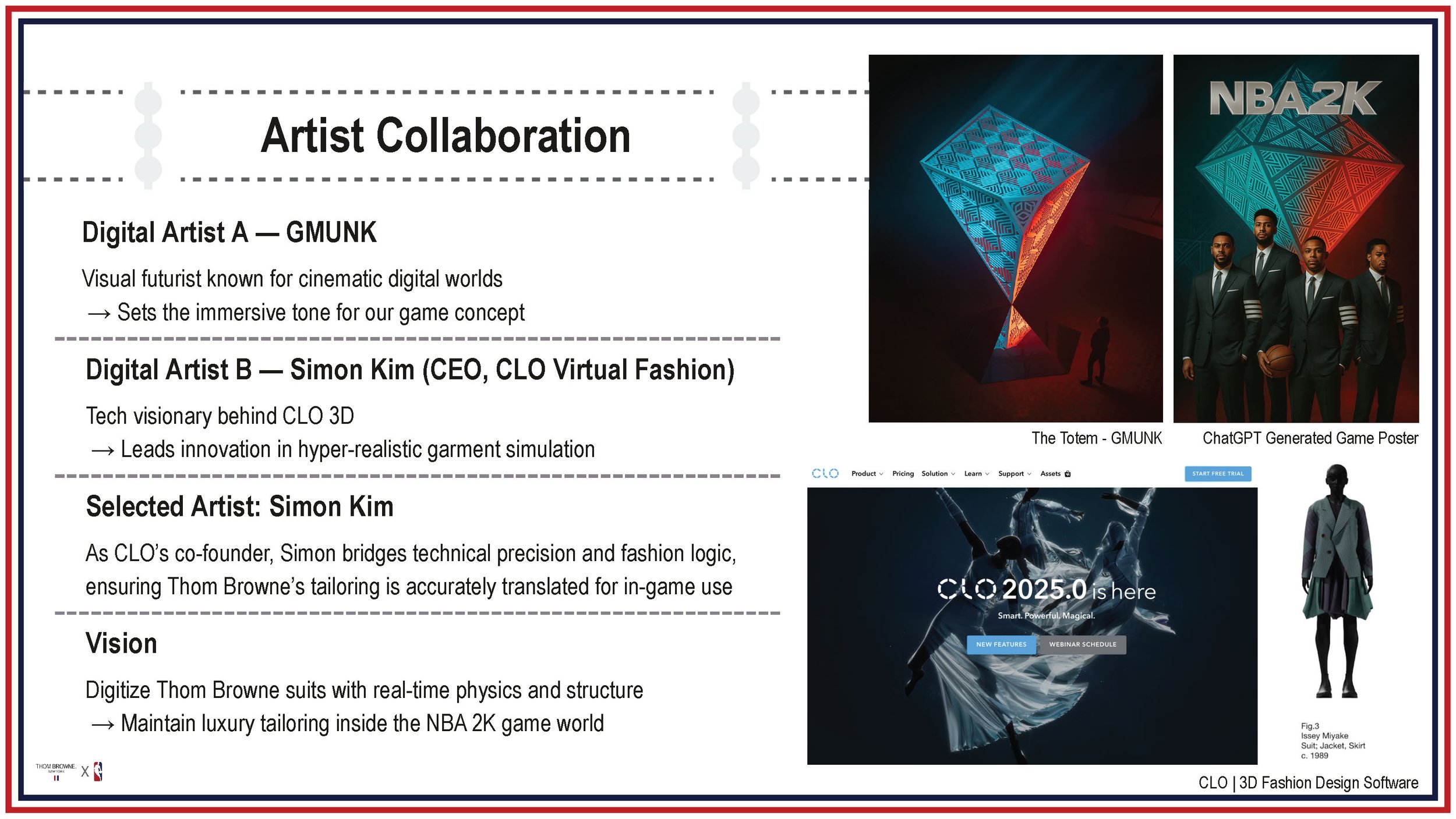
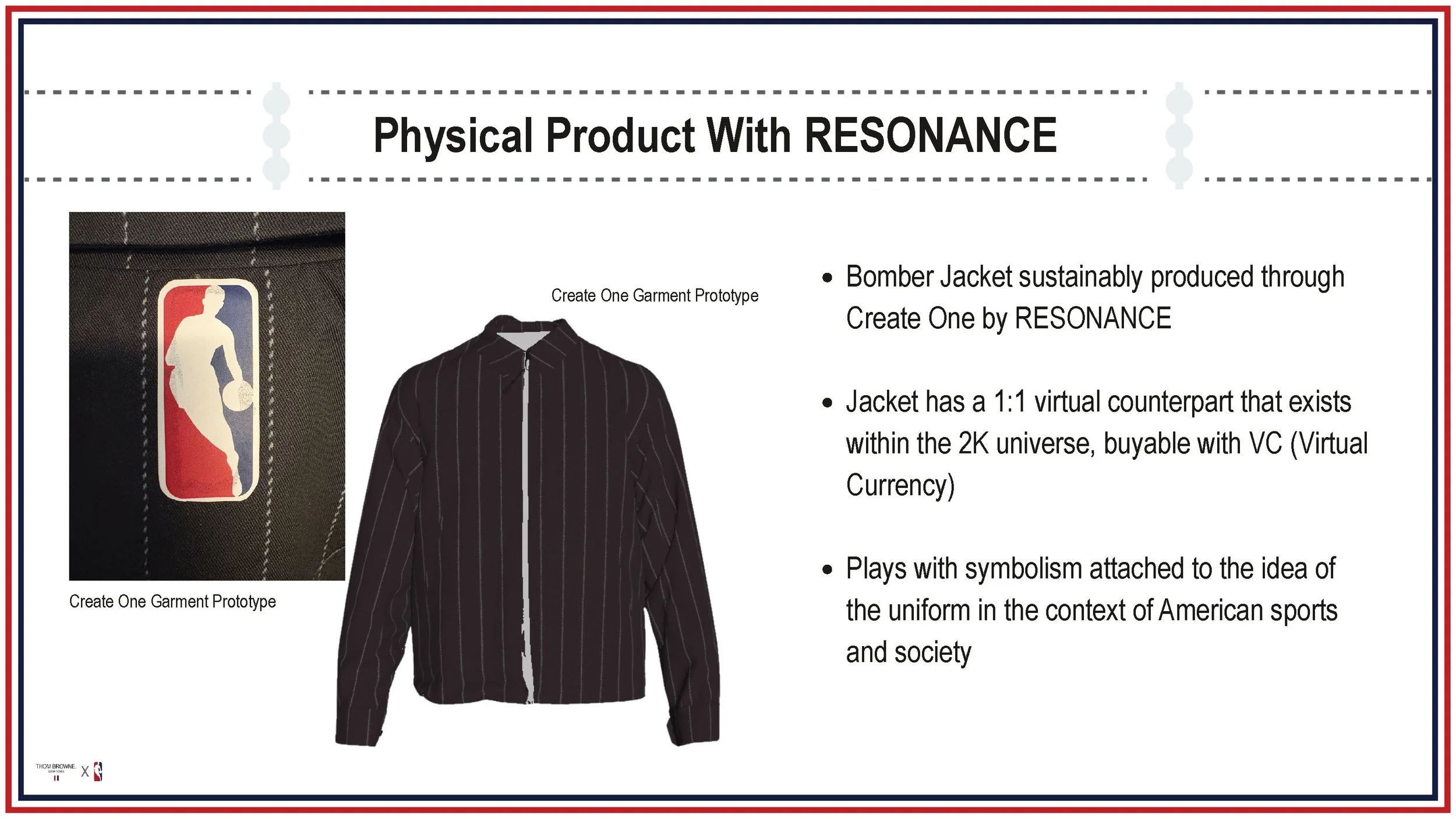
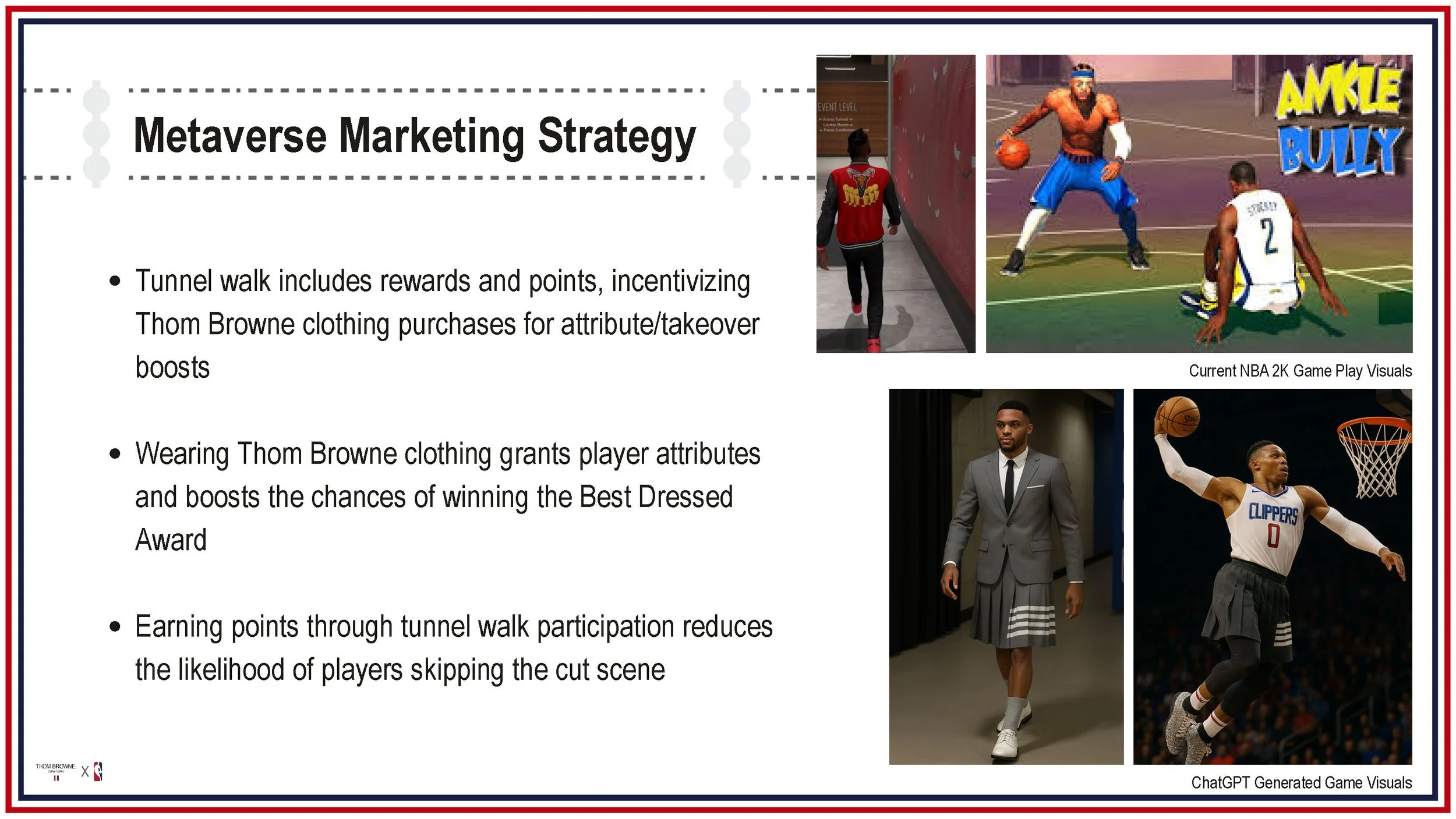
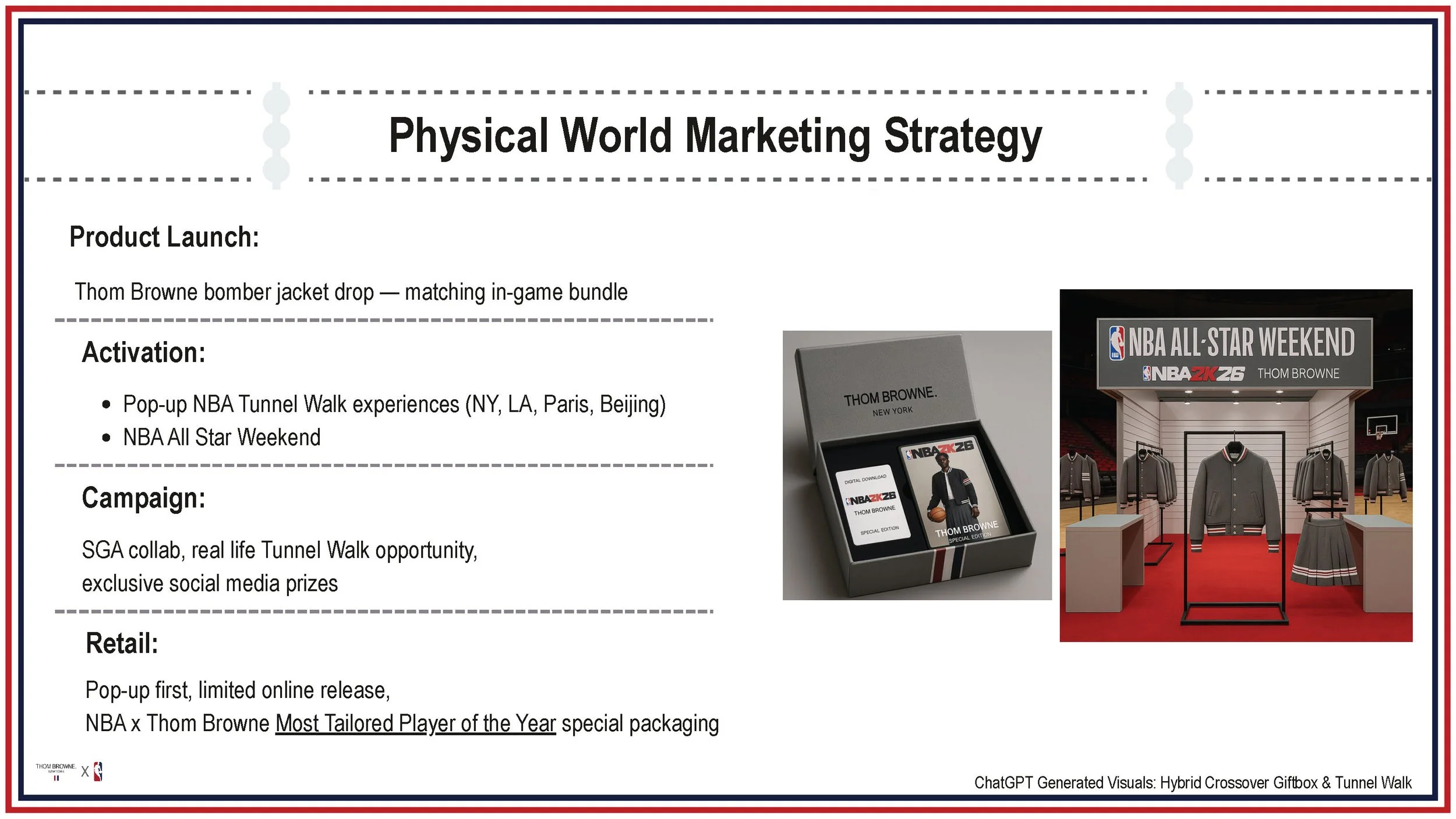
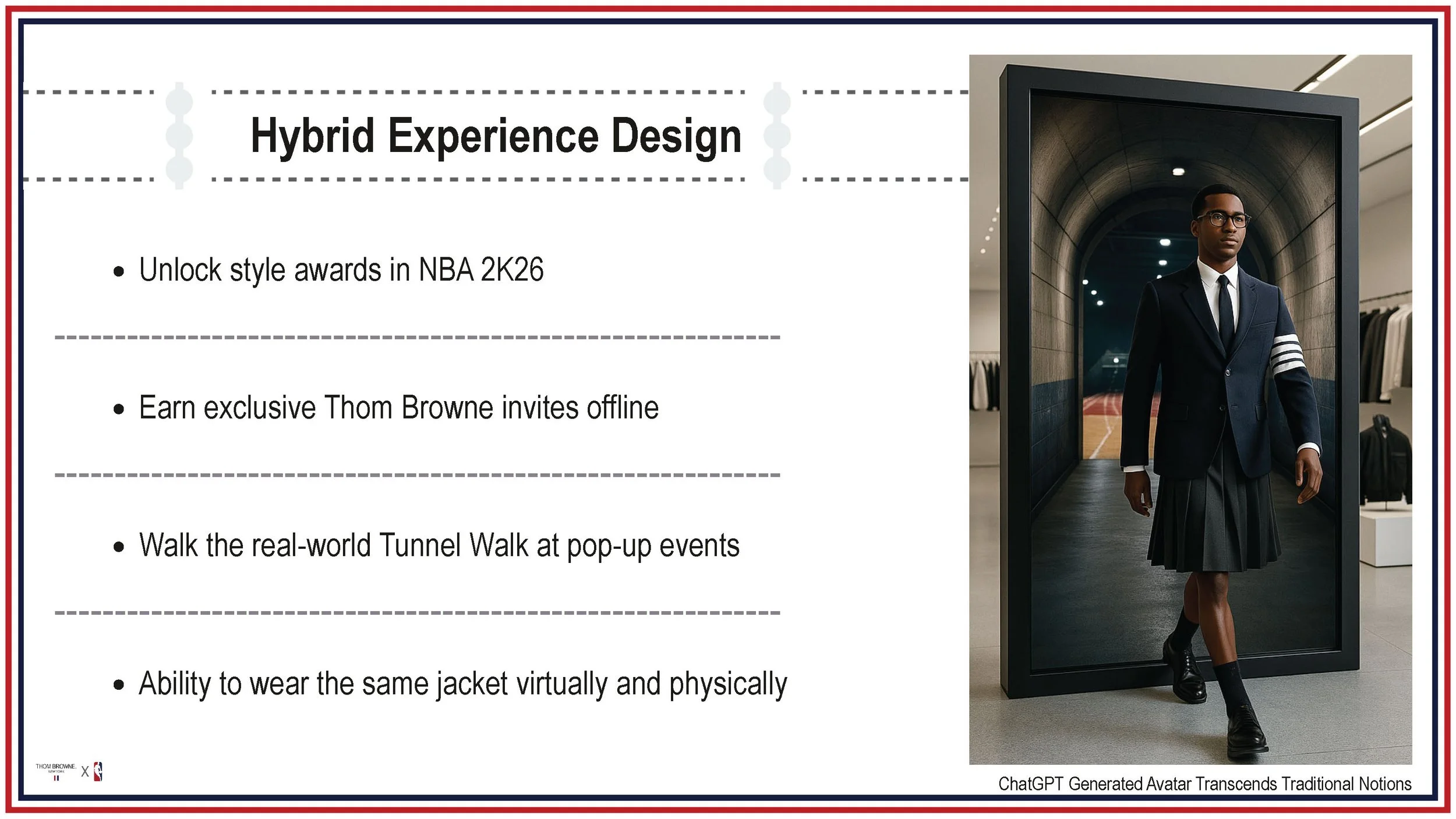
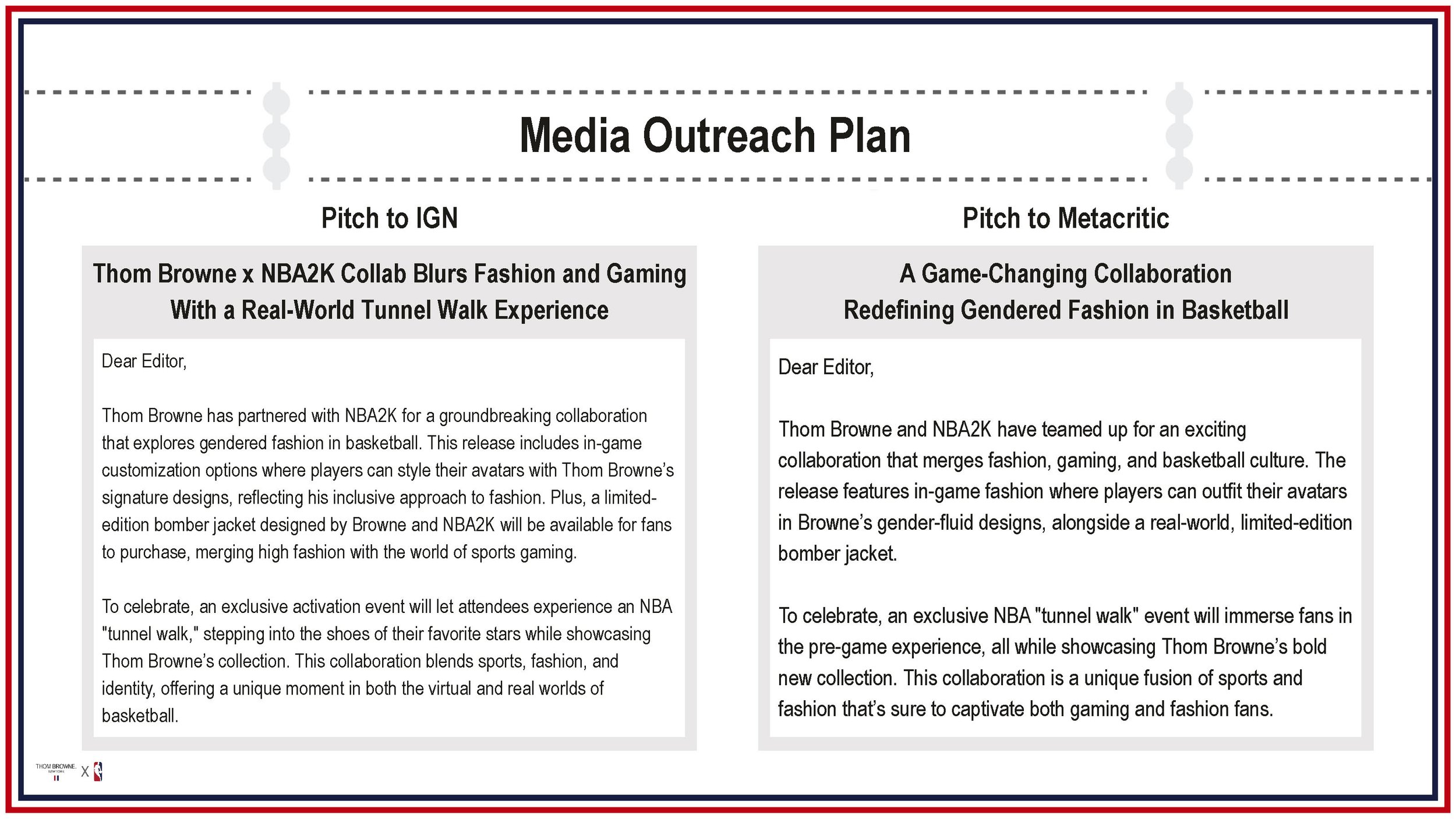
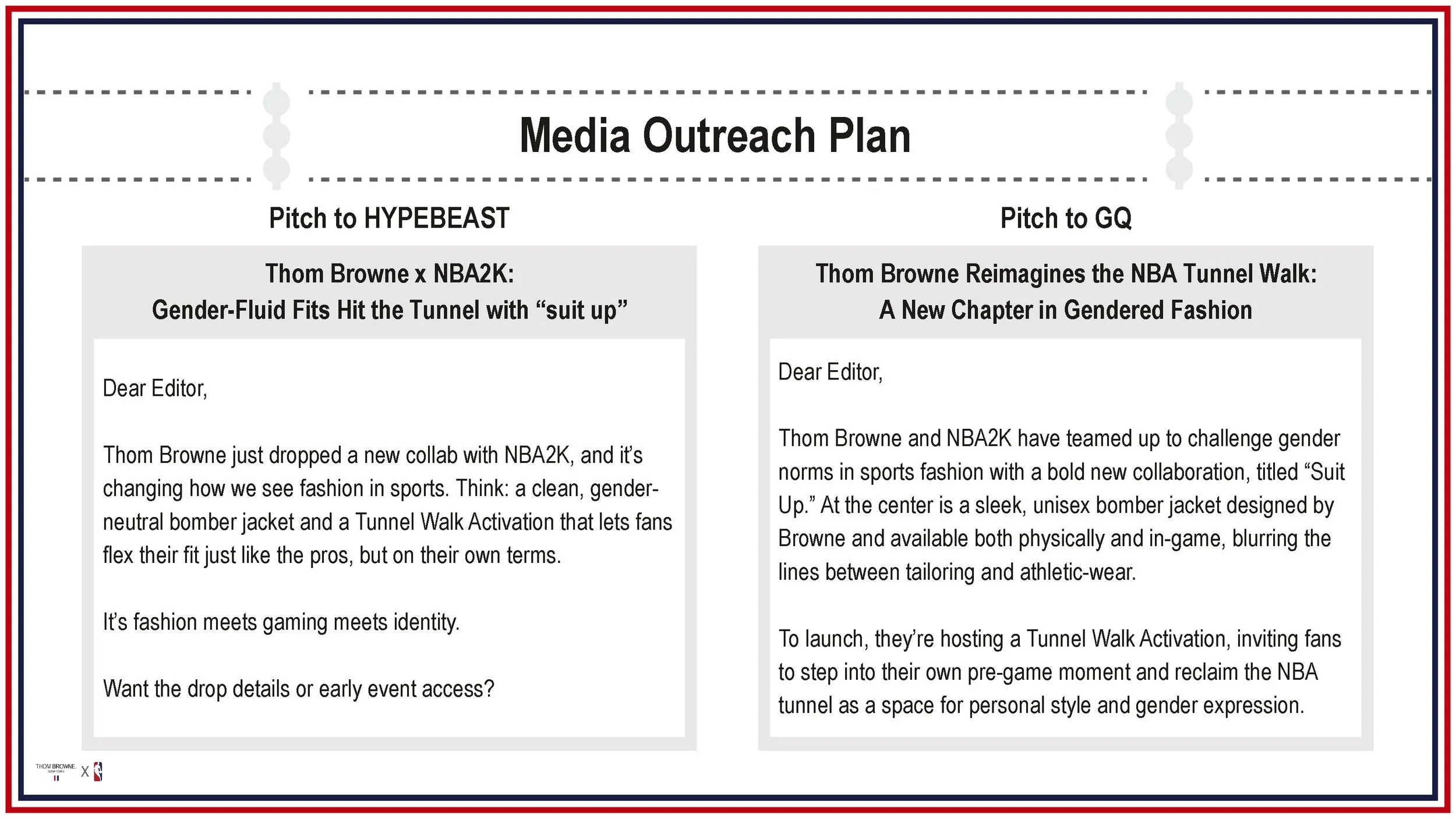
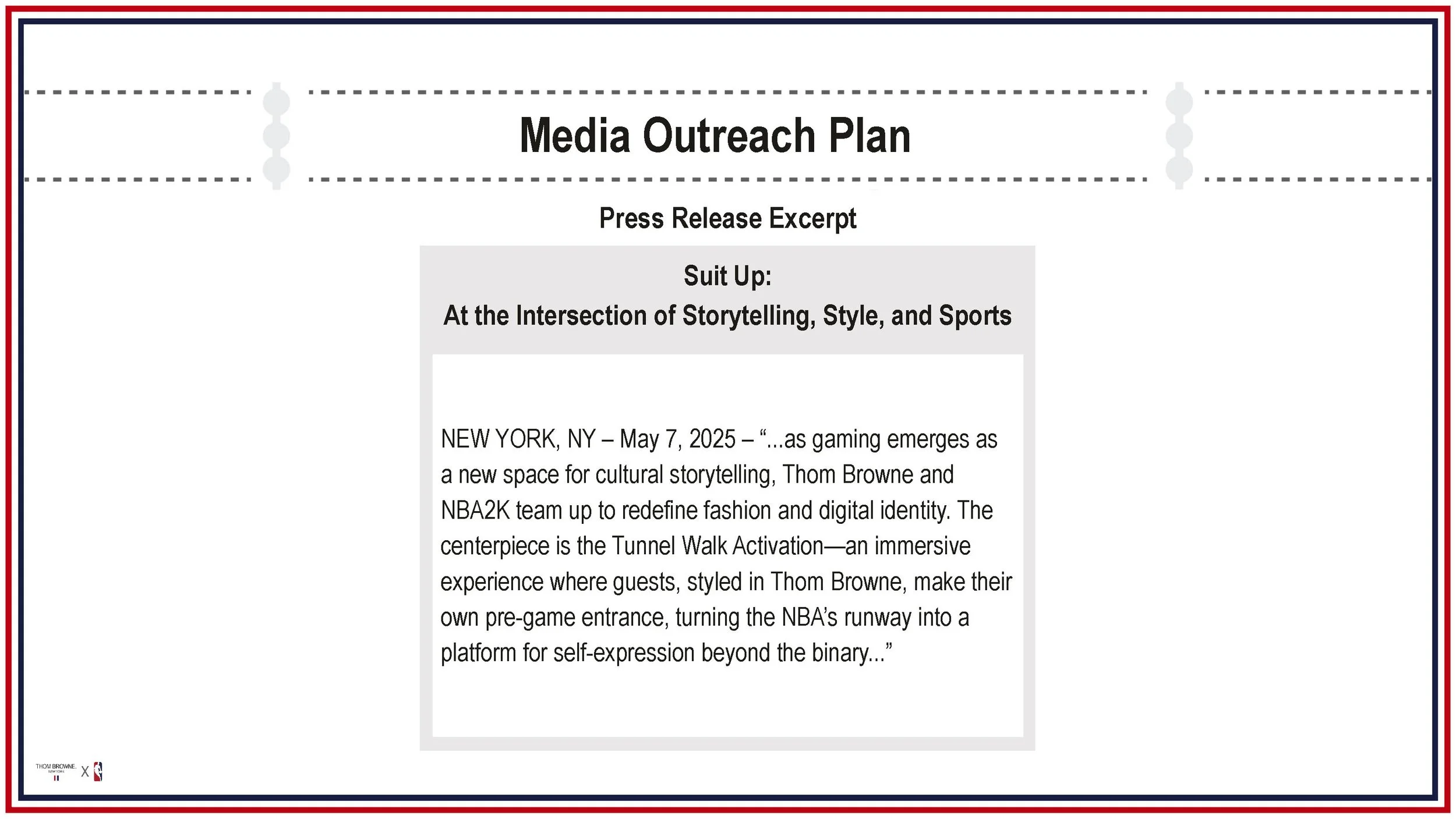
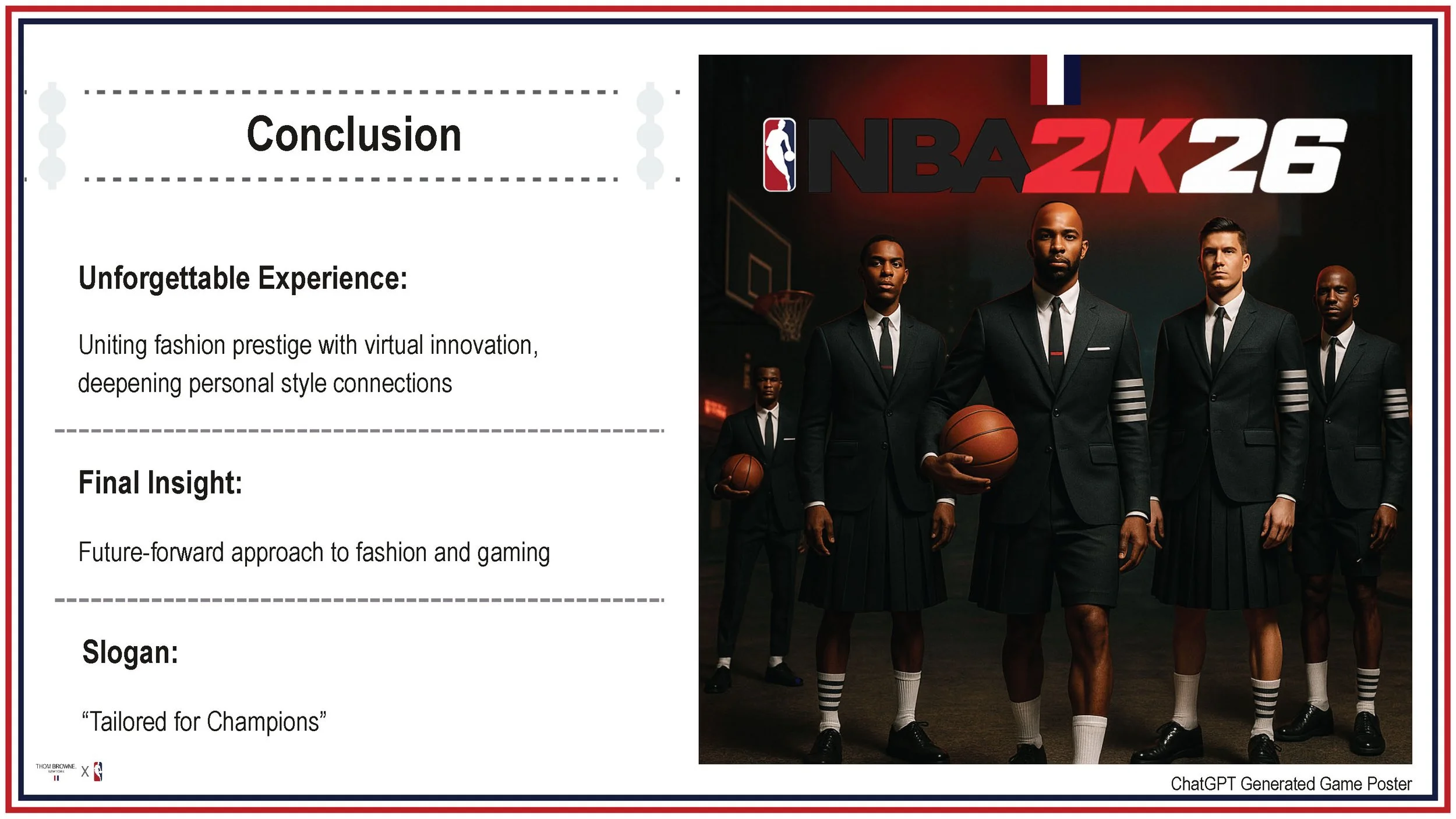
This immersive strategy reimagines Thom Browne through contemporary masculinity, sports culture, and shifting creative agency among men. Using virtual fashion and experiential storytelling, the project explores alternative expressions of menswear, positioning Thom Browne within a digital world where discipline, play, and identity coexist.
LUAR: Legacy Immersive Strategy
by Students Ava Wombwell, Olivia Cavero, Amber Heath, and Siwawat Chaipipat
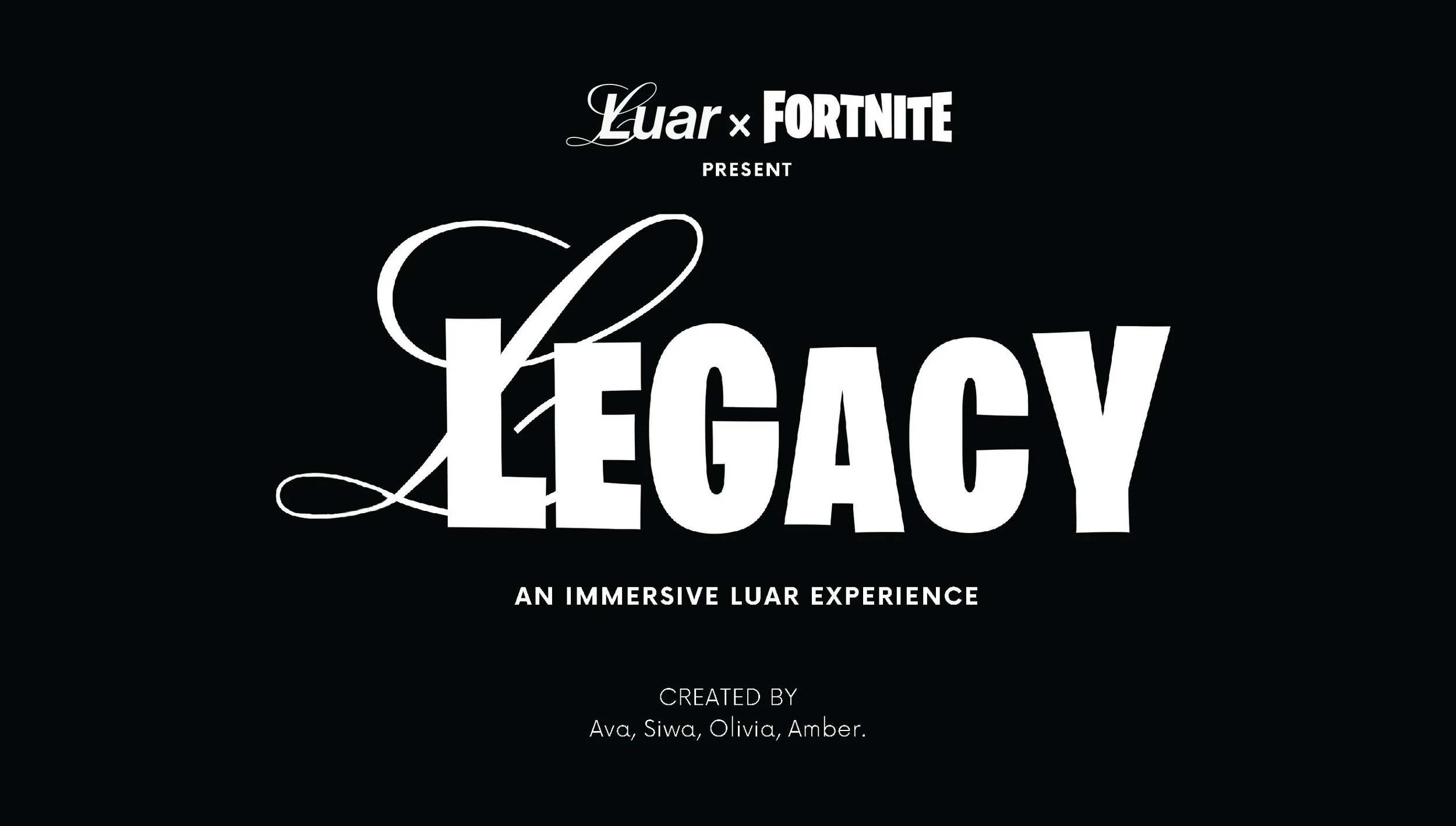
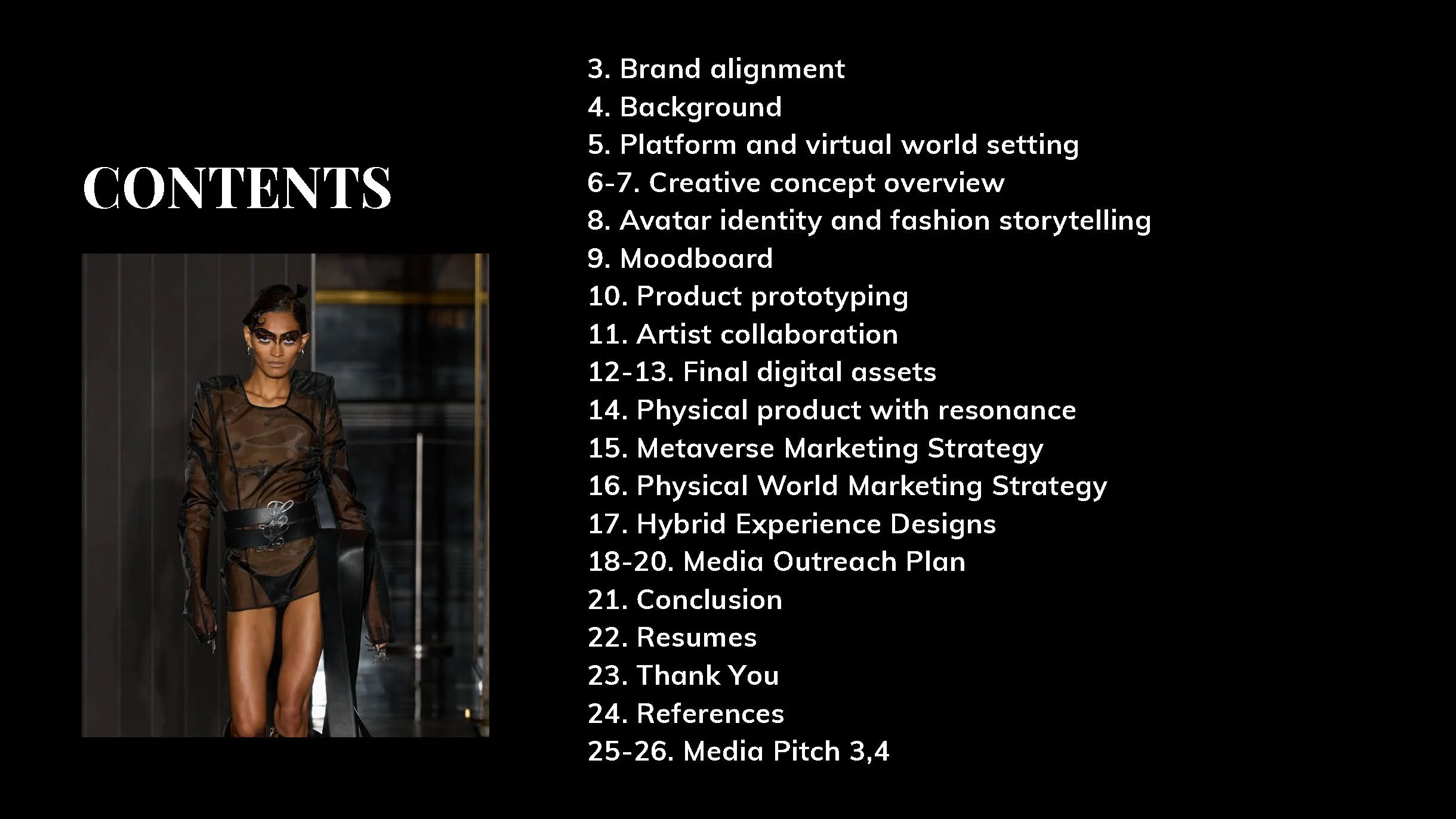
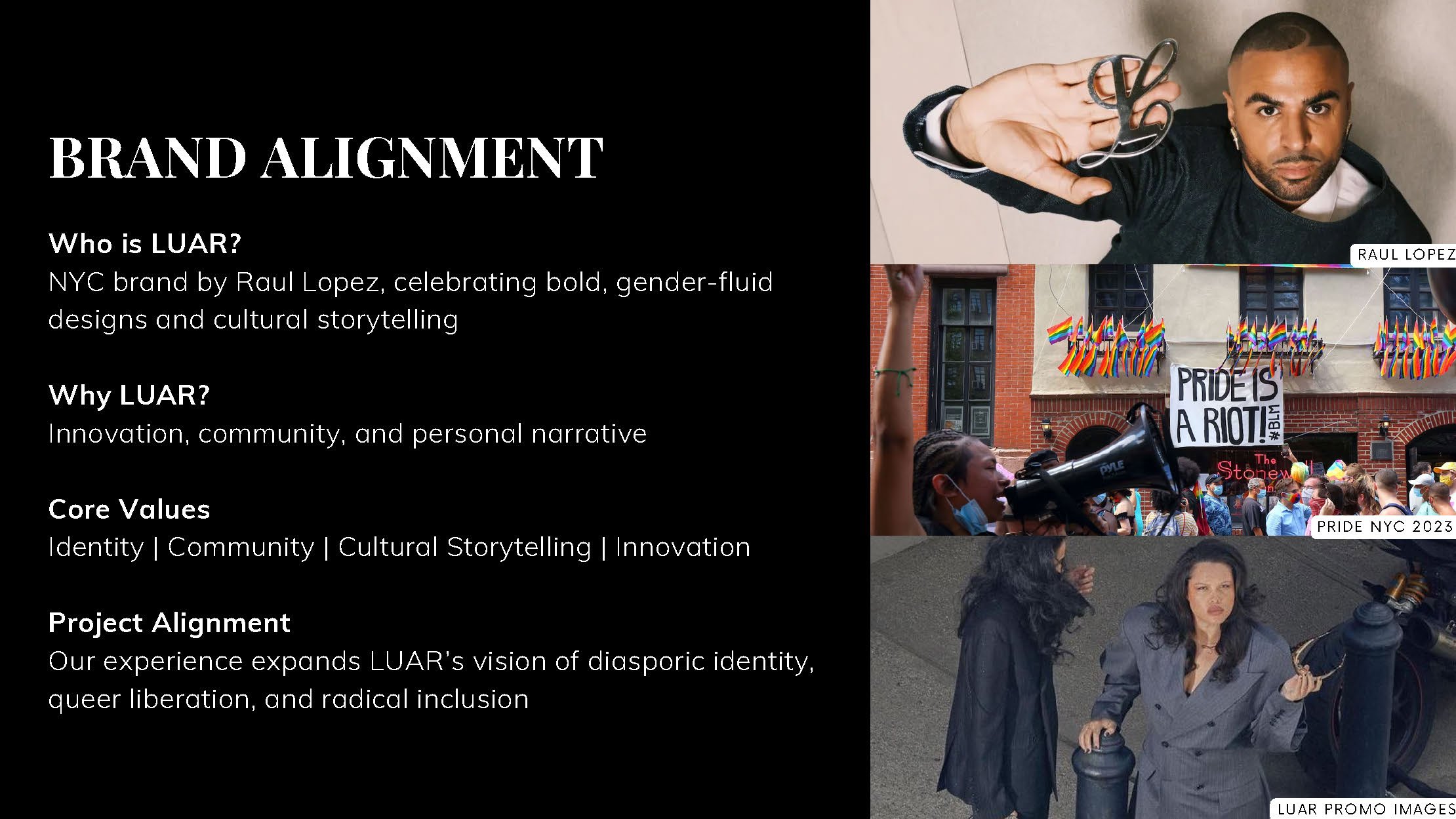
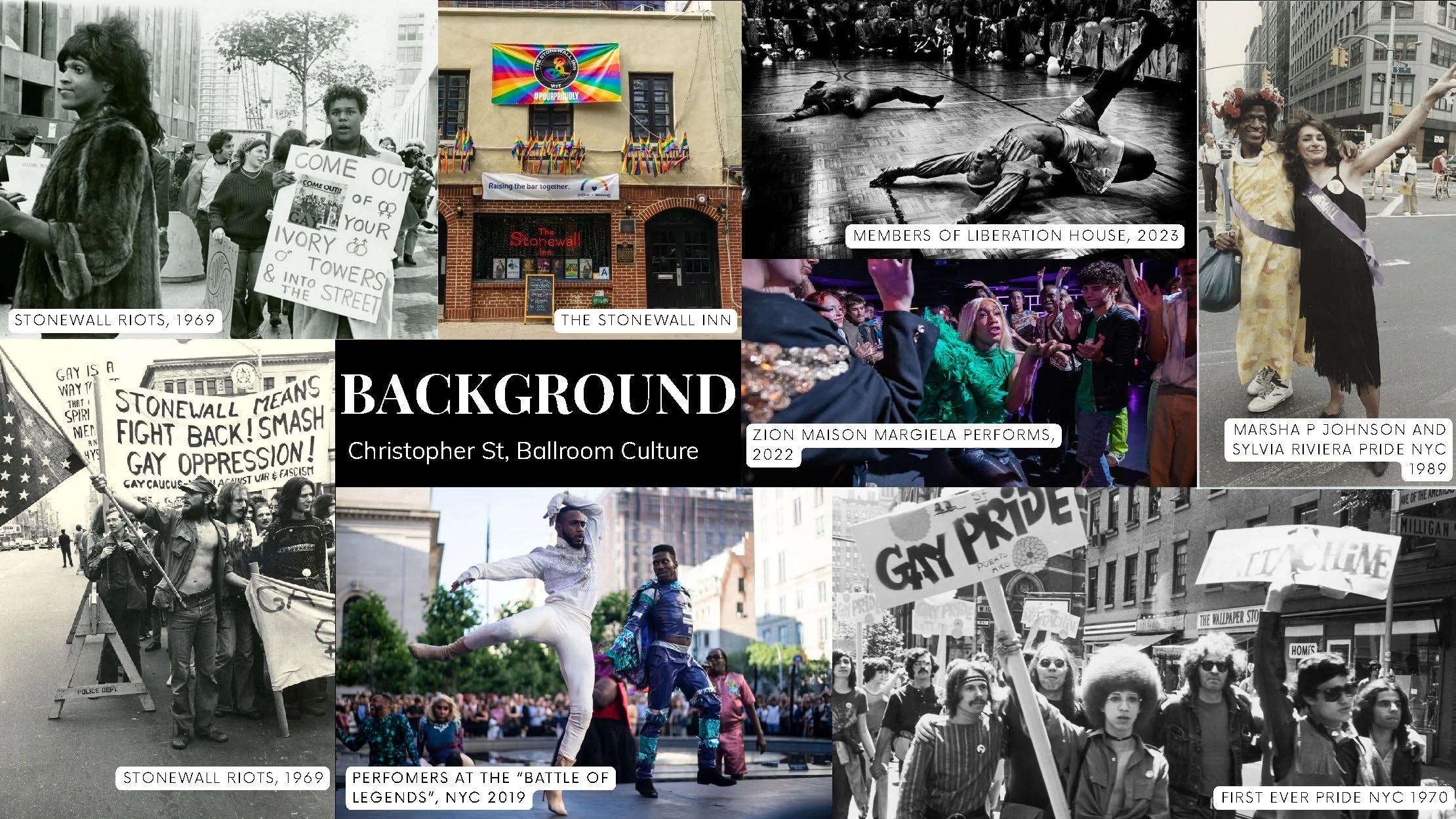
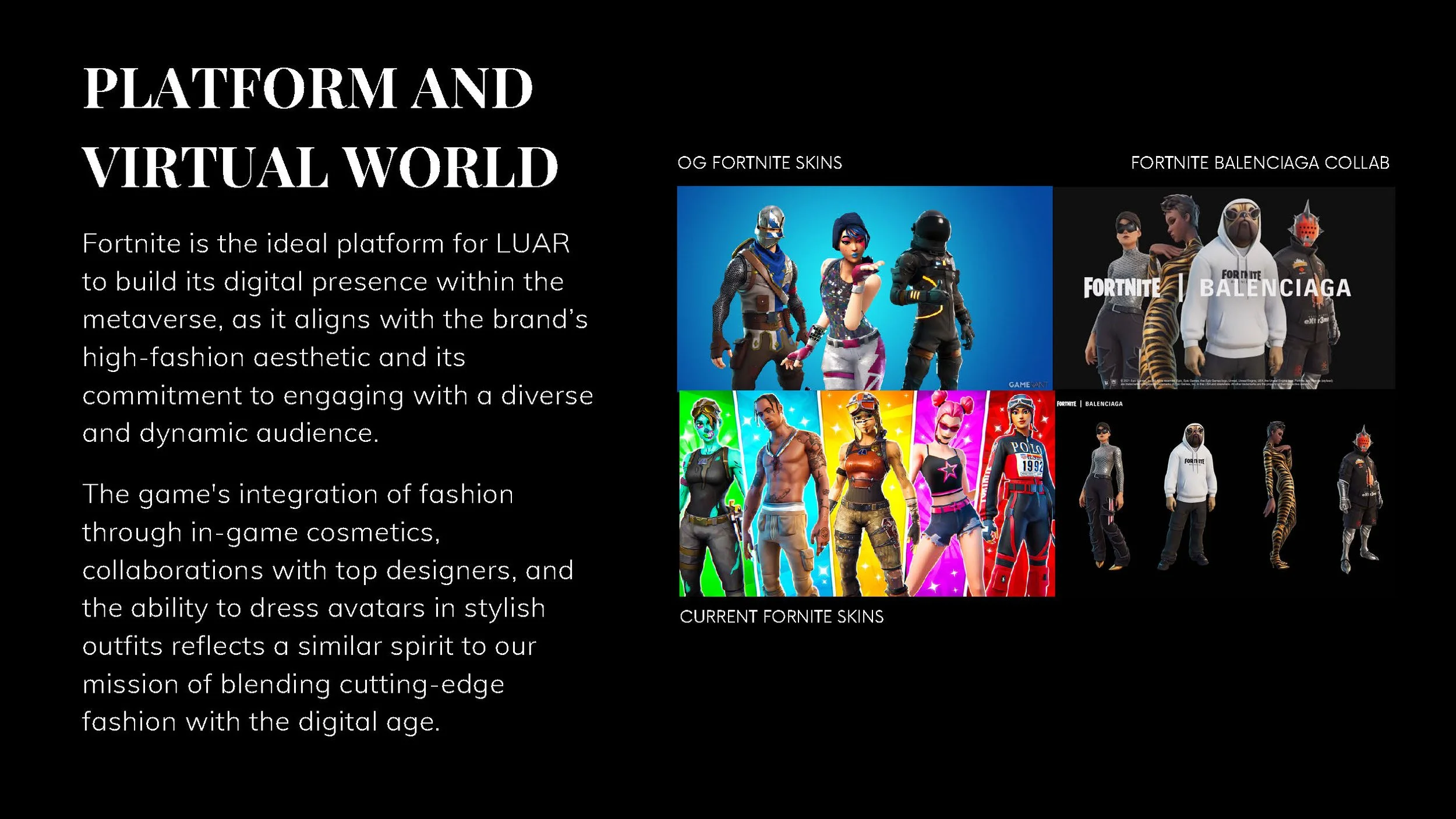
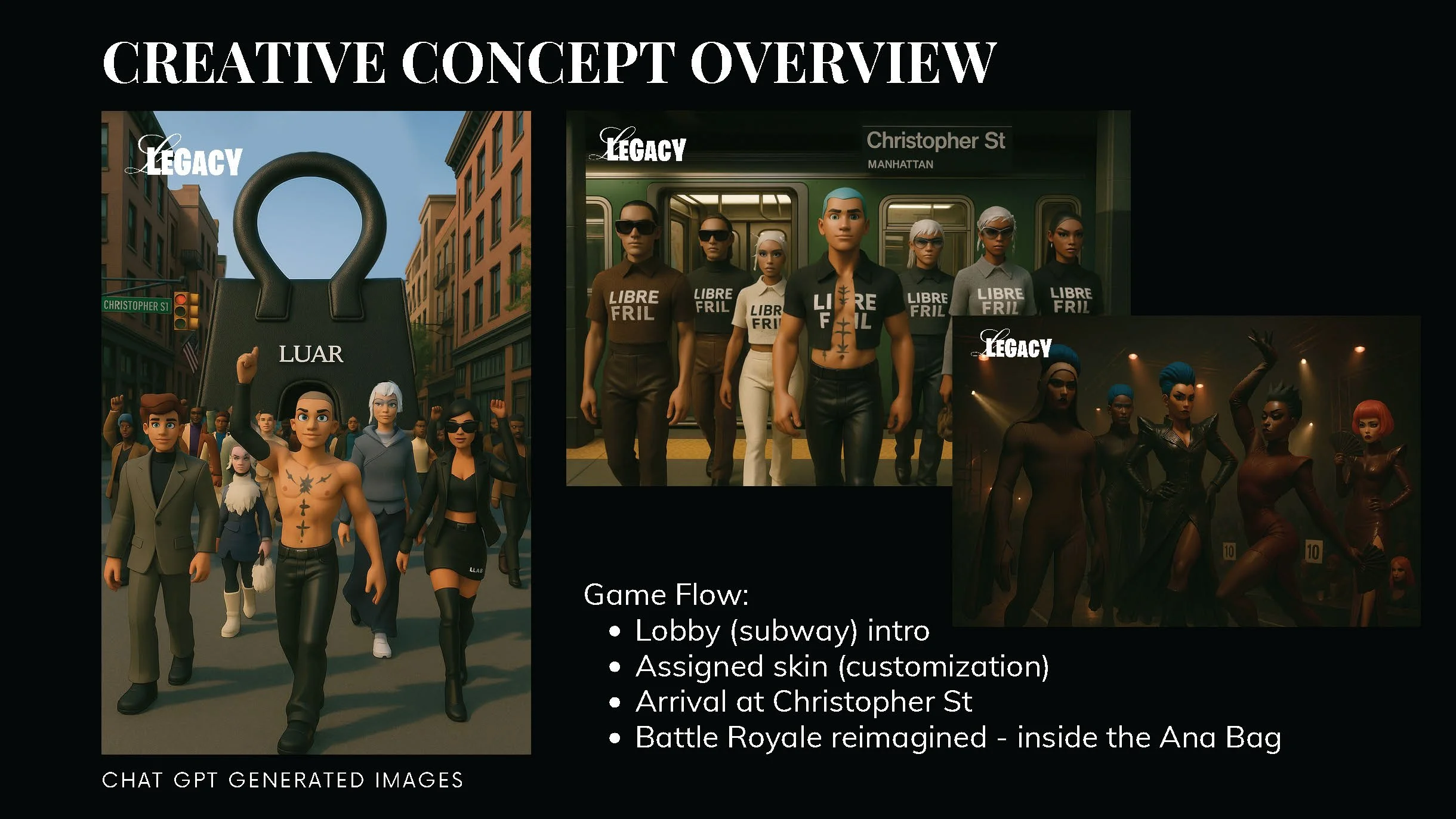
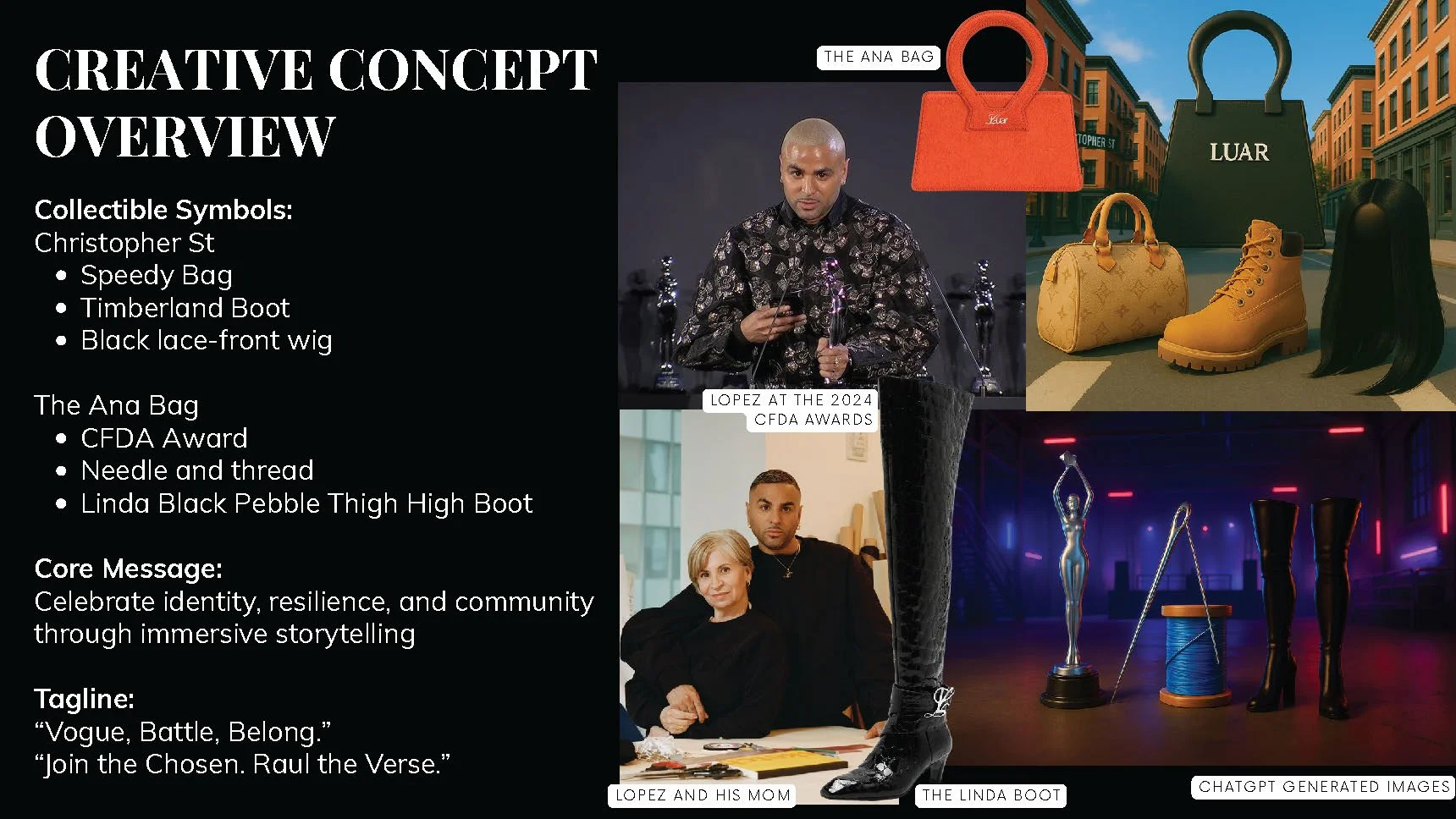
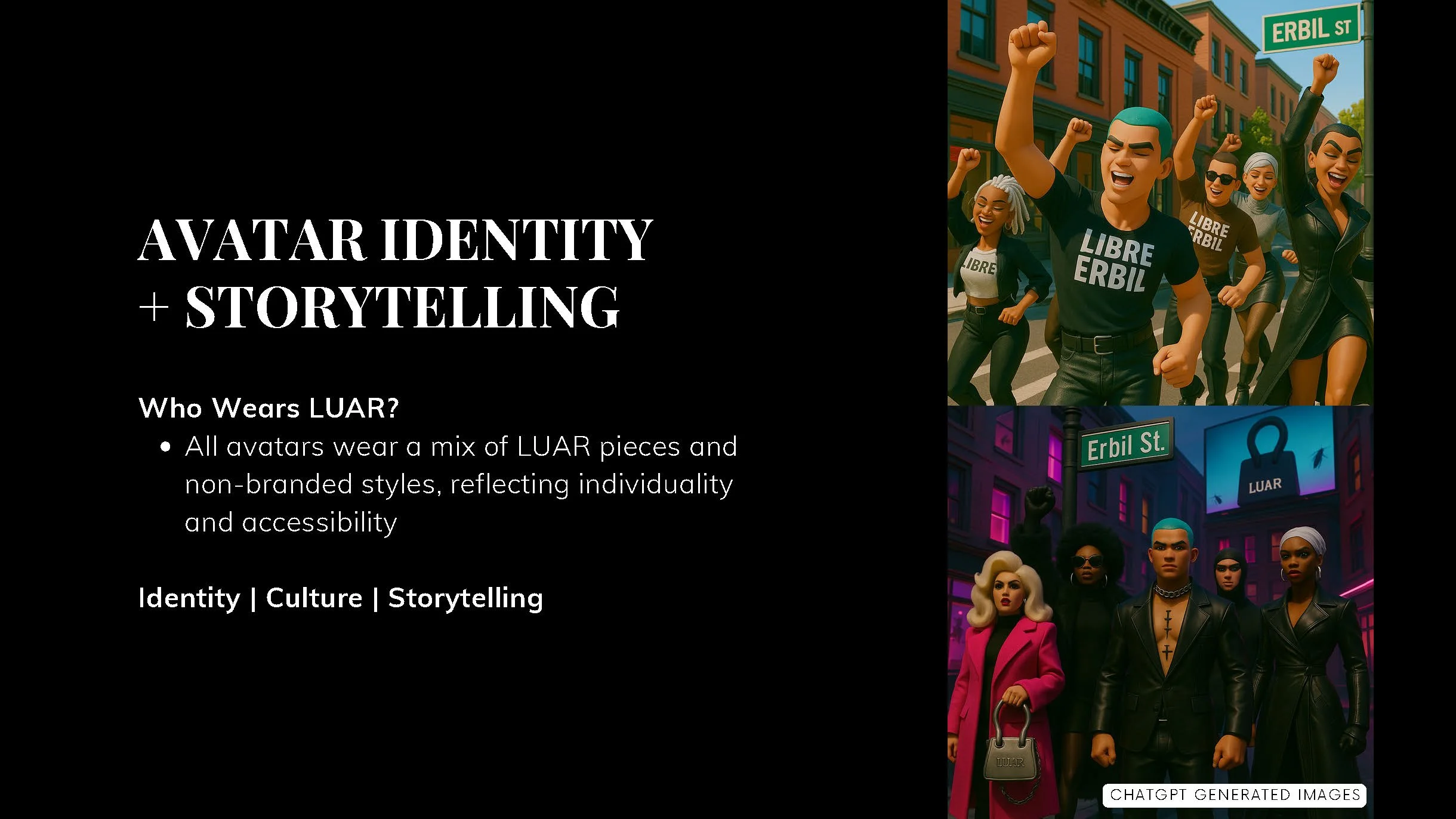
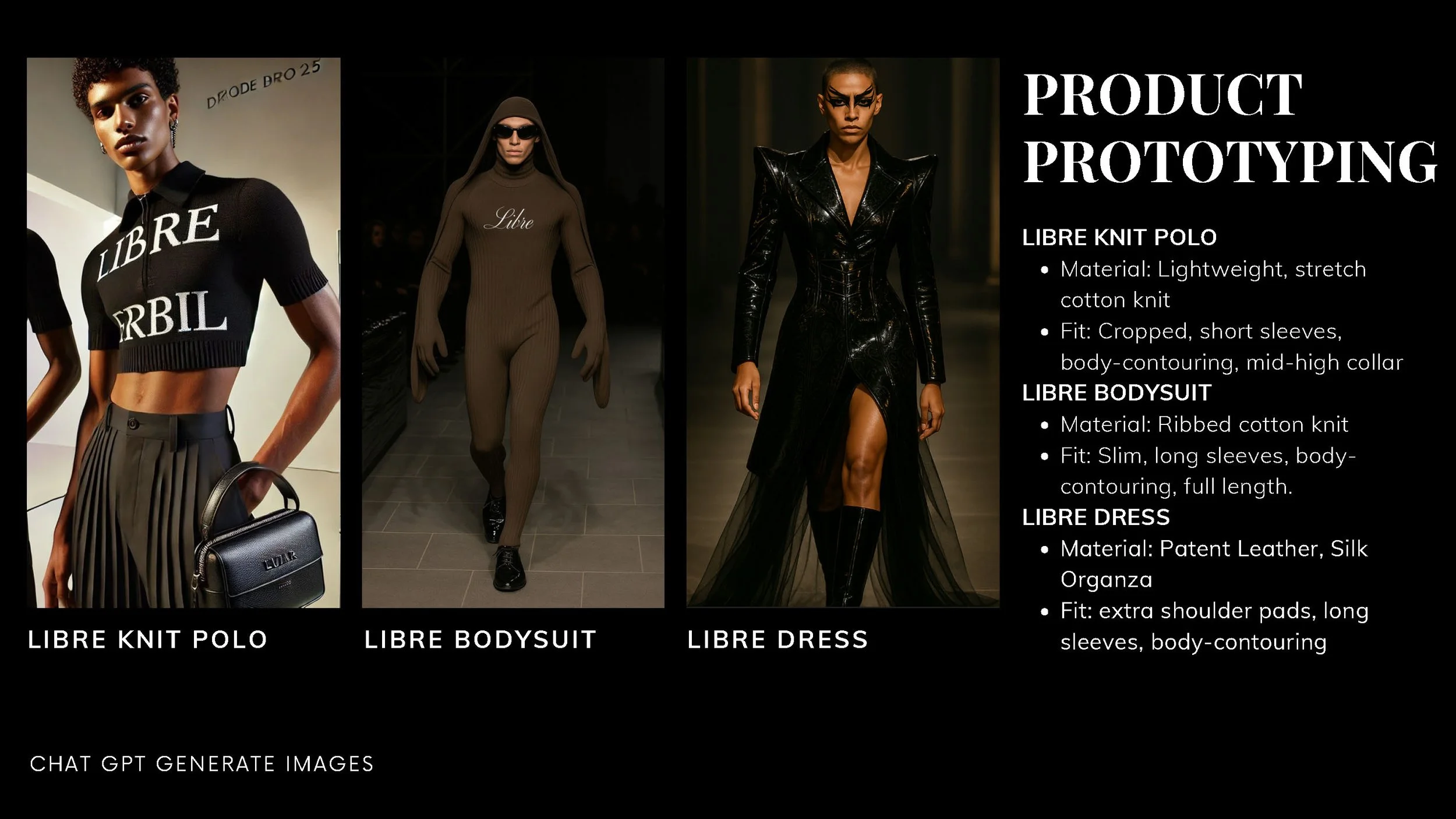
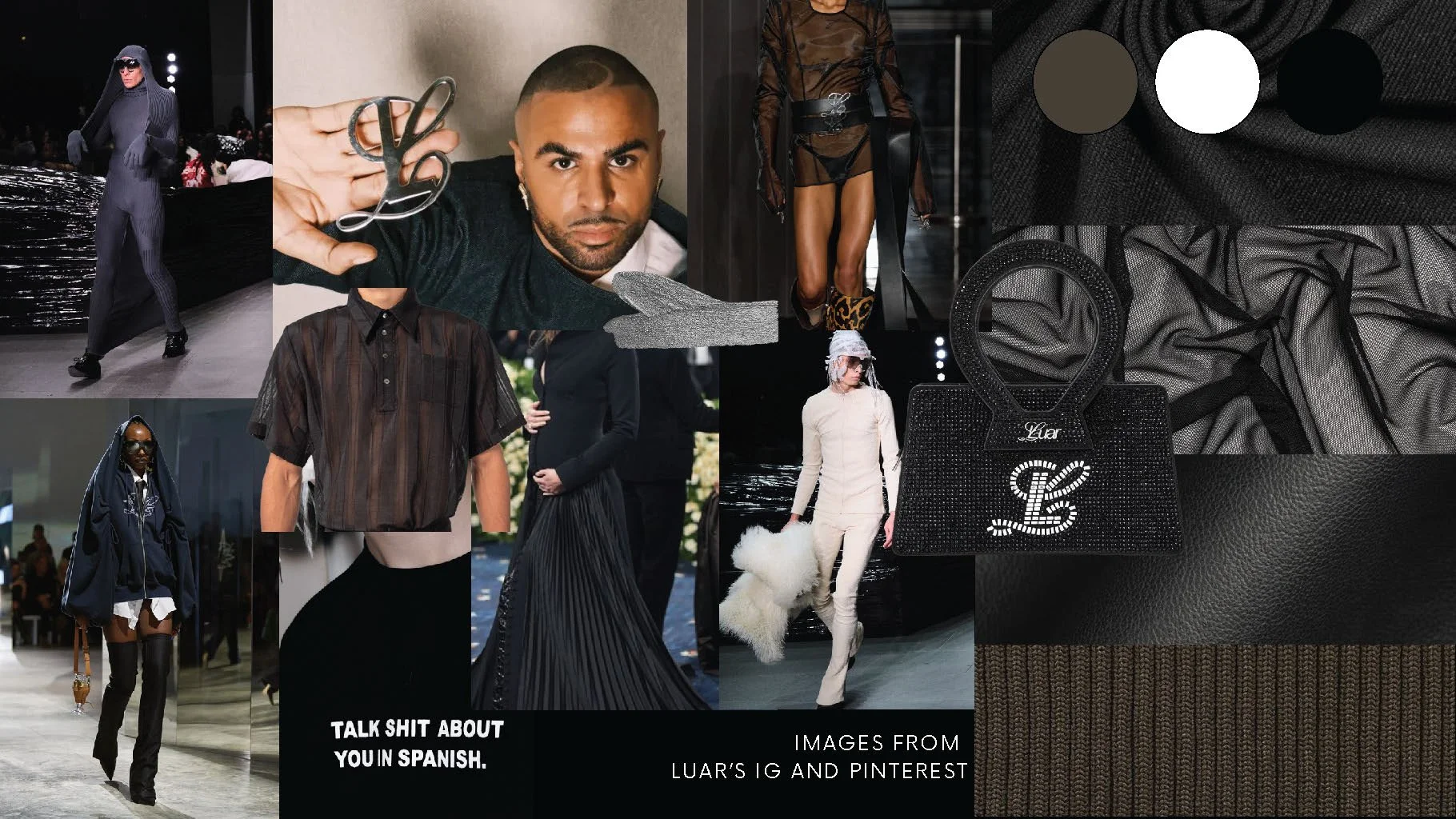
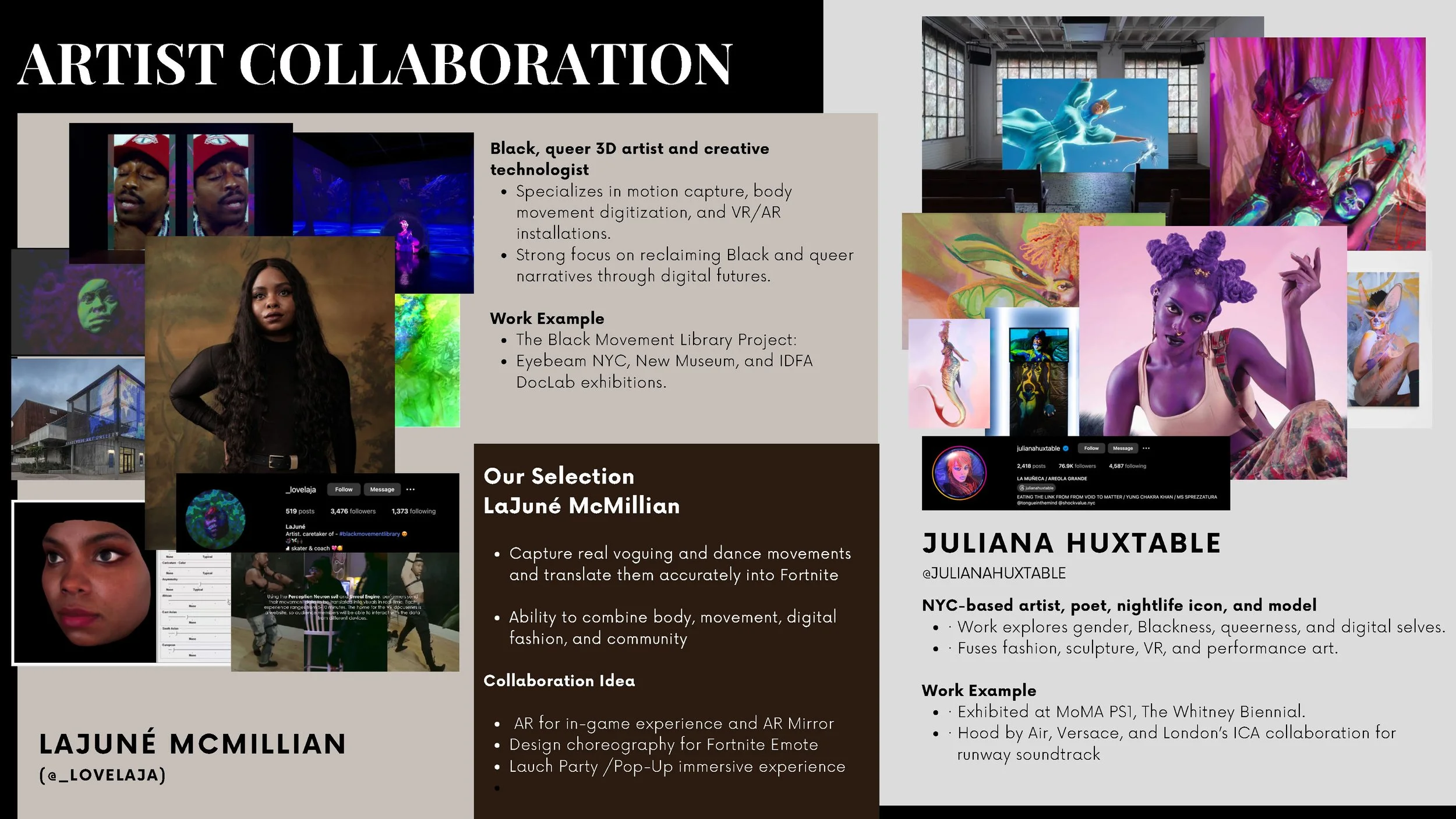
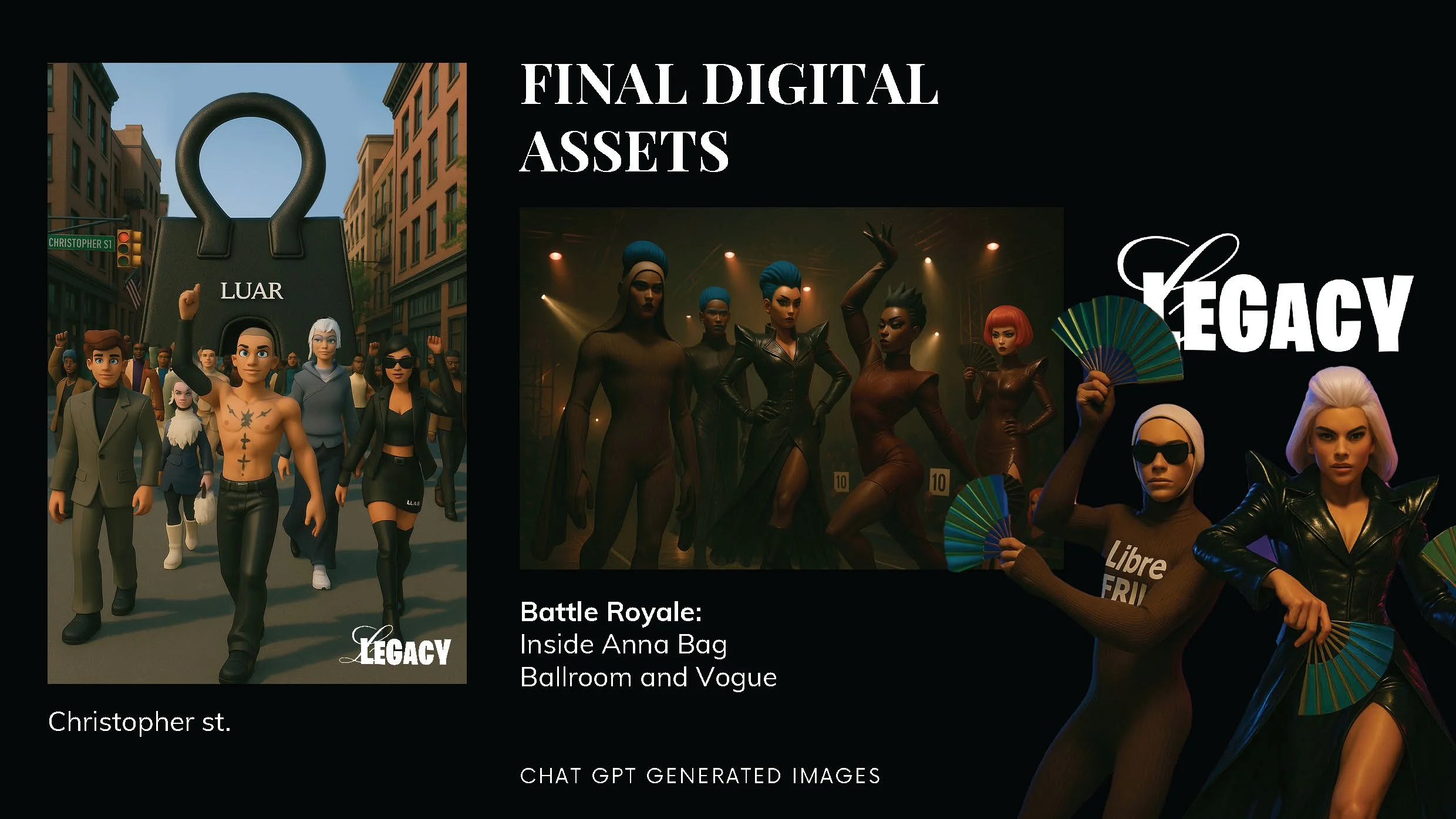
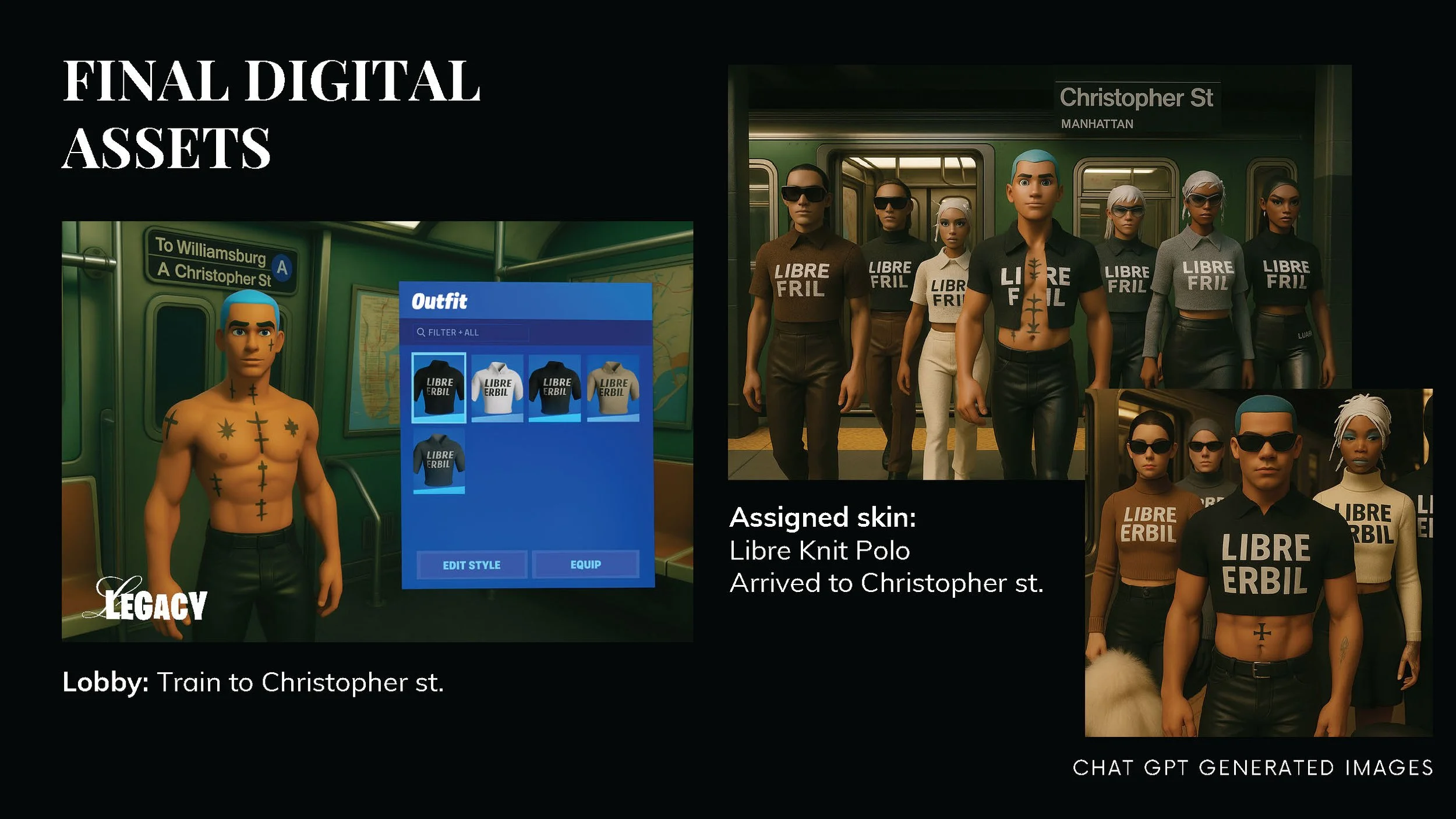
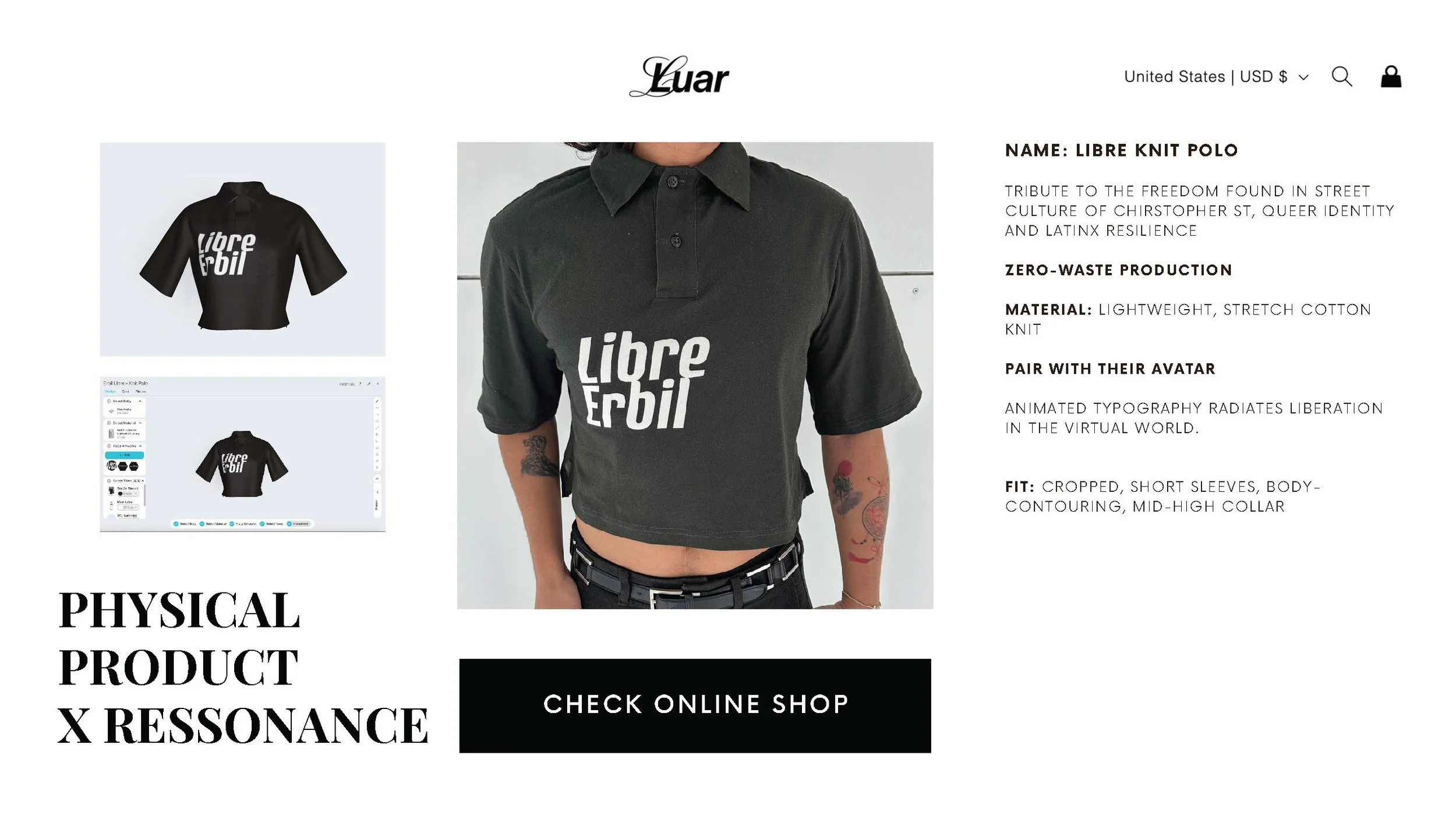
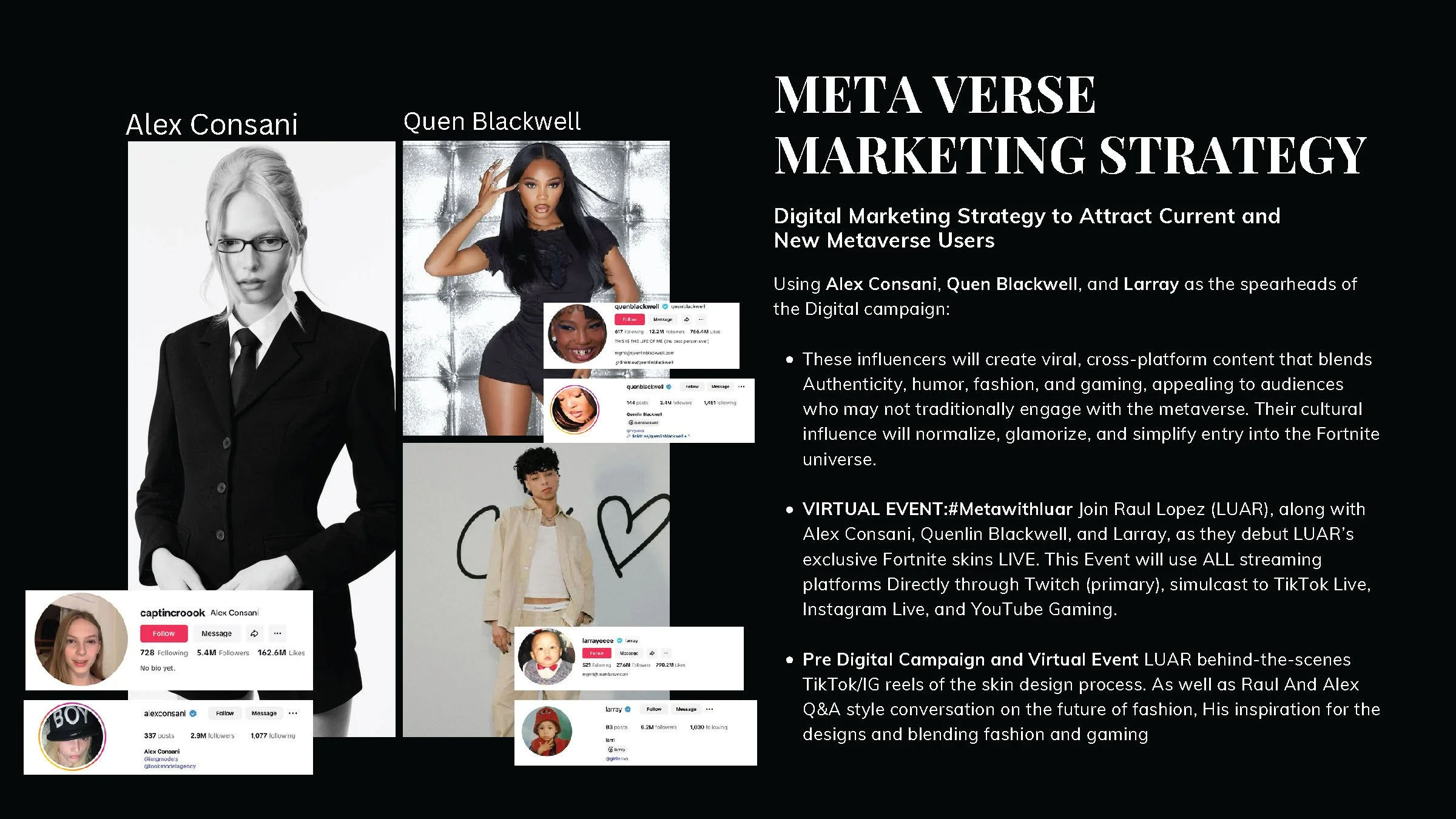
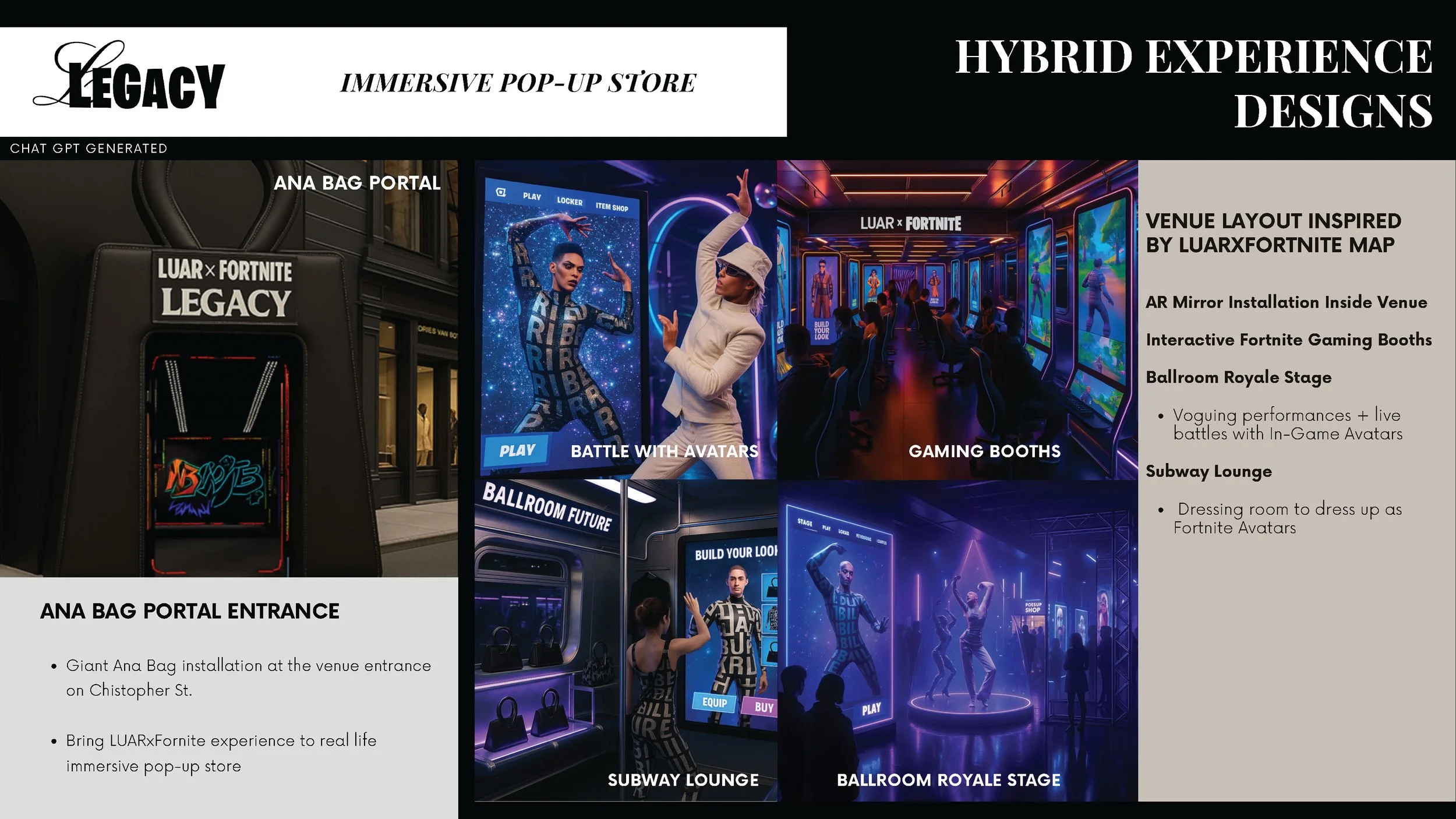
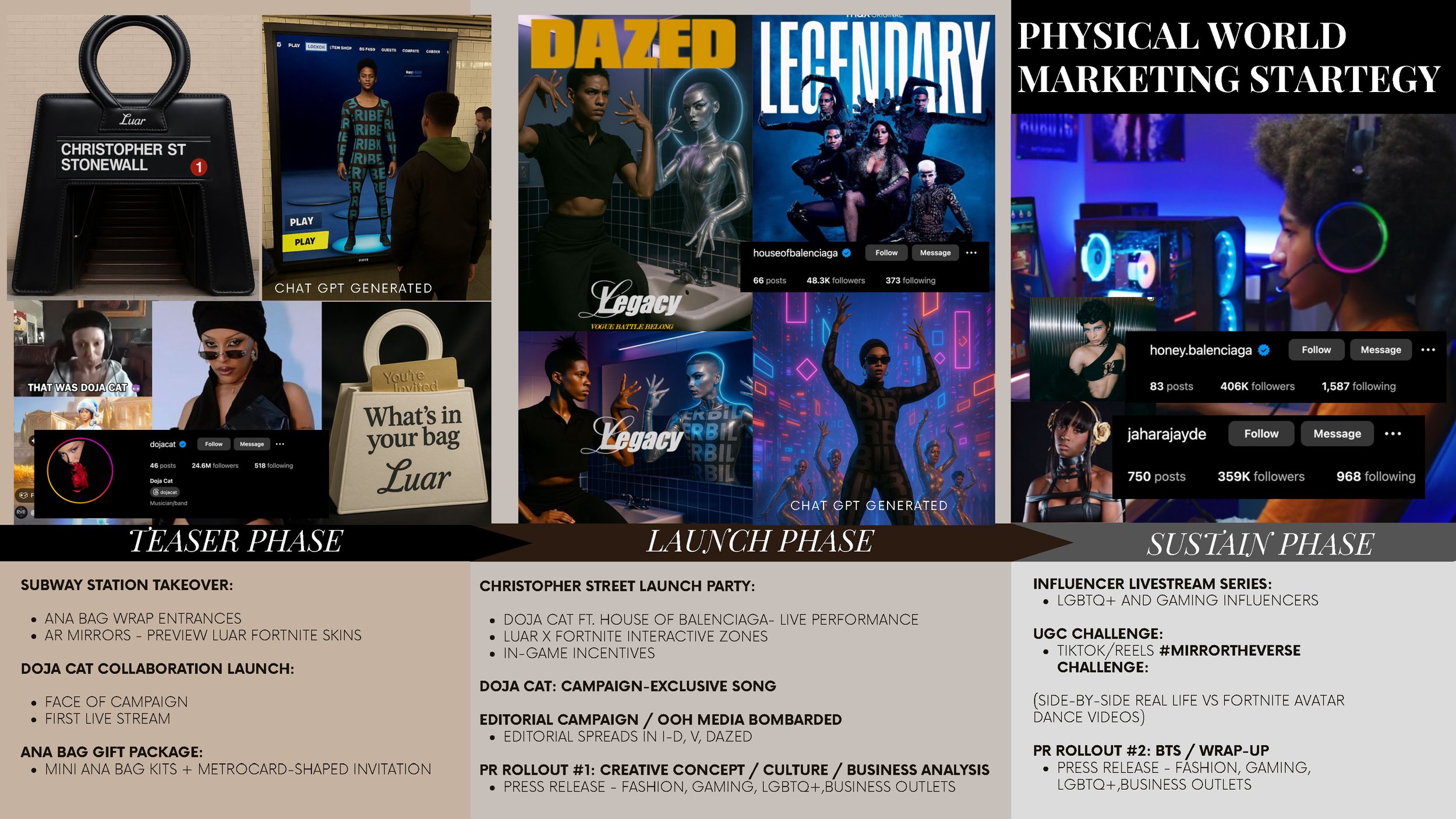
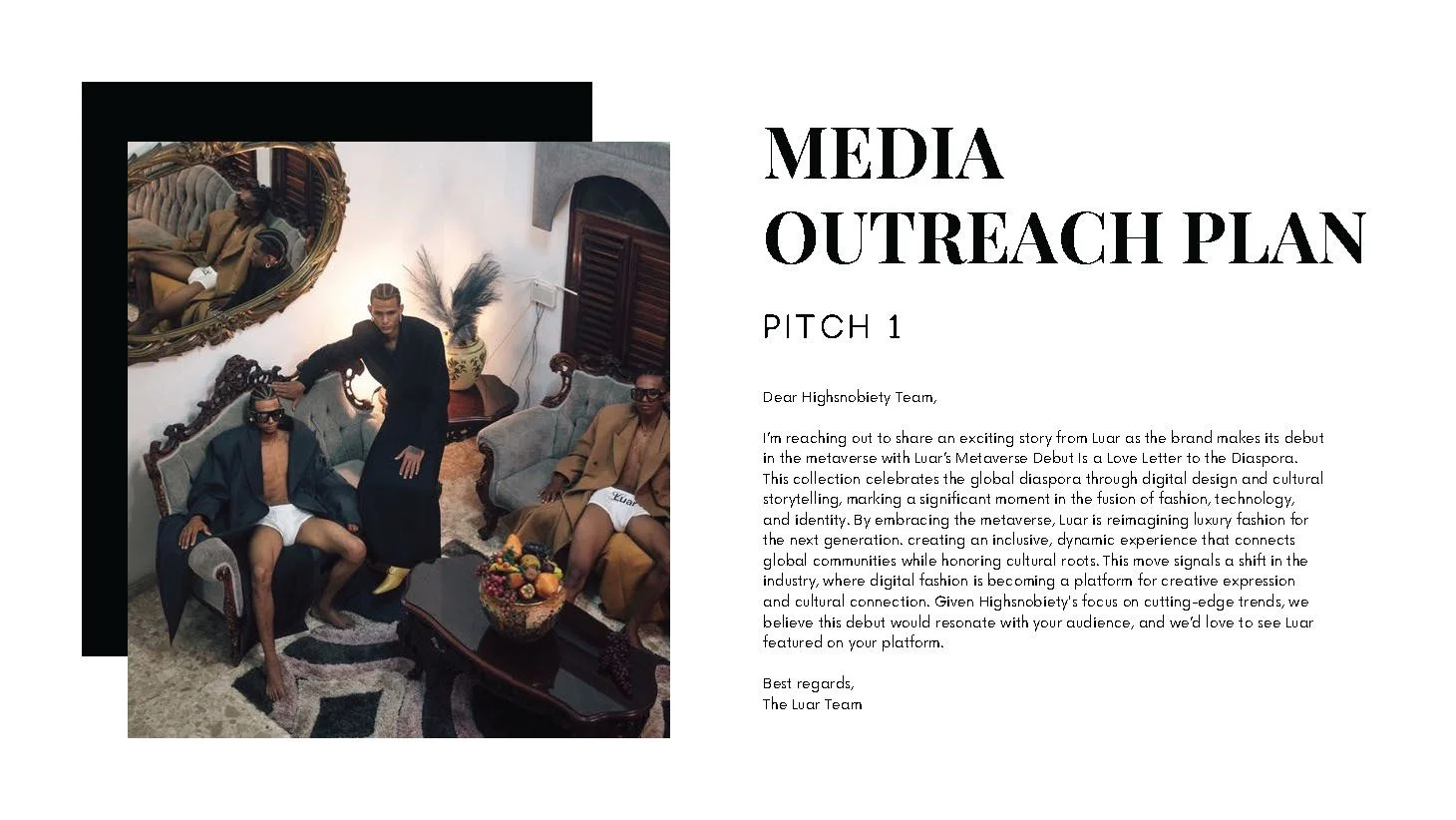
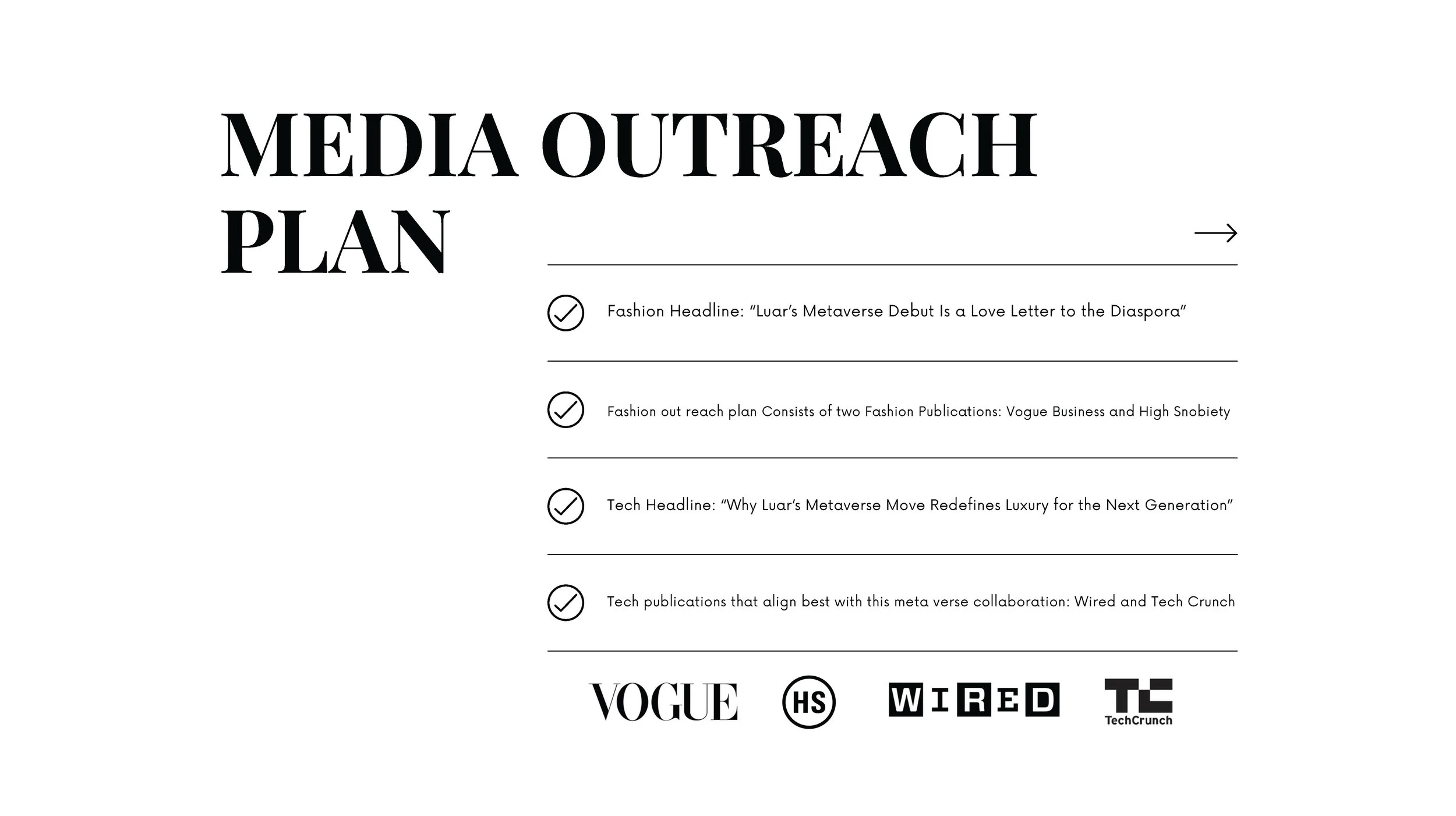
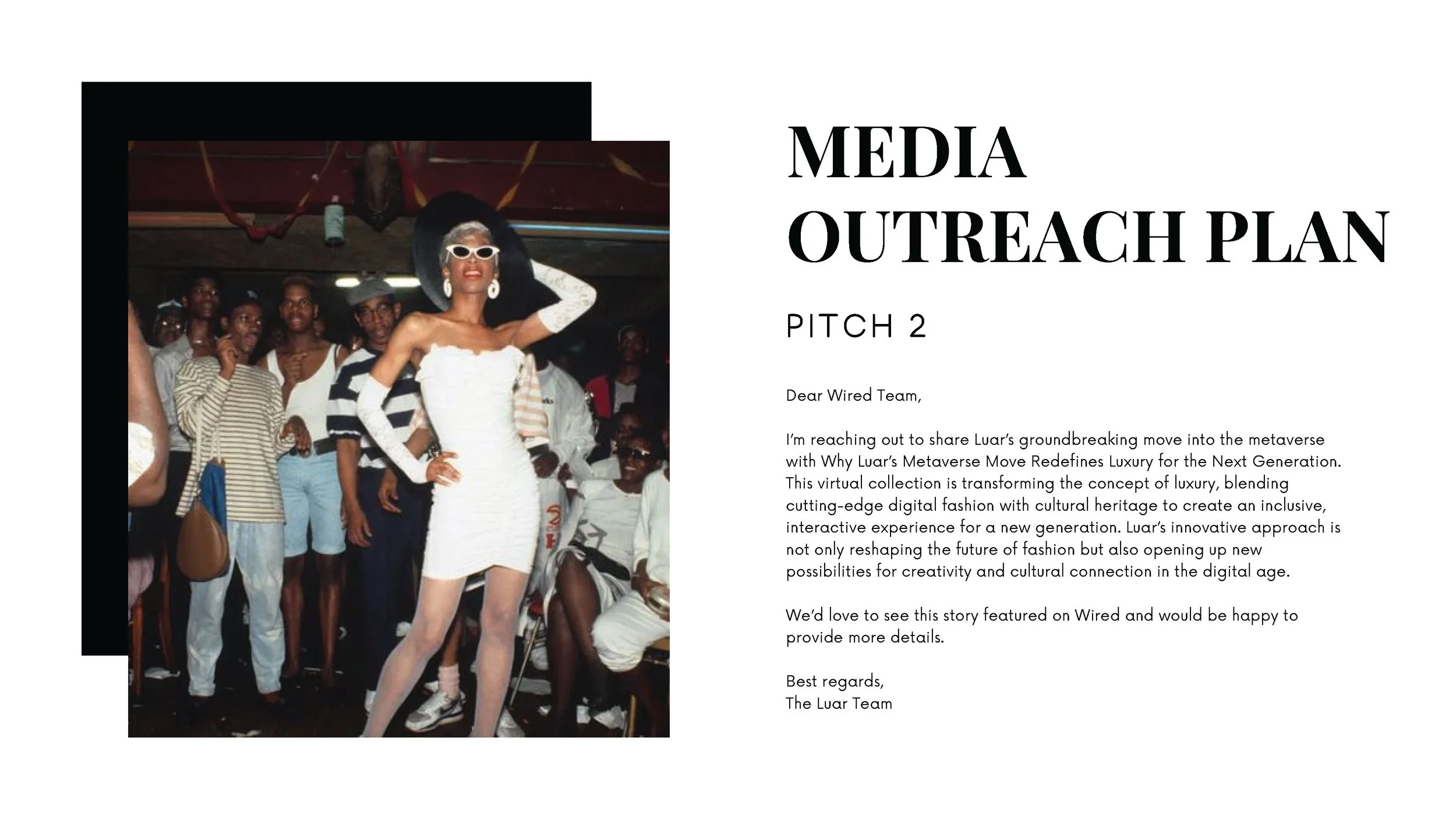
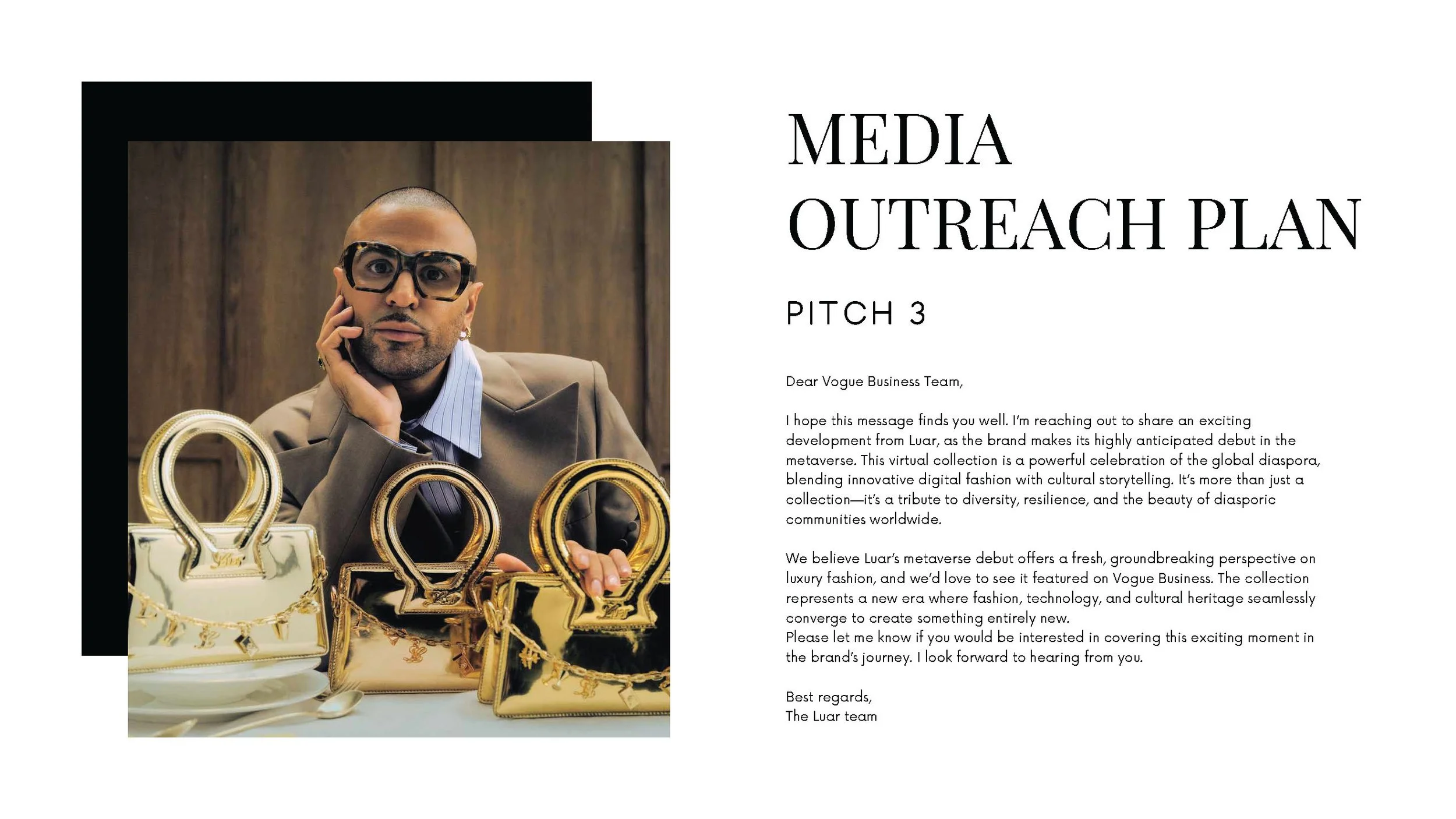
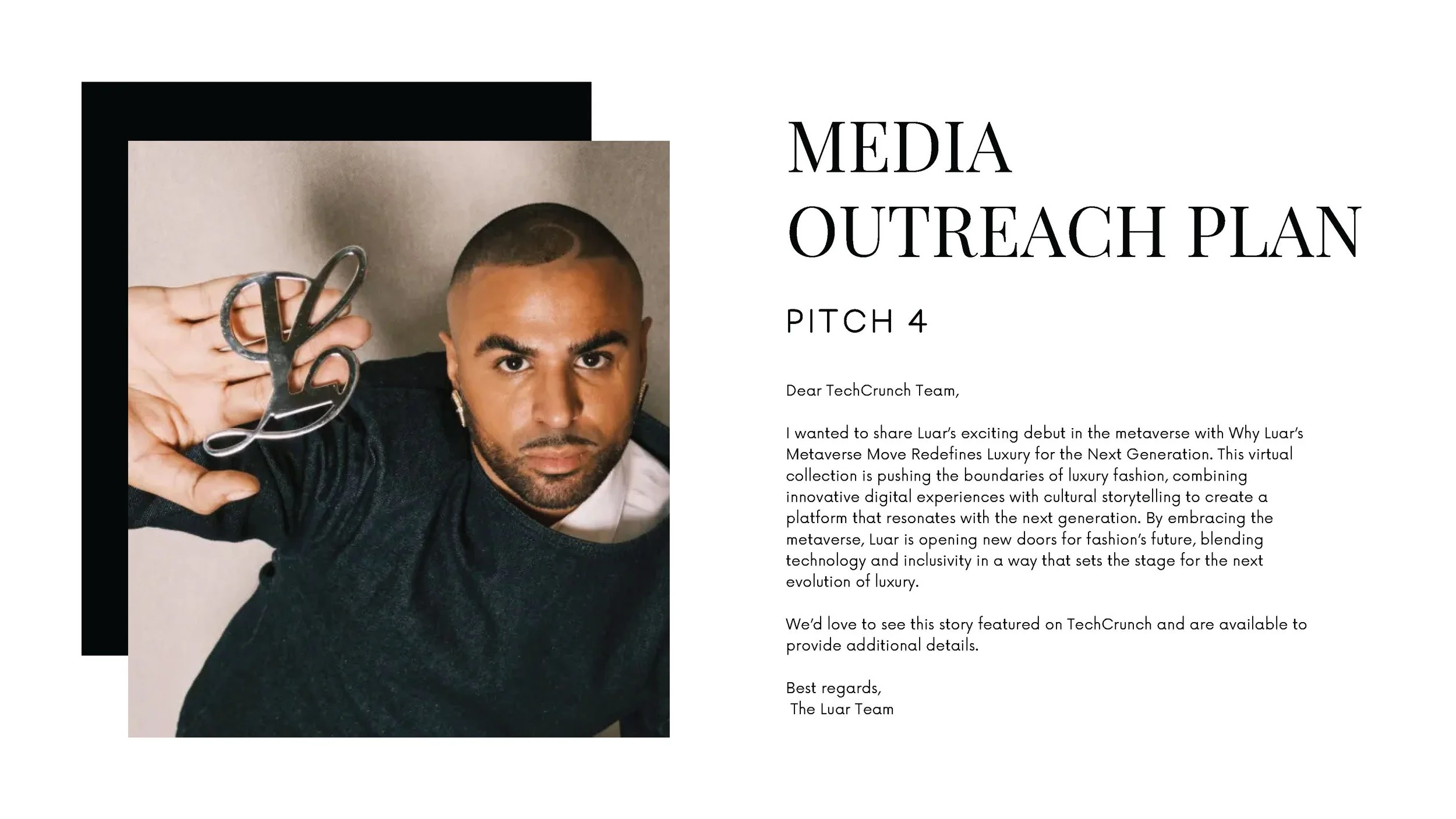
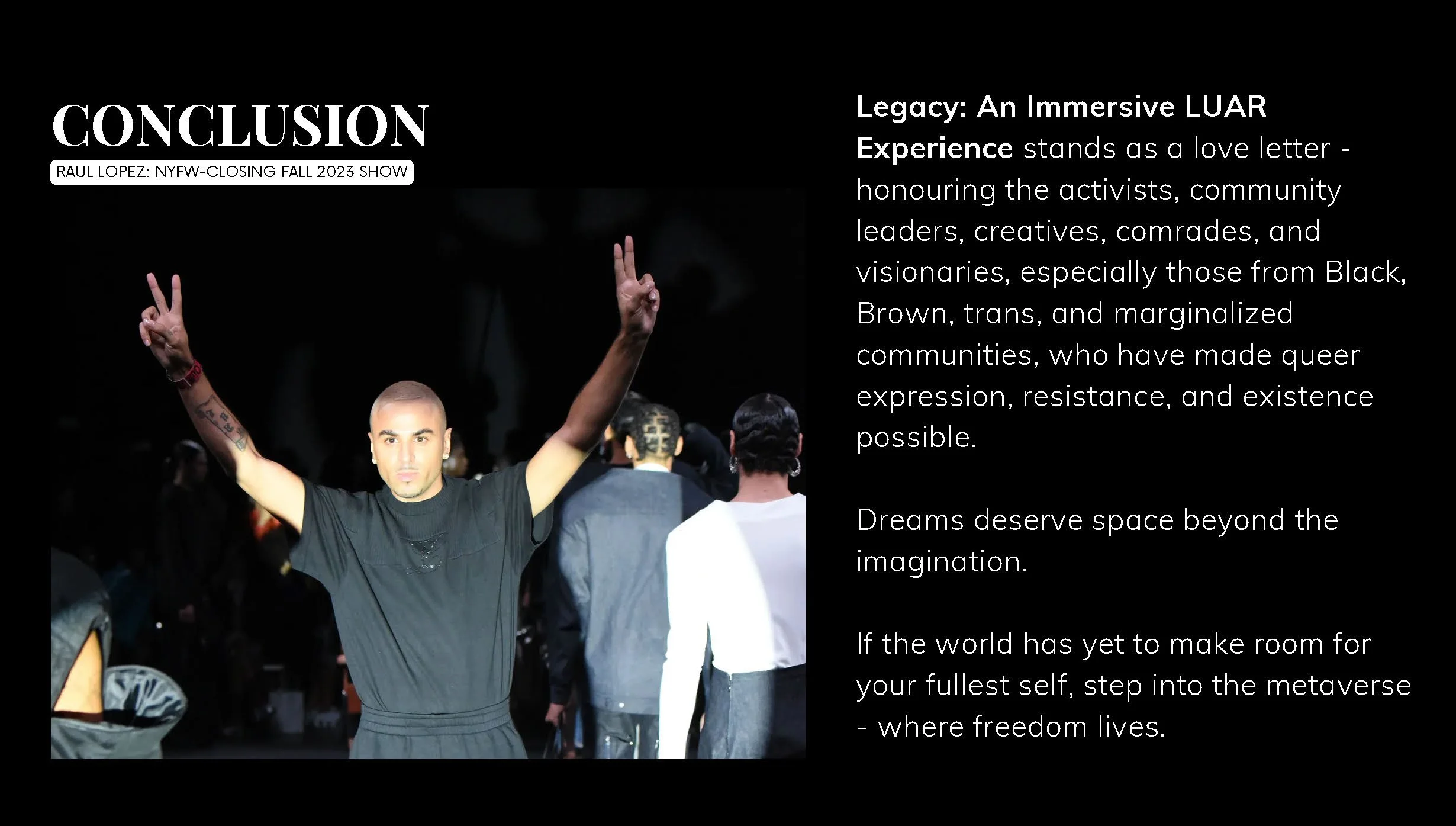
This immersive strategy positions LUAR within a virtual world that amplifies diasporic identity, nightlife culture, and community-driven luxury. Through digital fashion and experiential storytelling, the project extends LUAR’s real-world presence into a space where visibility, belonging, and self-expression are redefined for global audiences.
the era of AREA Immersive Strategy
by Students JESSICA NGUYEN, Martina Caillet-Bois, AND CHELSEA LODGE
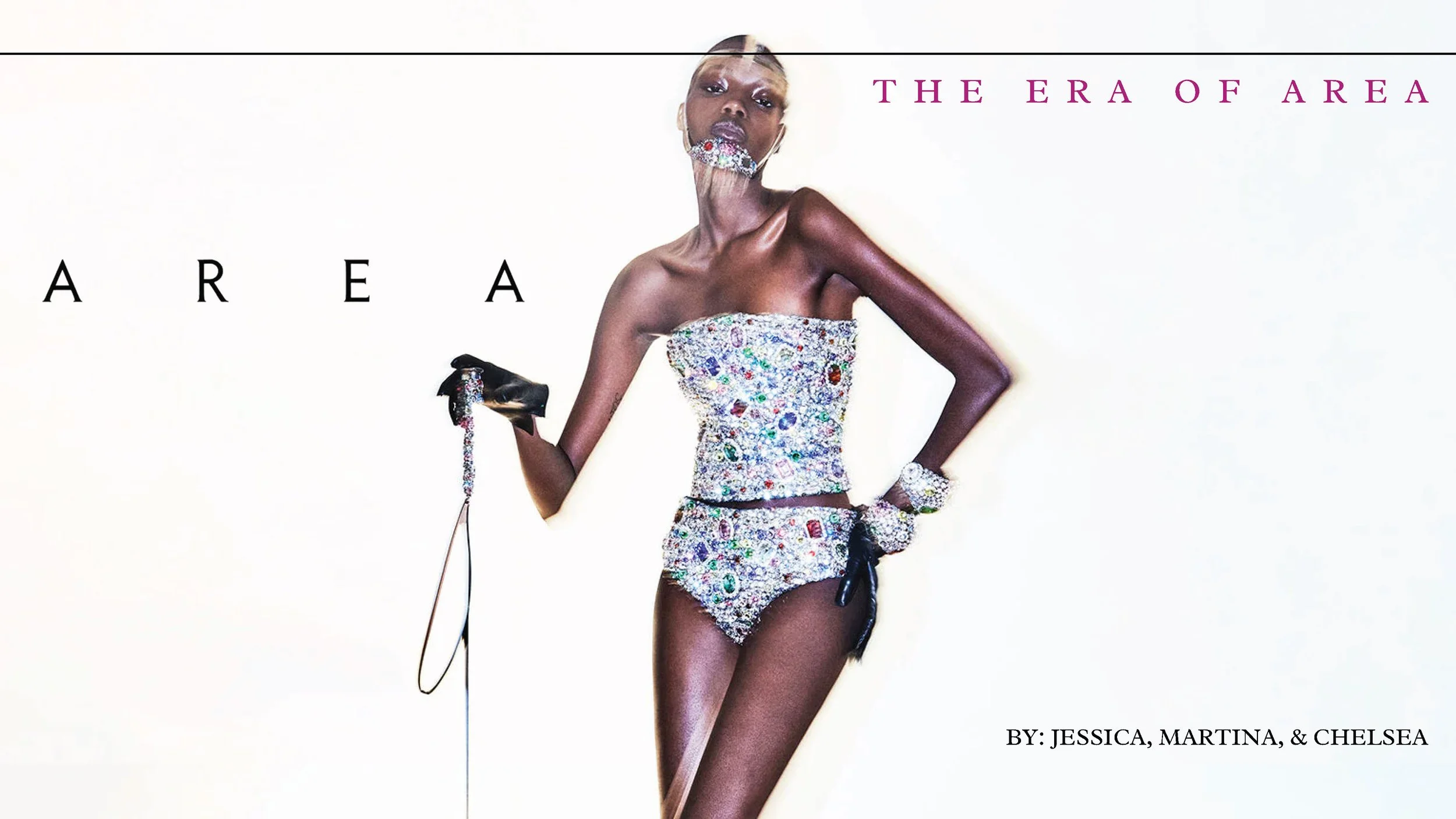
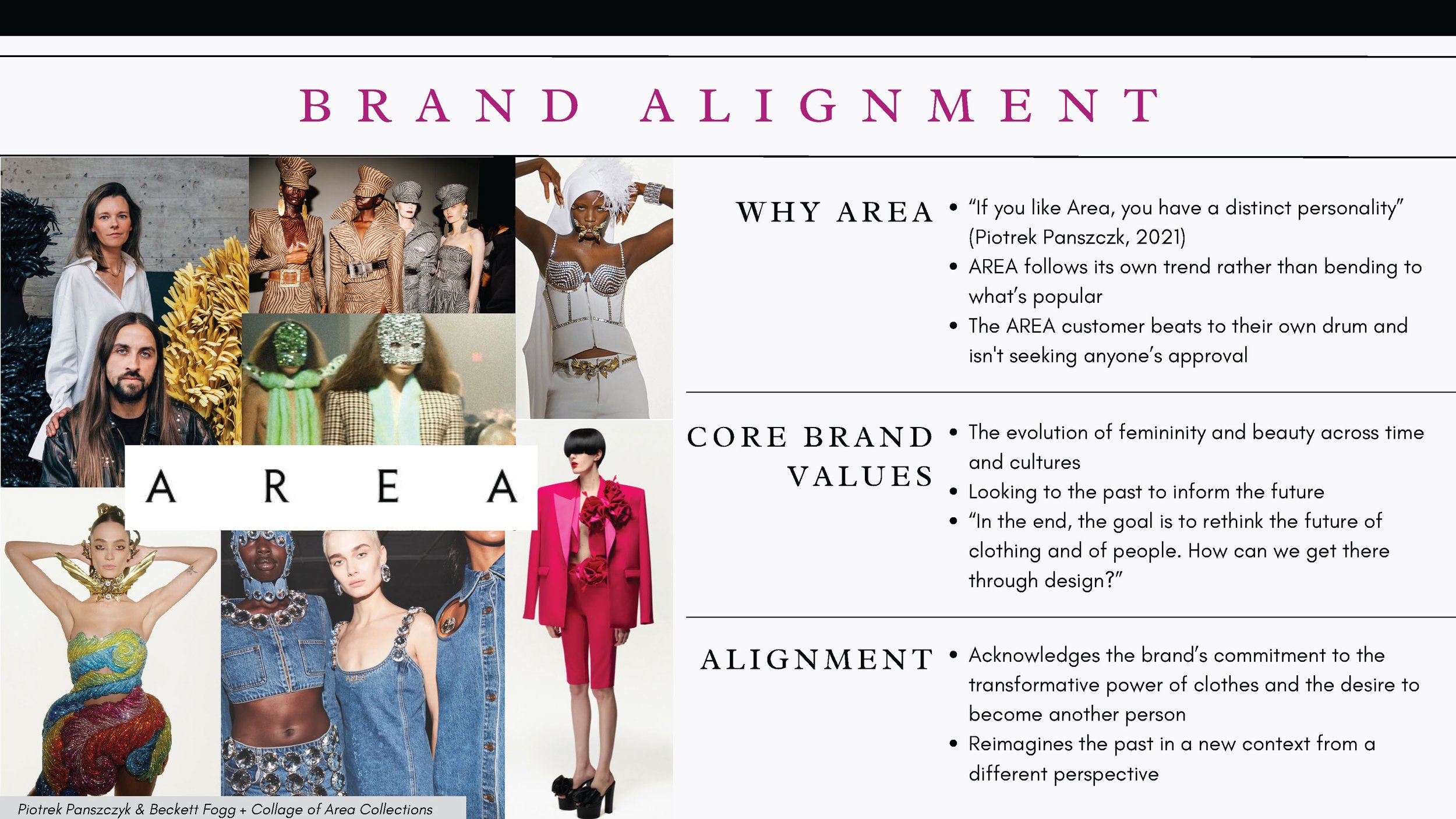
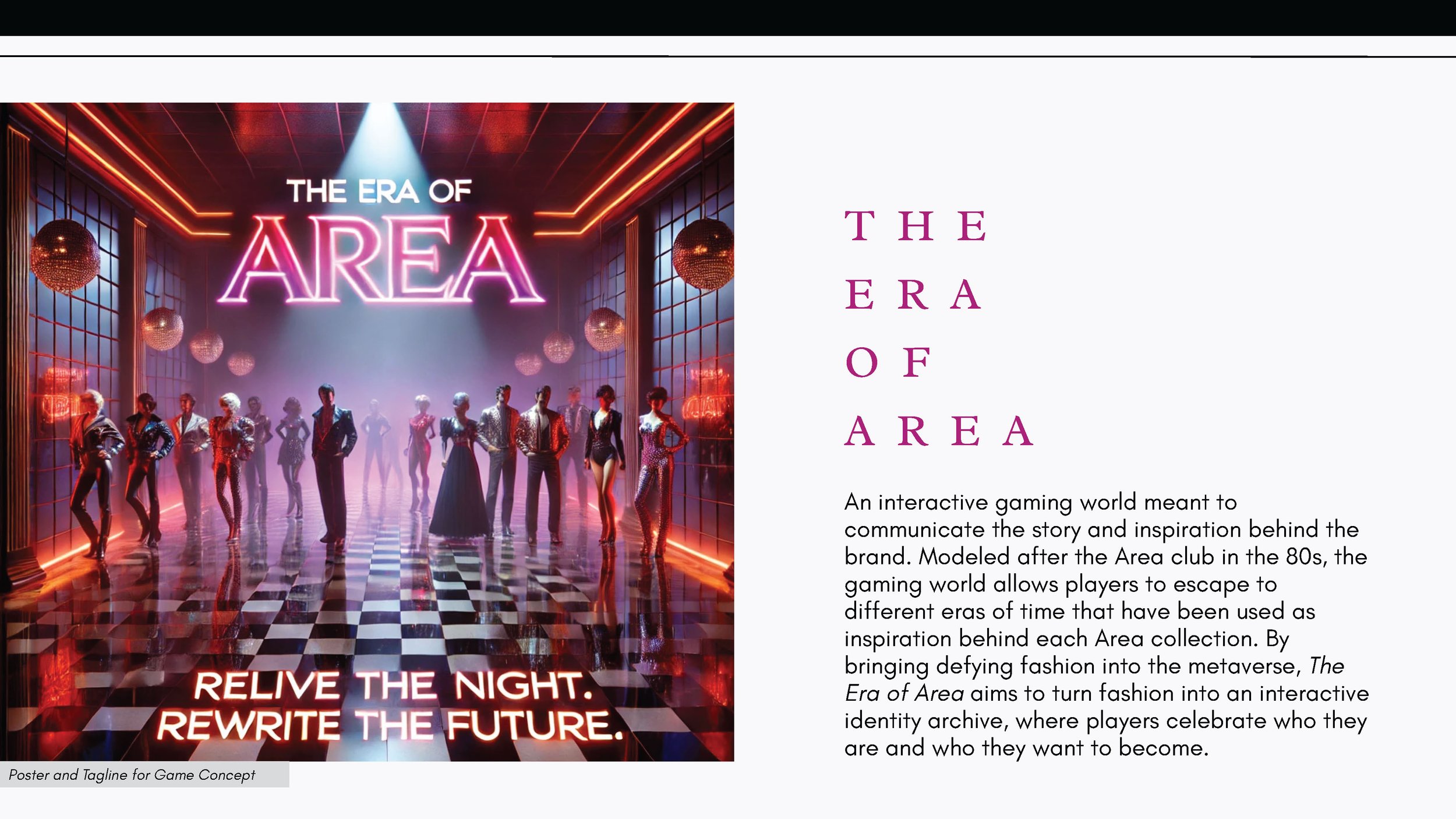
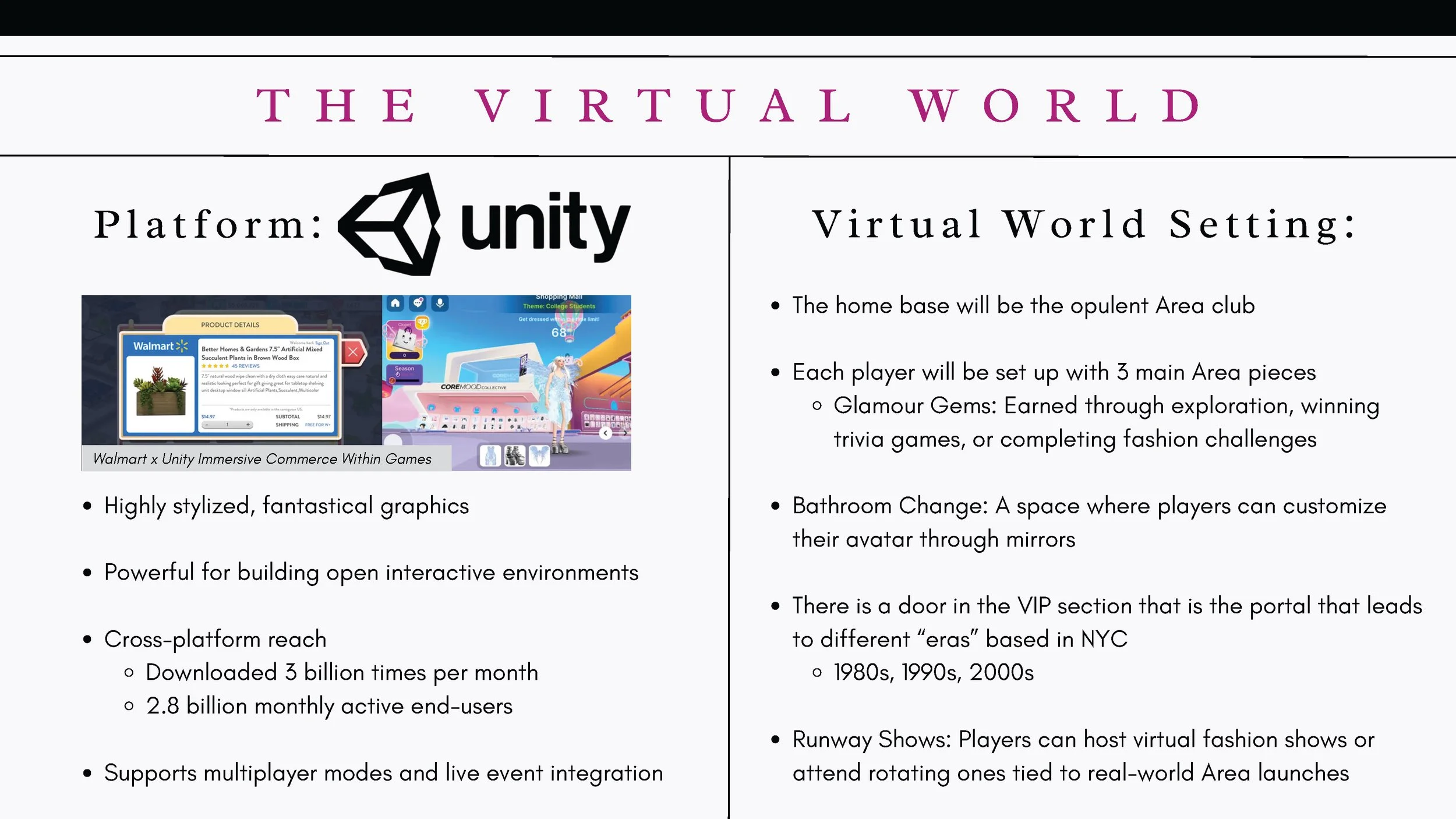
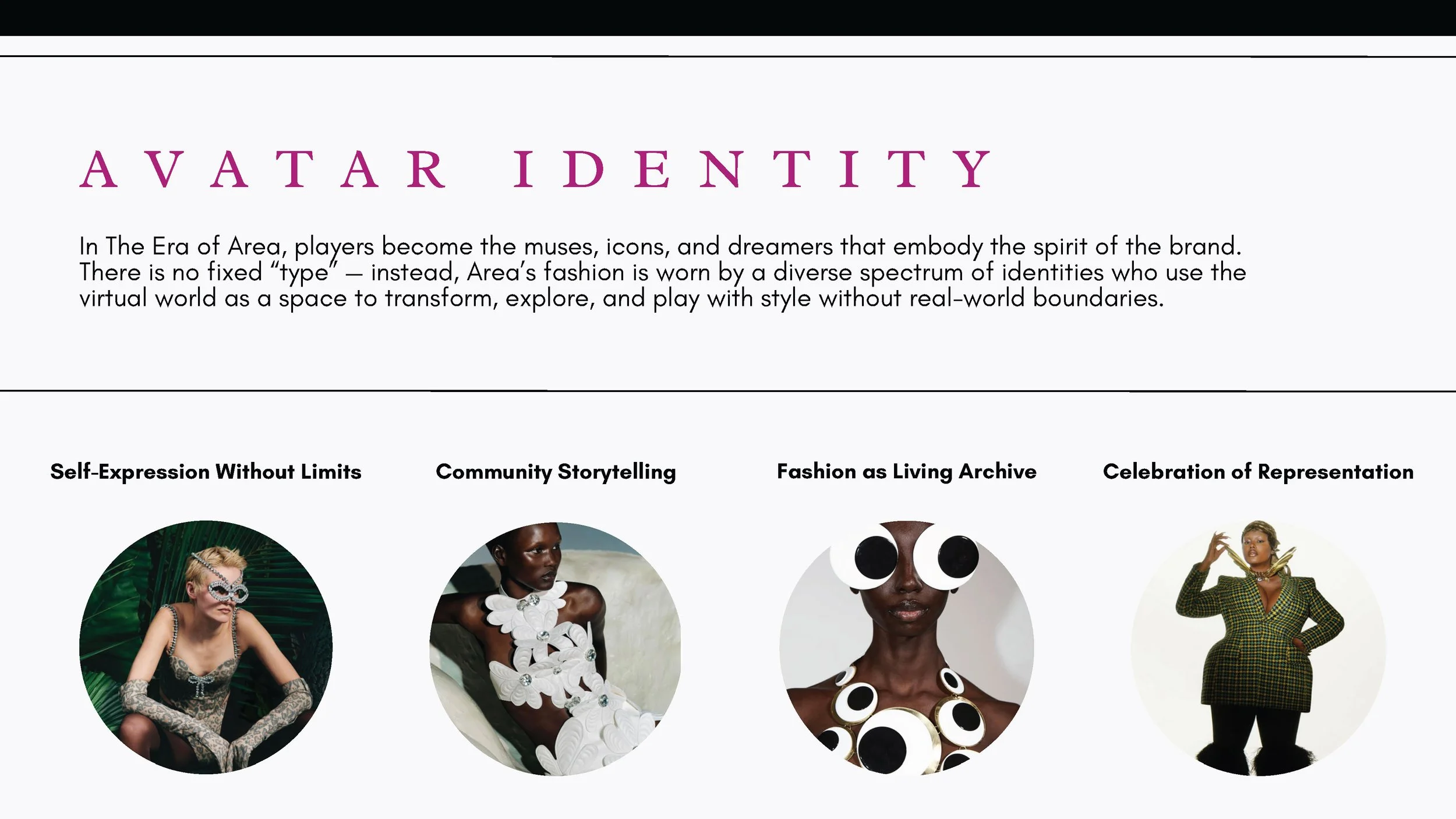
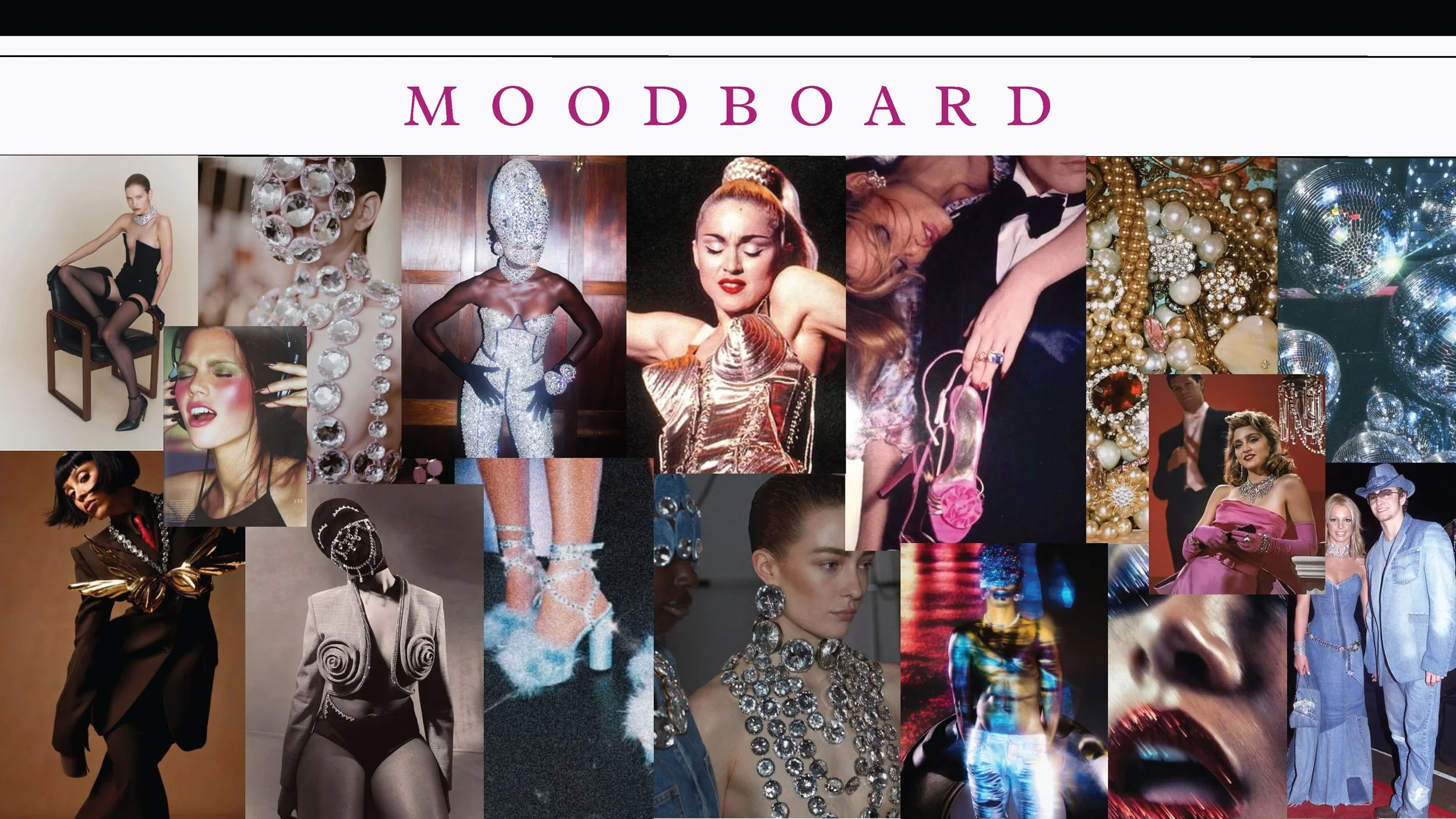
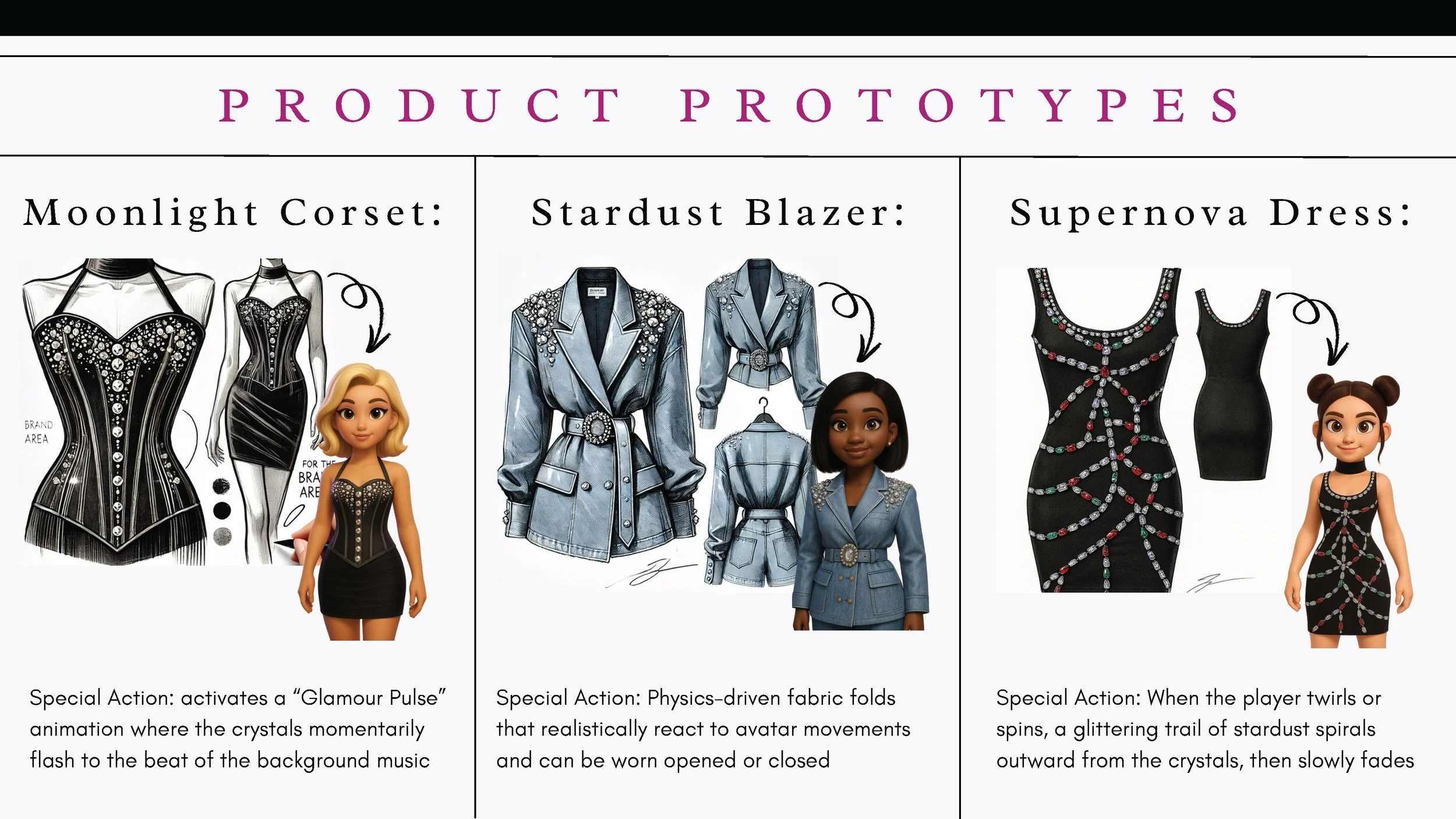
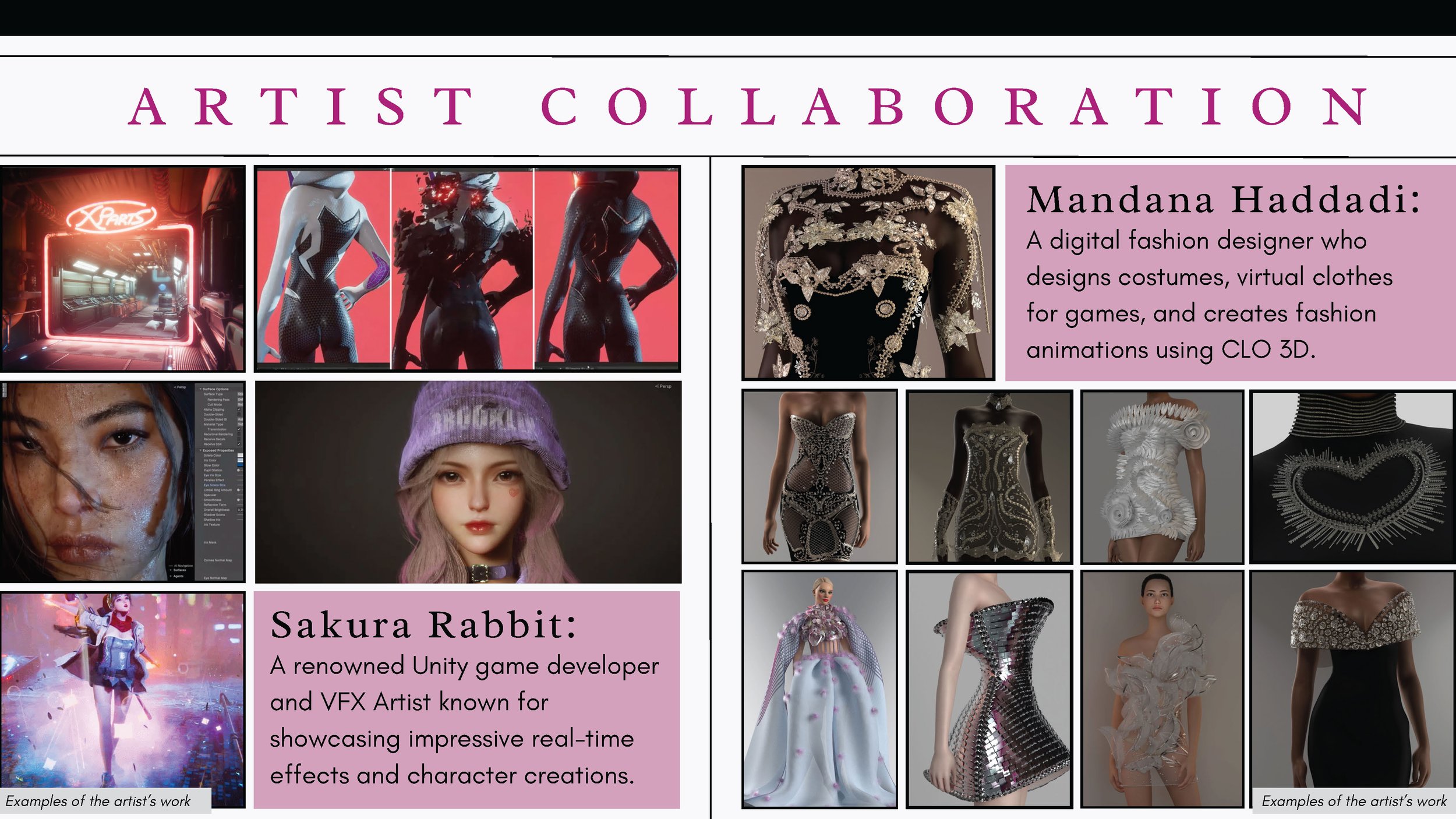
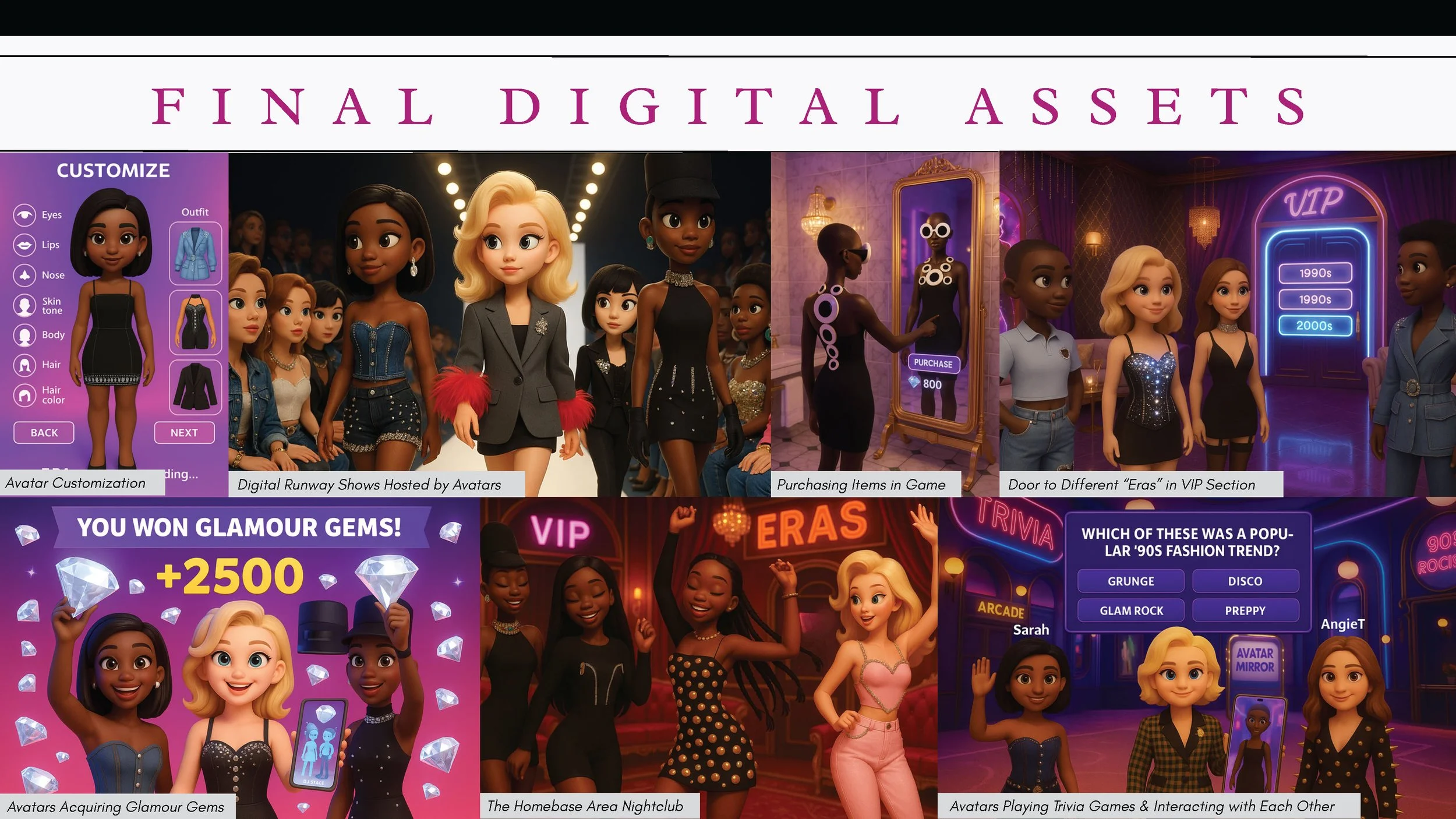
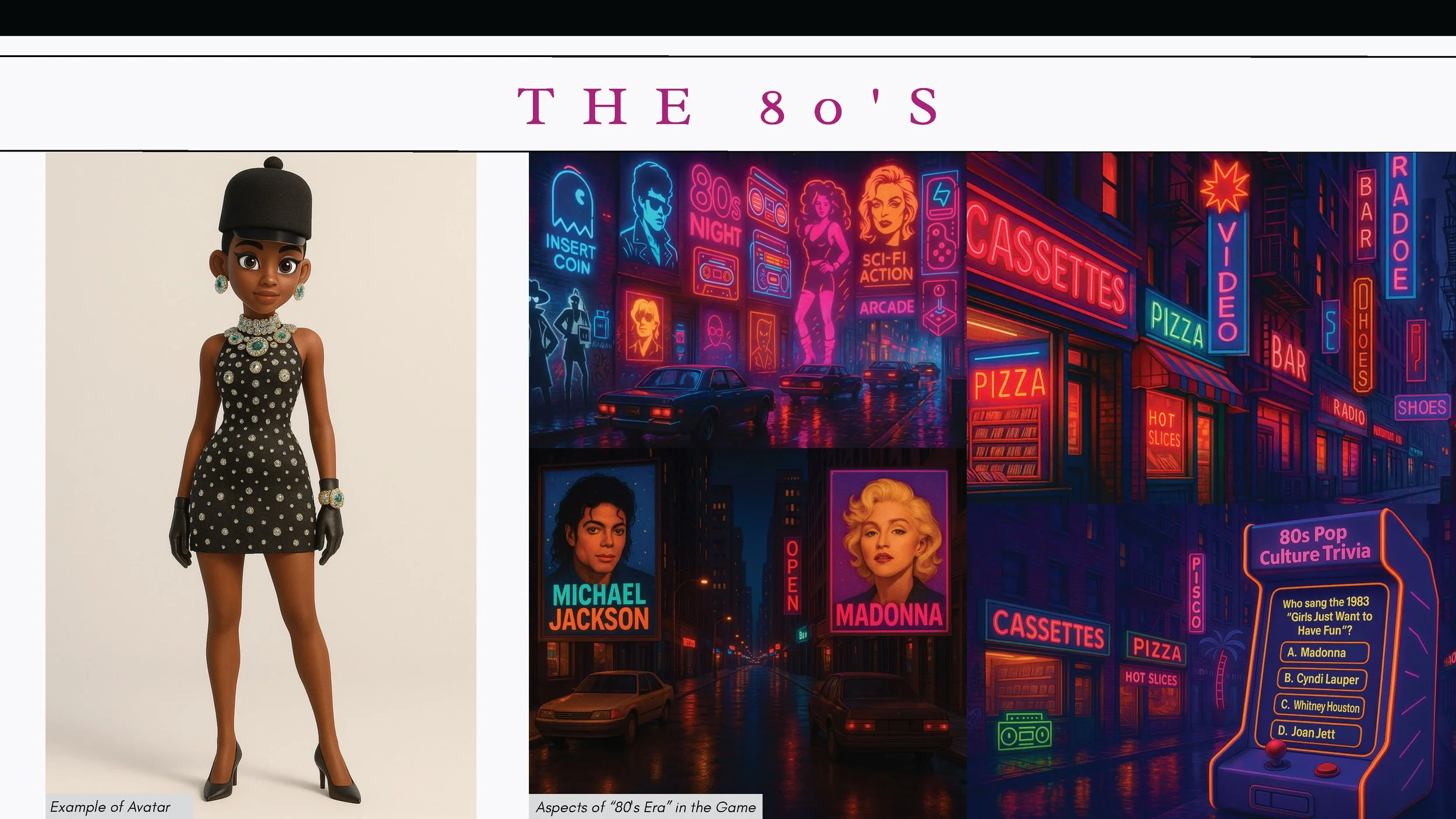
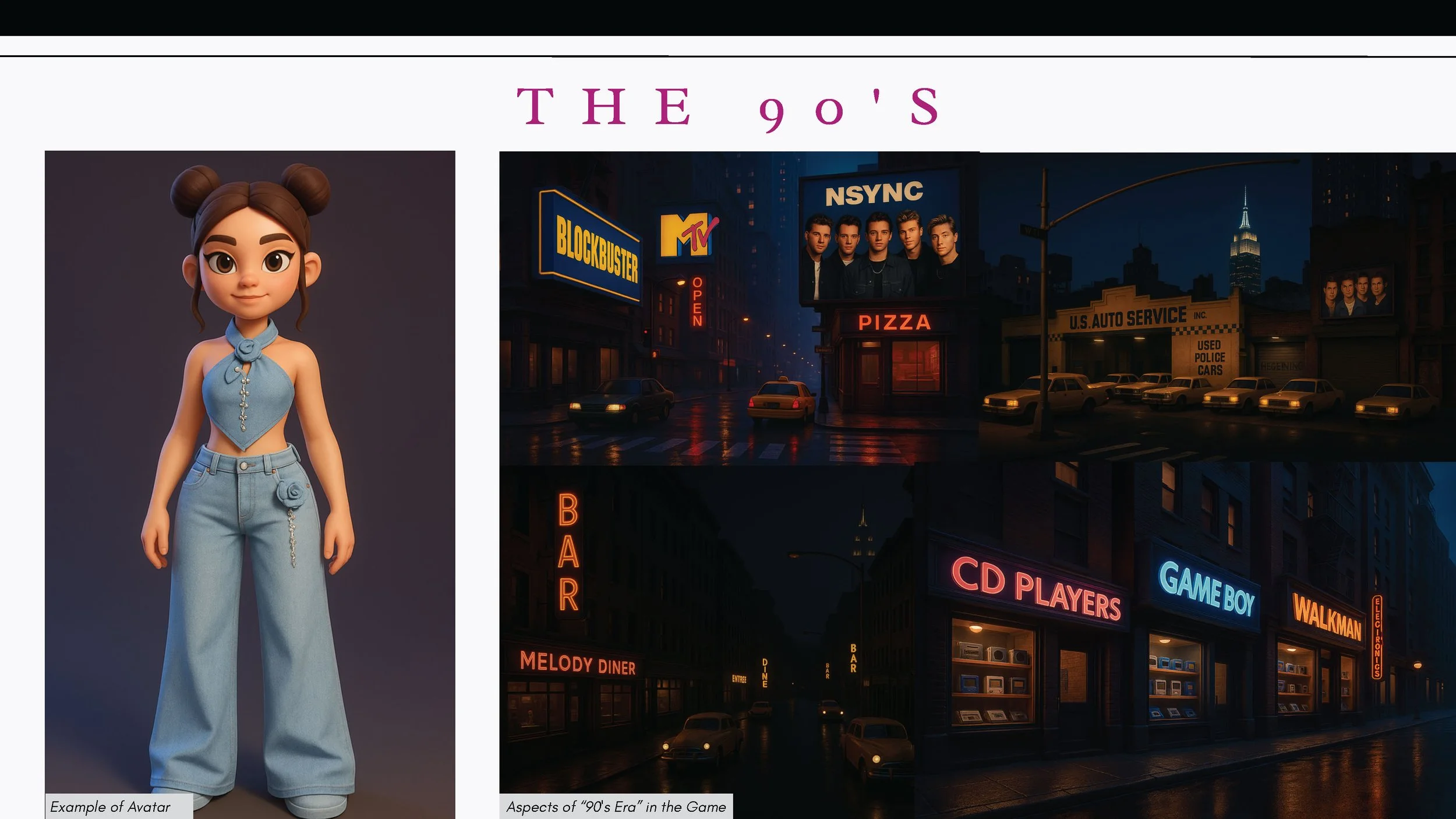
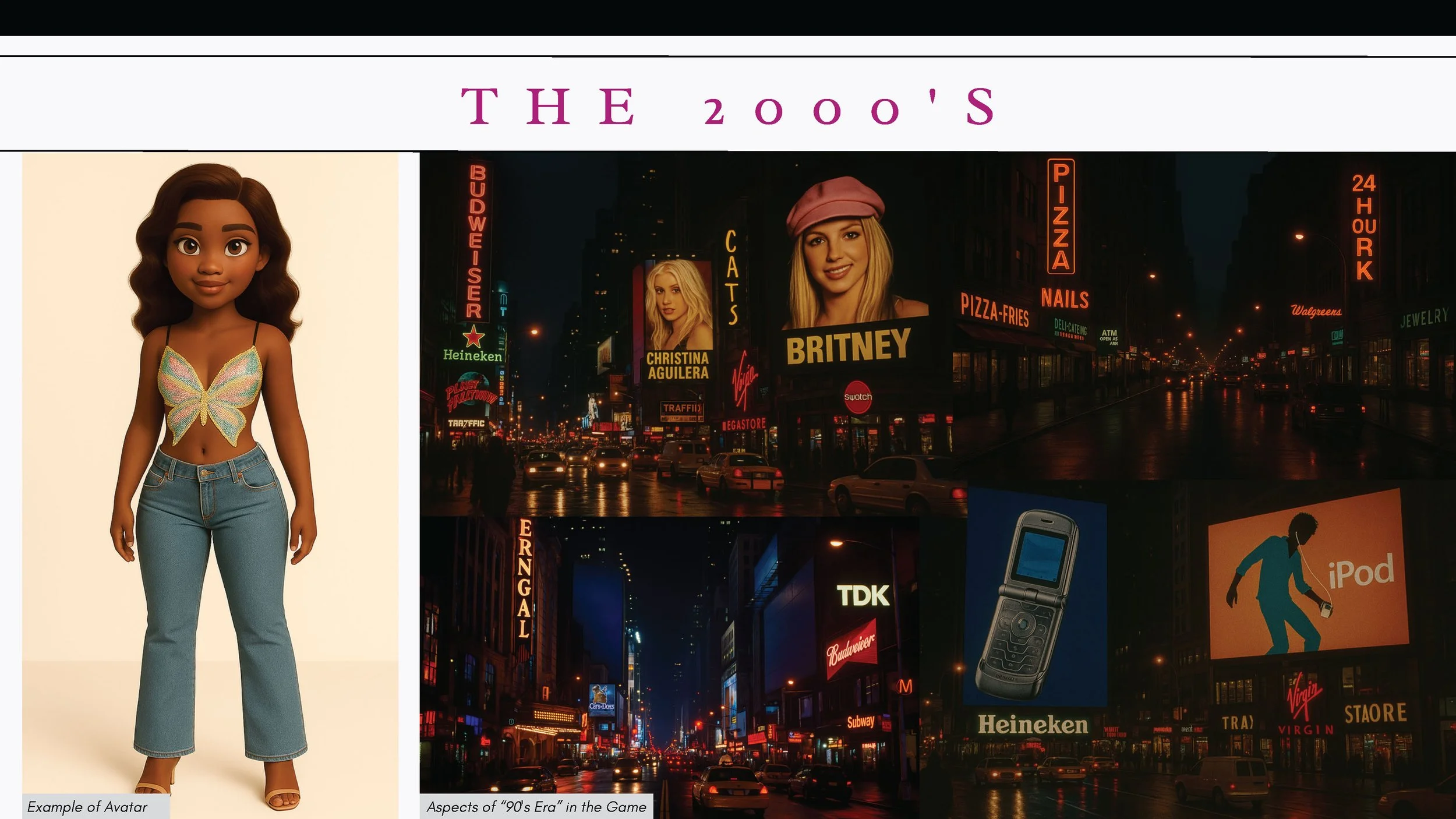
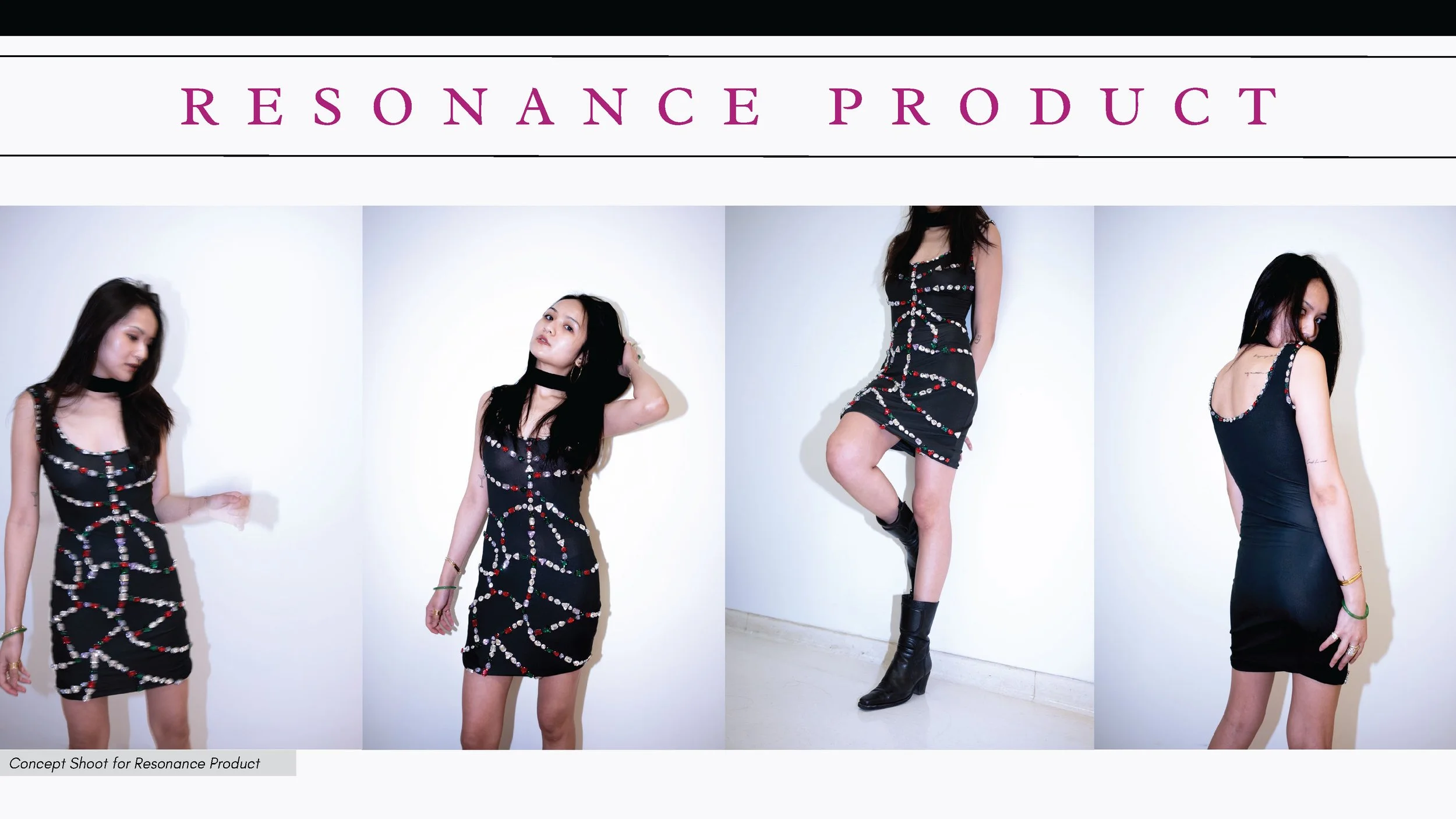
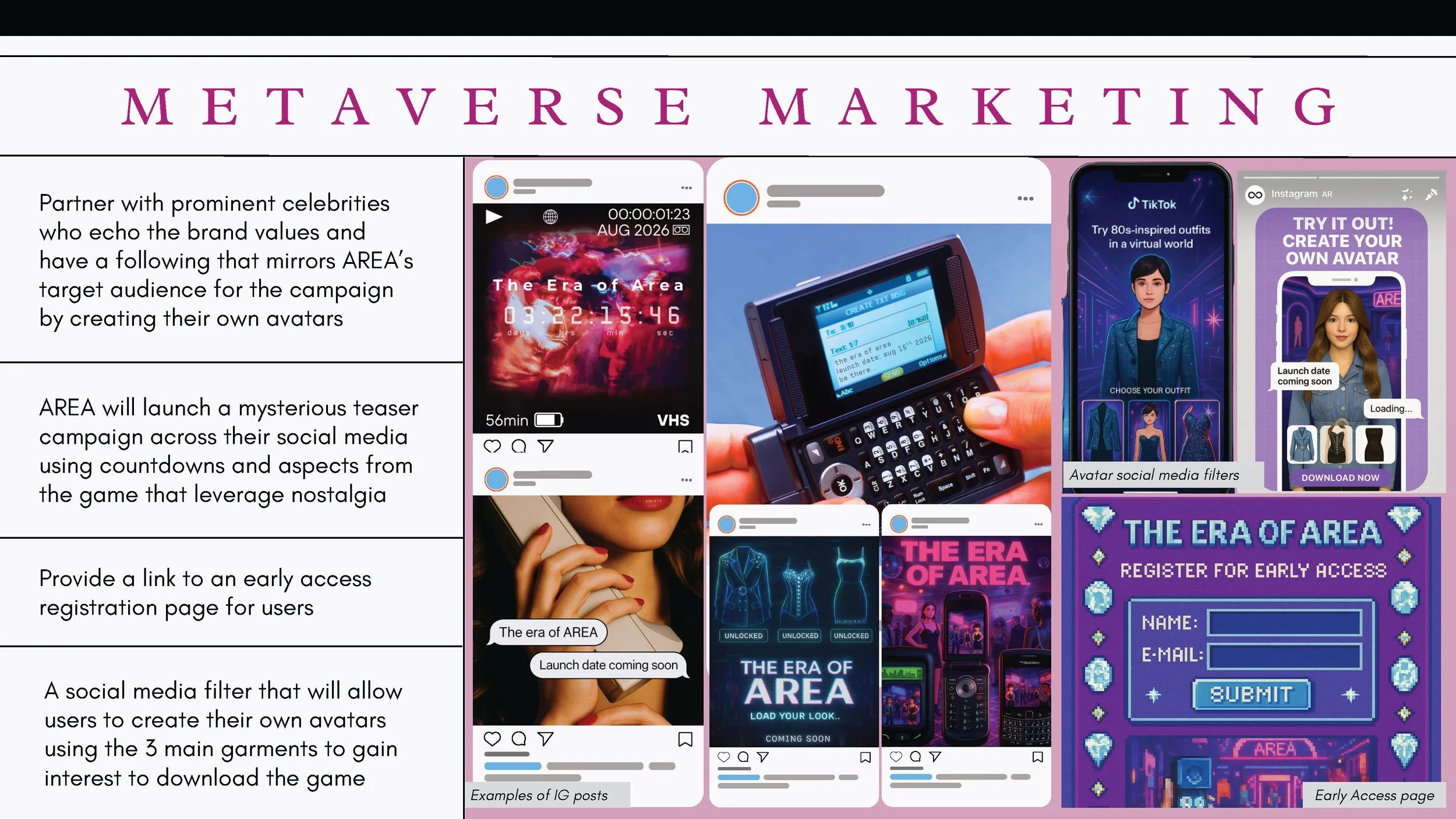
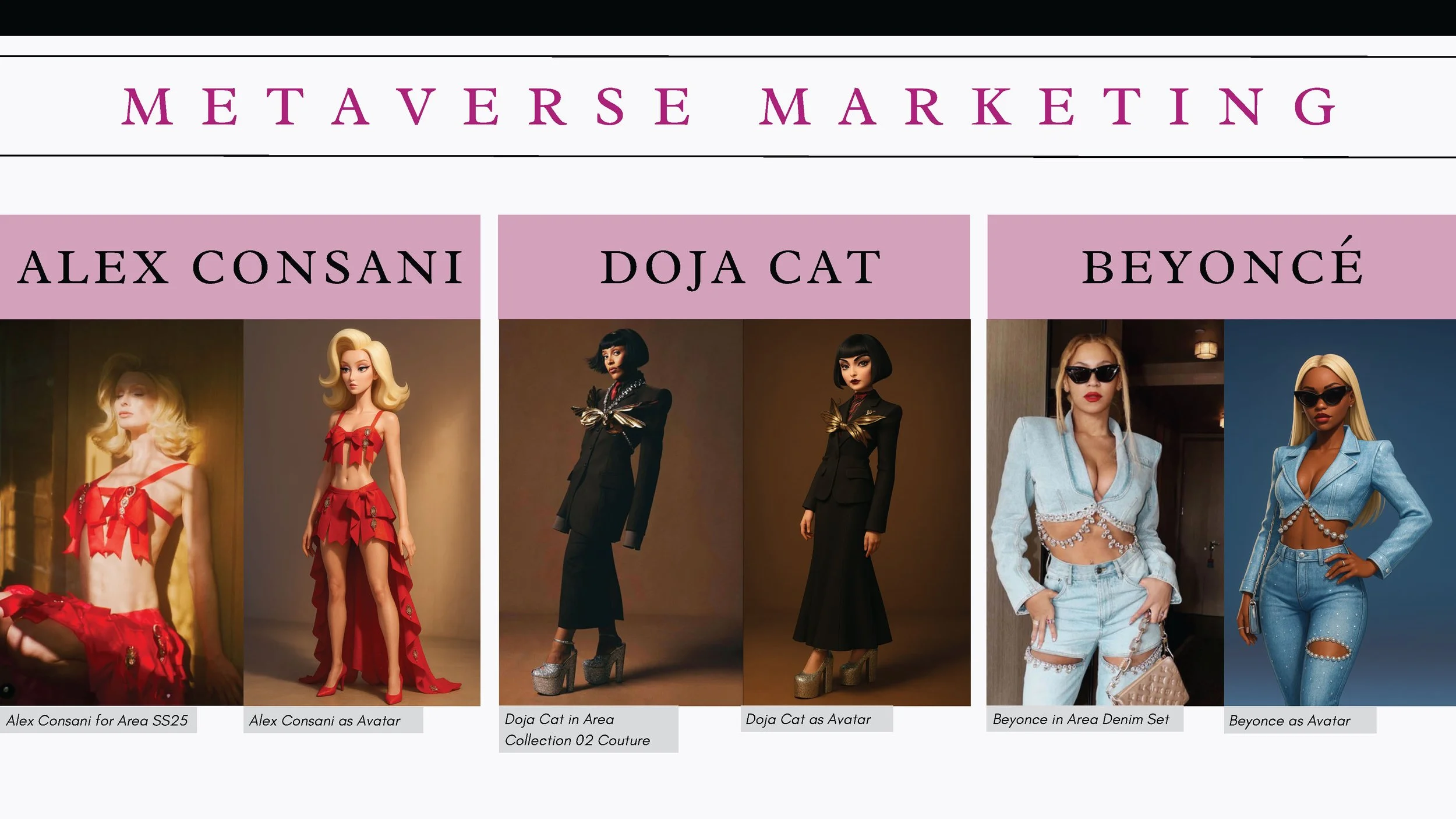
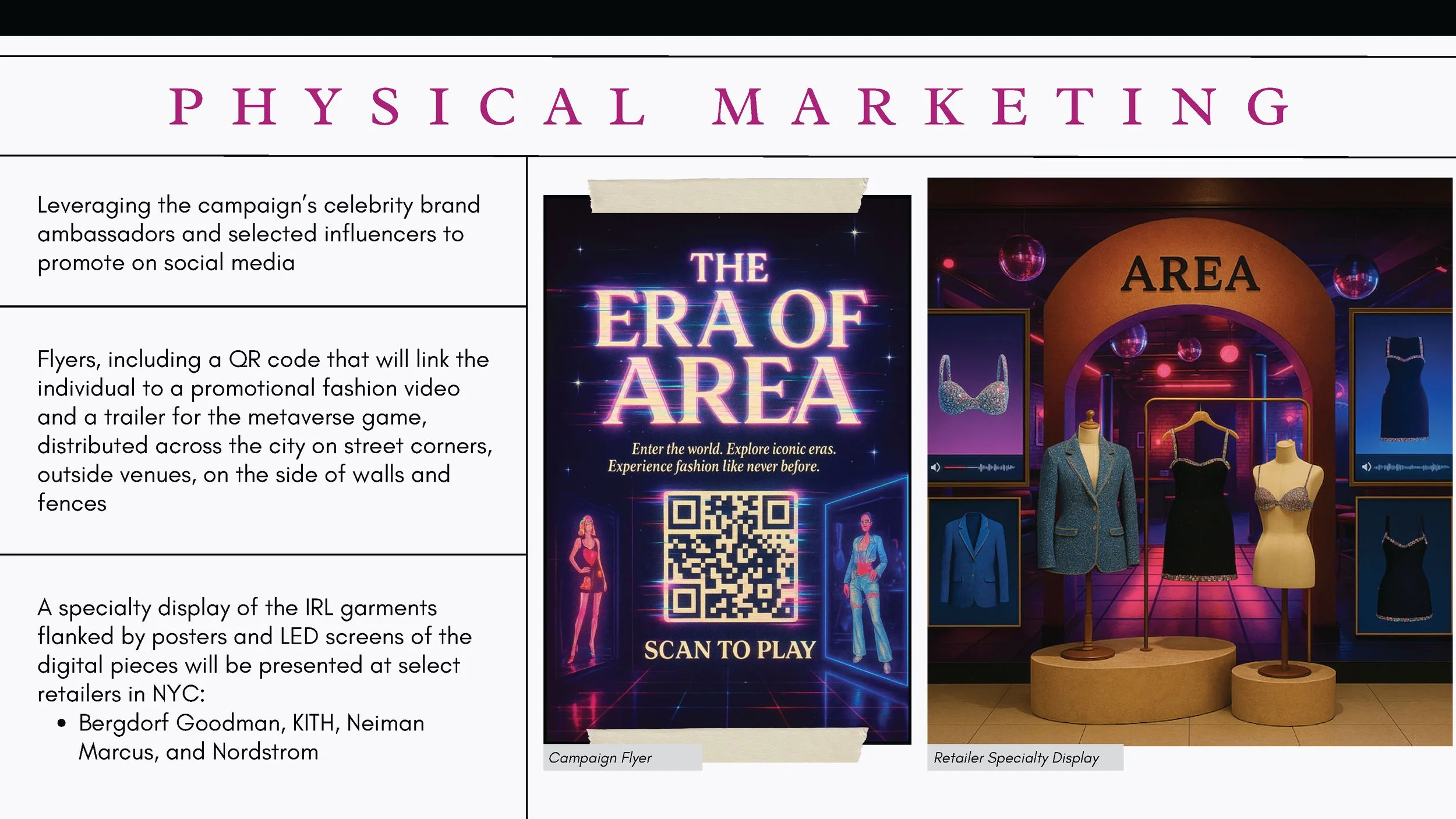
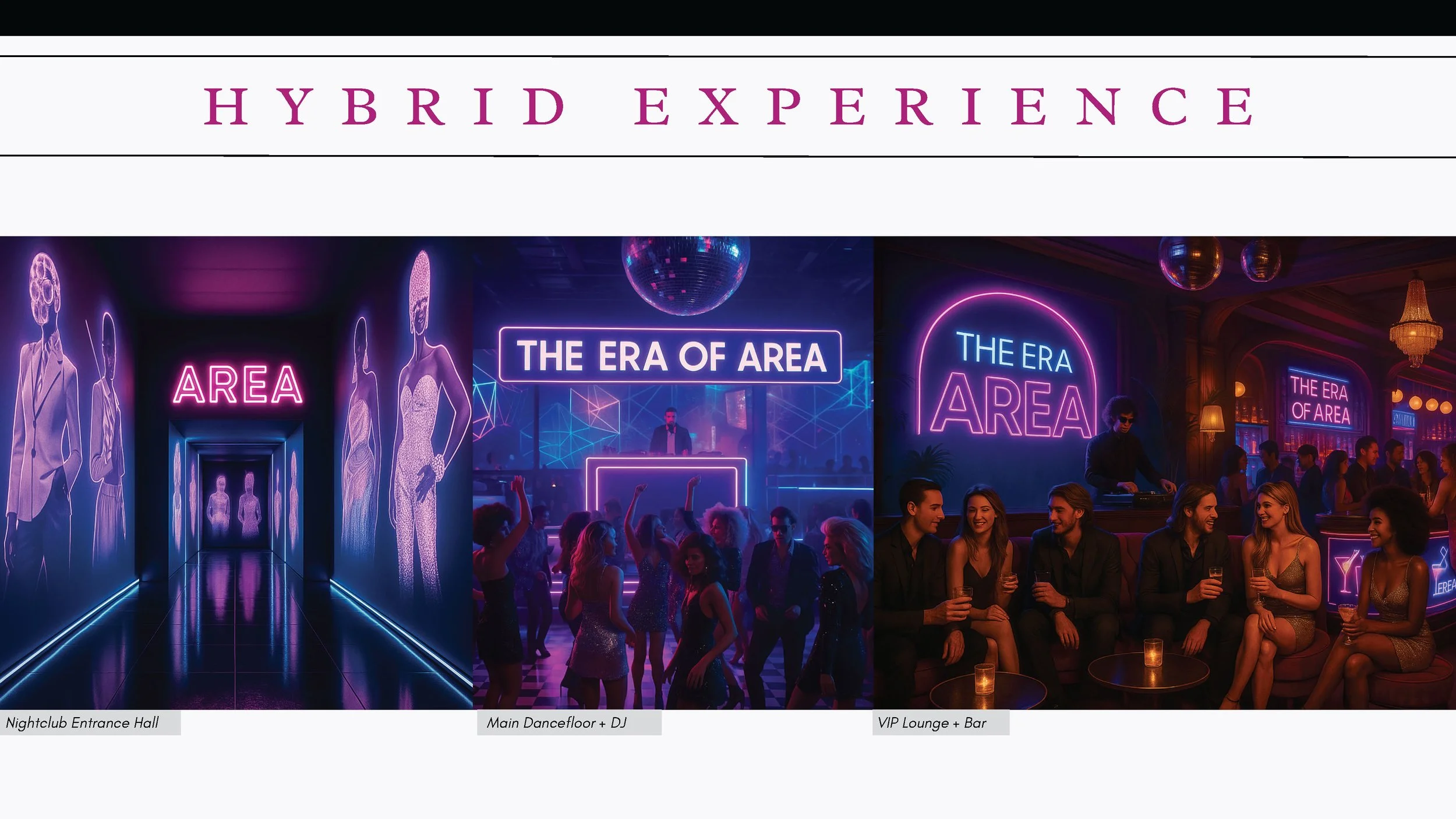
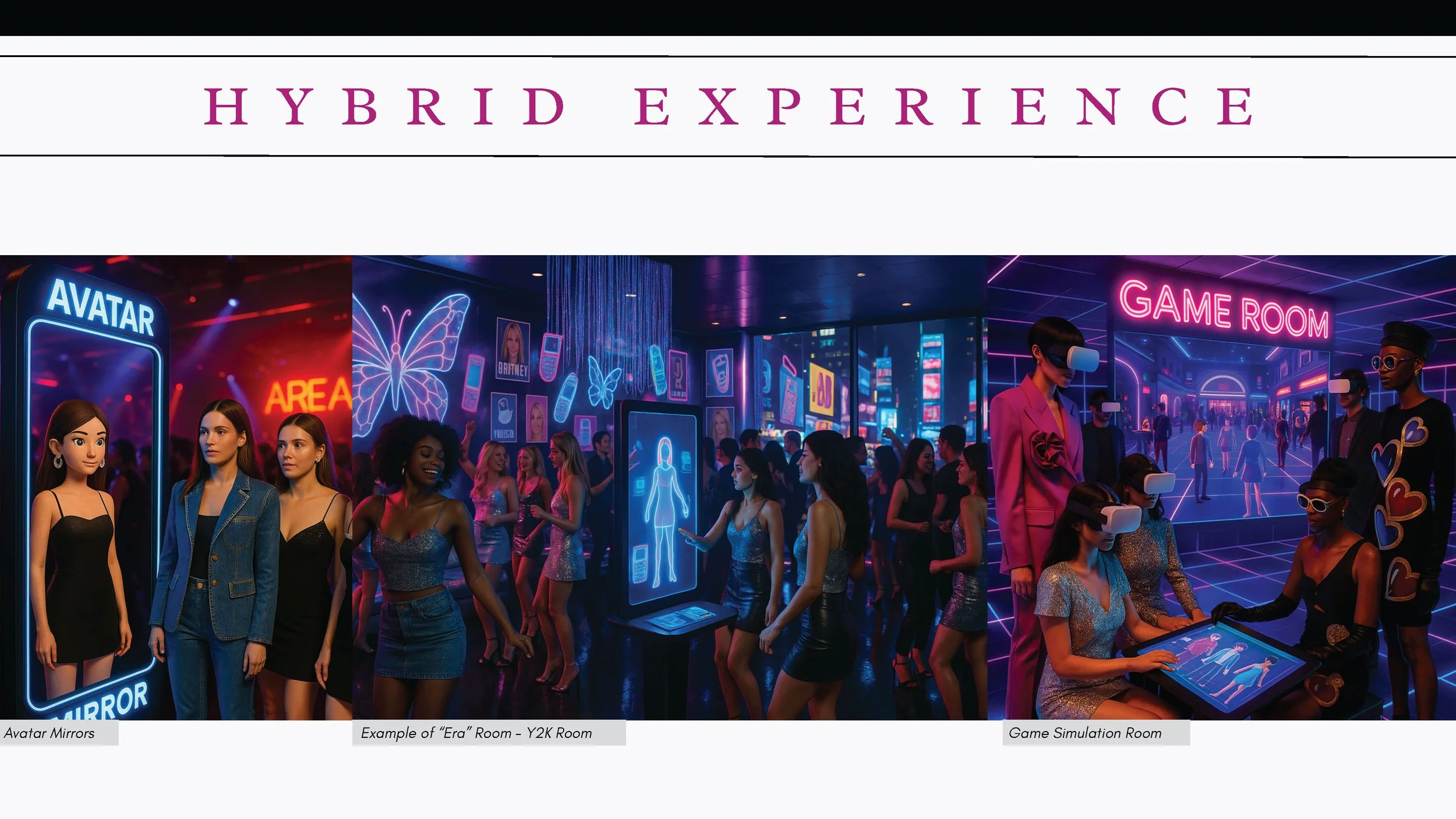
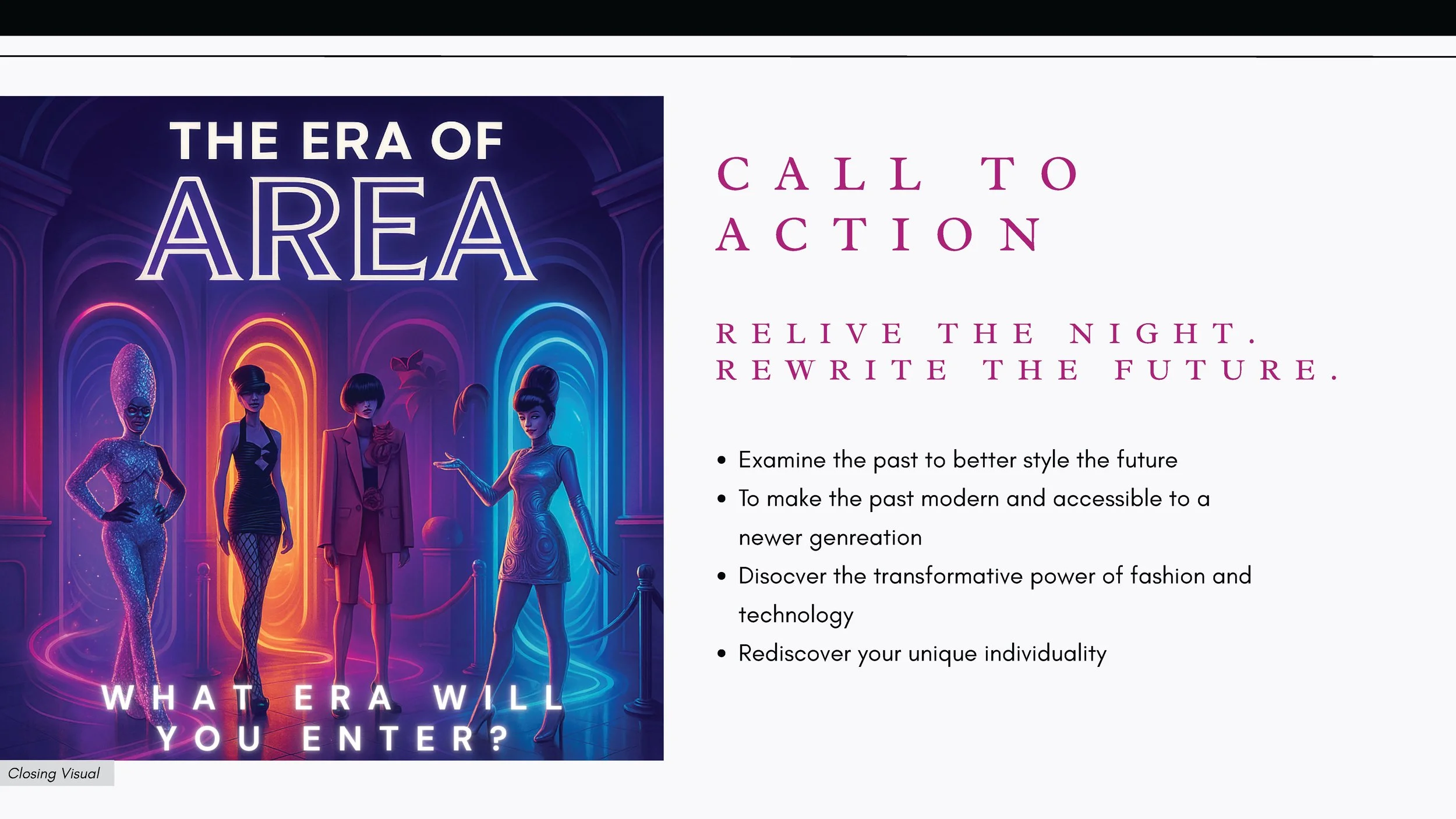
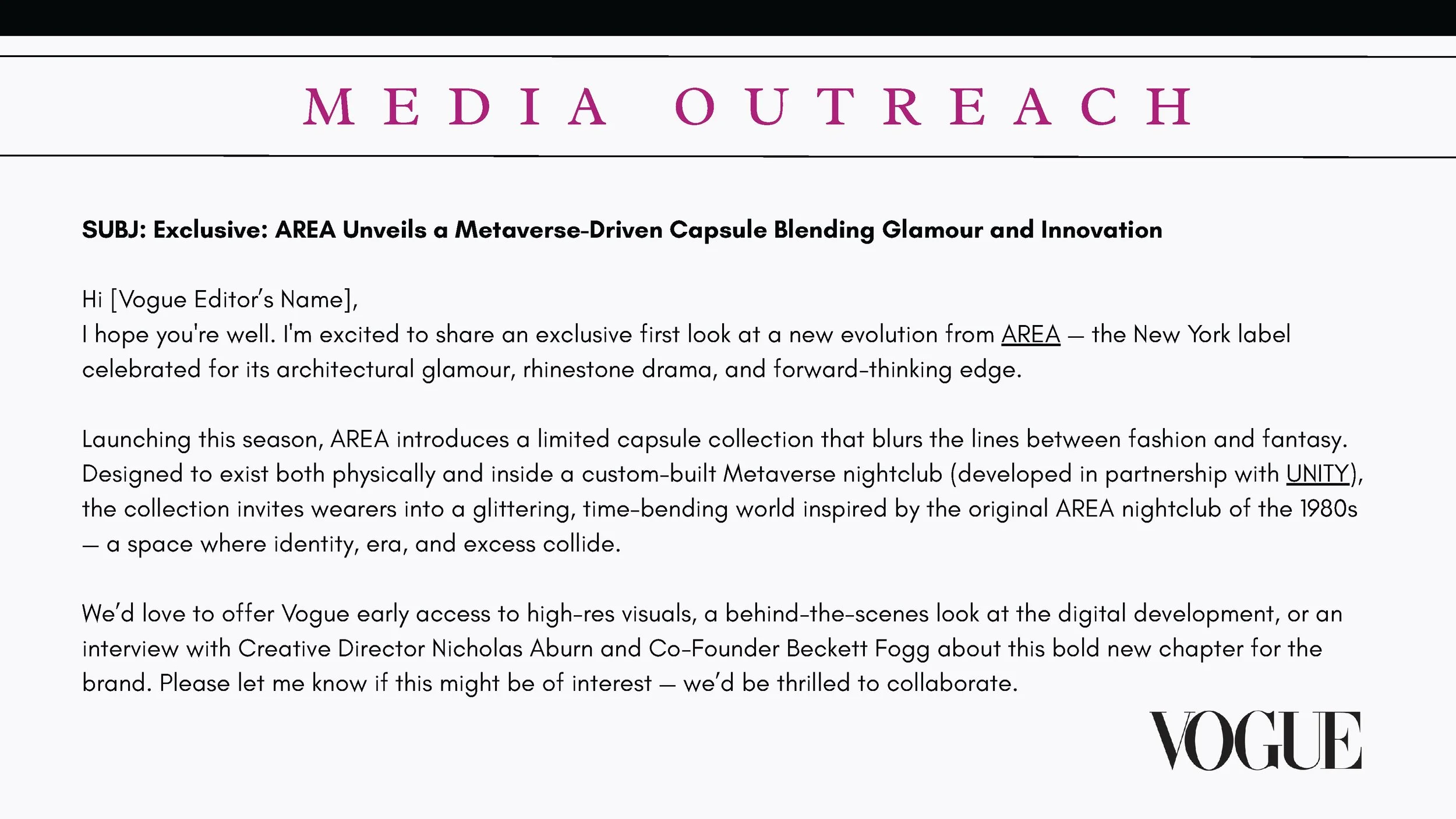
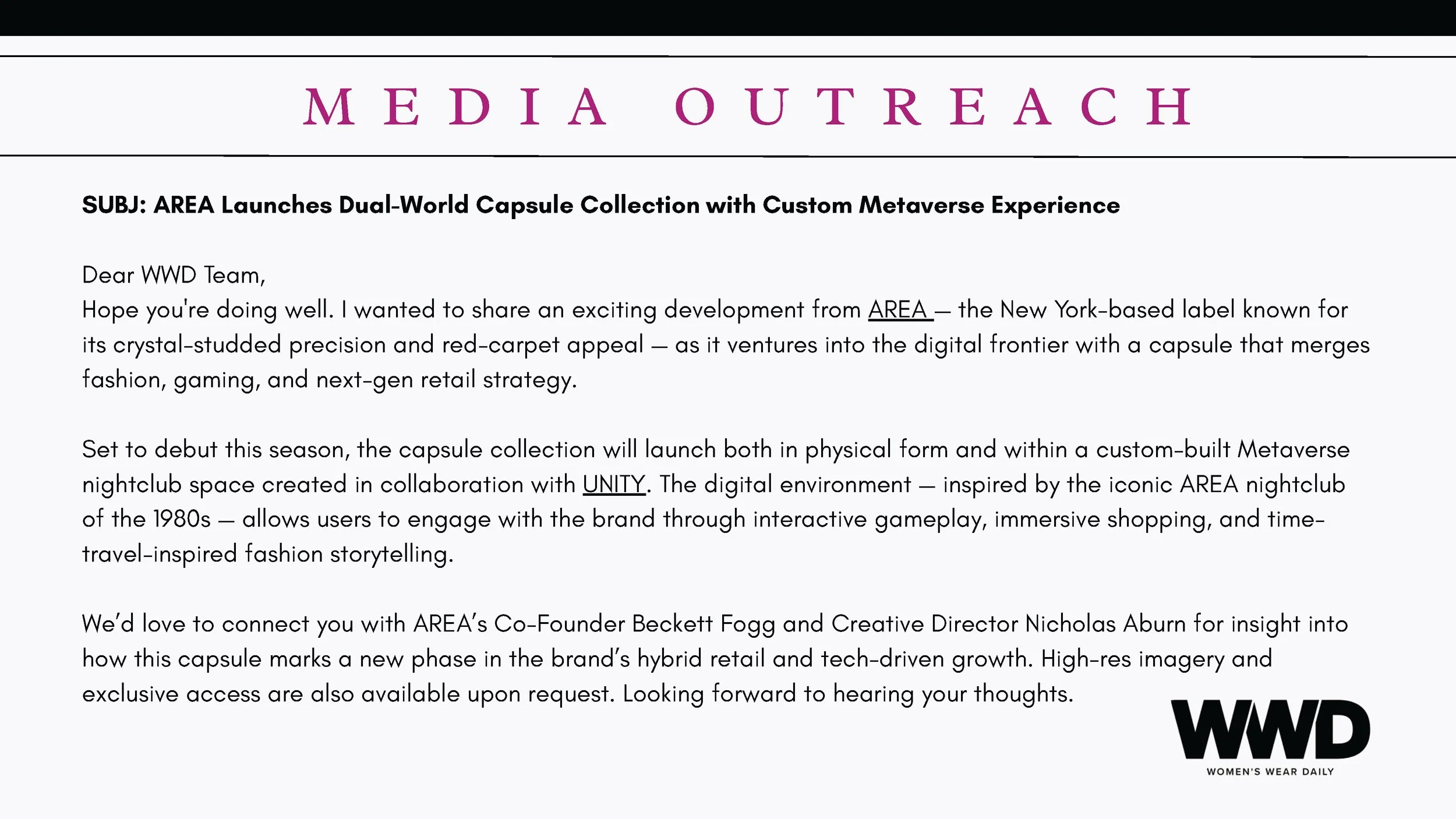
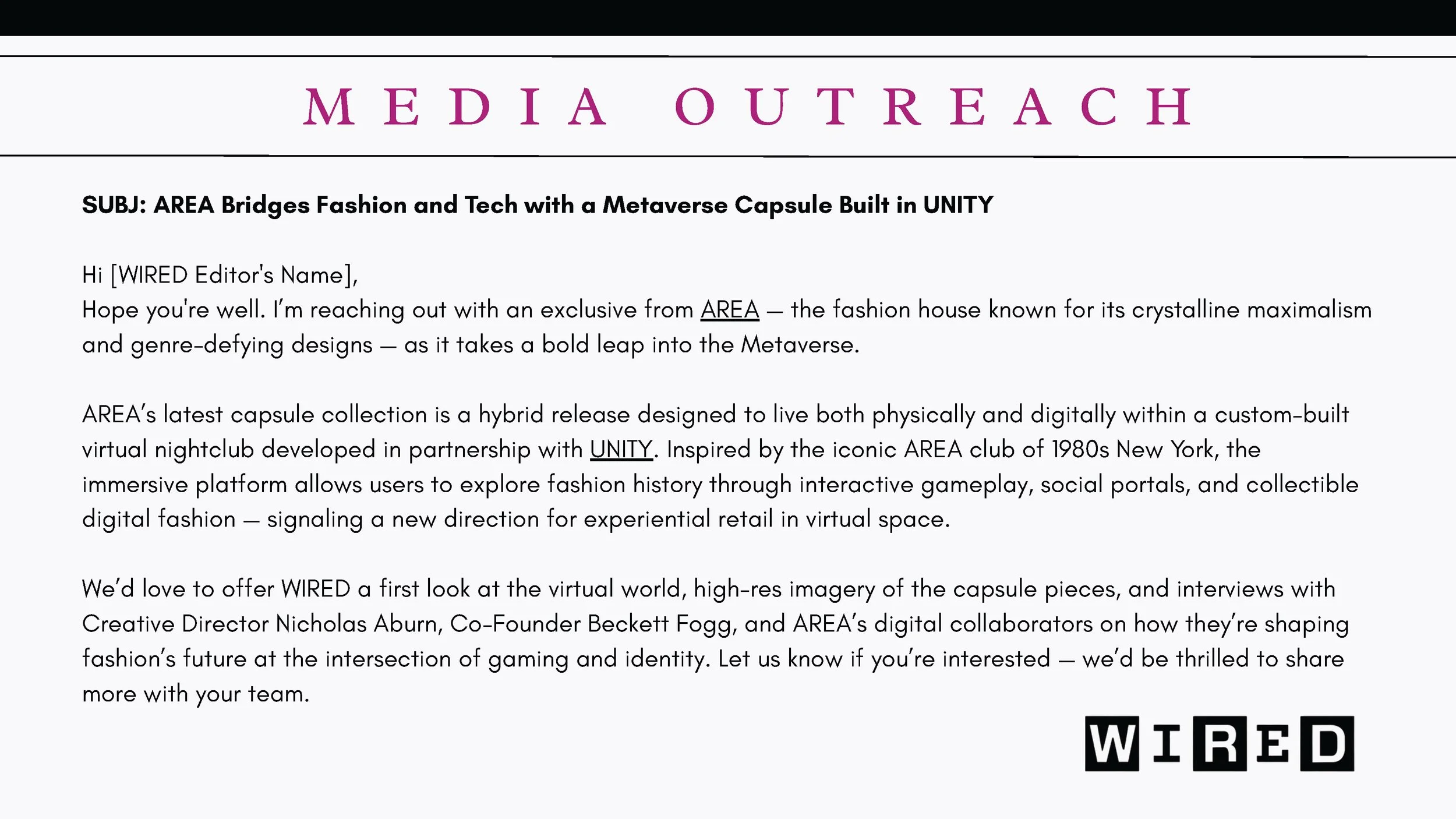
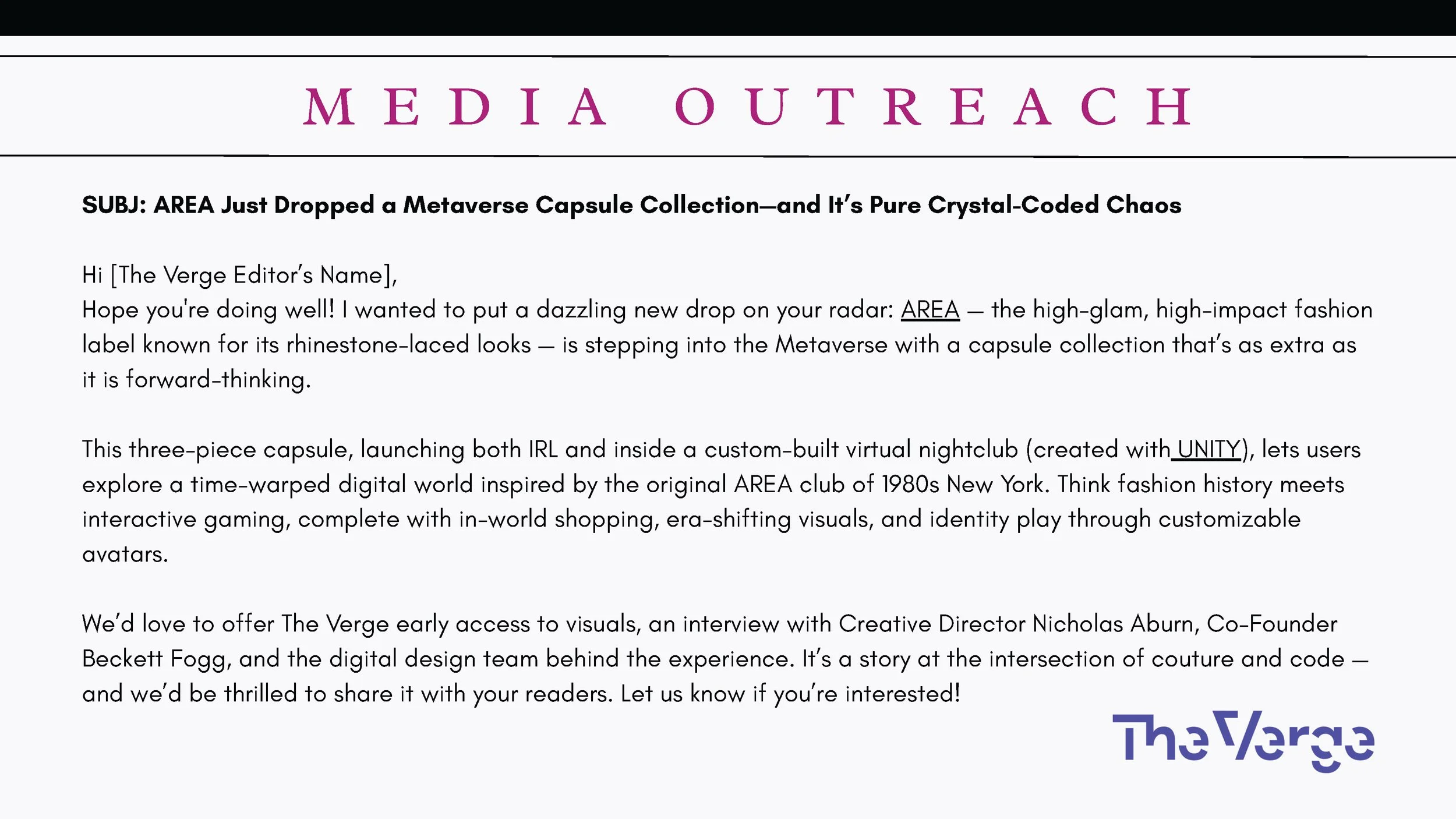
This immersive strategy positions AREA as a digital-first fashion spectacle where glamour, performance, and experimentation thrive. Through virtual fashion and interactive environments, the project explores how AREA can expand its brand universe into the metaverse, blurring fantasy and reality through playful excess and cultural spectacle.
Diotima Immersive Strategy
by Students Mariana Méndez, Aisha Mohamed, AND Saient Doucoure
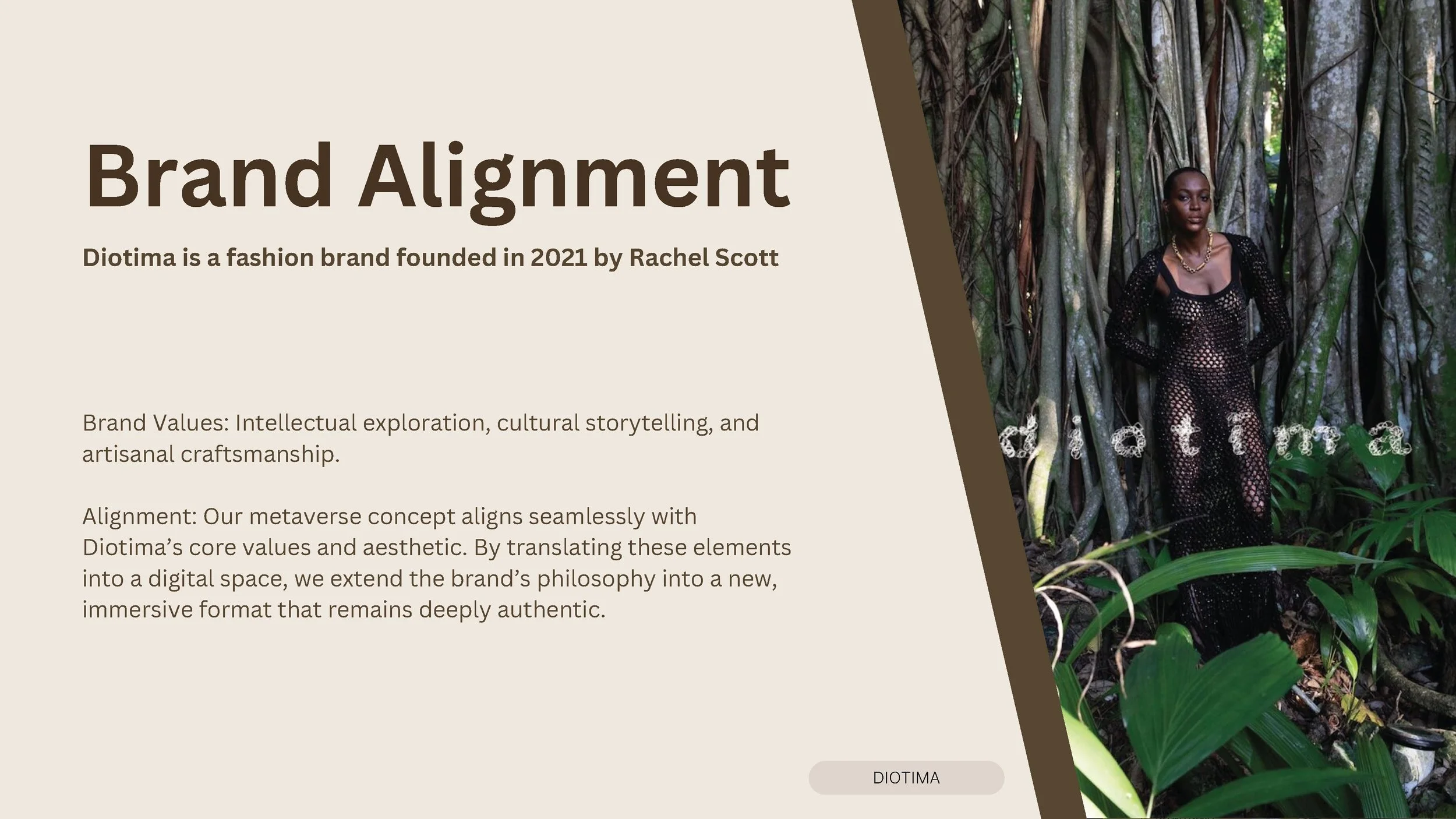
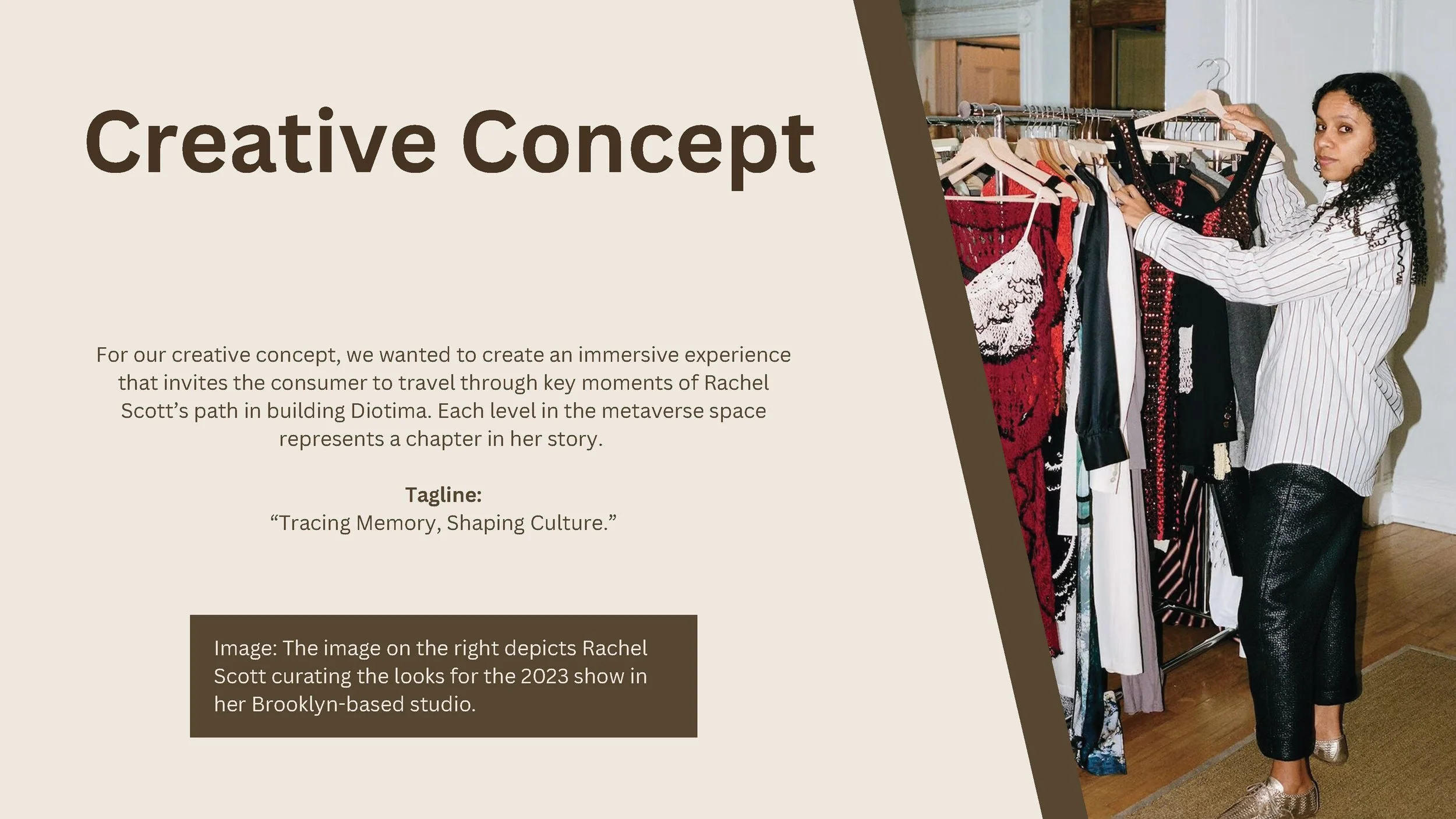
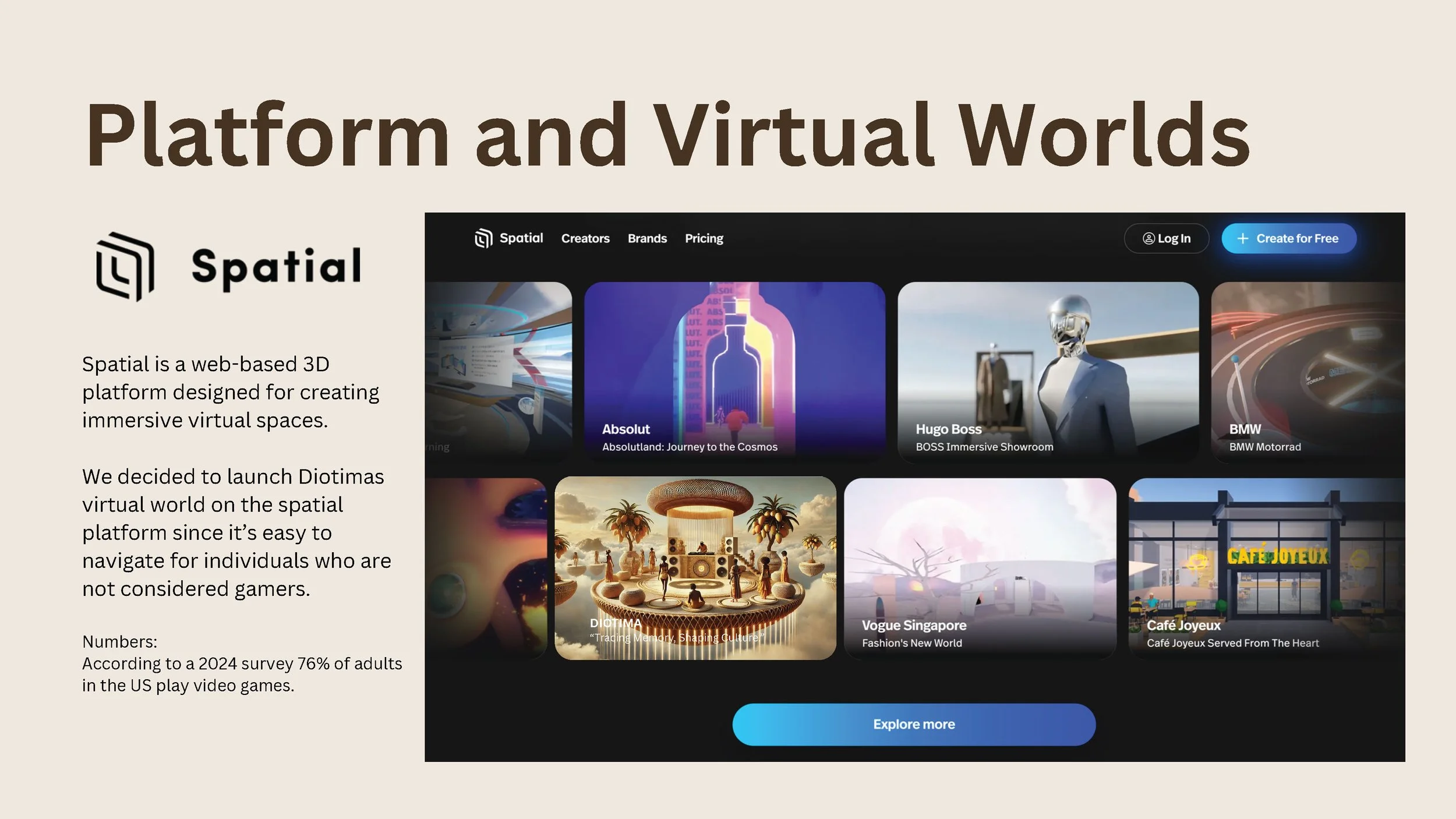
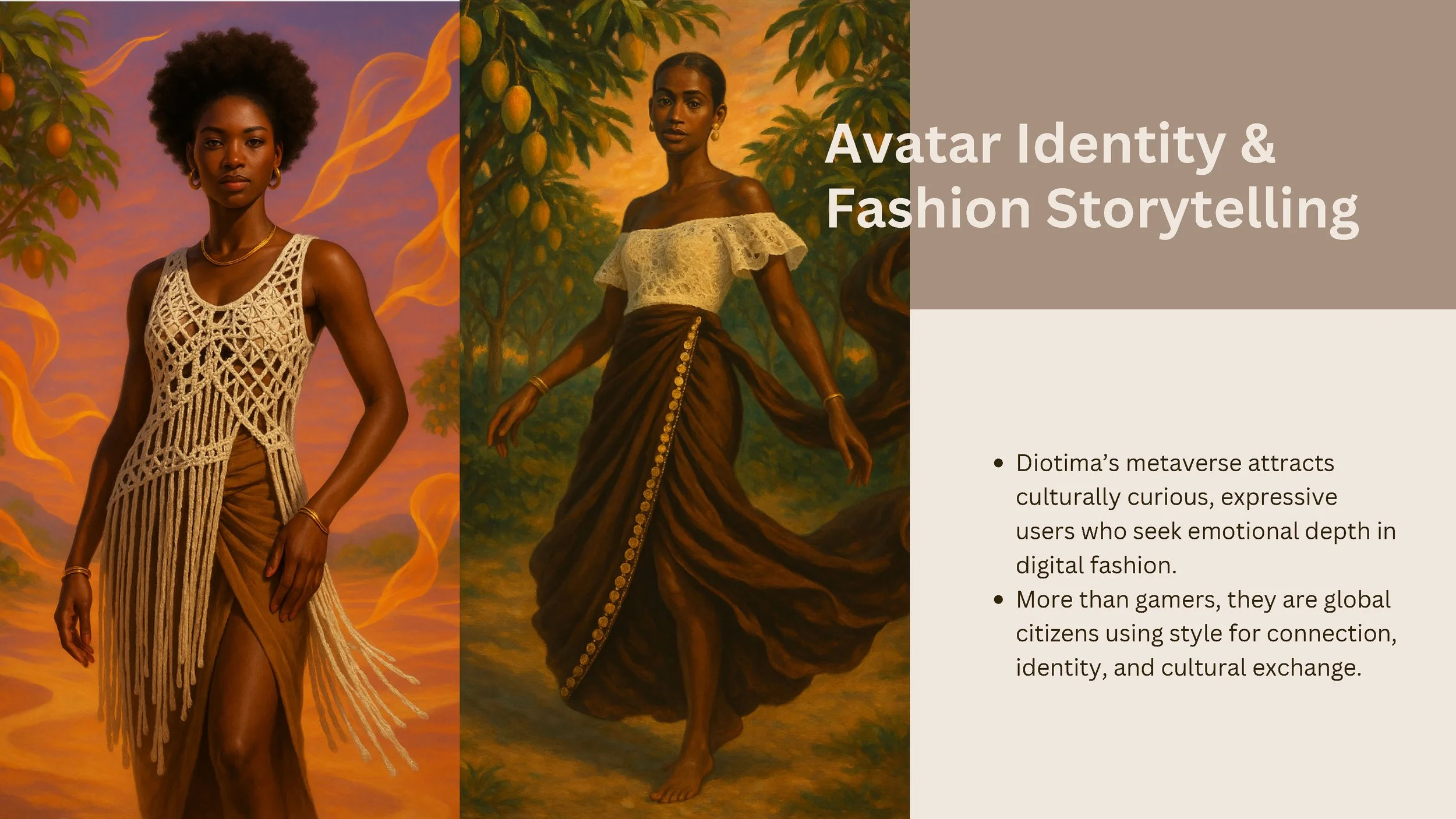
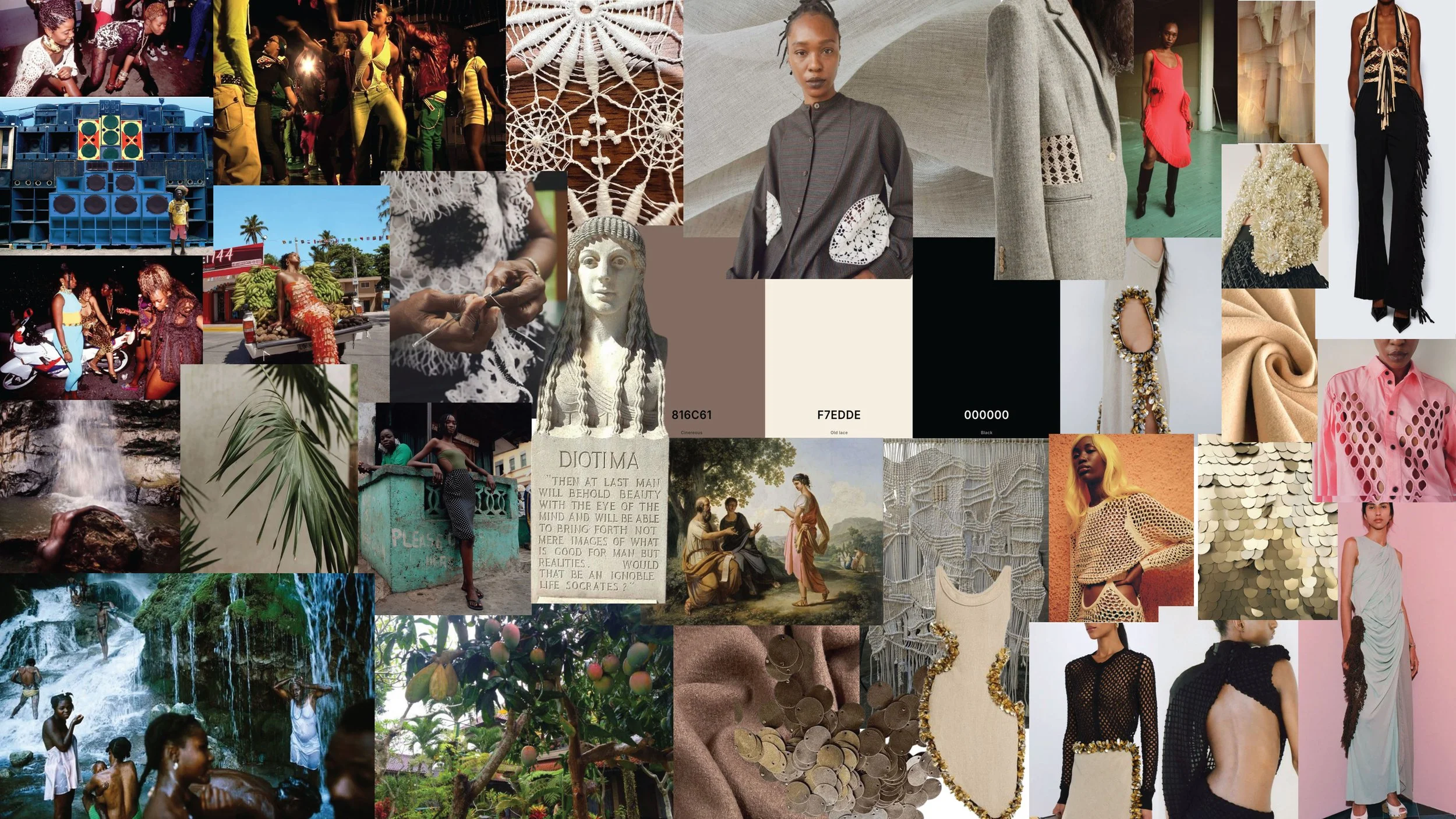
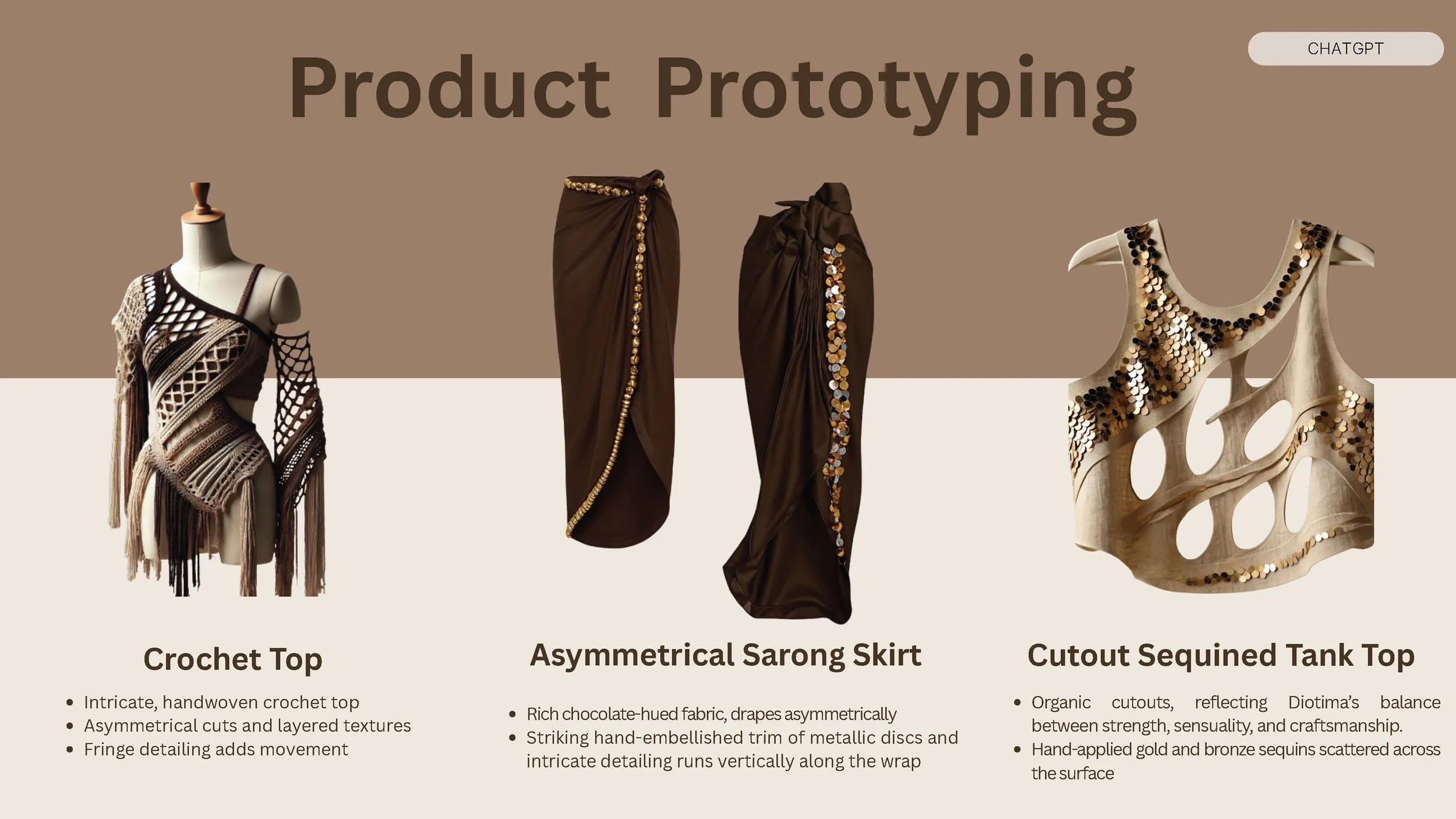
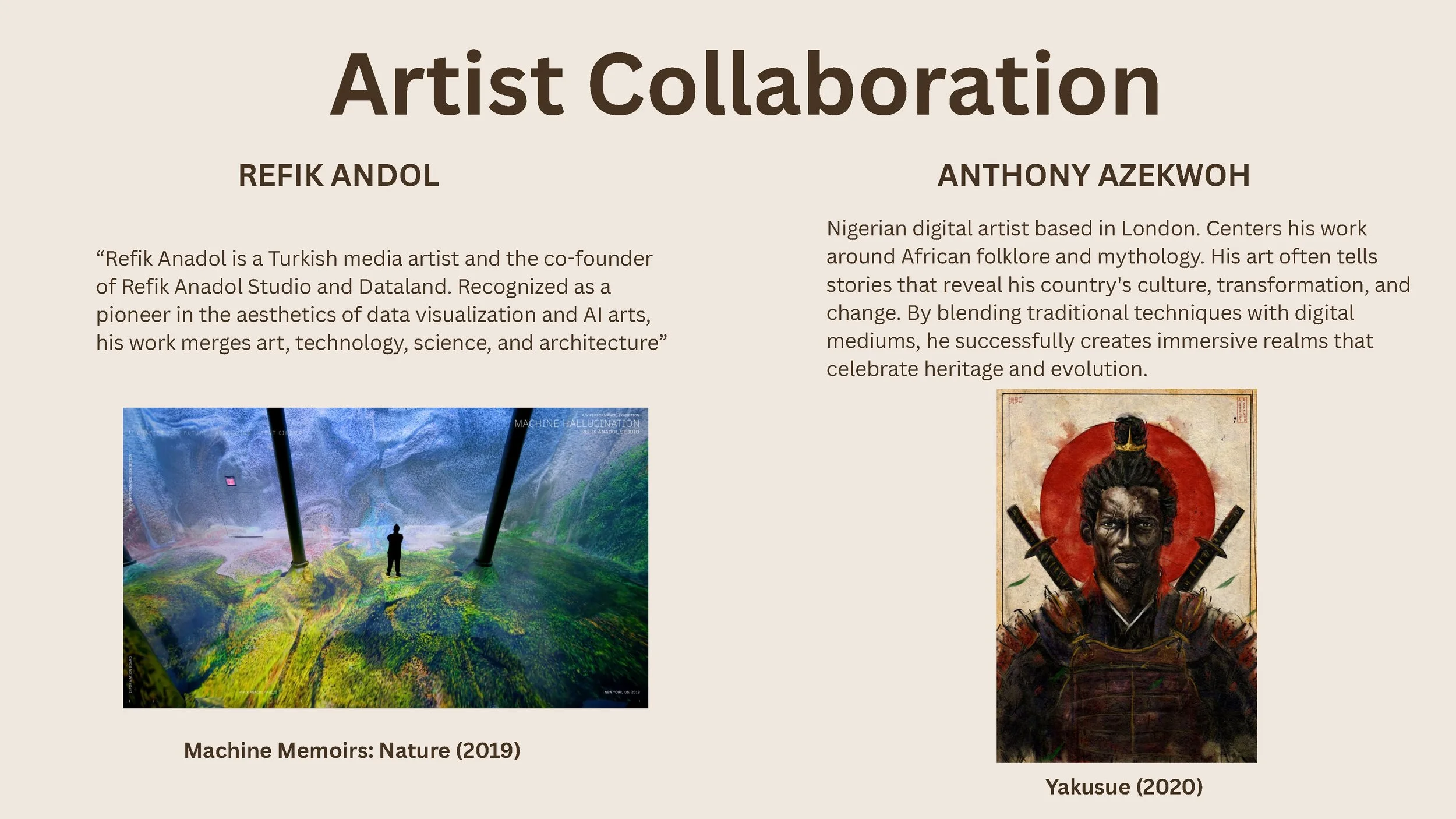
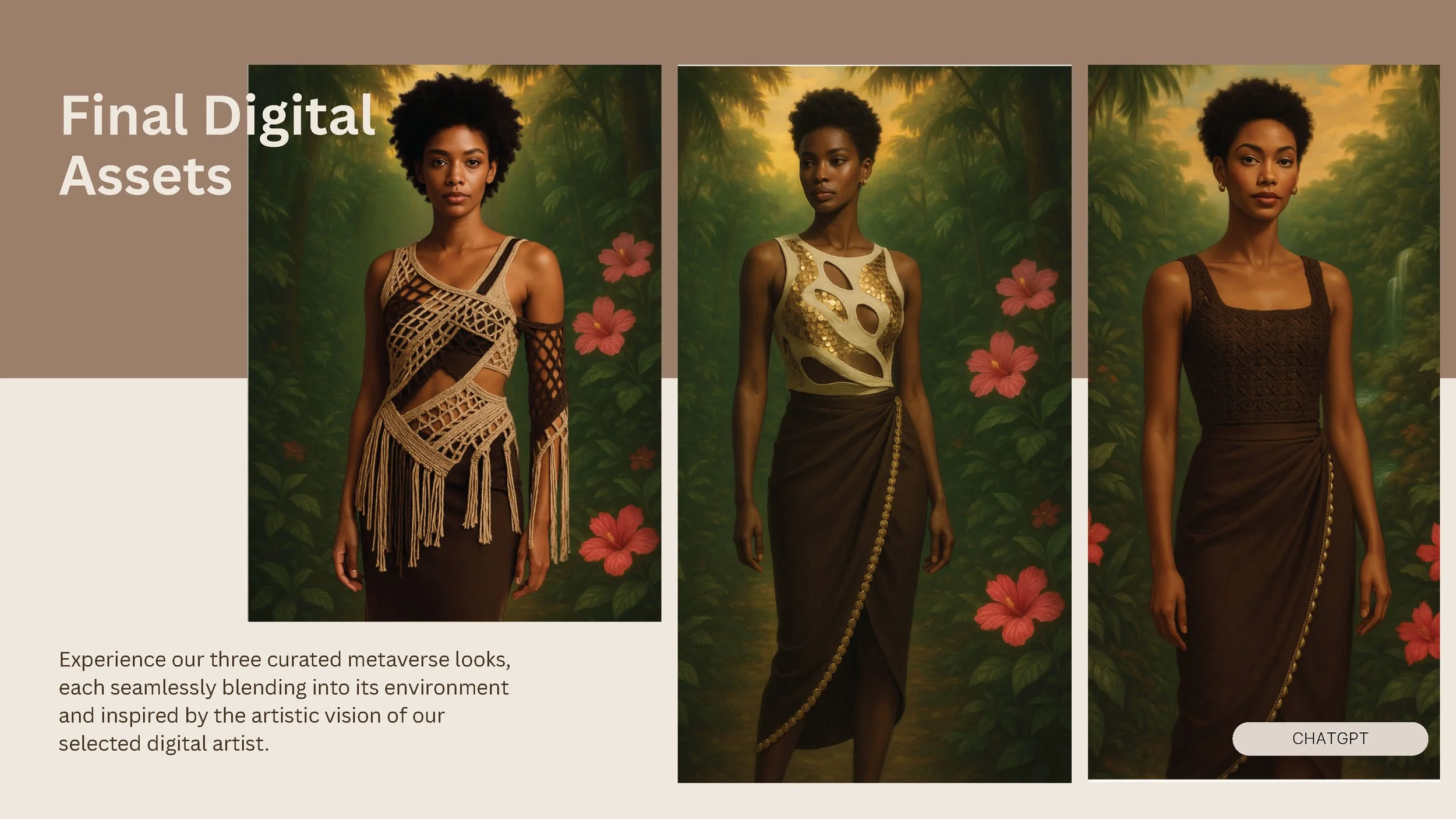
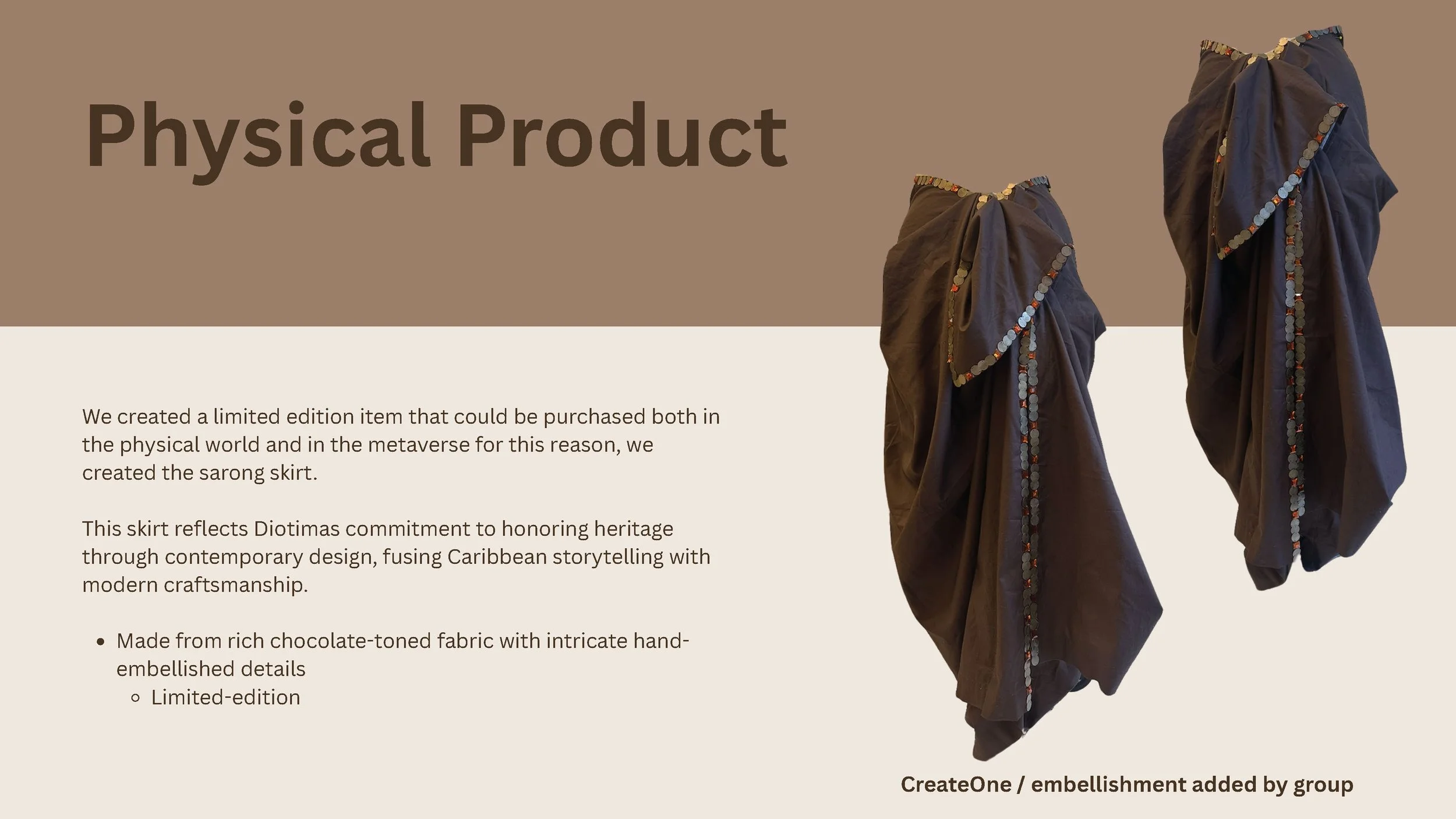
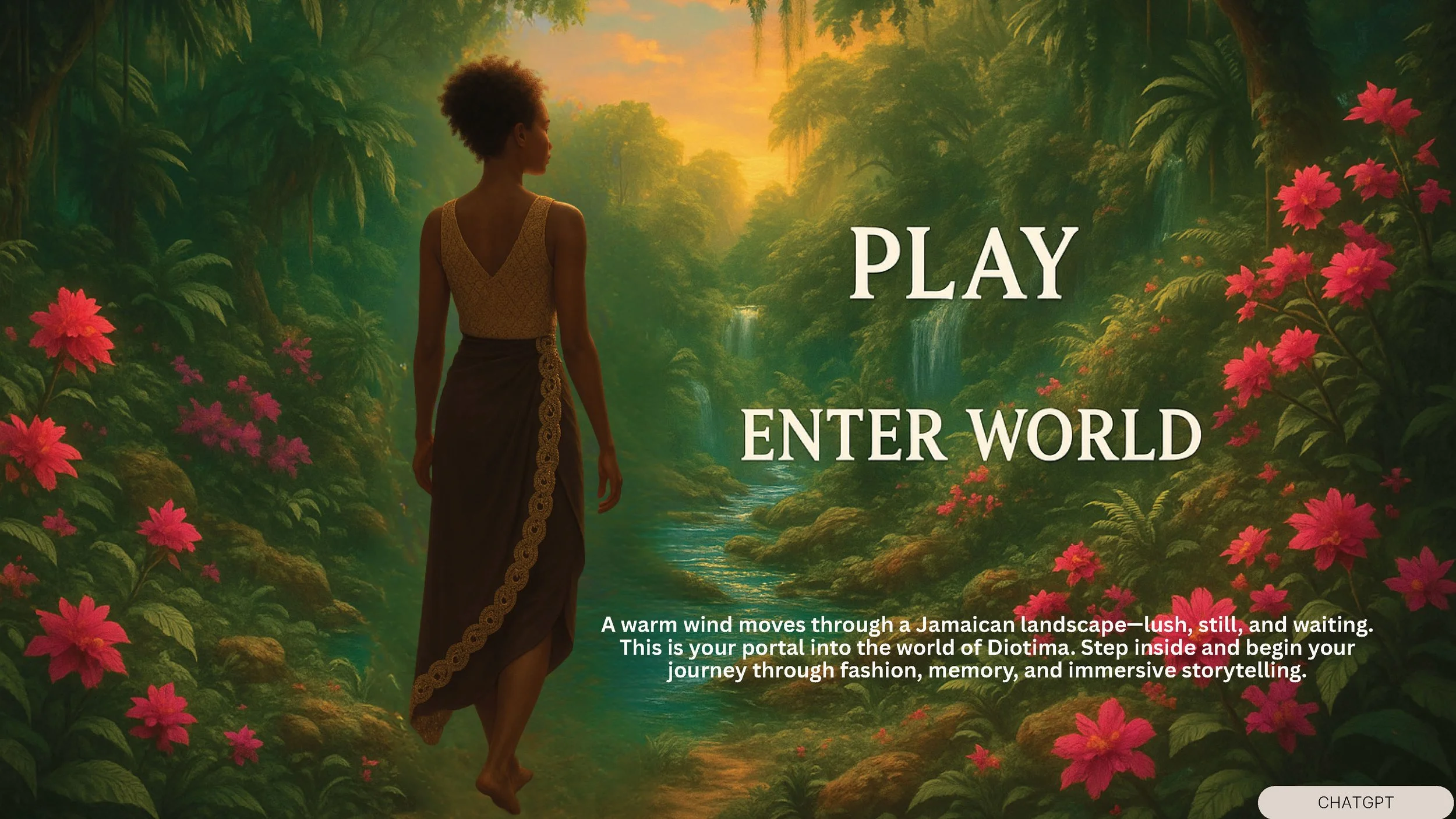
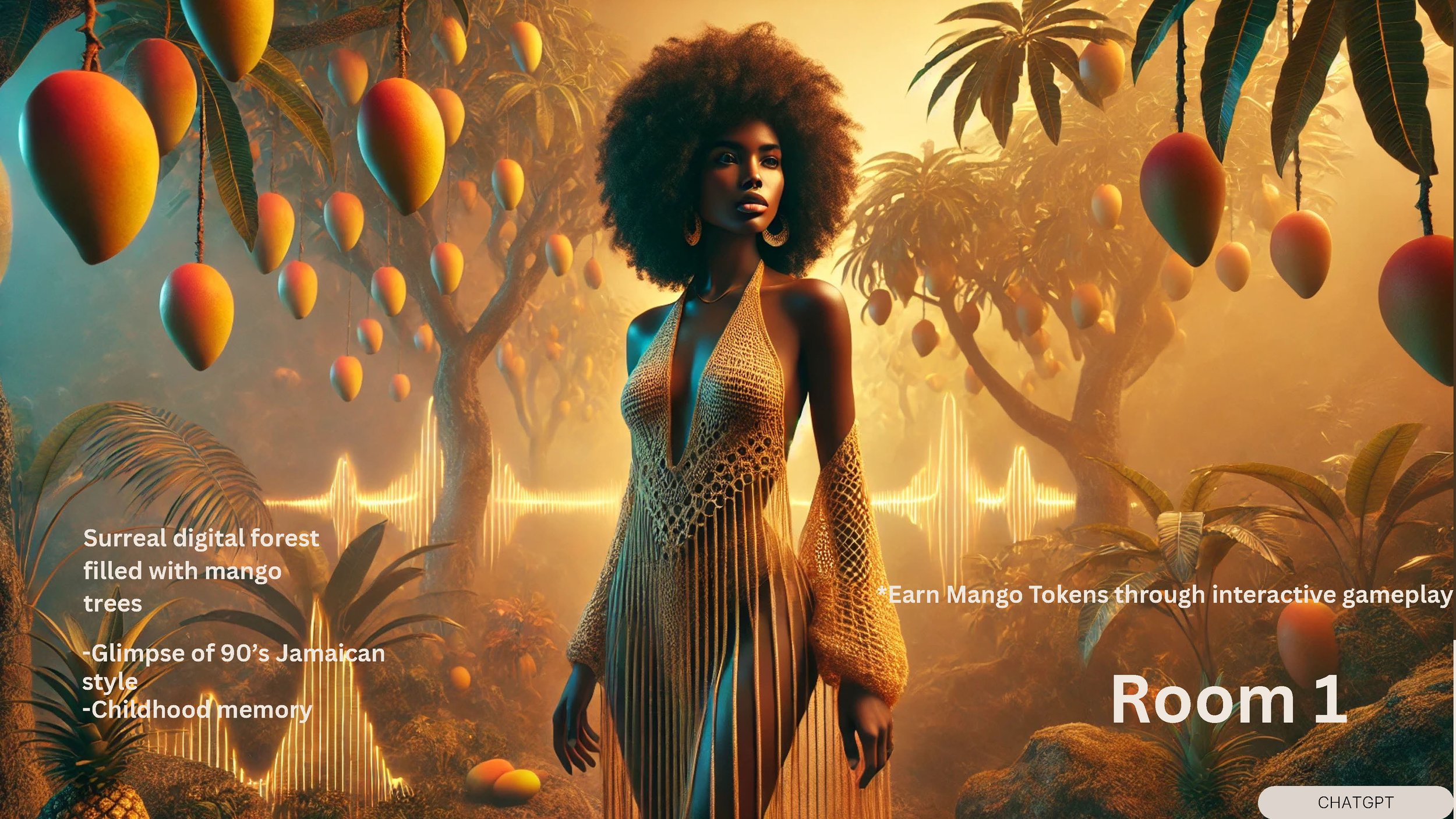
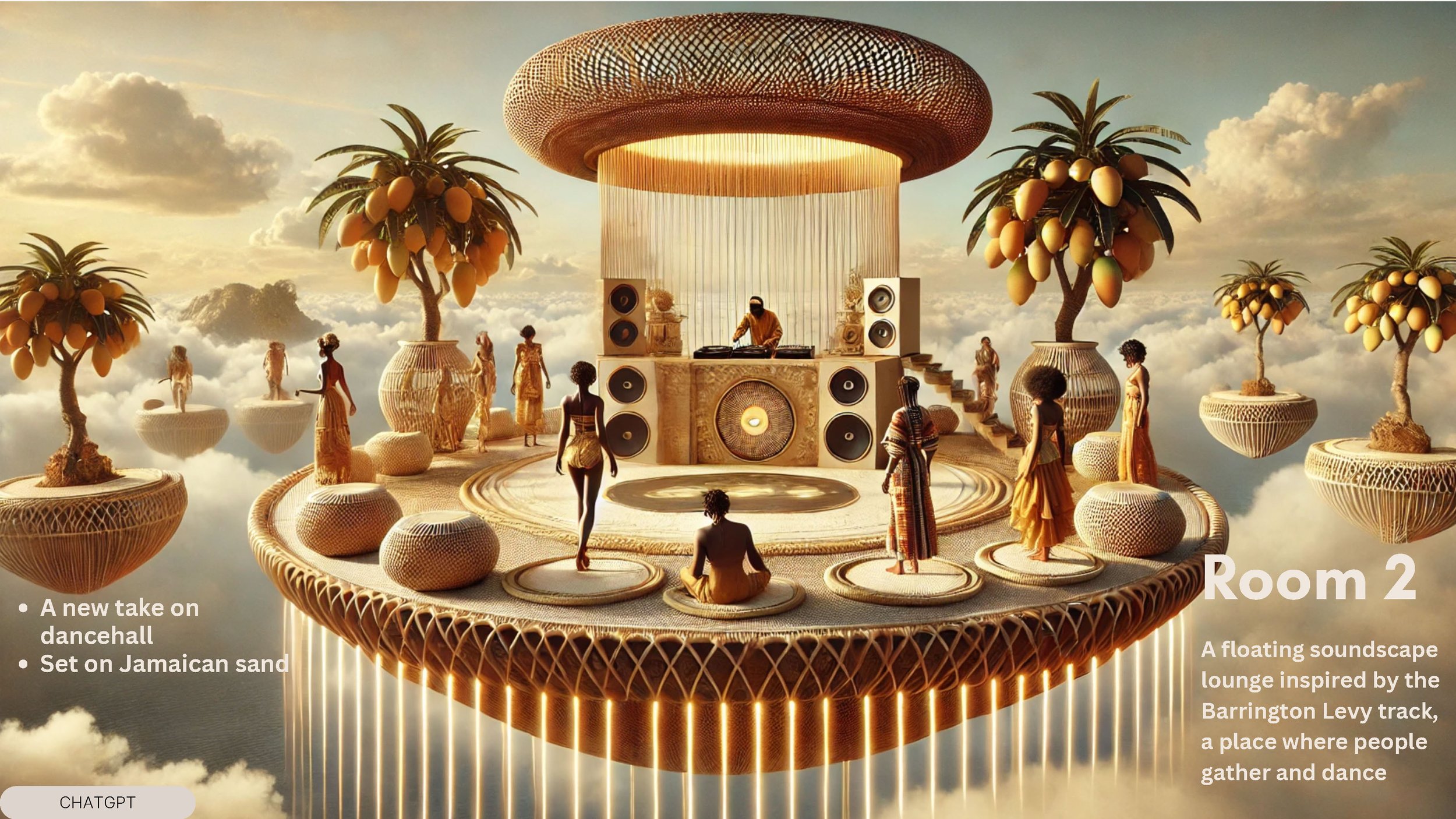
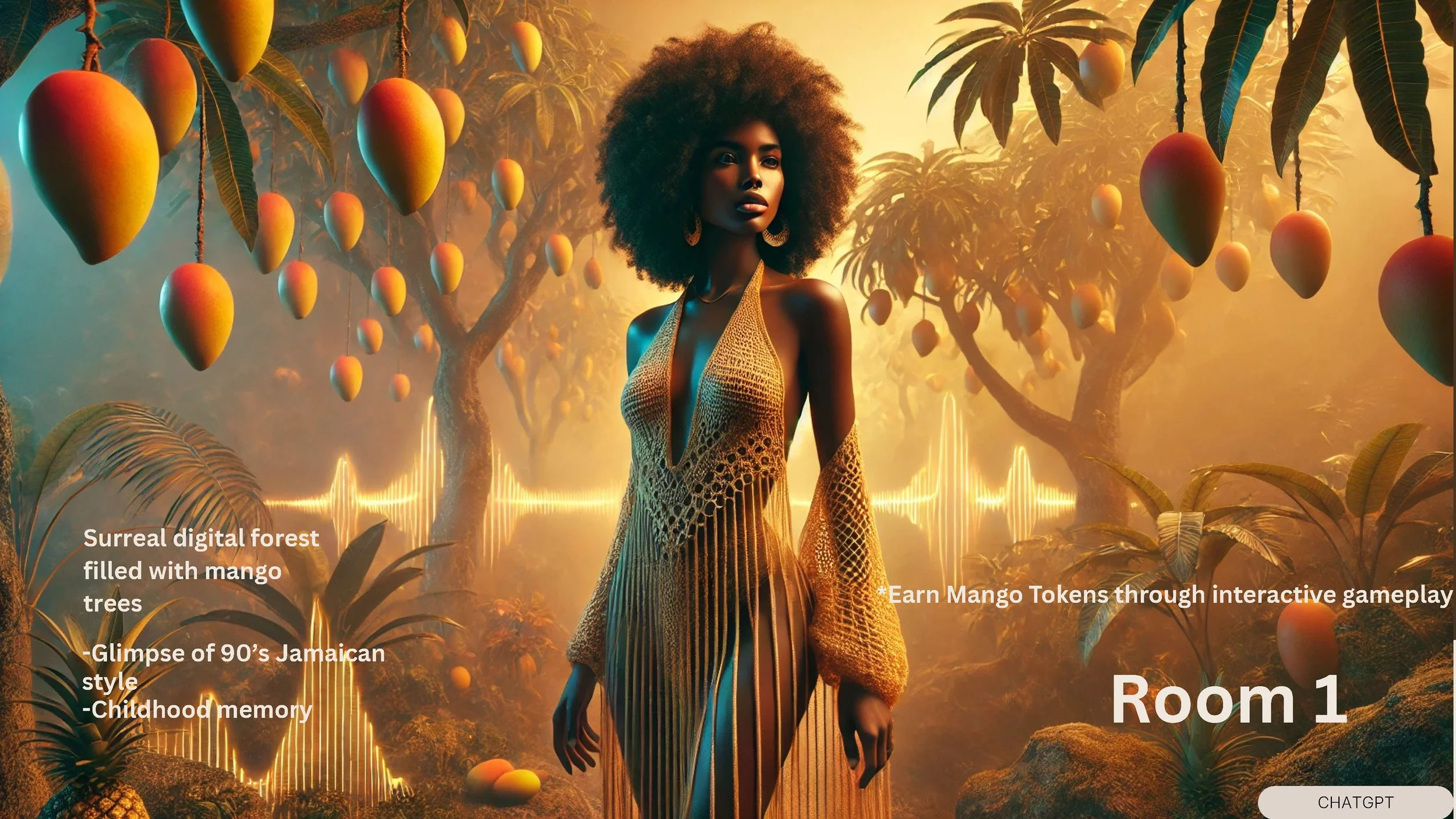
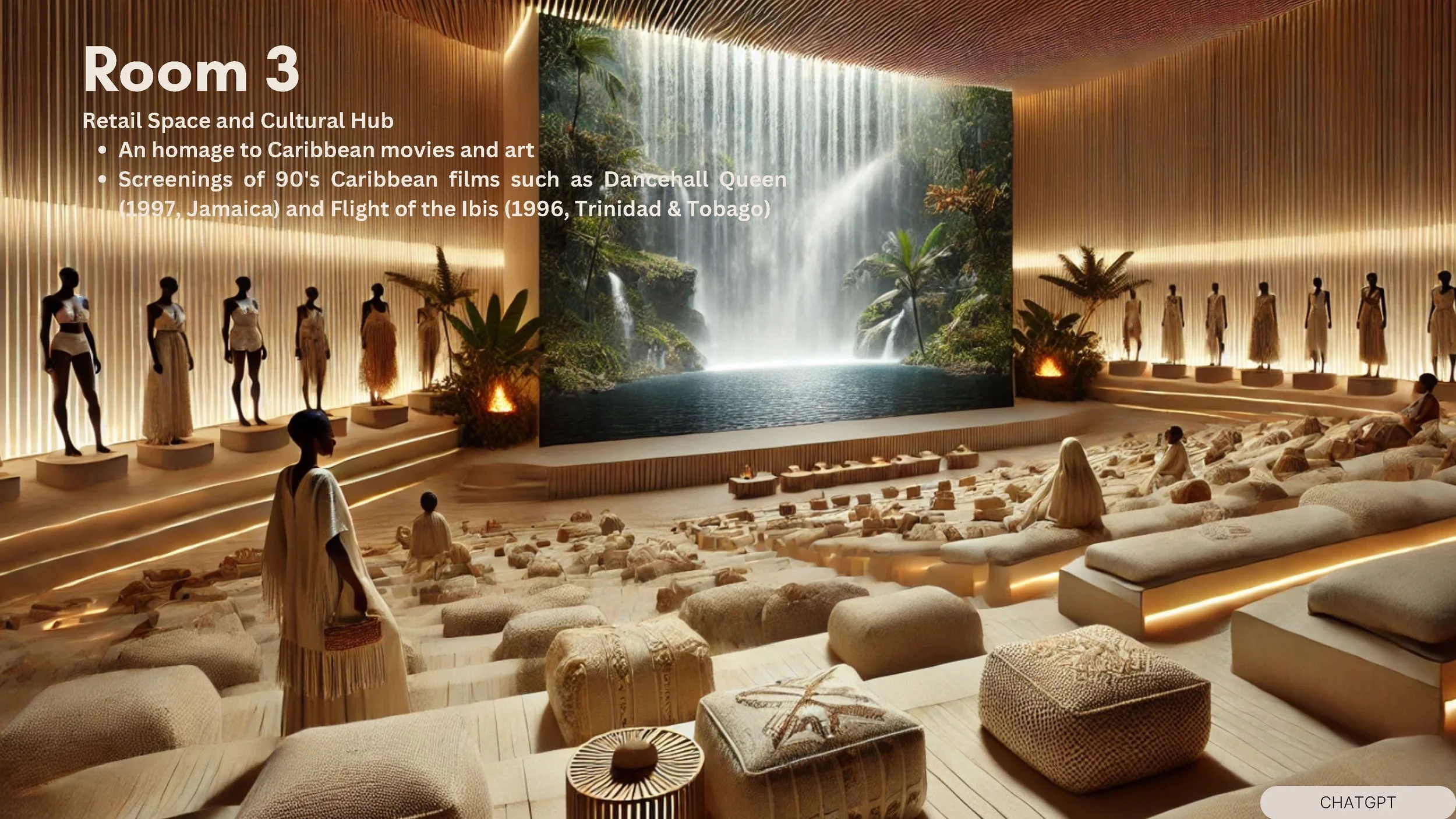
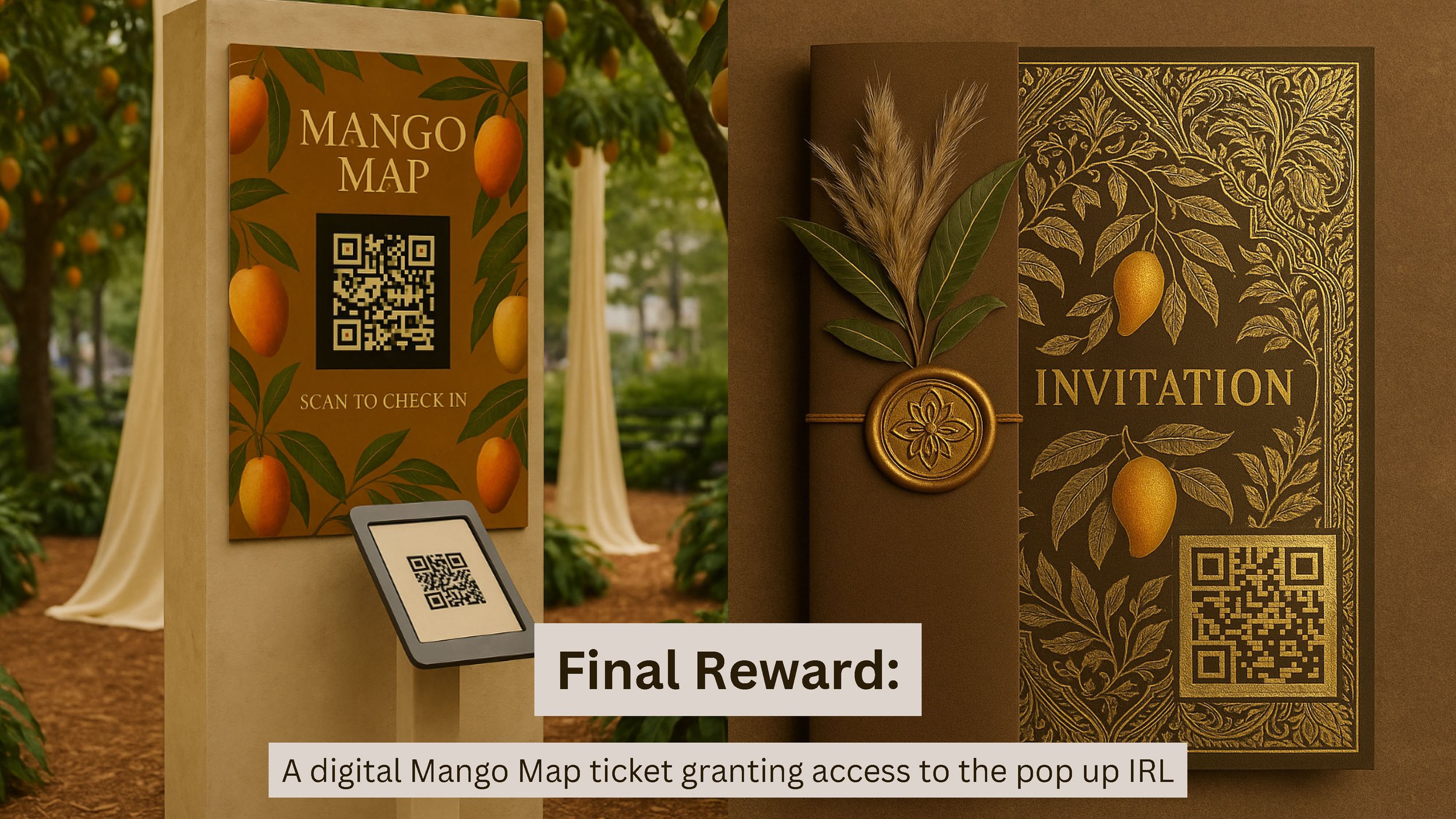
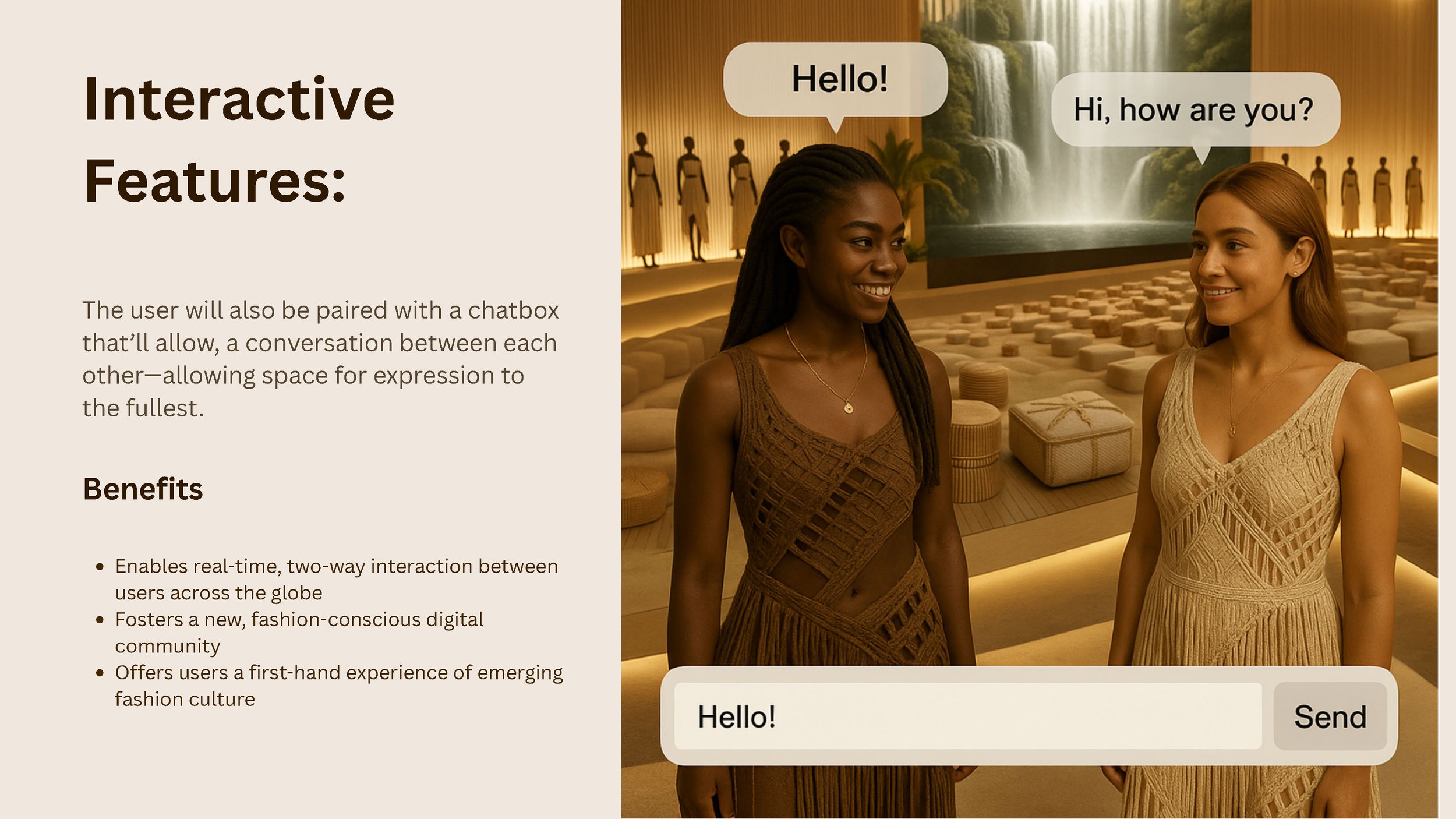
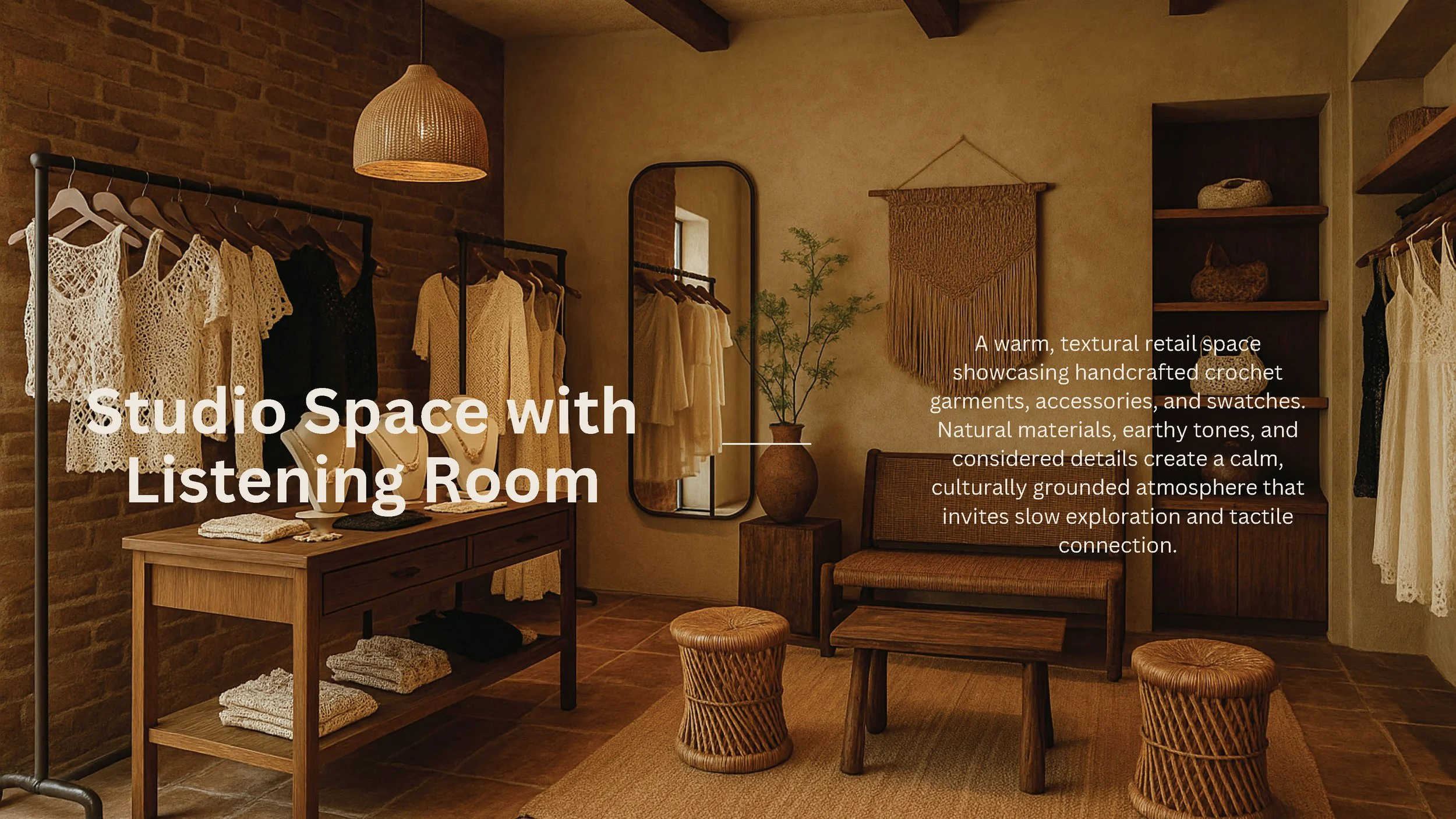
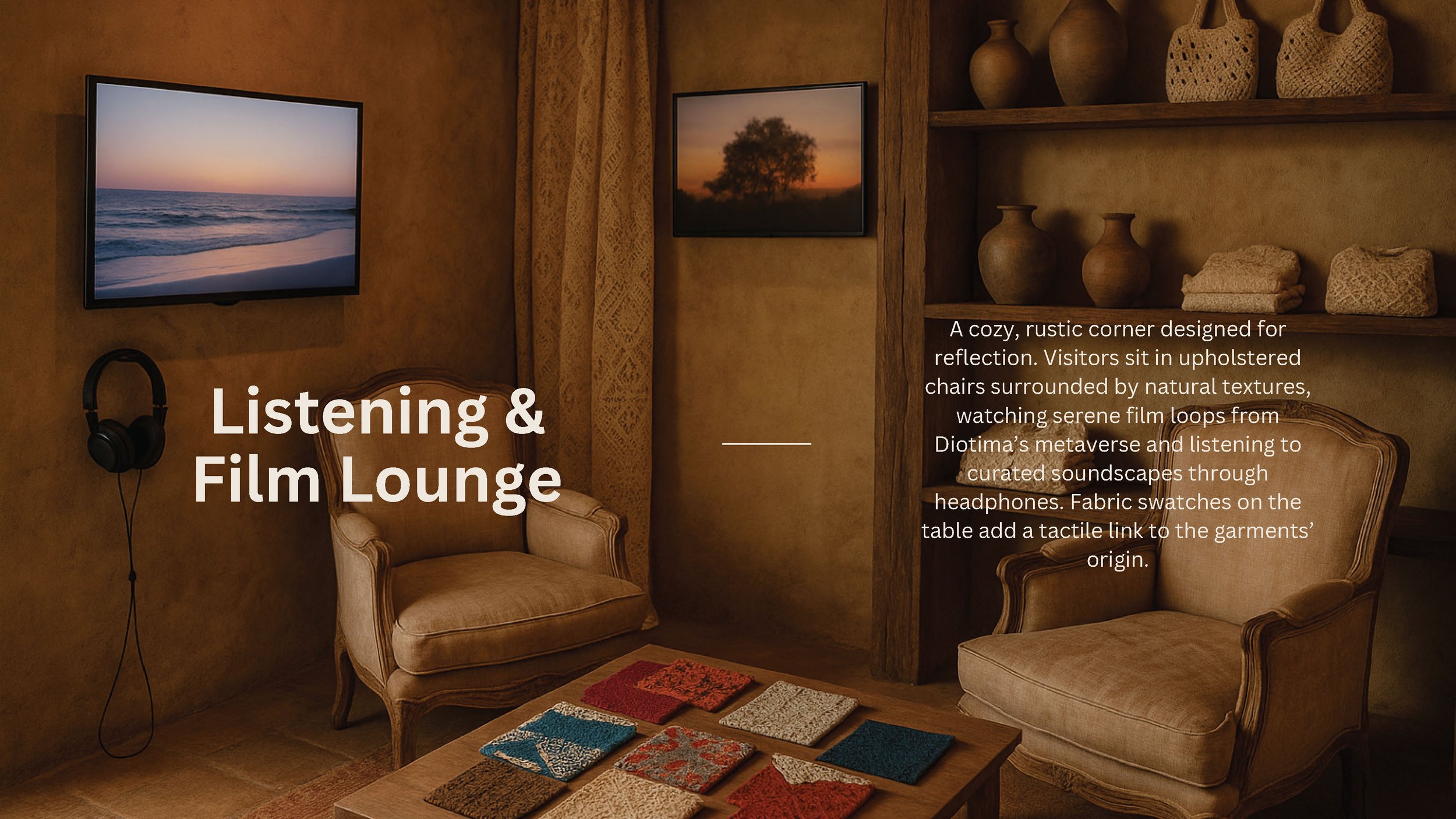
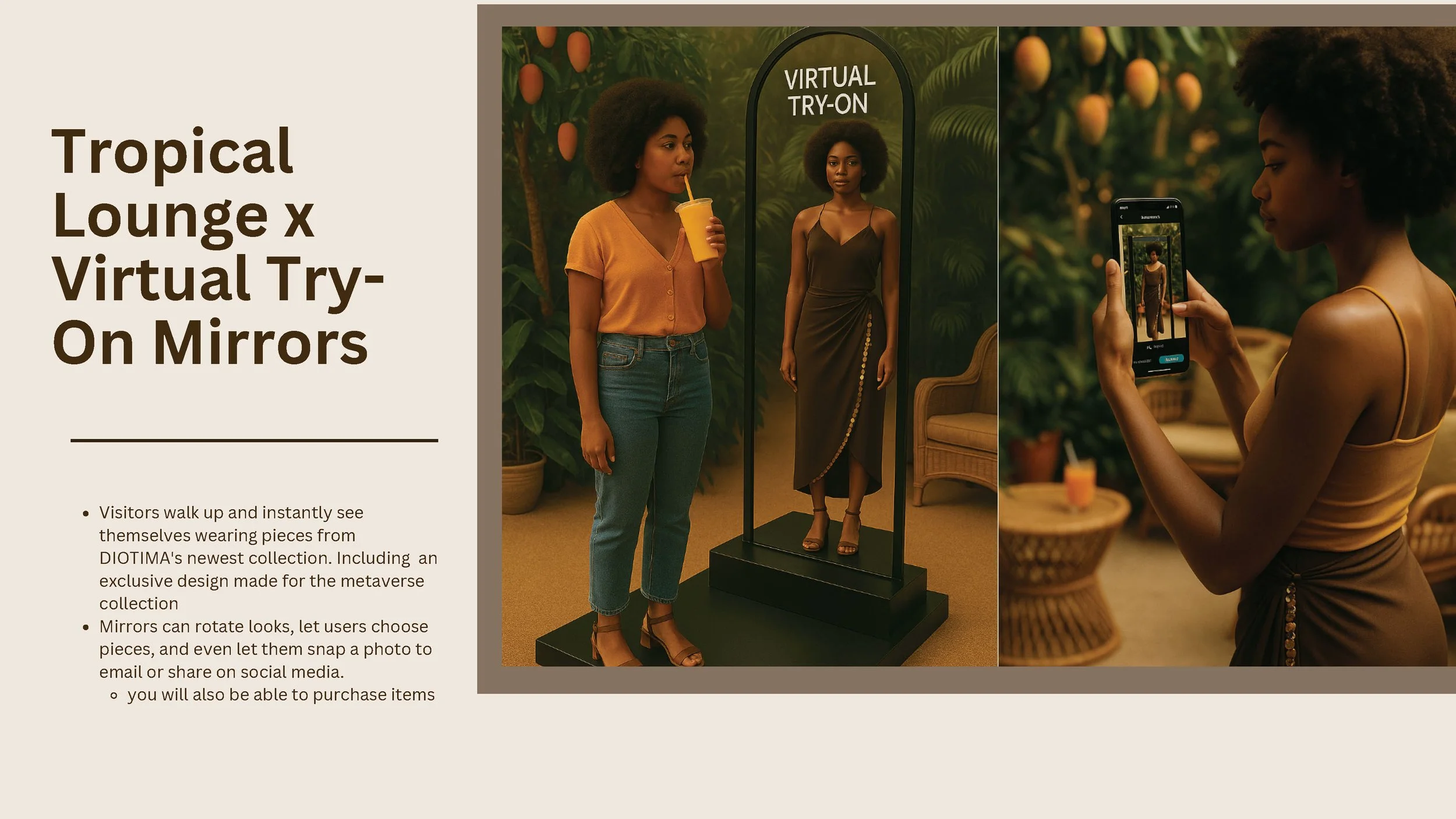
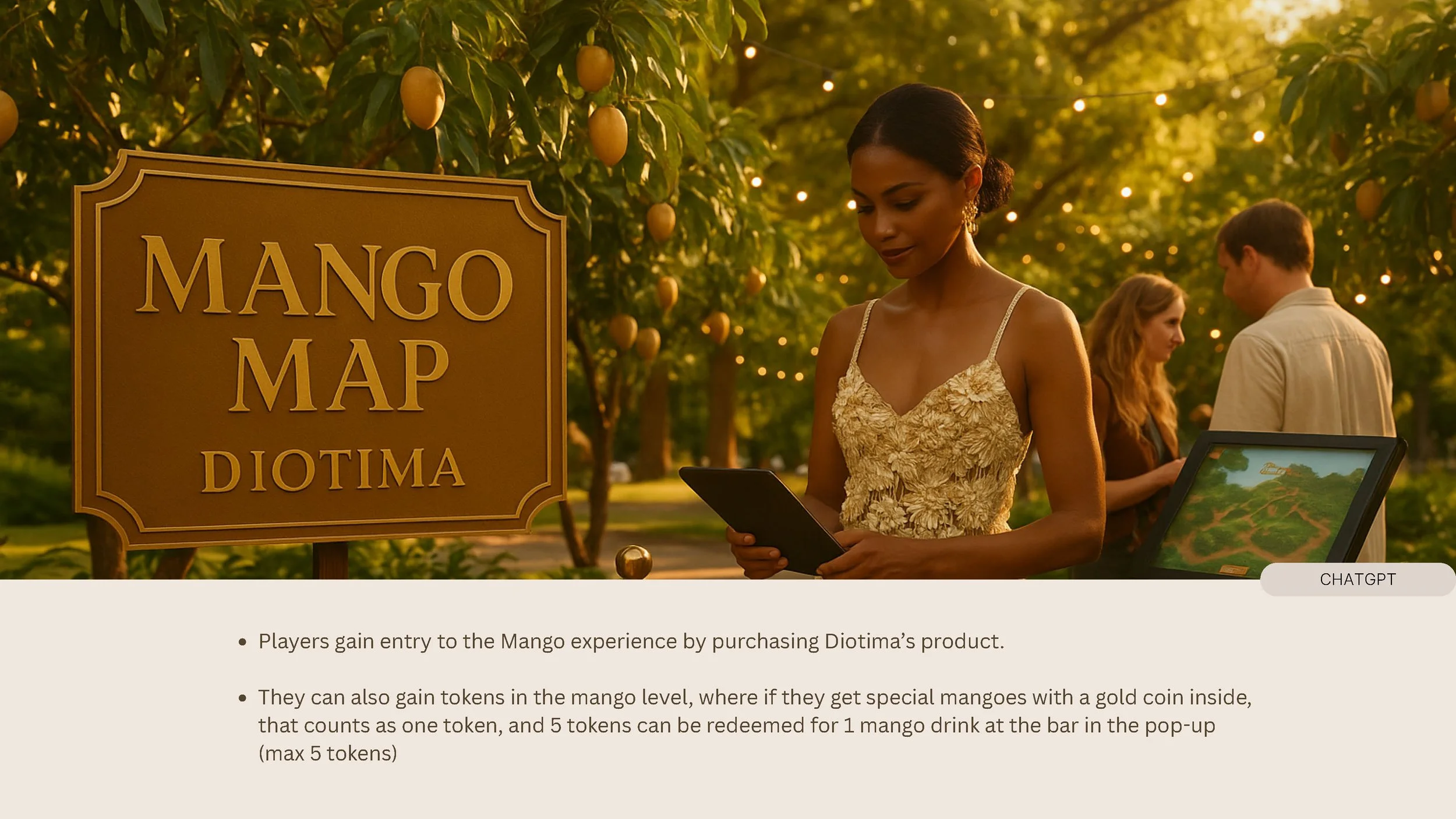
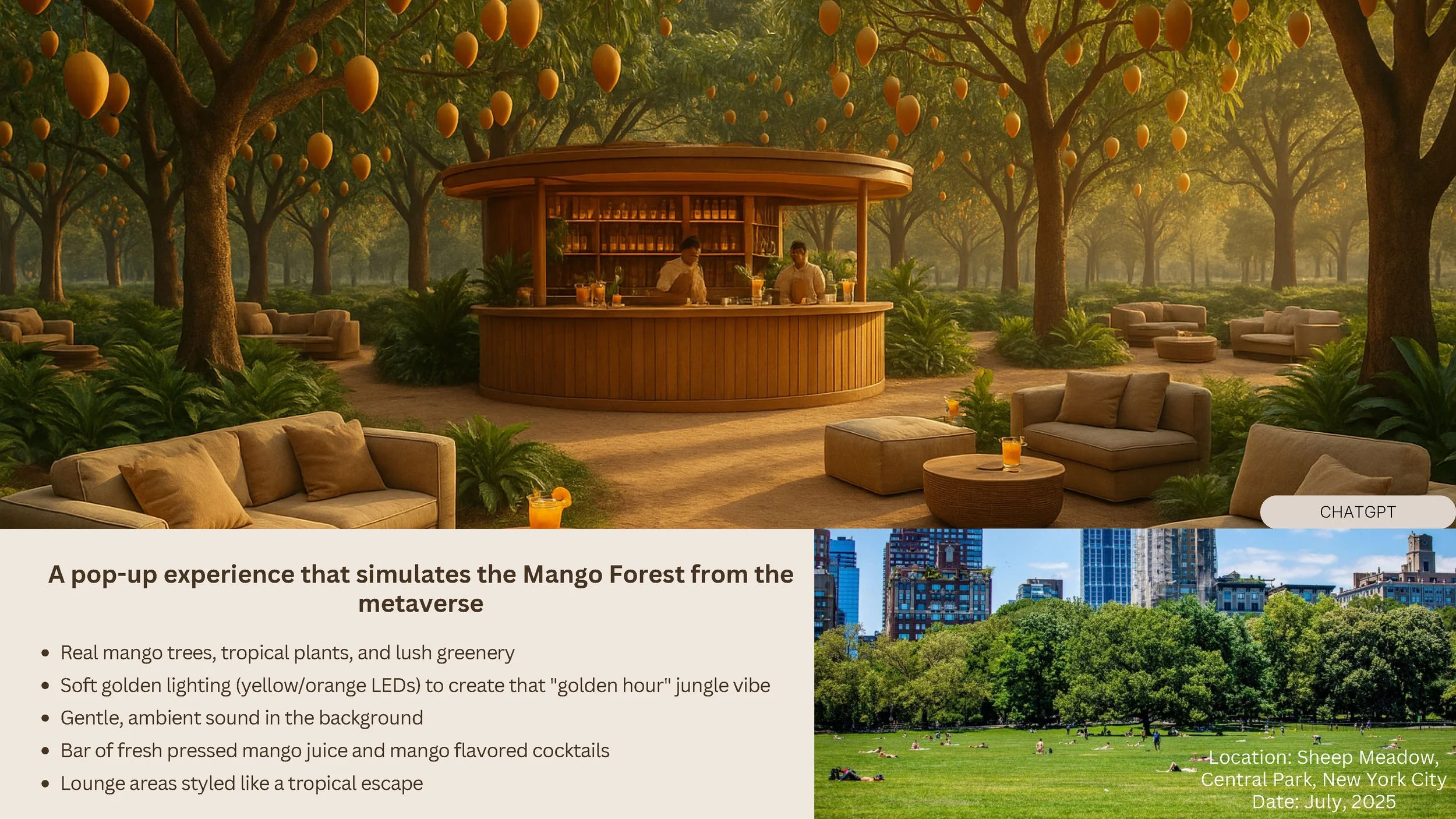
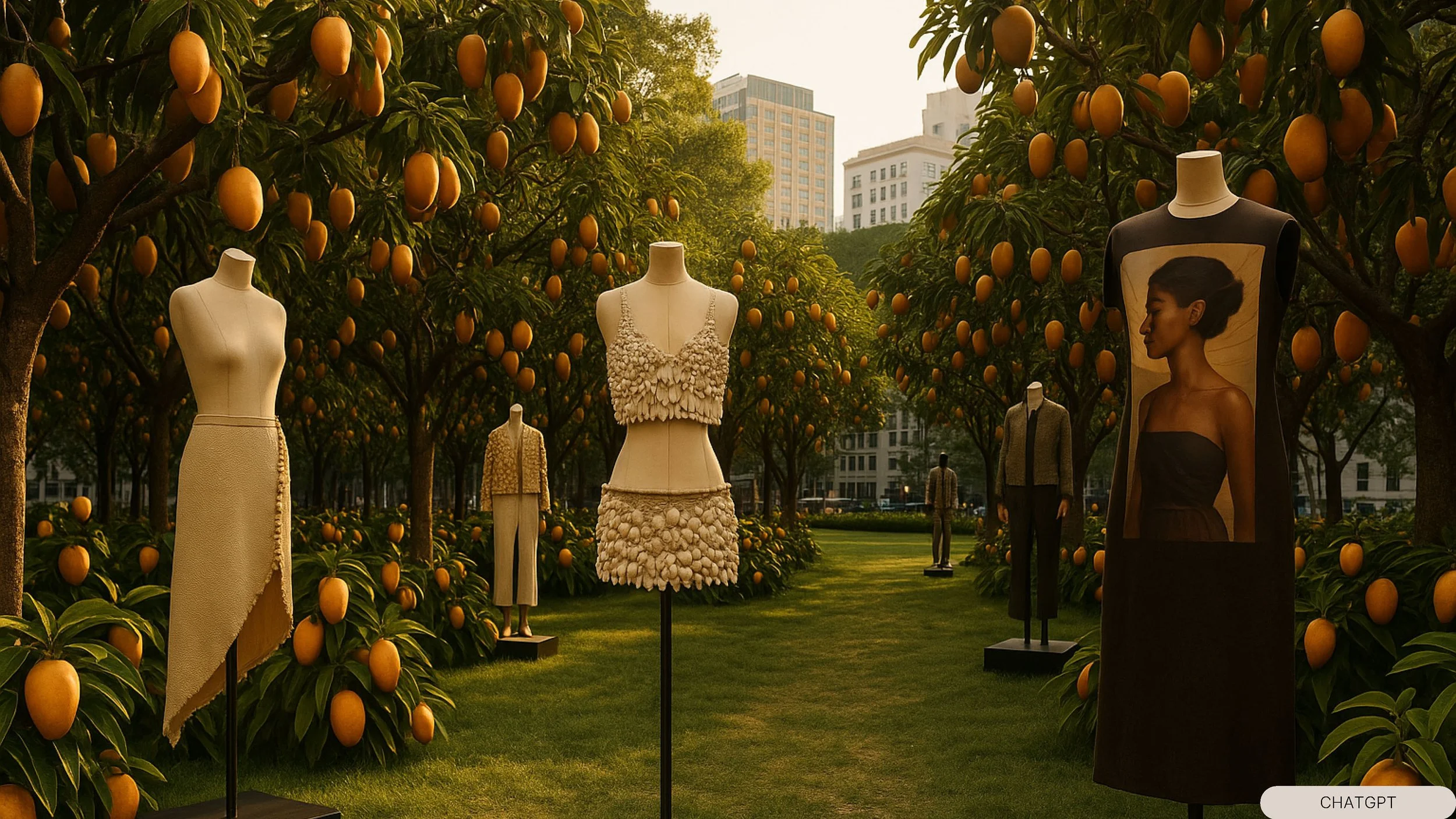
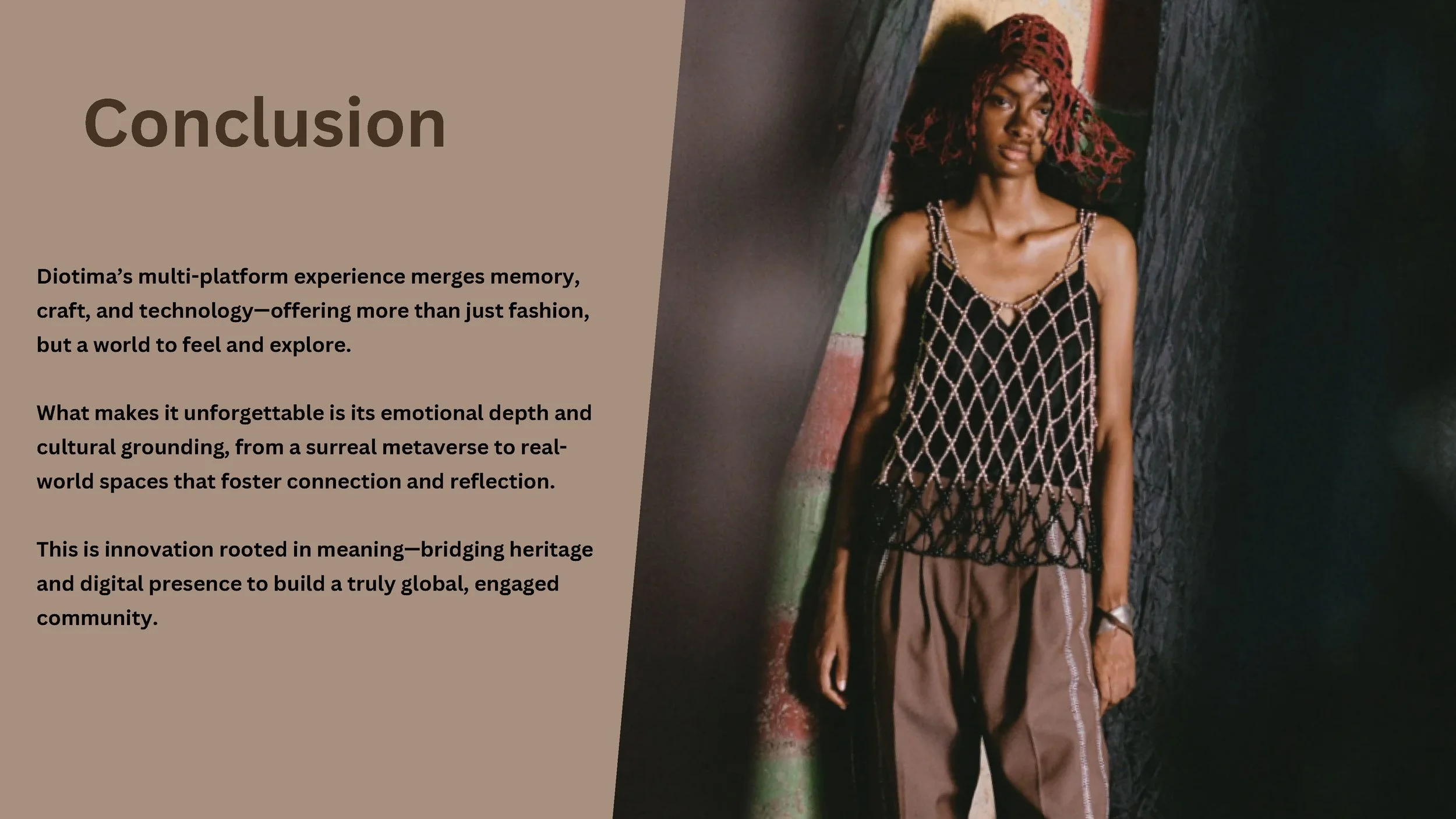
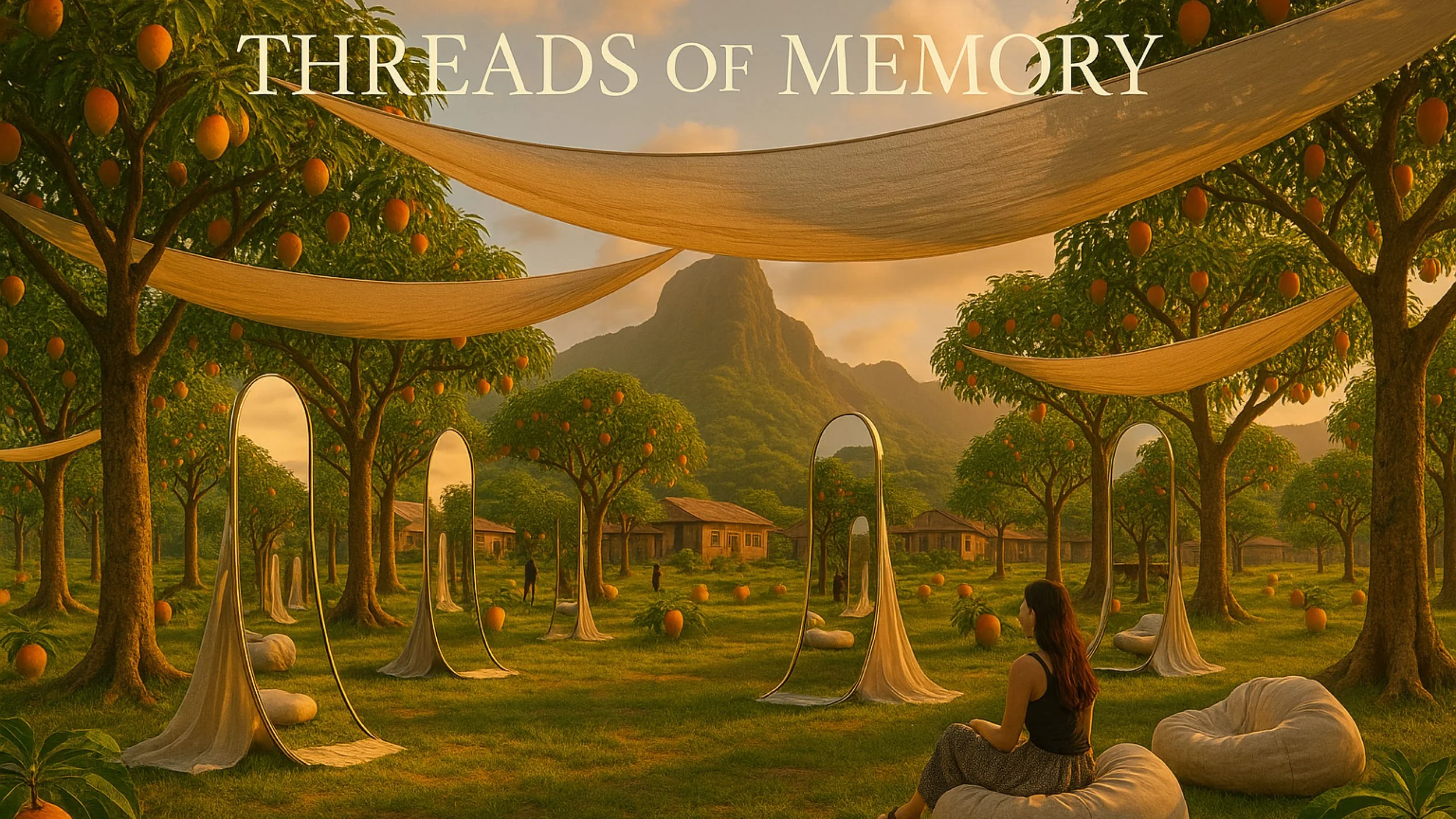
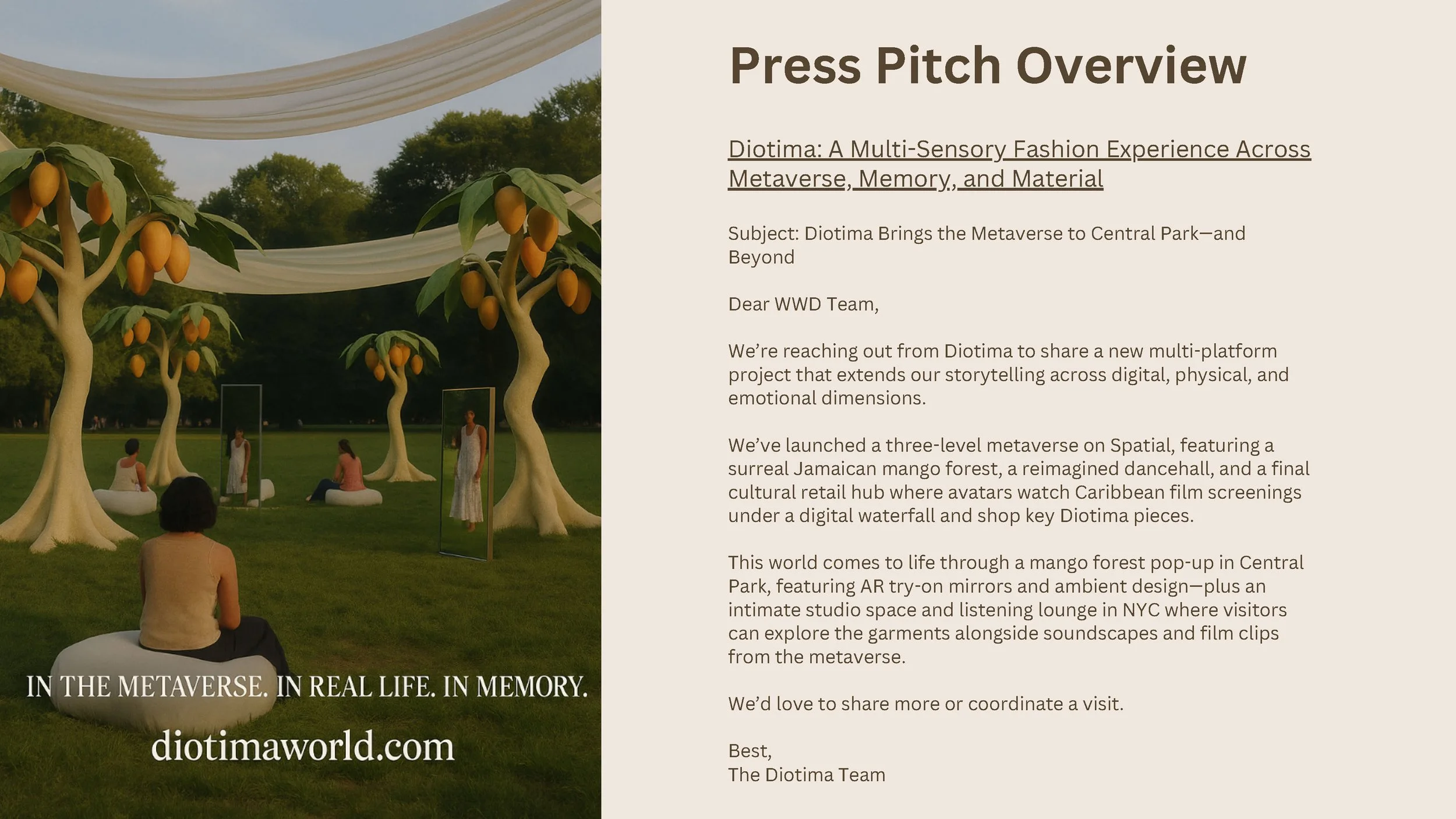
This immersive strategy translates Diotima’s commitment to craftsmanship, femininity, and ritual into a virtual fashion environment. The project uses digital garments and poetic world-building to explore softness, care, and intimacy, positioning Diotima as a brand where fashion, spirituality, and identity coexist across physical and virtual spaces.
Global and Local Leadership
This course examined leadership through both global and local lenses, contrasting traditional management with innovative, inclusive practices. Students explored leadership models across cultures and industries, emphasizing ethics, company culture, and human-centered strategies to move fashion forward.
One of the key initiatives I led was the Fashion Capital Global Summit: New York City, Paris, London, and Milan, where my MPS students reimagined the fashion industry from the ground up. Their mission: dismantle outdated systems and rebuild a more just, inclusive, and ethical fashion future.
They didn’t just imagine change, they created it.
From digital campaigns and policy manifestos to symbolic seals and leadership methodologies, these students produced tangible assets ready to thrive on today’s platforms and challenge tomorrow’s norms.
The next wave of fashion leadership is here, and they came with receipts.